

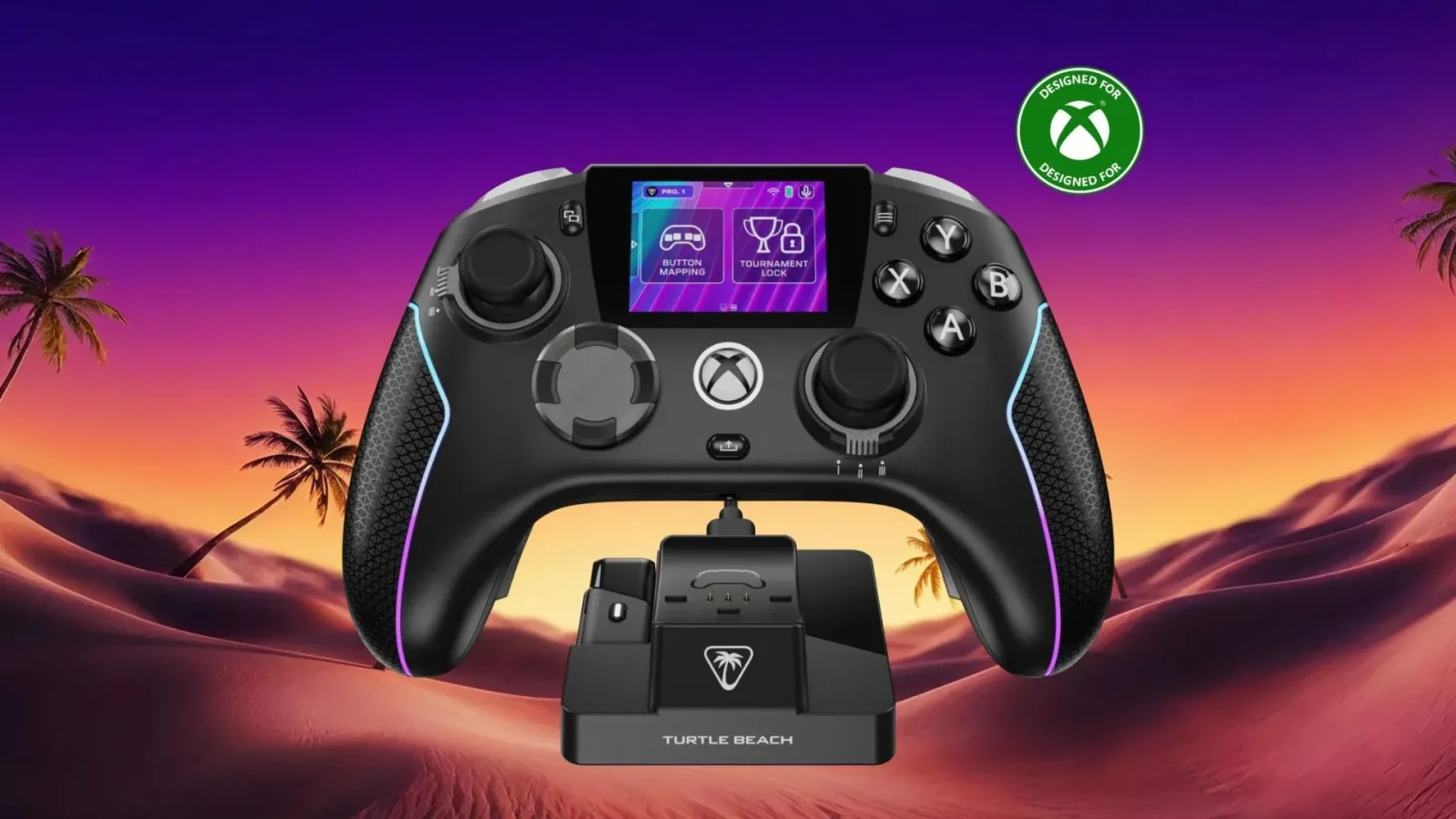
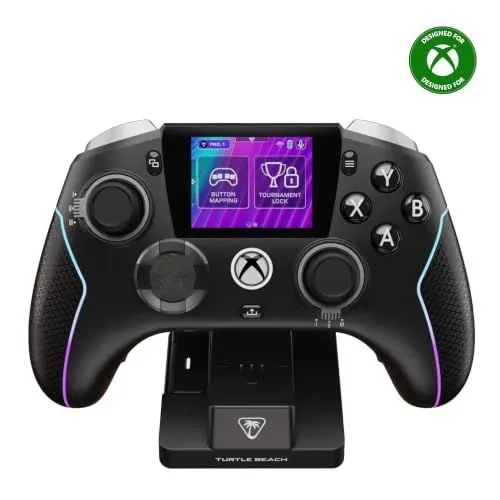
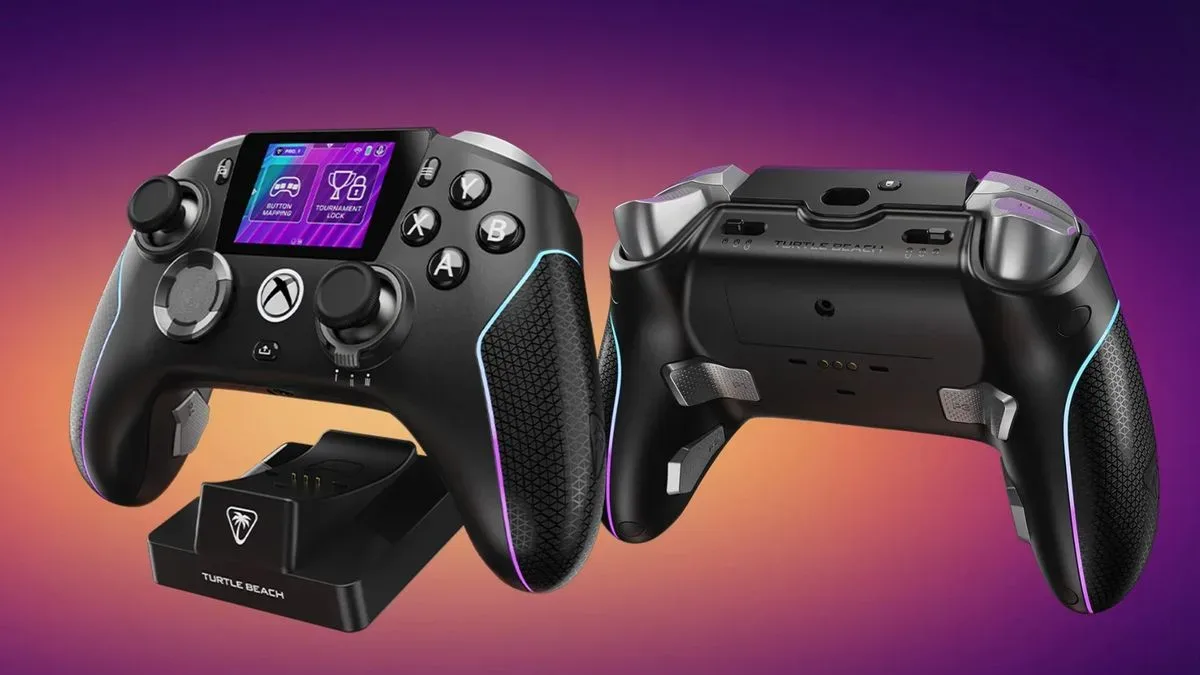
Turtle Beach has introduced the Stealth Ultra 2, a new wireless controller for Xbox and PC that significantly reworks the company's screen-equipped premium gamepad. It follows the original Stealth Ultra, which arrived in early 2024 as one of the earlier officially licensed third-party Xbox controllers to combine wireless console support with an integrated display and controller-side menu system.
The new model keeps the signature built-in screen, charging dock and carry case, but its design changes go much further than a routine refresh. Turtle Beach has moved to TMR thumbsticks, enlarged the display, changed the rear-button arrangement, added interchangeable stick gate shapes through built-in switches, and included three-way trigger-stop switches. For PC players using a wired connection, the controller is also rated for an 8,000Hz polling rate.
The Stealth Ultra 2 is available through Turtle Beach and selected retailers. Its listed price remains $199.99 / £179.99, matching the established price of the first model rather than moving into an even higher premium tier.
A more substantial follow-up to the original Stealth Ultra
The first Stealth Ultra had a distinctive place in the Xbox accessory market. Touchscreen controls and menu systems are now a more familiar concept on enthusiast-focused controllers, but the original arrived at a point when the combination of an integrated screen and wireless Xbox play was still unusual among licensed third-party options. It offered a well-rounded feature set, though competing gamepads with similarly ambitious specifications quickly crowded the category.
For useful background on this topic, read Dispatch Marks Its First Anniversary With Commentary, Storyboards, Mobile Release and Live Concert.
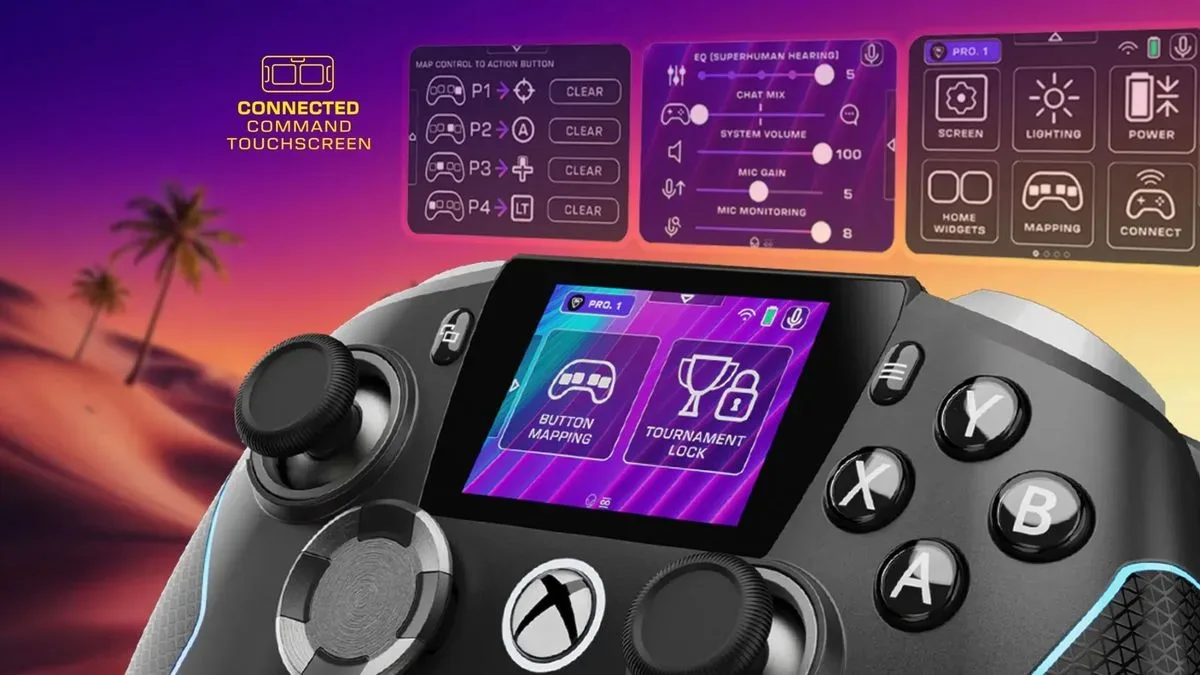
With the Stealth Ultra 2, Turtle Beach appears to be addressing several areas where a second-generation device can make a tangible difference. The screen is bigger, while social-oriented elements have been removed. That suggests a greater focus on direct controller utility: changing settings, setting up profiles, managing connections, checking power information, and controlling audio without leaving a game or reaching for a separate app.
Marketing material shows options for button remapping, audio controls, power and connection settings. It also indicates that players can alter screen settings and customize the widgets that appear on the controller's home display. A full breakdown of the touchscreen interface has not yet been shown, so its speed, depth and ease of use in day-to-day play remain details to be assessed.
TMR sticks and adjustable gates headline the hardware changes
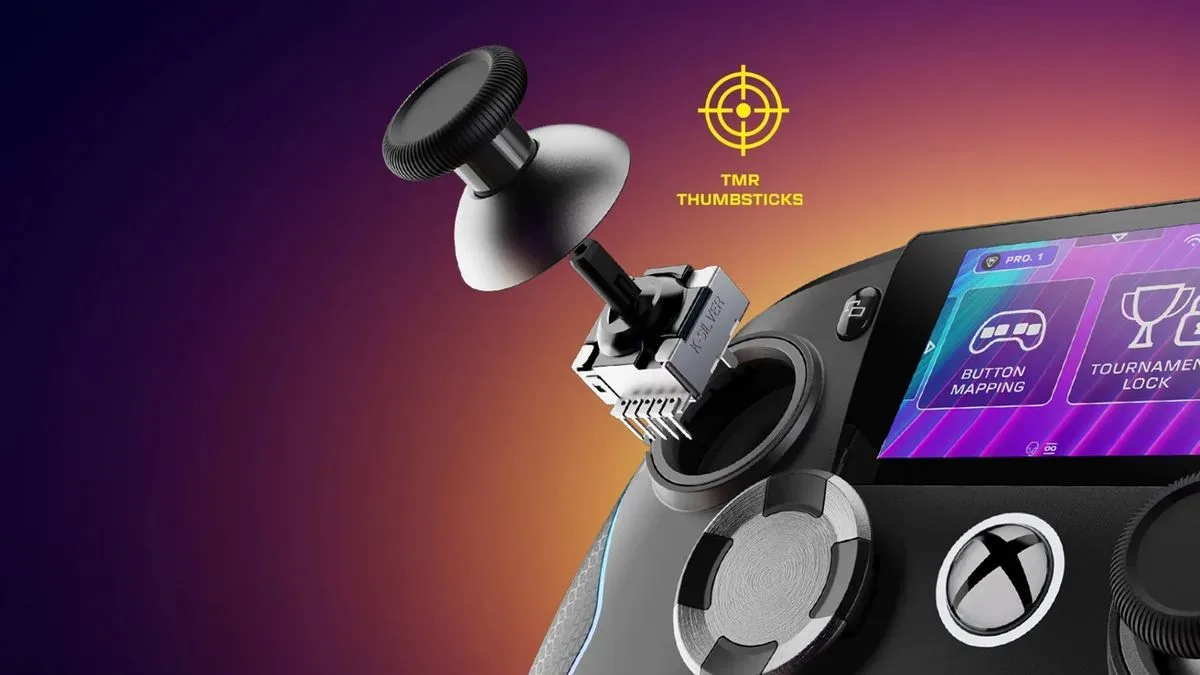
The most important upgrade may be the move to TMR thumbsticks. TMR, or tunnel magnetoresistance, is increasingly appearing in high-end controllers as an alternative to traditional potentiometer-based analog sticks. The technology is being adopted by manufacturers looking for more precise input and improved durability characteristics, and it has become one of the major talking points in the current premium controller market.
Turtle Beach is pairing those sticks with an unusual customization feature: players can change gate shapes using integrated switches. Stick gates affect the physical boundary around an analog stick and can influence how its outer range feels. The company is presenting this as an Xbox first. The concept has previously been explored through more hands-on modular solutions, including PDP's Victrix Pro BFG for Xbox, where players could manually change components. Here, the goal appears to be making adjustment faster and more integrated into the controller itself.
That feature could appeal to players who want different stick behavior for different genres. A preferred setup in a shooter may not be the same one desired for racing, sports, fighting games or platformers. The eventual value will depend on how pronounced the differences feel, how securely each position holds, and whether the system is intuitive enough to encourage experimentation rather than becoming a rarely used novelty.
The D-pad has also been revised. The previous metallic, flatter design has been replaced with one that has more pronounced shaping. D-pad preference is highly personal, particularly for fighting games, retro-styled action titles and menu-heavy games, but a more contoured design could offer clearer directional feedback.
Rear controls move into a more ergonomic position
Premium controllers often live or fall on the quality of their extra inputs, since rear paddles or buttons are central to their appeal for competitive players. Turtle Beach has changed the Stealth Ultra 2's rear-button layout from a horizontal configuration to a vertical one. The controls are now integrated into redesigned grips that appear to be slightly longer and slimmer than those on the original controller.
That redesign has the potential to make the additional buttons easier to reach while keeping a natural hold. On a pro-style controller, rear inputs are usually assigned to actions that players do not want to take their thumb off the right stick to perform, such as jumping, reloading, sliding, melee attacks or gear shifts. Placement matters enormously: buttons must be accessible without constant accidental presses or strain over longer sessions.
The Stealth Ultra 2 does not add extra bumpers or additional side buttons. That means players seeking the broadest possible set of remappable physical inputs may still compare it with alternatives such as the Nacon Revolution X Unlimited or Razer Wolverine V3 Pro. Turtle Beach's approach instead appears centered on refining its existing control count, stick technology and on-controller customization rather than pursuing a maximum-button design.
Three-way trigger-stop switches are another welcome inclusion. Trigger stops shorten trigger travel, a useful option for players who favor quicker activation in shooters and other fast-response games. Many controllers offer only one or two shortened positions, so three selectable levels provide more room to tailor the feel. Players who prefer full analog travel for acceleration and braking can still benefit from having a separate configuration available.
Wired PC performance targets competitive play
For PC use in wired mode, Turtle Beach says the Stealth Ultra 2 can reach an 8,000Hz polling rate. Polling rate describes how frequently a controller reports input data to a connected system. Higher rates are often sought by competitive players pursuing the lowest possible input delay, though real-world benefits depend on the game, computer setup, display, connection mode and a player's own sensitivity to latency.
The 8,000Hz figure puts the Stealth Ultra 2 alongside enthusiast-level PC controllers that emphasize performance specifications as much as comfort and customization. Importantly, this quoted maximum applies to wired PC use. Xbox players and wireless users should not assume that every platform or connection method will operate at the same rate.
It is also notable that Turtle Beach continues to support both sides of its target audience. Xbox compatibility remains a major part of the product identity, while PC players receive a headline performance mode that makes the controller more than a console accessory with desktop support added afterward.
Charging dock remains, with three power profiles
The Stealth Ultra 2 includes a charging stand and a carry case, two accessories that help support its premium price. A dock is particularly useful for a controller designed around a display and wireless features, removing the need to connect a cable after every session and giving the gamepad a consistent storage spot between uses.
Turtle Beach lists three power modes: Full Power, Balanced and Eco. The company estimates up to 34 hours of play in Eco mode, though that setting disables vibration and RGB lighting. At the other end of the scale, Full Power is quoted at up to 10 hours with the controller's full feature set active, including lighting. Actual endurance will naturally vary with usage, settings and wireless conditions, but offering explicit modes gives players a clearer choice between maximum features and longer battery life.
That flexibility may be especially practical for a controller with a built-in screen. Someone playing long single-player sessions may prioritize endurance, while a player using the gamepad in shorter competitive sessions might choose the fully featured setting and rely on the dock afterward.
Turtle Beach's controller strategy takes a clearer shape
The Stealth Ultra 2 arrives after Turtle Beach acquired PDP, a company with extensive controller experience and brands including Victrix. Since that acquisition, some products have returned under the Turtle Beach name, but the Stealth Ultra 2 looks like a more meaningful opportunity to combine distinct design experience into a fresh flagship controller.
Elements such as the adjustable stick gates and deeper emphasis on physical customization evoke the kind of enthusiast thinking associated with modular pro controllers. At the same time, Turtle Beach retains the touchscreen identity that separated the original Stealth Ultra from much of the Xbox controller field. The result is a product aimed at players who want both high-end competition features and convenient settings access directly from the controller.
At $199.99 / £179.99, it is still an expensive purchase. Buyers will reasonably weigh it against other advanced Xbox and PC controllers, particularly those with more auxiliary buttons or alternative modular systems. However, retaining the prior model's price while adding TMR sticks, a larger screen, revised ergonomics, trigger-stop options and a bundled dock gives the Stealth Ultra 2 a stronger specification than a minor yearly refresh would have offered.
Its success will ultimately rest on details that specifications alone cannot settle: stick feel, screen responsiveness, rear-button comfort, wireless reliability, build quality and the usefulness of the menu software. On paper, though, the Stealth Ultra 2 is a far more assertive attempt to compete in the increasingly crowded premium Xbox controller space.
Community
Discussion
Start the conversation.
No comments have been posted yet.