

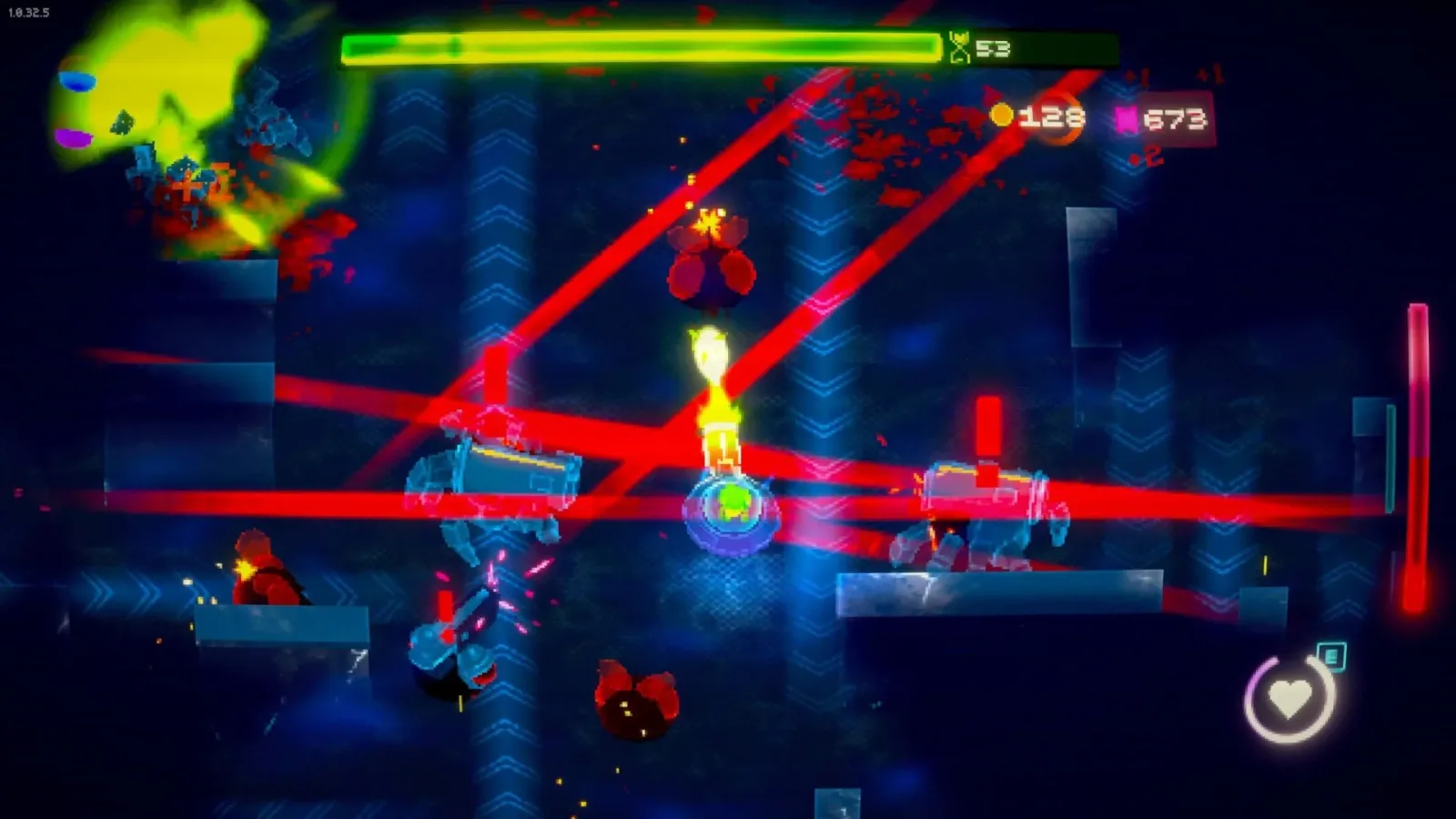
Unshine Arcade is the kind of game that makes a simple elevator pitch feel almost useless. It is a roguelite, certainly, but its structure is built around an arcade cabinet inside an abandoned arcade. It has maze navigation, an isometric shooting phase, gacha-ball rewards, tickets that persist after failure, branching runs, unlockable modifiers, vending machines, strange devices, and cheat codes waiting to be uncovered. It also has an increasingly suspicious sentient computer asking to be freed.
Developed by mardt, Unshine Arcade is out now on Steam for PC. A demo is also available, offering a substantial opportunity to see whether its unusual rhythm clicks before committing. At $10, it is positioned as a relatively low-risk detour for players looking for a compact indie game that favors repeated poking, experimentation, and incremental discovery over a fast sprint to the ending.
The central appeal is not just that there are many systems layered together. It is that the game presents those systems as pieces of a larger, unfamiliar place. The arcade is not merely a themed menu screen. It is a room full of machines, locks, powered-down equipment, and unexplained opportunities. Every return from a run can lead to another small discovery, another ticket sink, or another clue that changes how the next attempt might unfold.
A two-part arcade challenge
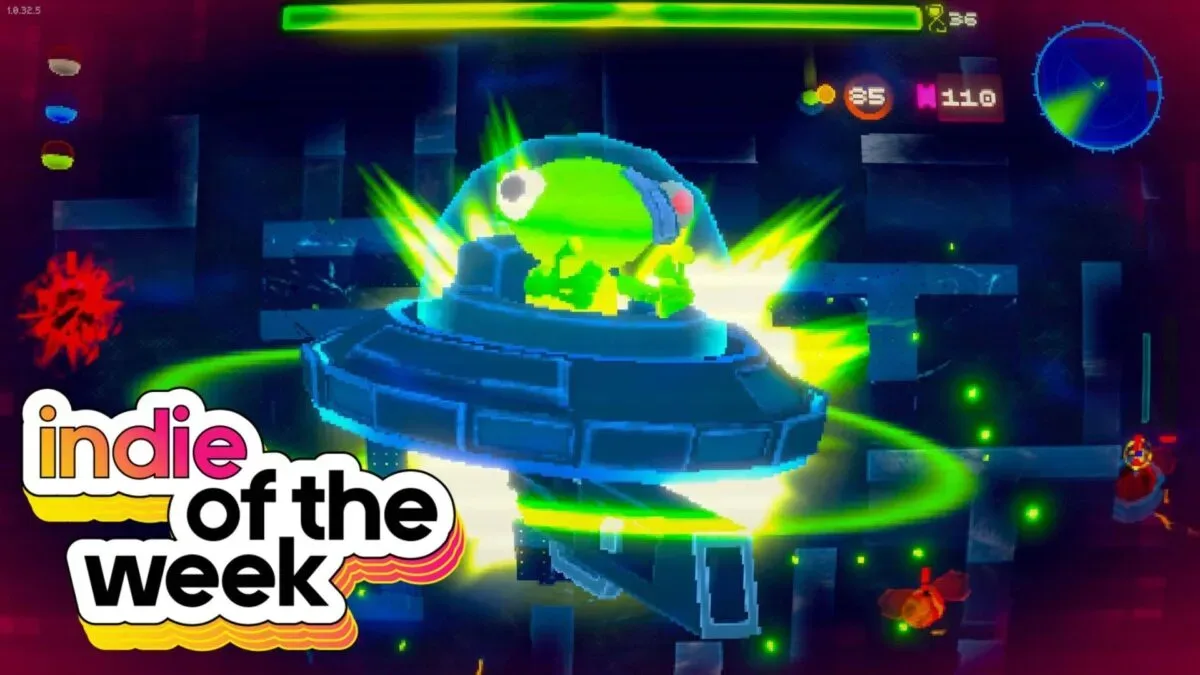
The game's core cabinet asks players to guide a small alien piloting a floating, UFO-like craft through a series of maze-shaped rooms. Early in each stage, survival is the priority. Players weave around hostile enemies while collecting coins, bonuses, and gacha balls, eventually making their way toward the weapon placed at the stage's end.
For useful background on this topic, read Xbox CEO Says PlayStation Collaboration Remains Possible After Physint Publisher Shift.
Picking up that weapon changes the rules. What had been a tense movement-and-avoidance sequence becomes an isometric shooter. The enemies that were dangerous obstacles moments ago are now targets, and defeating them produces the precious tickets that fuel much of Unshine Arcade's broader progression. That shift gives individual rooms a satisfying before-and-after structure: first sneak and scavenge, then arm up and clear the board.
Completing a round provides access to the gacha balls gathered during play. Their contents can be selected to add a fresh ability or bonus for the remainder of an attempt. The process gives each run room to develop its own identity, whether the player is leaning into movement, offense, survivability, or a combination of effects that may only become apparent after a few encounters.
Afterward, progress continues through a branching route reminiscent of deckbuilding roguelites. The choices are more focused than the sprawling maps found in some genre staples, but they still shape how a run grows. Players may choose another regular stage, pursue additional gacha-ball opportunities, visit a shop to spend collected coins on more balls, or head to a location that upgrades abilities already in hand.
Tickets matter even when a run ends
Like many roguelites, Unshine Arcade steadily raises the difficulty as a run continues, with more varied enemy behavior helping prevent its arcade loop from becoming too predictable. Reaching the final boss is the major objective, but failure does not erase every reward. Tickets earned while fighting enemies are retained, ensuring that even a doomed attempt can push the player's larger arcade progression forward.
That persistent ticket economy is where the game starts to reveal its stranger ambitions. One early outlet is the mysterious AI-like entity within the arcade, which requests ever-larger piles of tickets in exchange for what it describes as freedom. The request is deliberately unsettling: helping an unknown computer escape may not be as straightforwardly heroic as it initially sounds.
Tickets can also be spent on a claw machine that dispenses additional gacha balls for future runs. Elsewhere, a battery vending machine can be used to restore power to inactive machines around the arcade. These are only the first layers. Opening up the room and its connected spaces leads to new contraptions, new uses for currency, and new ways to alter the underlying game.
The result is a progression loop that does more than raise permanent stats. It encourages curiosity. A ticket reward might buy a mechanical advantage, but it might also enable access to a machine that explains more of the setting or exposes another bizarre side activity. One discovery could provide a useful boost; another could simply reveal that there is a knockoff Pong game hidden somewhere in this derelict entertainment space.
Codes, discs, and an arcade built for investigation
Unshine Arcade's abandoned setting grows into a meta-game of observation and experimentation. Players can discover codes that open doors to further areas, where more devices can affect their capabilities. Some secrets relate to the arcade's unusual story, while others are tools that directly influence the shape and pace of future attempts.
There are also discs that modify the nature of the main arcade game itself, adding another layer beyond the gacha abilities selected during each run. Difficulty can be raised as well, creating a risk-and-reward choice for players who want more demanding encounters and stronger ticket returns. This makes the game's cabinet feel less like a fixed mode and more like a platform that can be tuned, disrupted, and gradually understood.
Cheat codes are part of that appeal, too. Rather than being a nostalgic visual flourish, they are another secret for players to seek out and test. The presence of codes, unlocks, inaccessible rooms, alternative machines, and hidden modifiers gives Unshine Arcade a playful sense that the obvious path is rarely the whole story.
That sense of discovery is especially important because the core activity is intentionally repetitive. Players will return to maze rooms, gather resources, collect a weapon, and eliminate enemies again and again. Those who need constant structural reinvention may find the cabinet loop starts to wear thin. But for players who enjoy mastering a familiar routine while gradually gaining new ways to bend it, the repeated format becomes an advantage rather than a limitation.
A crunchy pixel world that is eerie without becoming exhausting
Visually, Unshine Arcade leans into a rough, crunchy pixel-art look. Its palette of muted blues, greens, and pinks gives the arcade a dirty, disused character, while the machinery and surrounding darkness suggest that something has gone badly wrong here. Yet its atmosphere is not relentlessly oppressive. There is an energetic, faintly silly spark underneath the unsettling details.
Paper tickets spewing out after a successful fight are a major part of that feeling. They make advancement tangible and celebratory even when the broader location feels wrong. The AI's chatter adds another odd source of personality, keeping the game from settling entirely into grim horror. Unshine Arcade appears happy to be creepy, but it is also happy to be goofy, colorful, and mechanically busy.
That balance distinguishes the game's mood. The arcade is strange and potentially sinister, but it is not only a place of dread. It is also a toy box. Players are encouraged to test buttons, invest in questionable machines, search for passwords, gamble tickets, upgrade their baseline capabilities, and see what happens when another system is switched on.
Best played in short bursts
Unshine Arcade seems particularly well suited to a stop-and-start routine. Its cabinet format lends itself to playing a handful of rounds, spending the resulting tickets, uncovering a small secret, and stepping away before returning later. It does not demand that players finish its mystery in a single sitting, and the persistent progression means a brief session can still feel productive.
That approach may be the best way to appreciate the game's escalating complexity. As base movement speed improves, for example, navigating the maze sections can become more fluid and exciting. As new devices and upgrades come online, earlier assumptions about what a run can look like may change. The oddest details are not all delivered at once; they accumulate through repeated visits to the arcade.
Unshine Arcade is therefore less about conquering one cleanly defined challenge than about inhabiting an increasingly peculiar game room. Its roguelite action provides the immediate hook, its ticket economy supplies steady momentum, and its secrets give players reasons to keep looking around after the action ends. For PC players drawn to compact, offbeat indies with a deliberately messy pile of ideas, this is a cabinet worth dropping another token into.
Community
Discussion
Start the conversation.
No comments have been posted yet.