

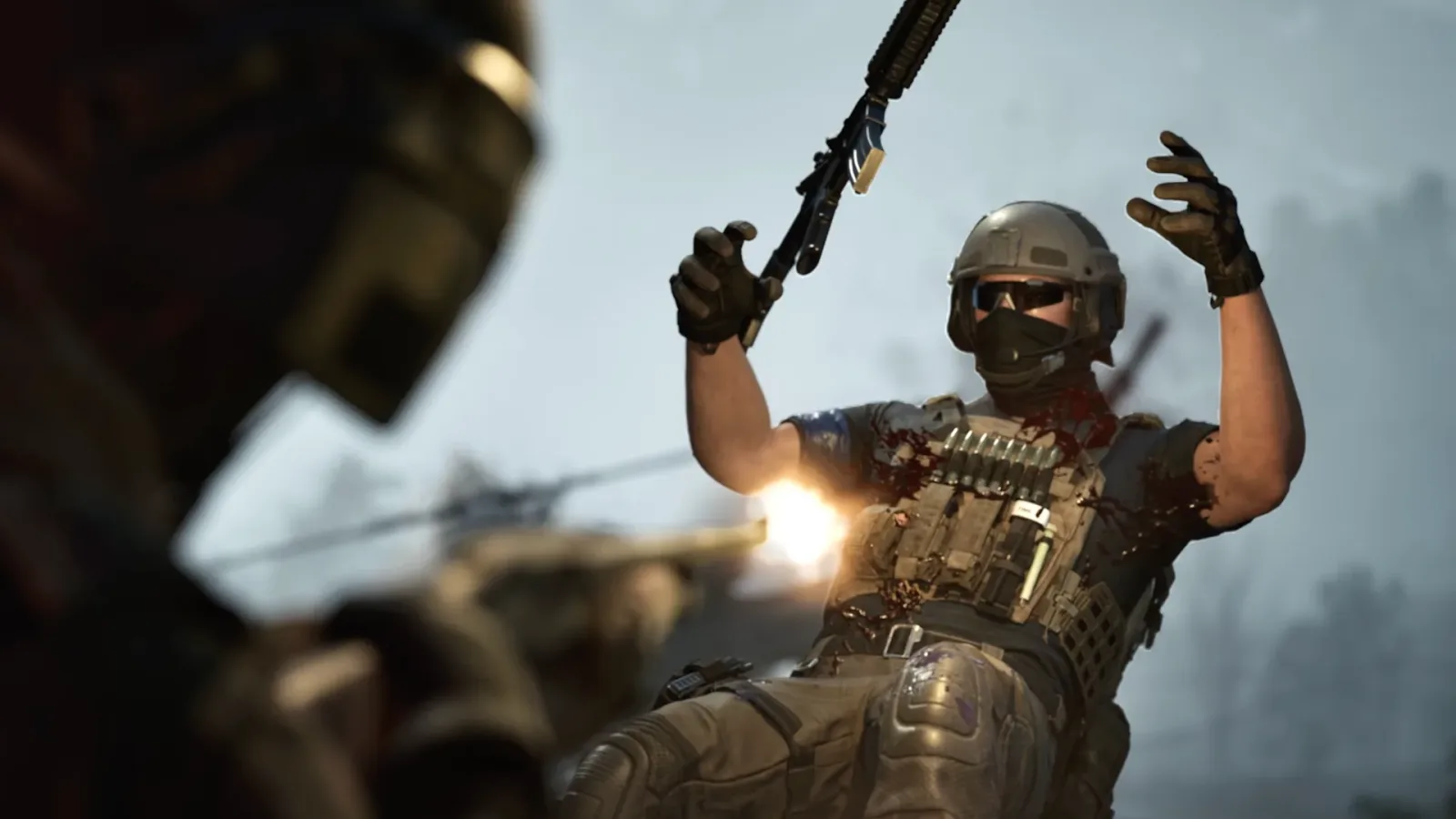
Wardogs loadouts are officially on the way, but Bulkhead is not ready to add them just yet. CEO Joe Brammer has confirmed that players will eventually be able to save and purchase custom setups, while also laying out the studio's unusual reasoning for holding the quality-of-life feature back during the game's current testing period.
The central concern is not simply interface work or implementation time. Bulkhead wants players to keep moving between weapons, gear choices, and possible builds rather than quickly locking into one familiar kit. The developer believes that tendency to experiment is important both for players learning how Wardogs works and for the team collecting reliable balance information across its available equipment.
It is a stance that may frustrate anyone who sees loadouts as a basic convenience in a competitive shooter. At the same time, it offers a clearer explanation for why the feature has been absent: Bulkhead is treating the lack of saved builds as part of its broader testing strategy, not merely as an unfinished menu feature.
Loadouts are planned, with no confirmed arrival date
Brammer confirmed that Wardogs will receive loadouts, although he did not provide a date or a specific update window for their arrival. When they do appear, they are expected to be tied to the game's progression and economy systems rather than handed to every player immediately.
For useful background on this topic, read Refund This Game Turns Steam's Two-Hour Refund Window Into a Platforming Challenge.
The current plan is for players to unlock loadout slots using in-game cash earned through Wardogs' meta game. The system is intended to function as a reward and a way to make the between-round experience smoother for people who have put time into the shooter. Players will be free to buy multiple saved setups or to ignore the feature entirely.
That detail matters because it suggests Bulkhead does not see loadouts solely as a menu shortcut. They will also be a long-term progression purchase, giving accumulated currency a practical use beyond a single match. For frequent players who know the exact weapon and equipment combination they want, saved builds should remove repetitive selection steps and get them back into the action more quickly.
However, the developer's focus remains on the period before that convenience becomes widespread. Bulkhead wants its arsenal, unlock paths, and balance systems to receive more active use first.
Why Bulkhead is deliberately delaying the convenience feature
In his explanation, Brammer said the team had consciously avoided giving even its own developers access to loadouts during internal testing. The thinking was straightforward: if convenient saved setups existed from the start, many testers would repeatedly choose their preferred equipment and spend less time with less familiar options.
Removing that shortcut compelled the team to rotate through more of the available gear. In turn, that meant a broader part of Wardogs was being tested in real matches rather than receiving limited attention while a small number of popular weapons dominated playtime.
Bulkhead is applying the same logic to the player base now. The studio wants people to try combinations they may not initially select, especially while the game's weapon balance and progression systems are still being evaluated. A player who always uses the same rifle, utility choice, and secondary weapon may be playing efficiently from their own perspective, but their habits can leave the developer with less useful information about how other gear performs in practice.
This is particularly relevant in a multiplayer FPS, where balance is not determined only by raw weapon statistics. A gun may look underpowered on paper, for example, but become potent in the hands of players who understand its range, recoil behavior, movement tradeoffs, or synergy with other equipment. Conversely, a popular weapon can seem essential simply because it is easy to understand early, even if alternatives become stronger once players learn their strengths.
By slowing the formation of permanent personal presets, Bulkhead is attempting to create more circumstances in which players reassess their options after a poor result. The approach is designed to encourage discovery rather than instant optimization.
The rebuy tests shaped the studio's thinking
The decision was also influenced by testing around Wardogs' rebuy feature, which allows players to quickly purchase the same gear they were using before they died. Brammer described an earlier pre-alpha version in which the rebuy option appeared as a prominent pop-up.
Players used it readily, including in situations where their chosen equipment was not helping them win. Rather than browsing for alternatives, many continued buying back the same setup after repeated defeats. Bulkhead had expected struggling players to look for more effective weapons or different approaches. Instead, a portion of them stuck with what they already knew, lost again, and in some cases stopped playing before they had meaningfully explored the game's progression path.
The team then ran tests without rebuy. The feedback from newer players improved, and Bulkhead saw clearer signs that players were using the unlock system as intended. In practical terms, being required to make another purchasing decision pushed players to engage with the available choices. That appeared to help them find equipment better suited to their needs, while also improving their impression of the game.
Rebuy has not been removed from Wardogs altogether. It remains available, but its placement has changed. Instead of taking center stage through a pop-up, it has been moved to a less noticeable button in the lower-left area of the interface. The revised presentation preserves the option for players who genuinely want it without making the automatic repeat purchase the most obvious next step after a death.
For Bulkhead, that result reinforced the idea that quality-of-life systems can have unintended effects. A feature that reduces friction may also reduce the moments where a player stops, considers why a match went badly, and tries something different.
A balance-data question as much as a player-experience question
Loadouts are therefore caught between two reasonable priorities. From the player side, saved kits are a familiar FPS staple. They reduce downtime, eliminate repetitive menu work, and let someone quickly return to a build they have deliberately refined. For people with limited play time, the convenience can be especially valuable.
From the developer side, Bulkhead argues that early convenience can skew the information used to tune the game. If the community rapidly concentrates around a few comfortable setups, the studio may get a distorted picture of the rest of the sandbox. Less-used weapons can be difficult to assess, because low usage does not automatically reveal whether they are weak, difficult, poorly communicated, or simply overlooked.
Brammer's comments make clear that the team considers this data important enough to justify a temporary absence of an expected feature. The goal is not to prevent players from ever settling into a preferred style. Once the loadout system arrives, players will be able to do exactly that. Instead, Bulkhead is trying to postpone that stage until more weapons have been tried and more balance evidence has been gathered.
It is also worth noting that saved loadouts cannot fully control how people play. Players have pointed out that someone who favors one build can still manually select the same items every round. In that view, the lack of presets adds menu friction without necessarily producing genuine experimentation. A player determined to repeat one kit can continue doing so; loadouts would merely make the process faster.
That criticism is fair, and it highlights the limit of Bulkhead's approach. A hidden or absent shortcut cannot force curiosity. Still, the rebuy testing suggests the studio has observed a meaningful behavioral difference when repeat choices are less immediate. Even a small interruption in the purchasing flow may lead some players to inspect other options, especially newcomers who have not yet formed strong preferences.
What Wardogs players can expect next
For now, Wardogs players should expect the game to continue emphasizing weapon experimentation over instant access to a permanent preferred build. The rebuy option remains in place but is less prominent than it was during earlier tests, while custom loadouts remain planned for a future update.
When they arrive, loadouts should offer a progression-driven quality-of-life upgrade purchased with in-game cash. The number of setups a player chooses to buy will be up to them, and the feature is meant to smooth out kit selection rather than replace Wardogs' broader equipment and unlock systems.
Bulkhead has not announced when the balance-testing phase will have produced enough confidence to make that change. Until then, the studio's message is simple: Wardogs is built around more than finding one reliable setup. Players are being encouraged to sample the full range of weapons and adjust when a familiar choice is not working.
Whether that philosophy feels like thoughtful design or unnecessary friction will depend heavily on each player's relationship with the shooter. But the important part is now settled: loadouts are not being ruled out. They are coming, just on Bulkhead's schedule and after the developer believes Wardogs has received the wider testing it needs.
Community
Discussion
Start the conversation.
No comments have been posted yet.