

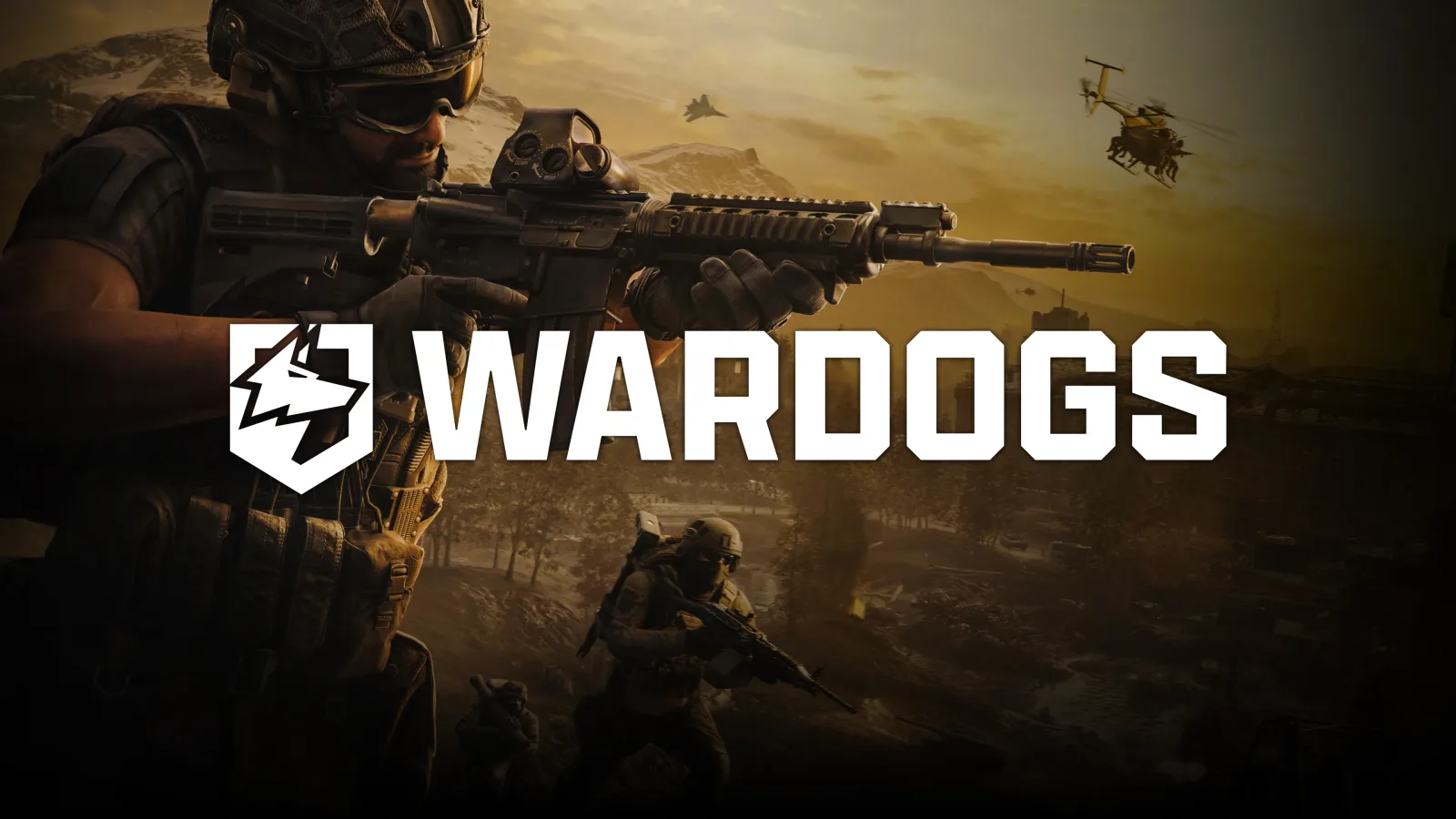
WARDOGS Season 2 is now live on Steam, delivering the first major update for BULKHEAD's 100-player tactical first-person shooter since it entered Early Access on September 10. Released on October 15, 2026, the new season combines additions intended to broaden the game's battlefield options with balance, progression and team-focused adjustments developed during the game's first month in the hands of players.
The headline feature is dynamic weather. Heavy rain and thunderstorms can now move into matches, affecting both what combatants can see and what they can hear. That may sound like a straightforward visual upgrade, but it has potentially significant implications in a large-scale tactical shooter where audio cues, positioning and awareness can determine whether a squad succeeds or is caught out.
Season 2 also adds four weapons, four vehicles and three buildable structures. Among the new vehicles are the T-72B3 main battle tank and the Flakpanzer Gepard anti-air vehicle, while new defensive fortifications are set to give teams more ways to hold territory and reinforce their positions. An experimental Wager Vendor rounds out the update with a performance-based risk-and-reward system tied to in-game cash.
Storms could change how every engagement unfolds
Dynamic weather is the most immediately distinctive addition in WARDOGS Season 2. Rain and thunderstorms do more than alter the atmosphere: they are designed to affect visibility and sound on the battlefield. Players may need to approach familiar routes and contested areas differently when rainfall reduces sightlines or makes the environment harder to read at a glance.
For useful background on this topic, read Neuron Activation Sets October 28 Steam Launch for Its Rapid-Fire Puzzle Thriller.
Thunder is particularly important to the new system. A loud crack can briefly cover the sound of footsteps, creating an opening for close-range pushes, flanks and repositioning. In a game built around large player counts and competing factions, that small window could matter a great deal. Squads that recognize the opportunity may use a storm to cross exposed ground, approach defended buildings or catch an opponent while their usual audio awareness is disrupted.
Conversely, weather can complicate coordination. Teammates relying on sound to identify enemy movement may have less information to work with, and reduced visibility can make it more difficult to distinguish threats at range. The effect is likely to reward players who adapt their pace, communicate clearly and avoid treating every match as if conditions are unchanged.
That is an appealing direction for a tactical FPS in Early Access. Rather than placing weather solely in the background, Season 2 makes it part of the moment-to-moment decision-making. A firefight taking place during clear conditions may call for a different approach from the same location during a downpour, and the uncertainty of changing weather gives the battlefield another variable beyond player loadouts and map control.
For another perspective on this story, read WARDOGS Season 2 Adds Dynamic Weather, Vehicles and Faction Incentives.
More weapons, vehicles and defenses expand the toolbox
Season 2's content drop adds four weapons, though details on the full set have not been outlined. Their arrival nevertheless gives the existing combat sandbox new options, and the wider update is clearly framed around expanding tactical choice rather than simply increasing the number of items available.
The four new vehicles are more clearly defined by the inclusion of the T-72B3 and Flakpanzer Gepard. The T-72B3 introduces a main battle tank to the season's vehicle roster, bringing an armored presence that can influence control over open spaces and key approaches. The Gepard, meanwhile, is an anti-air vehicle, adding a specialized countermeasure within the larger vehicle ecosystem.
In a multiplayer war game, the arrival of powerful armor and dedicated anti-air capability naturally puts more emphasis on combined arms coordination. Vehicles can be decisive when supported effectively, but their presence also creates a need for teams to understand their roles, work around them and respond to them. The update's mix of armor, anti-air tools and defensive construction suggests Season 2 is intended to make those interactions more varied.
Players also receive three buildable structures, including new defensive fortifications. Buildable defenses can change the character of an objective or chokepoint by allowing teams to prepare positions instead of merely reacting after an enemy begins an assault. They may offer greater resilience to defenders, but they also create new problems for attackers to solve through planning, pressure, vehicle support or a change in route.
The combined additions should make the shape of a match less fixed. A team's options are no longer limited to moving through the battlefield and contesting it with standard weaponry; it can now factor changing weather, stronger fortifications, fresh armaments and additional vehicle roles into its decisions. How those systems settle after players have time to experiment will be one of Season 2's most important Early Access stories.
The Wager Vendor introduces a personal gamble
Another Season 2 feature is the experimental Wager Vendor. This mechanic allows players to stake their in-game cash on their own performance, with the possibility of receiving a larger in-game payout if they meet the wager's conditions.
The system introduces a different kind of tension from the usual push for objectives, kills or territory. Players must decide whether their confidence in a coming performance is worth the risk. A wager may encourage someone to play more assertively, focus on a particular goal or commit to a high-pressure situation in pursuit of a reward.
Because the vendor is described as experimental, it should be viewed as part of the game's continuing process of iteration. Early Access gives the development team room to monitor how a feature is used, whether it complements the broader match experience and what adjustments may be needed over time. The key point for players is that the wagering concerns in-game cash, not real-world money.
Lonestar incentives target three-faction balance
Alongside the new content, BULKHEAD has made substantial changes to combat balance, progression, teamplay and faction dynamics. The adjustments follow a month spent observing the ways millions of players have engaged with WARDOGS during Early Access.
One specific initiative focuses on the game's three-faction warfare. The studio is encouraging players to enlist with Lonestar, the blue faction, after it underperformed relative to the other sides. Players who choose Lonestar can receive exclusive cash and XP incentives.
Faction population balance is especially important in a game structured around three competing sides. When one faction consistently attracts fewer players, the consequences can extend beyond raw headcount. It can affect territorial pressure, the reliability of coordination and the overall sense that each faction has a viable role in the conflict. Incentives are a direct effort to make the less-populated side more attractive without removing player choice altogether.
There is also a broader experimental value in the move. Three-faction warfare has different balancing challenges from the more common two-team format, since alliances of circumstance, shifting fronts and uneven attention can emerge naturally during a match. Encouraging participation in an underrepresented faction is one way to gather feedback on how that structure performs under more even conditions.
"Season 2 combines new content with important under-the-hood changes," BULKHEAD CEO Joe Brammer said, describing the update as an application of lessons learned from player feedback during Early Access.
Brammer also emphasized that the studio is continuing to build the game alongside its community. That framing is central to the season: the update is not only a content package, but also a response to the first wave of player behavior, feedback and live-game data.
A major start for WARDOGS on Steam
WARDOGS has had a significant opening period on Steam. Since its September 10 Early Access debut, the game has sold more than three million copies and reached a peak of over 425,000 concurrent players on the platform. Those figures give Season 2 a substantial community to serve, while also raising the stakes for ongoing updates, balancing and server-side support.
The season arrives shortly after the conclusion of the #WARDOGS100K competition. The winning player received $100,000 in real-world cash, while another 99 finalists each received $100,000 in WARDOGS in-game currency. The competition put a spotlight on player-created moments at a time when the game was building momentum following launch.
For now, Season 2's success will likely be judged less by any single addition than by how its systems interact. Dynamic weather needs to create fresh tactical situations without becoming frustrating. New vehicles and fortifications need to provide meaningful possibilities while fitting into the game's balance. Lonestar rewards need to help address faction participation. And the experimental Wager Vendor will need to prove that its added risk feels worthwhile within the normal flow of play.
Those are fitting questions for an Early Access release, where the game can evolve in public through updates and player response. With storms, armored vehicles, anti-air options, defenses and revised faction incentives now in place, WARDOGS Season 2 gives Steam players considerably more to test on the road toward the game's next stage.
Community
Discussion
Start the conversation.
No comments have been posted yet.