

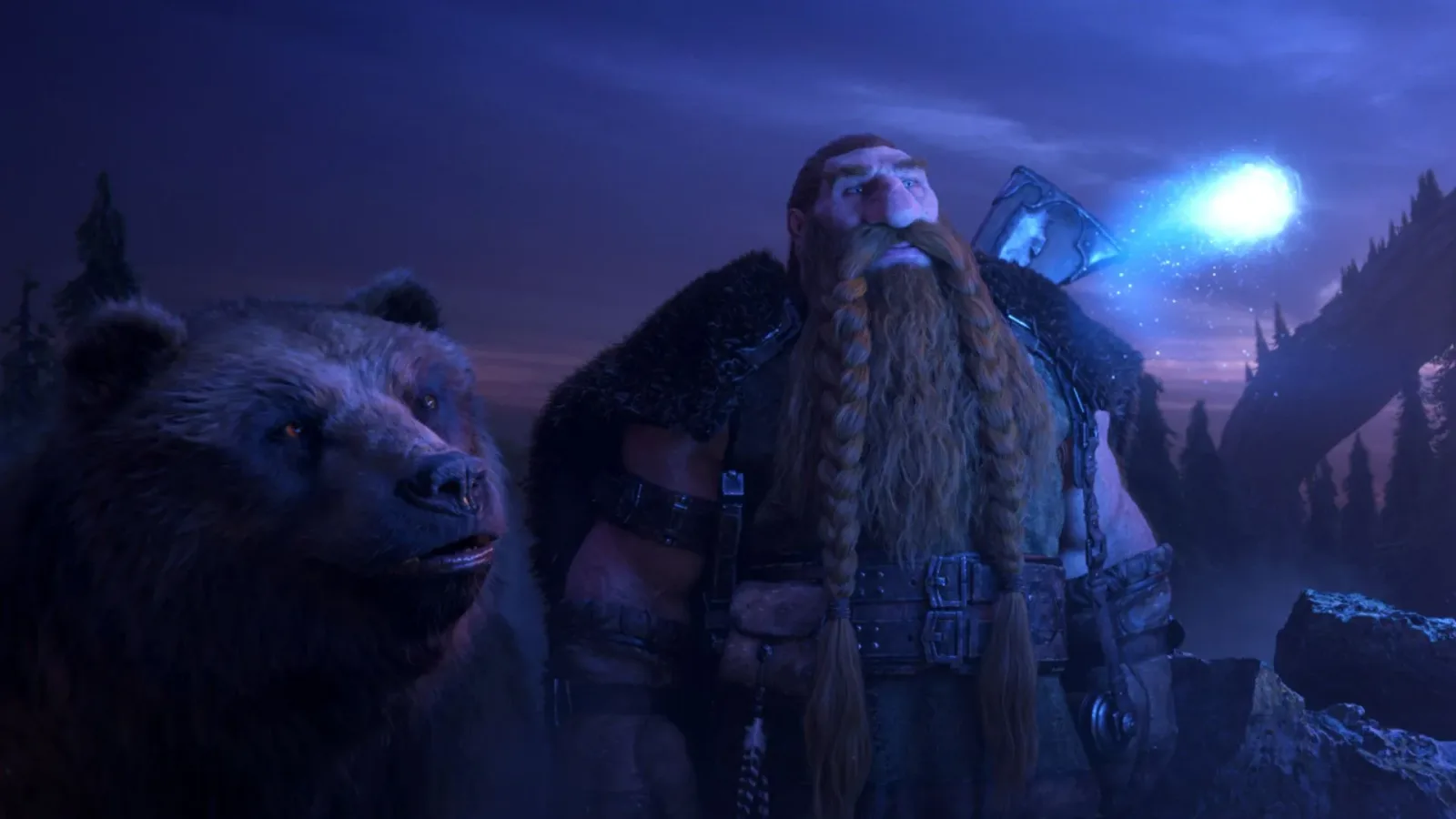
World of Warcraft: Forever has only recently been revealed at BlizzCon 2026, yet it is already generating one of the largest debates surrounding Blizzard's long-running MMO in years. Officially, Forever is not World of Warcraft 2. In practice, however, many players taking part in its paid beta believe the project is substantial enough--and sufficiently different in spirit--to occupy much the same space.
The discussion has been fueled by the game's unusual position. Forever is described as a revitalized version of the foundational 2004-era World of Warcraft experience, but it is not simply a preservation project in the mold of Classic. It also includes fresh material that players have not previously seen, giving Blizzard room to build on the familiar early-MMO framework without directly replacing either the existing Classic offerings or modern retail World of Warcraft.
That middle ground is precisely why some fans are calling it a sequel in all but name. It has the appeal of a return to a formative version of Azeroth, while also promising the uncertainty and discovery that tend to accompany an entirely new MMO launch. For a community that has spent decades weighing nostalgia against the desire for meaningful evolution, that combination appears to be a powerful one.
Embedded X/Twitter post
A successor without the sequel label
Blizzard's position is relatively clear: Forever is not being framed as an official numbered continuation. The studio has questioned what a conventional sequel could provide that World of Warcraft: Forever would not already be designed to deliver. That is a practical answer from the developer of an MMO that has expanded continuously for more than two decades. A sequel traditionally asks players to leave an older game behind, or forces a difficult split between two competing versions of the same virtual world.
For useful background on this topic, read Normal Golf Game Launches on PC, Turning the Fairway Into a Physics Puzzle.
Forever instead seems intended to sidestep that dilemma. It can coexist with Classic and retail World of Warcraft while offering a new starting point for people who miss a slower, more socially focused adventure. The project's aim is not merely to recreate an older game exactly as it was. Its appeal rests on updating that type of experience with unseen quests, stories and systems, creating a branch of World of Warcraft that can feel recognizable without being trapped by preservation alone.
Players have responded by using sequel language anyway. A widely shared reaction to Forever's nighttime visuals argued that it looked too ambitious to be dismissed as anything less than "WoW 2." Similar conversations across community spaces have focused on the opportunities opened by the project, with some calling it a clever route to developing a successor without the disruption and baggage of a formal World of Warcraft 2 announcement.
That perspective is understandable. For many people, "sequel" does not necessarily mean a new numeral on the box. It means a new era: a chance to enter a world where the first-time experience matters again, where unexplored zones and unresolved mysteries are not already catalogued in years of guides, videos and databases. Forever's approach appears tailored to restore some of that feeling.
Classic+ hopes meet a larger ambition
Before Forever's reveal, players often used the term Classic+ to describe an idealized future for old-school World of Warcraft. The concept has meant different things to different people, but the broad idea is consistent: retain the identity, pace and community-oriented character of the early game while adding official new content rather than endlessly repeating history.
World of Warcraft: Forever is being seen as an answer to those hopes, though its scale may push beyond what many imagined from the Classic+ label. It is a renewed take on the original MMO, but one built around content that has not been experienced before. That distinction matters. A seasonal reset or a re-release can bring players back for nostalgia, while a world with unknown destinations and questlines gives veterans a reason to approach Azeroth with fresh attention.
The early beta response suggests that ambience is a major part of the equation. Players have singled out the game's visual atmosphere, including its nighttime presentation, as evidence that Forever is trying to create a distinctive mood rather than merely display old locations again. In an MMO, environmental tone can be as important as any feature list. Long play sessions are shaped by the sense of place created between major encounters: the road to a town, a distant silhouette on the horizon, an evening spent gathering materials, or a chance meeting with strangers while traveling.
That atmosphere is also tied to the project's potential as a comfortable long-term game. Forever has been positioned as the kind of MMO players can settle into around work, school and other commitments, building a routine over hundreds of hours. There is an important difference between an MMO designed solely around racing to the latest endgame and one that asks players to enjoy the journey itself. The latter is often what fans of early World of Warcraft remember most warmly.
New quests and a renewed sense of discovery
Quest design has been another early point of enthusiasm. The beta's reception has included praise for the way Forever handles its adventures, with the experience described as recapturing the excitement of launching a new game for the first time. That response will be especially notable for long-time World of Warcraft players, who know the original world's geography and stories so well that surprise can be difficult to manufacture.
Fresh quest content offers Blizzard a chance to use player familiarity as an advantage rather than an obstacle. Revisiting a familiar region only to find an unexpected narrative path, a changed local conflict or a new reason to gather a group can make the world feel different without erasing its history. It is a delicate balance. Add too little, and Forever risks feeling like another replay. Change too much, and it may lose the qualities that made the classic-era foundation worth revisiting.
The project's perceived scale is why the "WoW 2" label has persisted. Fans are not necessarily arguing that Forever literally replaces the retail game, nor that Blizzard should abandon the versions currently supported. Instead, they are recognizing a design strategy that may accomplish many of the emotional goals associated with a sequel: a modernized presentation, an opportunity for new stories, a reset of shared discovery and a platform that can evolve in directions players have not already mapped out.
Skyborne and other early points of contention
Not every piece of Forever has been met without debate. The Skyborne race has proven controversial, particularly because it carries a $30 price tag. Paid elements in an MMO ecosystem always invite scrutiny, especially when a game is positioned as a return to a more communal, adventure-first identity. Players will likely continue to discuss whether the cost feels justified and how the race fits into the wider Forever experience.
Even so, the early view from beta participants has included positive reactions to the Skyborne opening story. That does not settle the pricing conversation, but it does indicate that the race is not being dismissed solely on concept. A strong introductory narrative can do a great deal to establish why a new race belongs in a world with such a deep existing history. The real test will be whether the Skyborne continue to feel integrated once players move beyond their starting material.
Forever is also moving away from combat add-ons and GDKP. The removal of combat add-ons mirrors a direction Blizzard previously took in retail World of Warcraft. For supporters, limiting these tools can reduce the extent to which external interfaces dictate optimal behavior, potentially placing more focus on communication, observation and the game's own built-in encounter information.
The move away from GDKP will be equally significant for the game's social and economic environment. GDKP runs have long been contentious because they connect raid rewards to gold-based bidding. Critics argue that the practice can create unhealthy incentives and make group content feel more transactional; supporters have valued the structure and reliability it can bring to organized runs. By excluding it, Forever is making a statement about the kind of group culture Blizzard wants to encourage.
November 4 is the next major milestone
World of Warcraft: Forever is scheduled to open to everyone on November 4. Until then, the paid beta will continue shaping impressions, and the debate around its identity is unlikely to fade. The strongest praise so far has centered on the project's atmosphere, its apparent care for questing and the feeling that Blizzard has found a way to make a very old version of Azeroth feel new again.
There are still questions to answer. Players will want to see how the new material holds up over time, how its monetized components are handled, and whether limitations on combat add-ons and GDKP lead to a healthier social experience. They will also judge whether Forever can sustain the difficult promise at its core: offering the familiarity of Classic without becoming constrained by nostalgia.
But the early conversation reveals why Forever matters. Blizzard may not be calling it World of Warcraft 2, and it will live alongside rather than replace the game's other versions. Yet if it gives returning players a genuine sense of discovery and gives veterans a new home for the classic-style MMO experience they have sought, the distinction may be less important than the result. For a sizable part of the community, Forever already feels like the next chapter.
Community
Discussion
Start the conversation.
No comments have been posted yet.