

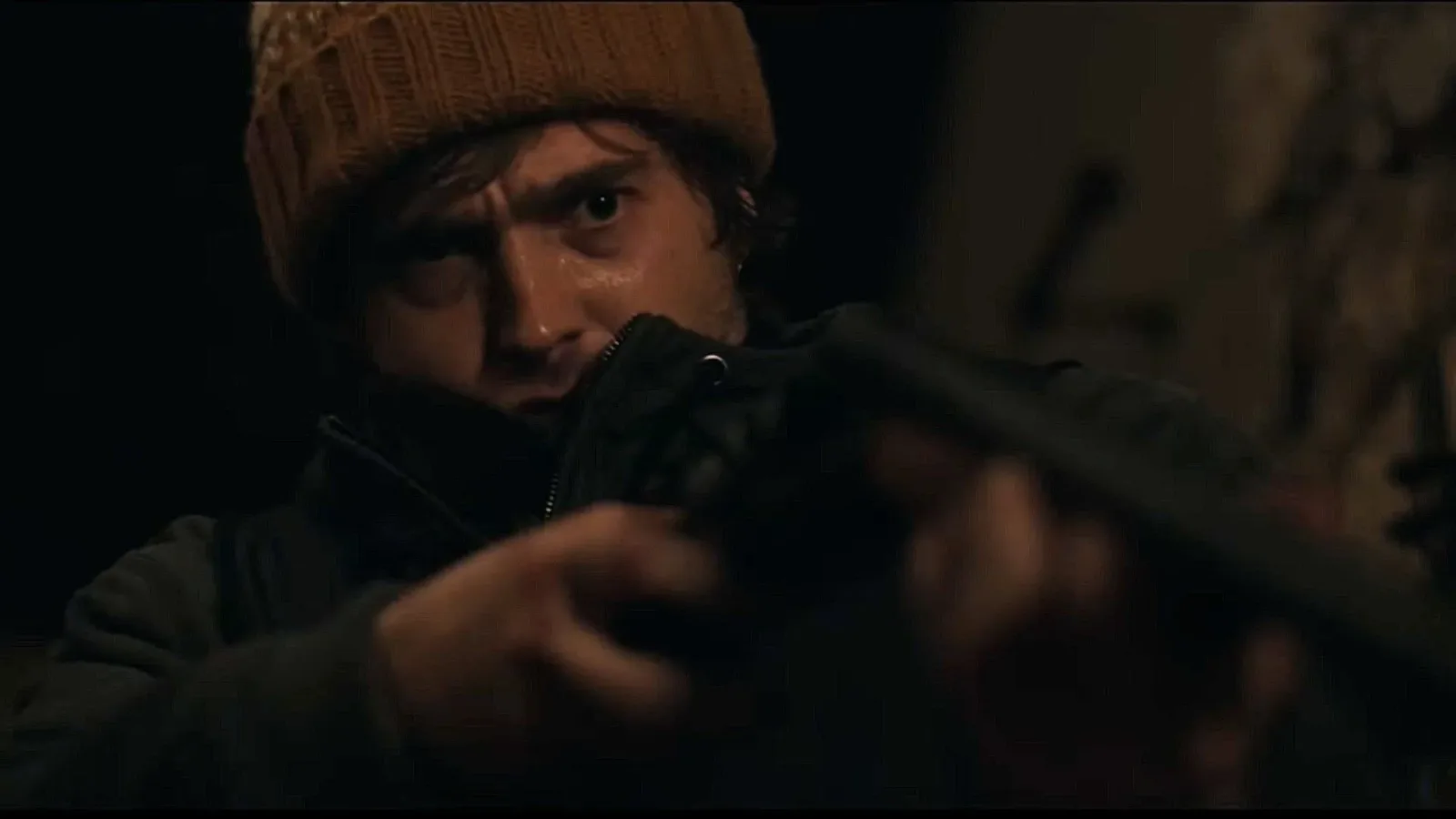
Zach Cregger's forthcoming Resident Evil movie is not being positioned as a direct retelling of one individual Capcom game. Instead, the filmmaker appears to be building a new story inside the franchise's familiar disaster zone while taking inspiration from several very different entries. In comments made during a September 1 Resident Evil Reddit AMA, Cregger explained that he is particularly interested in combining the structure and scope of Resident Evil 4 with the more grounded character approach of Resident Evil 7: Biohazard.
"I like the idea of borrowing the rhythm and scale from [Resident Evil] 4 and using some of the character elements from [Resident Evil] 7," Cregger said, as reported by DiscussingFilm and covered by GamesRadar+.
That description offers one of the clearest indications yet of what audiences can expect from the movie. Cregger has already said that his film is set on the periphery of the events of Resident Evil 2, during Raccoon City's catastrophic outbreak. But the new remarks make clear that the movie's storytelling DNA will reach beyond that one game. Rather than simply recreate Leon Kennedy's police-station survival horror story, Cregger is looking to tell a parallel tale with its own protagonist, locations, escalation, and monster encounters.
A Raccoon City Story Running Alongside Resident Evil 2
Cregger previously characterized the film as a standalone story that unfolds at the same time as the events of Resident Evil 2. During a set visit in Prague, he explained the idea as Raccoon City having "its big night," while the movie follows another crisis occurring in parallel. That framing leaves the filmmakers room to use one of the series' most recognizable settings without requiring the new film to repeat every plot beat associated with the game.
The approach is significant because Resident Evil 2 has an especially established screen history within the broader franchise. Leon, Claire Redfield, the Raccoon Police Department, Umbrella, and the city's collapse are central pieces of series lore. Setting a new story nearby means Cregger can embrace the atmosphere and consequences of that outbreak while allowing a different set of characters to experience it from another angle.
Production designer Tom Hammock confirmed that the city itself was designed with Resident Evil 2 in mind. According to Hammock, the team sought to capture the look associated with that game. This suggests that the film's Raccoon City will be an important connective element even if its narrative is not a one-to-one adaptation of Capcom's 1998 survival-horror classic or its 2019 remake.
At the same time, the creature work is not limited to a single game's imagery. Hammock showed off a creature wall during the Prague visit that included mock-ups for zombified rats, dogs, and other threats. He said that the designs drew substantial inspiration from Resident Evil 4 and Resident Evil 6. Taken together with Cregger's latest comments, the production appears to be selectively pulling from across the game series rather than treating one installment as the sole visual or narrative template.
Resident Evil 7's Ordinary-Protagonist Perspective
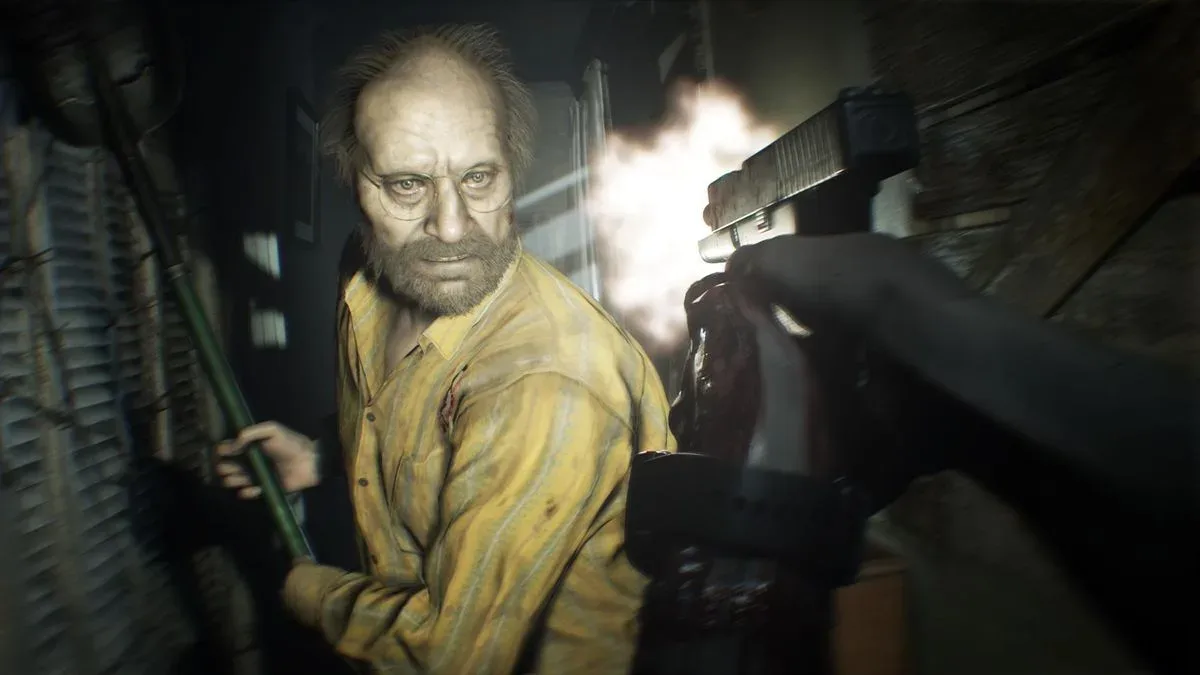
The most immediately understandable influence is Resident Evil 7: Biohazard. That 2017 game represented a major tonal shift for the long-running series. Instead of following highly trained recurring heroes such as Leon Kennedy, it placed players in the shoes of Ethan Winters, a comparatively ordinary man searching for his missing wife in a rural property overtaken by infection and violence.
Cregger highlighted exactly that quality when discussing his movie's lead. "Resident Evil 7 is when Ethan comes into it, and I like that you're just a normal dude going through this horrible situation," he said.
That sensibility is reflected in Bryan, the film's protagonist, who is played by Austin Abrams. Bryan is described as a medical courier simply going about a standard work shift. His routine trip changes drastically when he heads toward Raccoon City and becomes caught in the middle of an all-out apocalypse. He is not introduced as a government agent, elite soldier, or an established survivor with years of experience fighting bioweapons. He is, at least initially, someone expected to react to an unimaginable situation in real time.
That is a potentially useful entry point for a horror movie. The original games have often shifted between vulnerable survival horror and increasingly capable action heroes. Resident Evil 7 deliberately restored uncertainty by centering a character who was not equipped to understand the scale of the danger around him. If Cregger applies that same idea to Bryan, the film could present Raccoon City's downfall through a civilian perspective, making the familiar apocalypse feel newly immediate.
There is also a more specific visual link between Bryan's story and Ethan's. Like Ethan, Bryan ends up on a creepy farm. The setting naturally recalls the decayed rural horror that defined much of Resident Evil 7, although the available details do not establish how directly the film's farm will resemble the game's plantation setting or its infected inhabitants. What is clear is that Cregger is interested in putting an everyday protagonist into an isolated, deeply unsettling environment before or during the larger urban chaos.
Why Resident Evil 4's Rhythm Matters
While Resident Evil 7 seems to be informing the movie's human viewpoint, Resident Evil 4 is influencing its momentum. Cregger described the fourth game as having a rhythm he particularly likes, built around moving from one set piece and location to another. It is an important observation because Resident Evil 4 is famous for its forward drive and its constantly changing environments.
In the game, Leon's mission begins in a village, travels through a vast castle, and eventually reaches an island. Cregger noted that it feels like the game keeps offering more, with each major location functioning almost like another world. That escalating design helps Resident Evil 4 balance tension, combat, spectacle, and discovery over a long adventure.
For a feature film, borrowing that rhythm could mean that Bryan's journey does not remain in one building or one type of horror scenario. The movie could move across multiple corners of Raccoon City and its outskirts, with each destination presenting a fresh danger, a different atmosphere, or a new kind of creature. Cregger did not detail the film's complete structure, so it would be premature to assume exact locations or sequences. Still, his interest in the game's movement from set piece to set piece provides a useful clue about the intended pace.
That could also distinguish the project from an adaptation solely focused on the police station or another singular landmark. Resident Evil 2 is the film's chronological backdrop, but Resident Evil 4 may be the blueprint for how the audience travels through its story. The result could be a movie that begins with a recognizable outbreak setting and then keeps expanding into stranger, more dangerous territory.
A Selective Adaptation Rather Than a Checklist
video game adaptations frequently face pressure to reproduce beloved characters, iconic scenes, and exact plot points. Cregger's stated plan points toward a different method: use the games as a library of moods, structures, settings, and creature ideas, then build an original narrative within that world. The filmmaker is not hiding those inspirations. He has openly connected the movie to Resident Evil 2, Resident Evil 4, and Resident Evil 7, while Hammock has also cited Resident Evil 4 and Resident Evil 6 in relation to creature design.
That makes the project a hybrid of recognizable franchise elements. Raccoon City provides the familiar foundation. Bryan's vulnerability echoes Ethan Winters. The anticipated progression between locations follows the kind of mounting adventure associated with Leon's journey in Resident Evil 4. Meanwhile, the creature work is drawing inspiration from more than one era of the series.
Whether that mix satisfies fans will ultimately depend on execution. The games vary wildly in tone, from claustrophobic survival horror to large-scale action, and blending their strongest elements is a challenging goal. But Cregger's comments suggest he understands those differences rather than treating the franchise as one uniform thing. He is specifically identifying the qualities he wants to borrow: the ordinary-person terror of Resident Evil 7 and the expansive, constantly evolving journey of Resident Evil 4.
Resident Evil is scheduled to arrive in theaters on September 18. Until more is revealed, Cregger's description offers the best outline of the film's intended identity: a separate story during Raccoon City's worst night, seen through the eyes of a normal man, but paced with the escalating scale of one of the series' most celebrated action-horror games.
More gaming news on GamersExtra
- Nodusfall Hands-On: HoYoverse's Dark Co-op Action Game Has Nightreign Energy, but Its Own Role to Play
- Resident Evil Director Zach Cregger Says Village's Baby Monster Triggered a VR Panic Attack
- PlayStation State of Play September 2026: Start Time, Final Fantasy 7 Revelation, and State of Play Japan Details
Community
Discussion
Start the conversation.
No comments have been posted yet.