

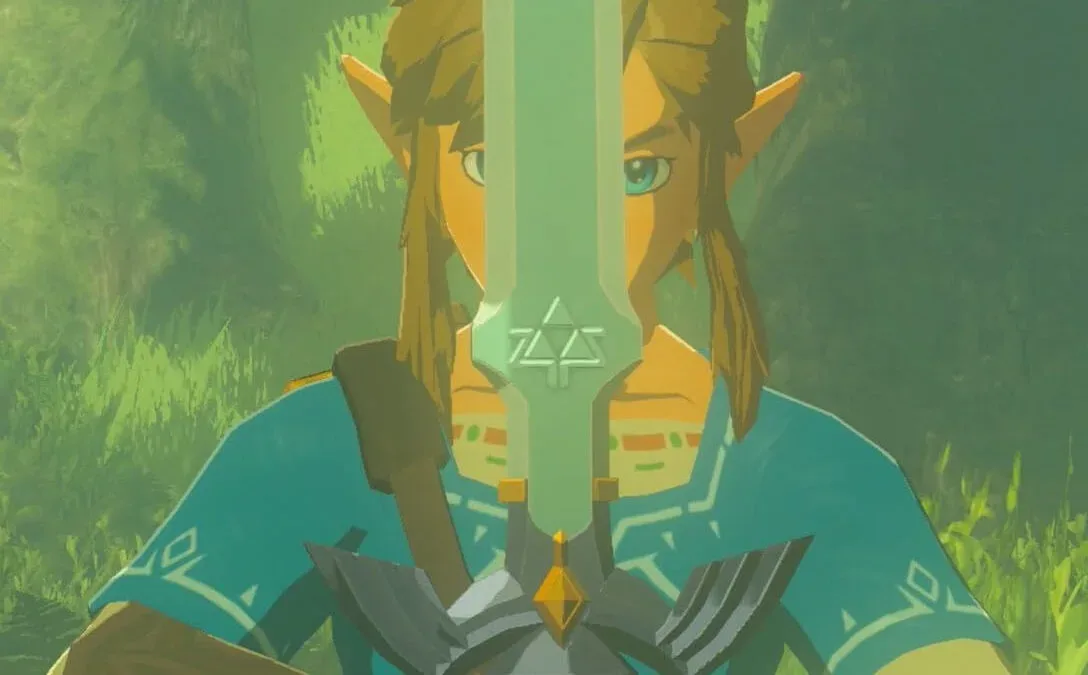
Eiji Aonuma, the longtime producer and creative leader behind The Legend of Zelda, has been named a Knight of the Order of Arts and Letters by France's Ministry of Culture. The distinction, presented during a ceremony in Paris this week, recognizes Aonuma's decades of work on one of gaming's most enduring adventure series. It is an honor with a broad cultural remit, awarded to artists and figures whose work has made a notable contribution to the arts and the spread of culture in France and around the world.
For Nintendo fans, Aonuma's name is inseparable from Hyrule. He joined Nintendo in 1988 and went on to become one of the central figures guiding Link's adventures through multiple eras of hardware, changing player expectations of exploration, puzzle-solving, storytelling, and freedom along the way. His influence stretches from the Nintendo 64 generation to the open-air design of The Legend of Zelda: Breath of the Wild and The Legend of Zelda: Tears of the Kingdom.
France's Minister of Culture, Catherine Pégard, described Aonuma as a storyteller who preserves room for players to use their own imagination. That observation gets to the heart of why Zelda has remained so distinctive across nearly four decades. The series has always featured recognizable pieces--Link, Zelda, Ganon, dungeons, tools, music, and a cyclical struggle against evil--but its best entries invite players to make their own discoveries within that framework.
Embedded X/Twitter post
Aonuma accepted the medal in Paris and delivered remarks in French, encouraging fans to continue the adventure together. It was a fitting gesture for a ceremony that celebrated a body of work with a reach far beyond Japan, Nintendo, or any single console generation.
For useful background on this topic, read Peak Reaches Consoles as indie games Bring Hockey, Horror and Heists.
A career intertwined with Hyrule's evolution
Although Aonuma started at Nintendo in the late 1980s, his defining connection to the Zelda franchise took shape during development of The Legend of Zelda: Ocarina of Time. Serving as a director on the landmark Nintendo 64 release cemented his role in the series' future. Ocarina of Time remains one of the most influential games ever made, in large part because it translated the series' sense of discovery into 3D while establishing approaches to camera control, lock-on combat, environmental puzzle design, and interconnected progression that countless games would later adopt.
From there, Aonuma became an integral contributor to virtually every major Zelda installment, as well as many related projects. His roles have varied across the years, but he has most often worked as producer: a position that can encompass high-level creative direction, development oversight, communication among teams, and the difficult task of ensuring an enormous project remains true to its identity while still trying something new.
That challenge has repeatedly defined Zelda. The Wind Waker embraced a striking, expressive cel-shaded visual style at a time when many expected a more realistic successor to Ocarina of Time. Twilight Princess moved in another direction, emphasizing a more grounded atmosphere and a sweeping scale. Skyward Sword used motion controls as a foundation for its swordplay and world structure. Each game carried familiar Zelda DNA, but none simply repeated the preceding adventure.
The franchise's modern transformation may be its most visible example of Aonuma's stewardship. Breath of the Wild rethought traditional Zelda conventions by reducing the importance of a fixed dungeon-by-dungeon sequence and placing experimentation at the center of the experience. Players could climb mountains, improvise with physics, combine systems, and pursue objectives in an order shaped by their own curiosity. Tears of the Kingdom expanded that philosophy even further through its construction and traversal mechanics, giving players tools that produced an extraordinary range of self-directed solutions.
Those games did not abandon the series' older ideals. They reframed them. Exploration, secrets, strange devices, looming ruins, and the satisfaction of realizing how a space works have always been essential to Zelda. The newer games simply created more opportunities for players to reach those moments in ways the designers may not have specifically predicted.
An arts honor that crosses borders and disciplines
The Order of Arts and Letters is not limited to French citizens. Its recipients can come from many countries and disciplines, reflecting the Ministry of Culture's interest in recognizing international cultural influence. Aonuma is part of a 2026 class that also includes jazz musician Kenny Garrett, actor Richa Chadha, and manga creator Rumiko Takahashi, best known for works including Ranma ½.
The variety of that group is meaningful. Games are sometimes still discussed as though they need to argue for their place alongside film, literature, music, visual art, and performance. Yet a Zelda game is built through the meeting of all of those fields. Its worlds depend on art direction and animation. Its emotional peaks depend on music and sound. Its characters and mythology rely on writing, visual design, and performance. Its most memorable moments arise from interactive systems that make the player an active participant rather than a passive observer.
Aonuma's recognition is therefore not merely a tribute to commercial success or a famous franchise. It is an acknowledgement of game development as a cultural practice--and of the specific creative contribution made by a producer who has helped keep one major series inventive through radical shifts in technology and audience expectations.
Video game creators have appeared among past recipients, even if developers remain less common on the list than figures from other arts. Shigeru Miyamoto, Aonuma's fellow Nintendo veteran and the creator most closely associated with Mario and the original Zelda, received the same title in 2006. Peter Molyneux was recognized the following year. The Ministry has also signaled a growing willingness to honor game development as a collective endeavor: earlier this year, it announced plans to award the distinction to Clair Obscur: Expedition 33 developer Sandfall Interactive. That recognition is set to mark the first time an entire game studio shares the ribbon.
The value of leaving room for players
Pégard's emphasis on imagination is especially apt for Aonuma's work because Zelda's appeal is rarely just about reaching an ending. The series gives players spaces to interpret and inhabit. A distant landmark becomes a personal destination. A puzzle becomes a small story of frustration, observation, and eventual revelation. A piece of equipment can be remembered not because it was assigned, but because it changed how a player saw the world.
That kind of design creates a different relationship between author and audience. Developers construct rules, locations, mysteries, and possibilities, but the player supplies the route, the rhythm, and often the anecdote that lasts longest. One person remembers finding a hidden cave after following a suspicious sound. Another remembers barely surviving a boss with a clever item choice. Someone else recalls stepping into Hyrule Field, sailing across an endless ocean, or emerging from a shrine onto a vast landscape for the first time.
Across Aonuma's tenure, Zelda has offered many versions of that promise. It can be a tightly arranged adventure where every tool unlocks a new idea. It can be a sea voyage between scattered islands. It can be a journey through time, twilight, sky islands, underground caverns, or an enormous wilderness. The settings and structures change, but the invitation remains consistent: look closer, try something, and see where it leads.
A landmark moment for one of gaming's key creative figures
The French Ministry of Culture had announced Aonuma's knighthood in 2023, with the presentation ceremony taking place this past week. The gap between announcement and ceremony does little to diminish the significance of the occasion. Rather, it underlines how long the career being recognized has been--and how many Zelda generations have passed under Aonuma's creative guidance.
For players, the honor is also a reminder that games are made by people whose influence can extend far beyond the screen. Aonuma's work has helped define how millions of people understand fantasy adventure games. It has inspired designers, artists, musicians, and storytellers, while giving players of different ages their own paths through the same legendary kingdom.
Link may be the hero who repeatedly rises to face darkness in Zelda's fiction, but this ceremony placed deserved attention on one of the people who has spent years shaping the worlds that make those journeys possible. As a Knight of the Order of Arts and Letters, Eiji Aonuma now joins a wider international community of artists recognized for carrying imagination across cultures--and for helping audiences keep the adventure going.
Community
Discussion
Start the conversation.
No comments have been posted yet.