

Creative's Pebble Plus has been around since 2019, yet it remains one of the most persuasive upgrades available to a budget PC setup in 2026. The reason is straightforward: for roughly $30 / £30, it supplies two compact desktop satellites and a dedicated subwoofer. That is a complete 2.1 arrangement at a price where many alternatives offer only a basic pair of small speakers, often without the low-end presence needed to make music, games, and movies sound genuinely rounded.
There are inevitable compromises at this price, and the most obvious one is impossible to ignore. The Pebble Plus is a wired system in every sense. Its cables are plentiful, permanently attached, and awkward to disguise. Bluetooth is absent, USB audio is absent, and the only audio connection is a 3.5mm input. But for a permanent desktop installation where cost, compact dimensions, and sound quality matter more than a pristine cable-free aesthetic, this little system remains a remarkable bargain.
A compact design with smart acoustic priorities
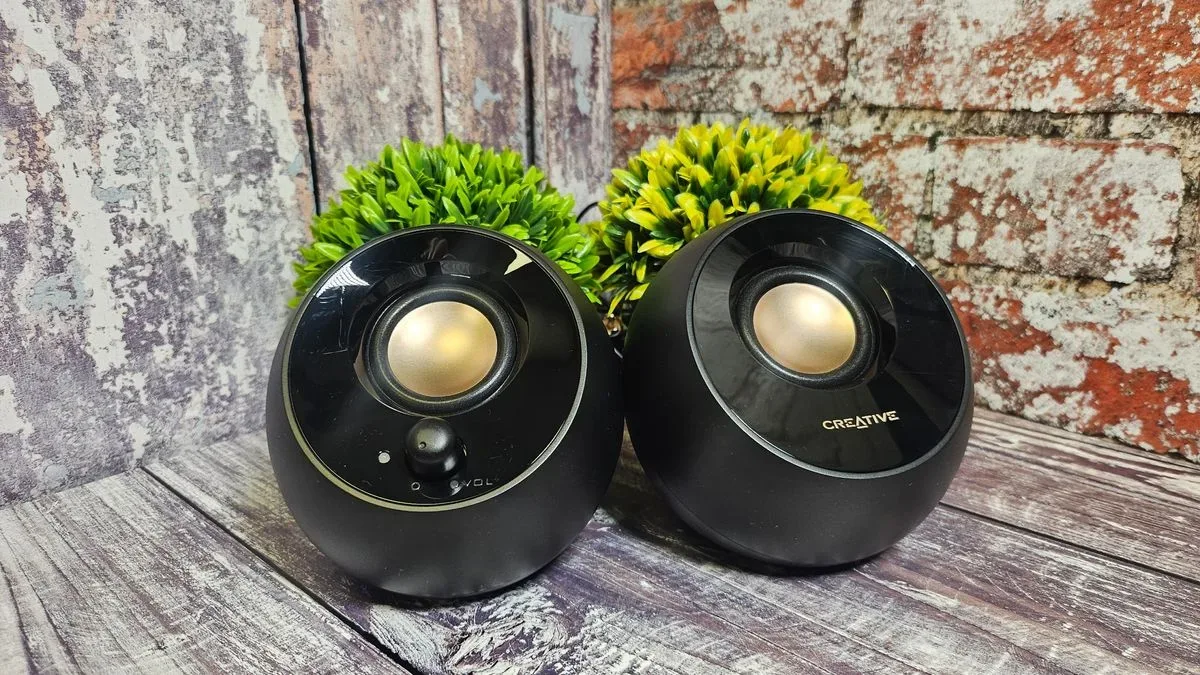
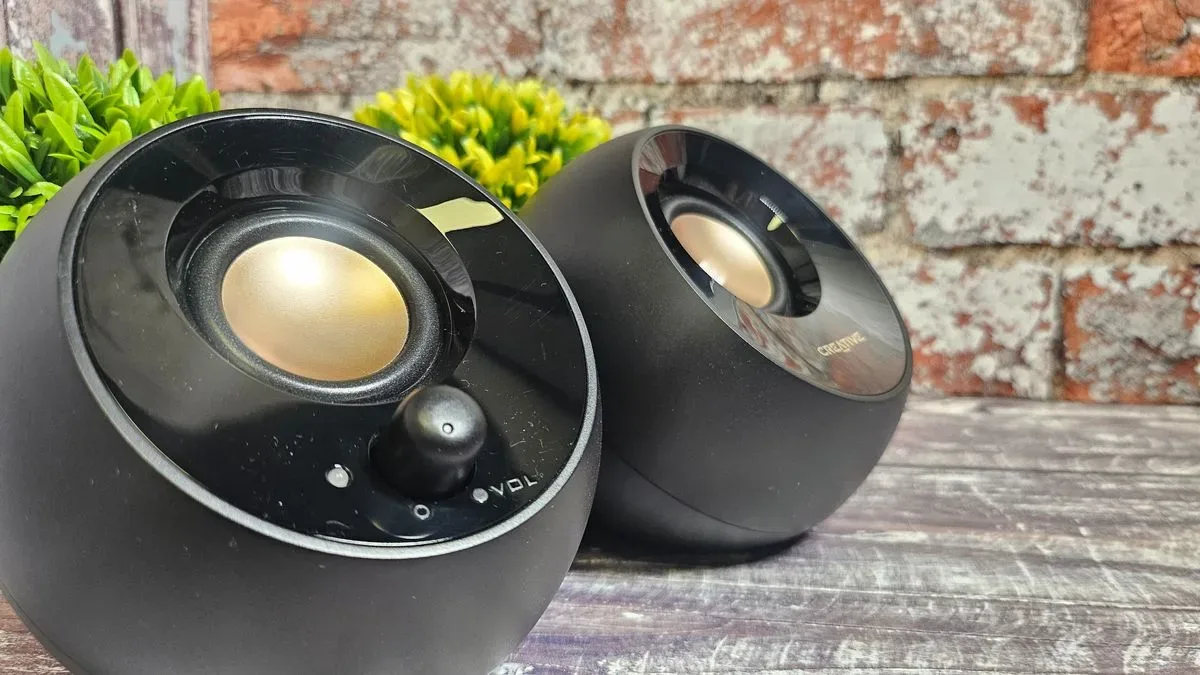
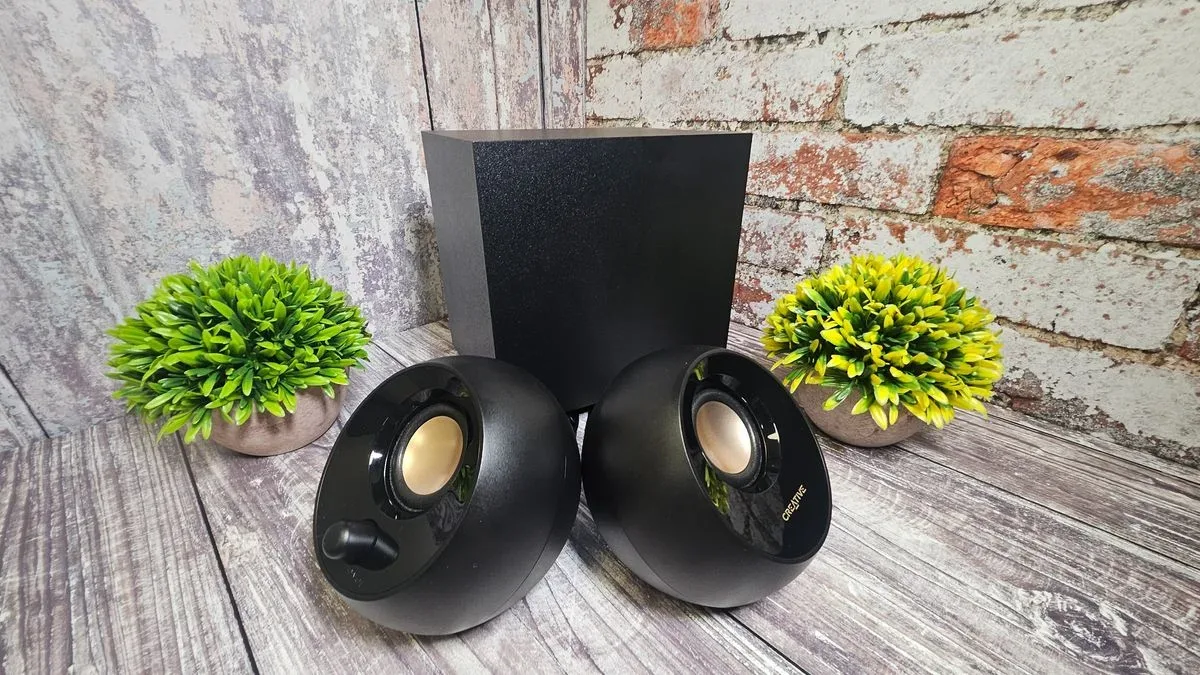
The Pebble Plus looks more thoughtful than its cost suggests. The two spherical satellite speakers are finished in a restrained black-and-gold style that can fit into most gaming, work, or mixed-use desk setups without demanding attention. There is only one color treatment, but the minimalist presentation is clean and sensible. Keeping the options limited has likely helped Creative protect the aggressive price.
More importantly, the satellites are angled upward at 45 degrees. That detail is not merely decorative. Rather than firing sound straight ahead, the speakers aim more directly toward the listener's ears, improving perceived clarity at a desk. It also helps the small drivers perform efficiently without needing excessive volume. For near-field listening--where the user is sitting relatively close to the display and speakers--that design choice makes particular sense.
For useful background on this topic, read Nvidia RTX 6080 Rumor Points to 2028 as GPU Costs and AI Demand Reshape the Market.
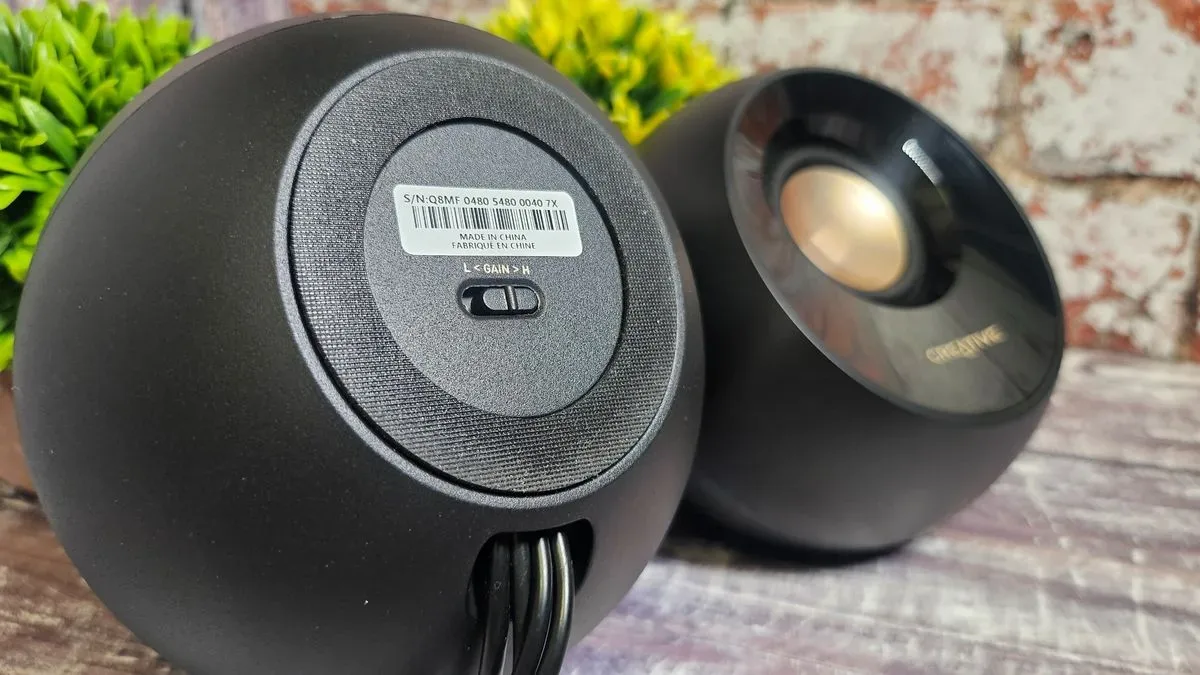
The powered right-hand speaker serves as the system's control center. A single dial handles both power and volume, an appealingly straightforward solution in an era when inexpensive peripherals can be overloaded with buttons, touch surfaces, and unnecessary control schemes. A low/high gain switch sits beneath it. The result is simple to operate: turn the dial, set the preferred gain level, and get on with the game, work, or music.
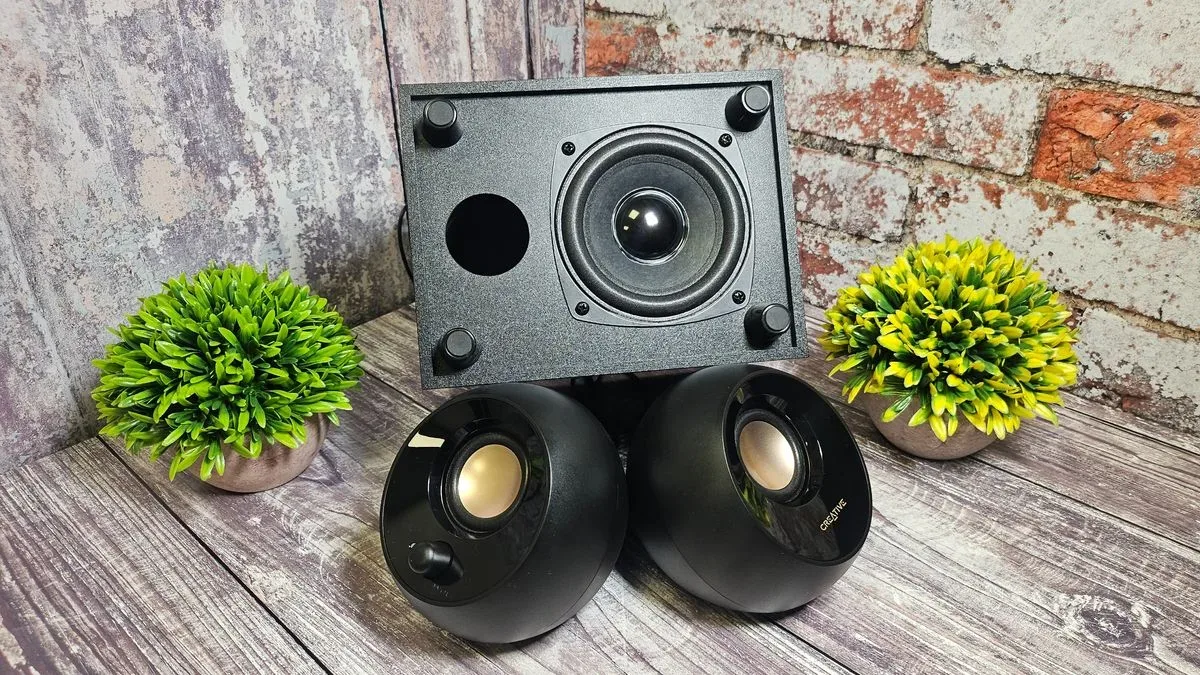
The separate down-firing subwoofer is tiny and notably light, especially next to what people may expect from a traditional sub. Its four-inch driver does not suggest room-shaking bass on appearance alone, and buyers should not expect a cinema-scale low end from a $30 desktop system. Still, it proves more worthwhile than its size initially implies. The benefit is not overwhelming rumble; it is the extra body and depth that makes the full setup sound more complete than the satellites alone.
The cable problem is real
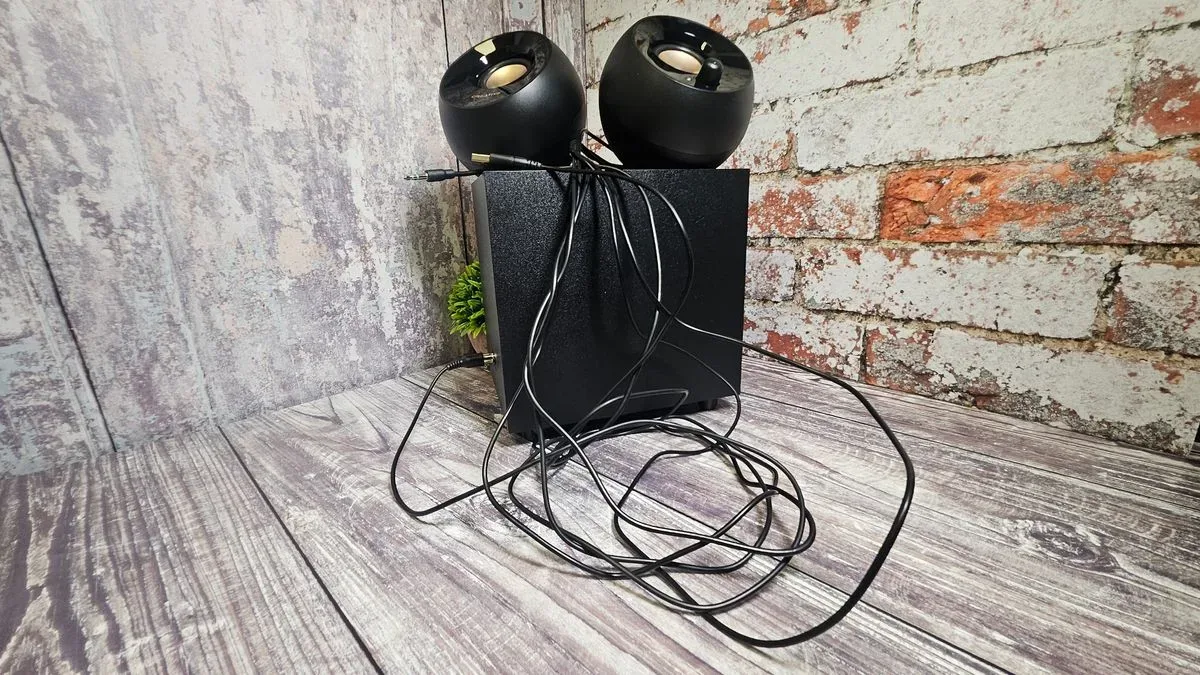
For all its design strengths, the Pebble Plus has one major flaw: cable management is genuinely poor. Every important lead is hardwired into the rear of the right satellite. That includes the connection to the subwoofer, the link to the left satellite, the USB power lead, and the 3.5mm audio cable. The result can quickly become a bundle of wires spreading across the desktop, behind a monitor, and toward the PC or power source.
This is more than a minor aesthetic complaint. It can be inconvenient when rearranging a workstation, moving a laptop between rooms, or trying to keep a compact desk uncluttered. In temporary spaces, the dangling cables can even become a tripping risk. The system itself is portable enough to fit easily into luggage, which is useful for travel or a temporary editing and gaming setup, but carrying it does not make the cable layout any less cumbersome once it is unpacked.
Many speaker systems still require wired satellite and subwoofer connections, so the Pebble Plus is not unusual in that respect. The frustration comes from where the connections terminate. A design that places more of the routing at the subwoofer can keep the desk area clearer. Here, the right satellite has to handle everything, placing a cable cluster right where users are likely to see it.
This setup is best suited to a fixed computer arrangement: a desktop tower, or a laptop used with a hub and a reliable place to hide cables. Connect it once, route the wires as carefully as possible, and leave it alone. It is much less attractive for anyone who frequently changes devices or values a minimalist desk above all else. Those users may be better served by a simple soundbar, Bluetooth speakers, or a wireless-oriented pair that skips the subwoofer altogether.
Features favor reliability over convenience
The Pebble Plus uses two-inch mid-range satellite drivers paired with a down-firing four-inch subwoofer. Together, Creative rates the system for a 50Hz to 20kHz frequency response. Each satellite provides two watts, while the subwoofer supplies four watts of bass output. When the system receives more power from a wall socket rather than standard USB 2.0 power, it can reach 8W RMS for a louder and more forceful presentation.
The speaker arrangement is deliberately uncomplicated. Audio enters through the hardwired 3.5mm auxiliary connection, while USB provides power unless a wall outlet is used. This means some PCs may need two occupied connections: one USB port for power and a 3.5mm jack for audio. That could be difficult for modern ultra-thin laptops that have abandoned the headphone jack, possibly requiring an adapter or another audio solution.
The lack of Bluetooth and USB audio feels dated in 2026, particularly because a newer Pebble Plus model with basic wireless support could reduce the number of cables without needing premium specifications. Yet there is another side to this older approach. There is no pairing process, no menu navigation, no wireless delay, and no intermittent Bluetooth behavior to troubleshoot. Plug the system in and it works. That directness may be especially welcome for users who want dependable desktop sound without managing wireless connections.
Surprisingly balanced sound for the money
At medium volumes, the Pebble Plus produces a lively and pleasingly balanced sound profile. The satellites handle vocals, strings, brass, and higher-frequency details with more clarity than their size suggests, while the subwoofer fills in the lower ranges enough to prevent the presentation from sounding thin. Game soundtracks, orchestral music, movie scores, and broadly mixed playlists benefit most from this balance.
The system is particularly effective in the near-field environment it was designed for. A desk setup does not need huge output to feel immersive, and the Pebble Plus can add welcome scale to games, streamed shows, films, and background music without requiring headphones for every session. It is an easy upgrade over the weak speakers integrated into most monitors, and it provides a more natural, room-filling alternative when a headset is not necessary.
The subwoofer deserves credit for its subtle contribution. It does not transform the Pebble Plus into a bass monster, nor does it deliver the chest-thumping response associated with much larger systems. Instead, it adds depth that becomes obvious when it is removed. The satellites remain competent by themselves, but the full 2.1 setup sounds more rounded, richer, and more satisfying. For buyers shopping at this price, that extra low-end support is a meaningful advantage.
There is a limit. Push volume too high, particularly with bass-heavy R&B, hip-hop, or drum-and-bass tracks, and distortion starts to emerge. Low frequencies can lose composure when the system is asked for more than its small drivers can comfortably provide. Gamers who crave explosive, high-volume bass and music listeners who prioritize powerful sub-bass should set their expectations accordingly. This is a budget desktop system, not a replacement for a large soundbar package, studio monitors, or a serious hi-fi setup.
Within sensible volume levels, though, the balance is impressive. The Pebble Plus avoids sounding overly harsh or hollow, and the extra low-end weight helps games and screen entertainment feel more complete. For casual listening, desk-based work, and the occasional speaker-led gaming session, it offers a crisp, capable sound that greatly outperforms its price category.
Who should buy the Creative Pebble Plus?
The ideal buyer is building a PC desk setup on a strict budget, has less than $50 to spend, and specifically wants the fuller range that comes from a separate subwoofer. It is also a strong fit for headset-focused players who still want speakers available for relaxed single-player games, videos, music during work, or sharing a film without wearing headphones.
Be certain to choose the Pebble Plus rather than the standard Creative Pebble, as the non-Plus model does not include the subwoofer. That extra unit is the core reason this package stands out. Creative's own Pebble v3 offers USB-C and Bluetooth around a similar price, but gives up the subwoofer. The newer Pebble X Plus brings more modern features, yet costs roughly three times as much.
Buyers who need Bluetooth, USB audio, clean cable routing, or high-volume bass should look elsewhere. But if the desk can accommodate the wires and the goal is the best possible 2.1 sound at about $30 / £30, the Creative Pebble Plus is still exceptionally difficult to surpass.
Final takeaway
The Creative Pebble Plus survives in 2026 because it gets the fundamentals right. It is compact, inexpensive, easy to control, and far more sonically complete than a budget speaker system has any right to be. Its aging connectivity and unruly fixed wiring are substantial drawbacks, not footnotes. Even so, the sound quality, useful compact subwoofer, and sheer value make those compromises easier to accept in a permanent setup. For budget PC audio with a real 2.1 presentation, this remains the system to beat.

Community
Discussion
Start the conversation.
No comments have been posted yet.