

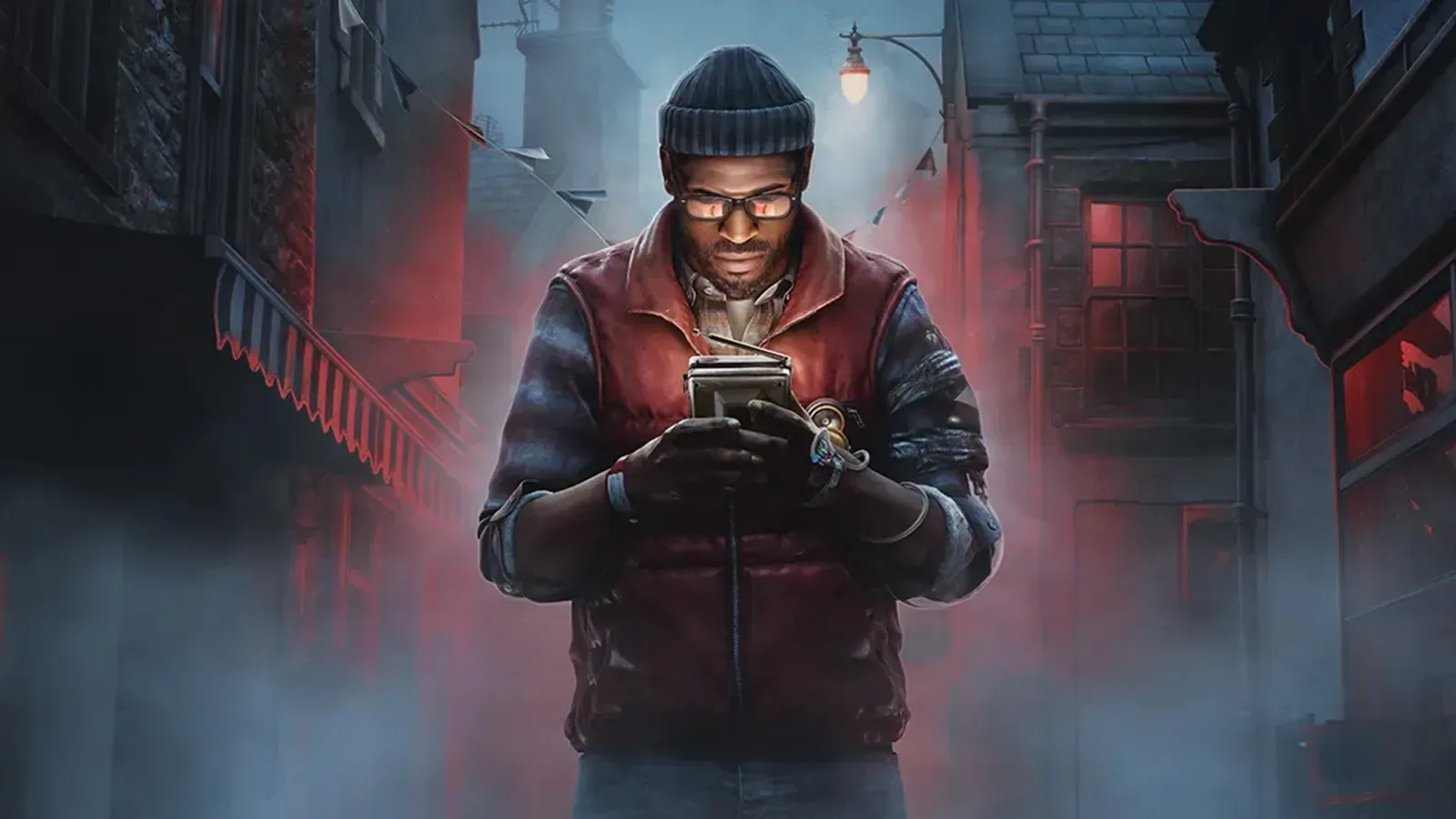
Silent Hill: Townfall arrives on PlayStation 5 as another confident step in the series' modern revival. Set in 1996, it follows Simon Ordell through St. Amelia, a Scottish town swallowed by fog, decay, and manifestations of deeply personal suffering. The location may be new, but its emotional terrain is unmistakable: isolation is suffocating, reality is unreliable, and monsters are never merely monsters.
The result is an affecting horror game that understands the qualities that have made Silent Hill endure. Townfall is interested in trauma, repression, loneliness, and the painful work of facing what has been buried. More importantly, it expresses those ideas through a first-person viewpoint that makes every corridor, closet, and fog-covered street feel dangerously close. While a handful of uneven stealth mechanics interrupt that carefully built tension, this is a memorable descent into psychological horror with a distinct identity of its own.
A First-Person View That Changes the Mood
Silent Hill has experimented with first-person presentation in the past, but Townfall is the first entry to fully build its experience around it. That decision is not simply a cosmetic change. Seeing St. Amelia through Simon's eyes makes the town more immediate and overbearing. There is less distance between the player and a darkened doorway, an abandoned room, or a shape moving somewhere in the mist. The perspective turns familiar horror-game spaces into places that feel hostile on a more personal scale.
It also gives Townfall a different kind of vulnerability from the over-the-shoulder perspective often associated with modern survival horror. Simon does not feel like a capable action hero surveying a danger zone. He feels exposed, limited, and unsure. The game repeatedly makes the player consider what is just beyond sight, whether it is safe to emerge from cover, and how much of the environment can be observed without becoming visible in return.
For useful background on this topic, read Destiny 2 Fans Celebrate as Bungie Reverses Course on Vaulted Content.
The peeking mechanic is central to this effect. It is integrated with enough care that leaning around an obstruction or exposing only a small portion of Simon's body feels like a believable act of self-preservation. Peeking is not a decorative animation; it supports the game's tension by making caution physical. Watching a monster from partial cover, then pulling back into safety, has the uneasy rhythm of someone trying to stay calm while panic threatens to take over.
St. Amelia Is a Convincing New Nightmare
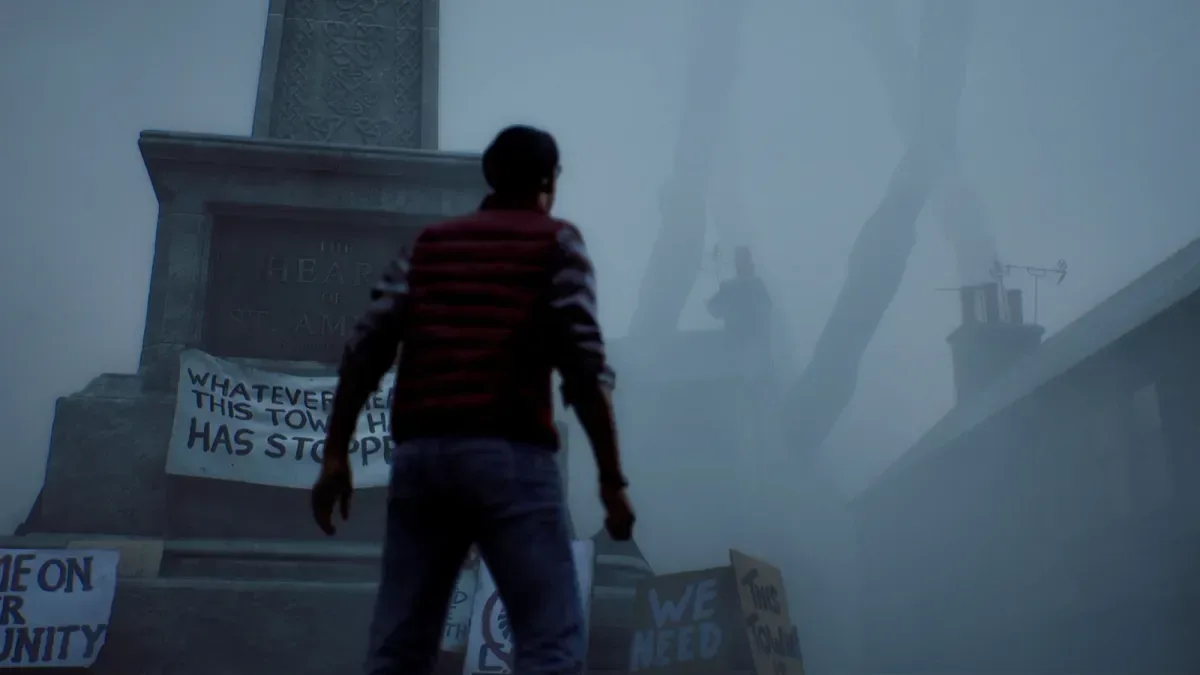
Townfall succeeds because St. Amelia feels oppressive long before its story reveals much about the people trapped within it. The Scottish setting provides a fresh location for the franchise without sacrificing the qualities that define Silent Hill's best spaces. Its interiors are tight, cluttered, and full of small details that encourage close inspection. Outdoors, the fog is so dense and tangible that it seems to have weight. The town does not merely contain the horror; it appears to participate in it.
This visual work is particularly important in a first-person game, where environmental detail is constantly placed under scrutiny. Claustrophobic rooms invite a slower, more nervous pace, while exterior spaces offer only the illusion of openness. Visibility is compromised, routes are uncertain, and the fog turns even ordinary movement into an act of apprehension. St. Amelia is not Silent Hill itself, but it carries the same sense that the landscape has been shaped by emotional damage.
That strong atmosphere supports a story that is structurally familiar in a welcome way. Simon and the other figures caught in St. Amelia are dealing with internal demons that have taken terrifying external form. The exact nature of the town's reality, its monsters, and the forces directing events is not cleanly explained. What remains clear is the emotional truth behind the nightmare: something is badly wrong, the characters are being made to face it, and escape requires moving forward rather than finding an easy answer.
Clearer Character Drama, Without Losing the Unease
Townfall makes an interesting narrative choice by being more transparent than many earlier Silent Hill stories about the personal pain driving its cast. The individual sources of distress are less obscured, and there are fewer layers of ambiguity around why people feel as they do. That approach slightly reduces the dreamlike, elusive quality that has often made the series so haunting. Part of Silent Hill's appeal has always been the discomfort of not knowing whether a scene is literal, symbolic, remembered, imagined, or all of those at once.
Yet clarity is not necessarily a weakness here. Mystery can be powerful, but withholding information for its own sake can become exhausting. Townfall finds a worthwhile balance. It preserves uncertainty around the town and its supernatural logic while allowing the emotional stakes to land with greater directness. The game does not abandon ambiguity; it simply chooses to make the human suffering beneath the surrealism easier to recognize.
That balance helps the experience feel emotionally grounded. The horror is still strange and unsettling, but the characters' anguish is not hidden behind so many riddles that it loses impact. As a result, Townfall can be unsettling in both the immediate sense of fearing what might be around the next corner and the more lasting sense of recognizing the emotional scars those horrors represent.
Survival Means Avoidance, Not Firepower
Combat is deliberately de-emphasized. Ammunition is extremely limited, and melee weapons do not offer reliable long-term security because they deteriorate quickly. This is among the most restrained approaches to weaponry in a Silent Hill game that includes guns at all. The design clearly wants Simon to survive through caution, observation, hiding, and movement rather than through force.
To support that focus, Simon carries an era-appropriate portable television that can be used to track monsters through static. It is one of Townfall's best ideas. The device lets players monitor nearby threats while keeping the unease intact. Rather than making enemies harmlessly visible on a clean tactical display, the television retains the unsettling texture of distorted signals and uncertain images. It grants useful information, but never enough comfort to eliminate the danger.
In its strongest moments, the television and peeking systems make stealth feel intimate and nerve-racking. There is a satisfying dread in studying a creature's position, waiting behind cover, and trying to slip through an area without drawing attention. Townfall effectively transforms limited knowledge into suspense. The player often knows enough to be afraid, but not enough to feel fully prepared.
Stealth That Does Not Always Play Fair
Unfortunately, Townfall's stealth does not consistently communicate the rules governing enemy awareness. At times, crouching, moving slowly, and using cover appear sufficient to avoid detection. At others, enemies seem to notice Simon despite similar caution. This inconsistency makes it difficult to tell whether failure came from a poor decision, an unreadable line of sight, unexpected sound detection, or a system behaving unpredictably.
That problem matters because the game's combat limitations leave few alternatives. When stealth is the primary route through an encounter, players need to understand why they were seen and what can be done differently. Instead, uncertainty can lead to repeated save reloads. Those retries are more than a minor annoyance: they can fracture the atmosphere that Townfall works so hard to create. Fear gives way to troubleshooting, and the oppressive mood can be replaced by irritation.
One especially frustrating type of encounter involves an invincible enemy that kills Simon instantly if it catches him. Tracking such a threat on the television while hiding can initially be tense, but that tension fades if the creature does not seem to move on no matter how long the player waits. A sequence intended to create helpless dread can become a prolonged stalemate. In those stretches, Townfall is less scary than it is tedious.
Who Should Visit St. Amelia?
Townfall is best suited to players who value psychological horror, oppressive atmosphere, and narrative themes over action-heavy survival mechanics. Fans who want a game built around conserving resources, avoiding danger, and interpreting strange symbolism will find much to appreciate. Its first-person perspective also makes it a particularly strong choice for those looking for a more immediate and claustrophobic form of Silent Hill horror.
Players who need stealth systems to be precise and consistently readable should approach with some patience. The game's biggest shortcomings arise not from its premise or presentation, but from moments when its enemy behavior is difficult to parse. Anyone expecting frequent combat or a power fantasy will likewise be better served elsewhere. Townfall is designed around fragility, restraint, and discomfort.
Final Takeaway
Silent Hill: Townfall proves that the series can continue to explore new forms without losing sight of its defining concerns. St. Amelia is an imposing and beautifully realized setting, the first-person viewpoint gives the horror a sharper edge, and Simon's journey maintains the franchise's essential preoccupation with trauma made manifest. Its more direct storytelling sacrifices a little of the series' most abstract mystery, but gains emotional clarity in return.
The inconsistent stealth rules and occasional frustrating pursuit encounters keep Townfall from being as seamless as its atmosphere deserves. Still, those flaws do not erase the power of its strongest passages. This is a disturbing, intimate, and often compelling Silent Hill experience--one that understands that the most frightening places are often built from the memories people cannot escape.
Community
Discussion
Start the conversation.
No comments have been posted yet.