

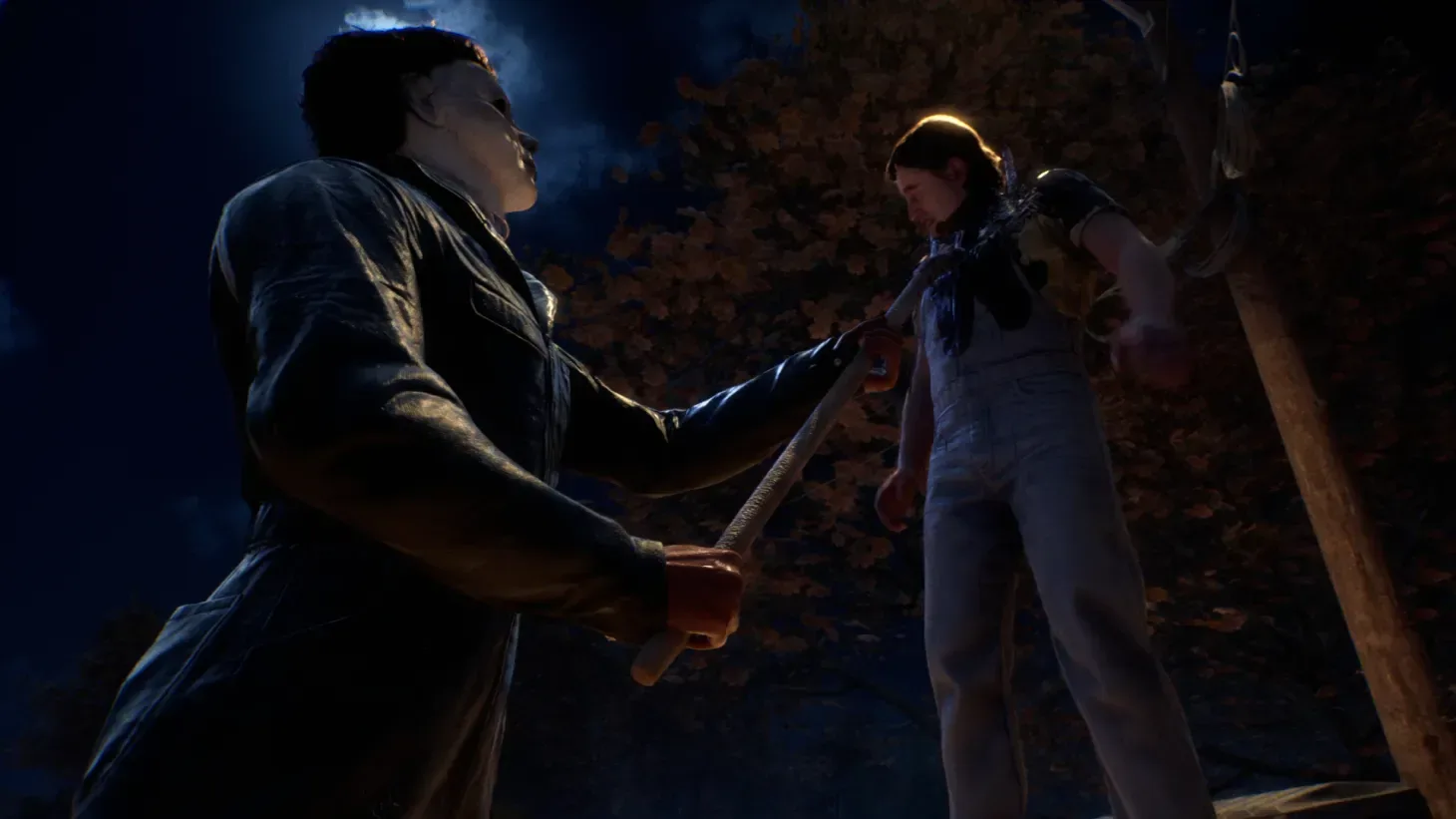
Halloween is at its best when a carefully planned escape collapses into panic. A group of Civilians might be combing through suburban homes for car parts, weapons, and keys one second, then scrambling through backyards after Michael Myers emerges from the darkness the next. IllFonic's PlayStation 5 asymmetrical horror game understands that the Halloween license needs more than recognizable masks and familiar music cues. It needs the unnerving feeling that danger could be waiting just beyond a porch light, along with enough multiplayer unpredictability to make every trip through Haddonfield feel different.
The result is a game with rough edges, a slight single-player offering, and some conspicuous quality-of-life problems. Still, when a match is underway, those frustrations can fade behind the immediate excitement of survival, pursuit, rescue, and ridiculous player-driven improvisation. Halloween delivers both the dread expected from Michael Myers and the gleeful nonsense that can make online horror games worth returning to for dozens of matches.
Opening Verdict: Multiplayer Is the Main Attraction
Anyone considering Halloween primarily for a substantial solo adaptation of John Carpenter's 1978 film should keep expectations in check. The campaign lasts only a couple of hours and functions largely as an extended introduction to playing Michael. It can be replayed to seek out Dr. Loomis audio logs, tackle challenges, and earn cosmetic rewards, but it is not a robust story mode with the scale or depth of a full single-player horror game.
That said, it is not an empty inclusion. The campaign is an attentive, detailed love letter to the original film's setting, mood, and mythology. It establishes the tone of Haddonfield well and gives players a useful chance to understand the killer's basic toolkit before facing real opponents. It simply should be viewed as a prelude to the real game rather than the package's defining feature.
For useful background on this topic, read Marvel's Wolverine Review: Relentless Momentum.
That real game is asymmetrical multiplayer: several Civilians attempt to protect residents and escape, while one player controls Michael Myers. Matches start quickly and can run for around 20 minutes, depending on how effectively the Civilians coordinate and how mercilessly Michael hunts. The design has a confident grasp on what makes the genre work. It creates pressure without making every encounter feel predetermined, and it leaves ample space for players to invent their own strategies, disasters, and stories.
Saving Haddonfield Means Taking Risks
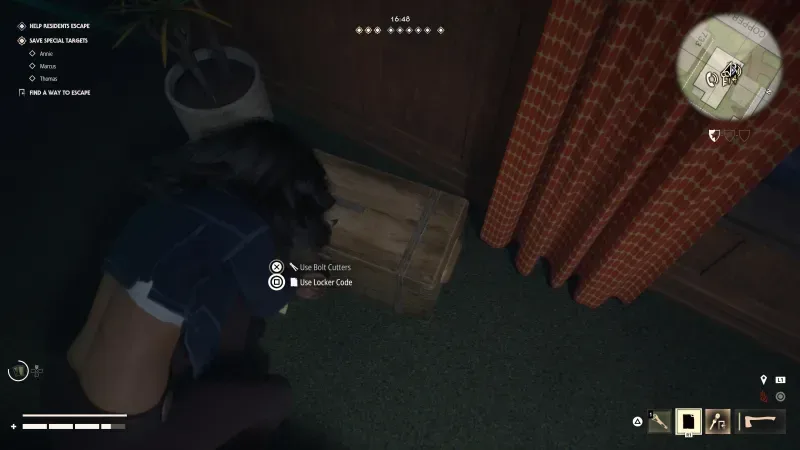
Civilians are not merely trying to survive long enough to reach an exit. Their most valuable objective is locating and rescuing three designated target residents scattered across each map. These NPCs carry special importance for both sides, and prioritizing them yields the most experience. This is a smart wrinkle because it repeatedly draws Michael and the Civilians toward the same areas. Rather than allowing survivors to endlessly hide or loot in isolation, the structure generates the confrontations that make a slasher game exciting.
Other residents can be directed to call the police, hide, or follow the player. A successful group can build a small crowd of people working toward escape, whether that means getting a vehicle repaired, opening a locked hatch, or surviving long enough for law enforcement to enter the situation. The civilian side consequently has more to do than simply evade the killer. It has a sense of community and urgency that suits the Haddonfield setting, where ordinary people are trying to make it through an extraordinary night.
For another perspective on this story, read Halloween Review: Haddonfield's Best Nights Are Equal Parts Dread and Goofiness.
Searching houses, drawers, cabinets, and shops produces the expected survival tools. Repair kits can restore escape cars, keys can open padlocks, and weapons provide temporary defense against Michael. But Halloween is especially entertaining because its item pool also supports a much less orderly approach. Civilians can arm themselves with firecrackers, lawn darts, baseball bats, and other tools suited to making Michael's night difficult.
There is real satisfaction in a coordinated escape, but there is an equally strong appeal in watching a group turn on the killer, knock him down, and flee before he gets back up. That balance between genuine fear and slapstick defiance gives Halloween a distinctive personality. Civilians can play cautiously and methodically, or they can take risks that turn the game into a messy neighborhood brawl. Both approaches fit the systems surprisingly well.
Characters Offer Flexibility Instead of a Strict Meta
Playable Civilians have different traits, including Athleticism for stamina and sprint duration, plus passive abilities that improve actions such as calling the police or knocking Michael down. Players who want to optimize can account for those details, but the differences do not appear so severe that character choice becomes a rigid requirement. In practical terms, choosing someone based on appearance rather than a spreadsheet of ideal traits remains perfectly viable.
That is a welcome decision for an asymmetrical game. Some games in the genre can turn character selection into a burdensome meta-game before a match even begins. Halloween instead places the emphasis on what players do once they are loose in Haddonfield. Coordination, opportunism, map knowledge, and a willingness to adapt matter more than picking the one mathematically correct Civilian.
Michael Myers Is the Star of the Show
Playing Michael is more direct, as it should be. He is alone against a group, but his abilities capture the unnatural persistence and menace of The Shape. Shape Jumping moves him around the map with ghostly speed, allowing him to close distance and reappear where Civilians least want him. Light limits his advance and prevents him from moving through doors, creating a clear counterplay opportunity: find a power box and disable it.
Evil Presence amplifies his intimidation factor around nearby targets, while Stalk lets Michael raise a Civilian's or resident's fear simply by keeping his gaze fixed on them. It is a wonderfully appropriate mechanic for this character. Michael Myers has always been frightening partly because of his stillness, his silence, and his unreadable attention. Making observation itself into a meaningful threat translates that quality into game form without overcomplicating it.
The first-person presentation also helps sell the role. Seeing through the limited eyeholes of the mask and hearing Michael's harsh, inhuman breathing makes the character feel less like a standard multiplayer villain and more like an intruder in someone else's home. Stalking victims makes them easier to kill and expands the available kill options, including contextual executions involving refrigerators, windows, and phone cords. The violence can be brutal, but it is built around recognizable slasher-movie spectacle rather than detached gore for its own sake.
Michael's kit creates a strong push and pull with the Civilian tools. He is powerful enough to be scary, mobile enough to maintain pressure, and equipped with mechanics that reward patient predation. Yet a reckless killer can still be delayed, humiliated, or outmaneuvered by a coordinated group. This tension keeps matches from becoming either pure power fantasy or pure helplessness.
Roughness, Bugs, and a Weak Wait-After-Death System
Halloween needs polish. Bugs are frequent enough to be noticeable, even if they generally stop short of ruining the experience outright. Some of the game's oddities land in the category of amusing horror-game jank rather than serious failure: unusual movement behavior and strange animations can make a frantic chase even funnier. That charm does not erase the technical issues, but it does mean the roughness occasionally contributes to the game's offbeat personality instead of completely undermining it.
The more persistent issue is onboarding for Civilians. The side has several objectives, NPC interactions, items, and escape methods to understand, yet the game does not always supply enough clear in-game context. Learning by doing is possible, and newcomers will likely grasp the essentials after a handful of rounds, but a better tutorial and clearer explanations would reduce unnecessary confusion.
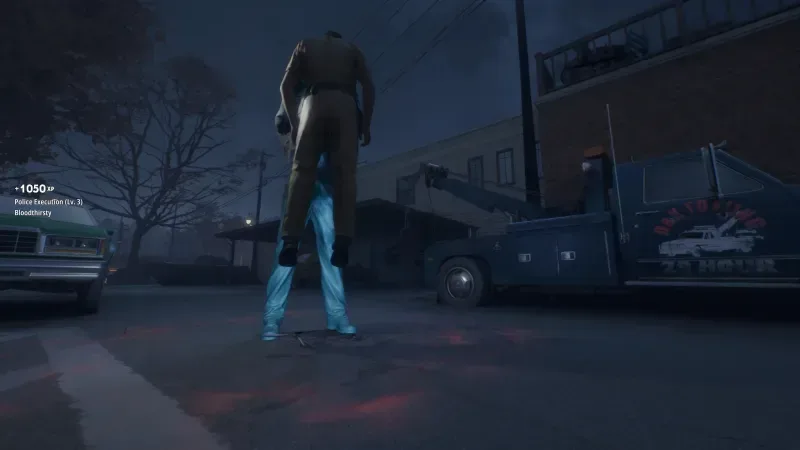
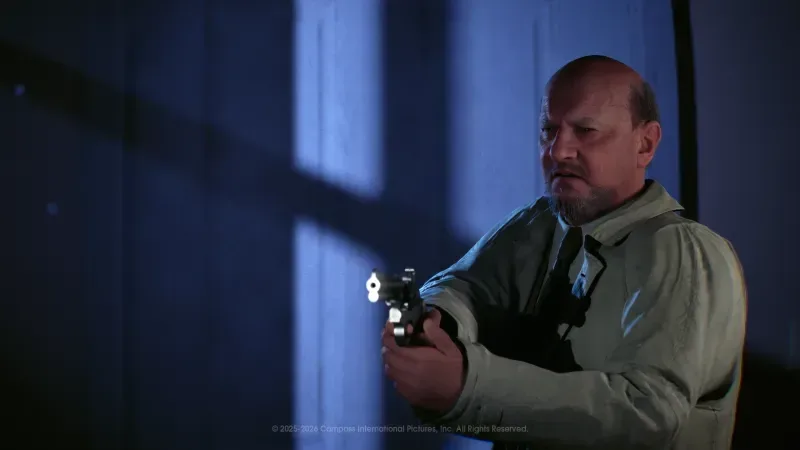
Post-death participation is also a missed opportunity. Dead players can complete small button-mashing or timing minigames that assist surviving teammates and may even lead to a return as a police officer or Dr. Loomis. The idea is sensible: keeping eliminated players engaged is important in a match that can last roughly 20 minutes. Unfortunately, the minigames become repetitive quickly, and their impact can feel too minor to justify spending the remainder of a round on them.
Players also need to remain through the match to receive their experience, a restriction that discourages quitting but makes the repetitive after-death activity more frustrating. Meanwhile, unlockable cosmetic rewards such as alternate color tints, shirts, hats, and similar items are pleasant bonuses rather than compelling long-term goals. They do not harm the game, but they are unlikely to be the reason anyone keeps playing.
Performance and PlayStation 5 Context
On PlayStation 5, Halloween's greatest strengths are rooted in match flow rather than technical showmanship. Its suburban spaces support suspenseful chases, indoor stalking, scavenging, and sudden confrontations, while the quick match starts make it easy to jump back in after an escape or a massacre. The game's technical blemishes remain part of the package, however, and prospective players should expect occasional bugs and animation oddities.
None of those issues appear fundamentally game-breaking, but they are significant enough that further updates and refinement could substantially improve the overall experience. The foundation is already strong. Better explanations for Civilians, more rewarding post-death interactions, and continued bug fixes would make a game that is often exciting feel much more complete.
Who Should Play Halloween?
Halloween is best suited to players who enjoy asymmetrical horror, social multiplayer chaos, and the particular pleasure of telling friends about a match that went spectacularly wrong. Fans of the 1978 film will find a respectful appreciation for its atmosphere and central villain, especially in Michael's presentation and the campaign's attention to the source material. Players who enjoy taking either role in an asymmetrical game will find meaningful options here: Civilians can rescue, scavenge, coordinate, and fight back, while Michael can stalk, terrify, and execute.
It is less suitable for players seeking a lengthy solo campaign, a flawlessly polished competitive experience, or a deeply rewarding cosmetic progression system. The campaign is too brief to carry the purchase for single-player-focused audiences, and the game's jank will test anyone with little patience for bugs.
Final Takeaway
Halloween succeeds because it makes Haddonfield feel like a place where terror and absurdity can coexist. Michael Myers is frightening when he appears silently at the end of a hallway, yet it can be just as memorable when a group of desperate Civilians pelts him with improvised weapons before racing away in a battered sedan. IllFonic has created an asymmetrical horror game that respects its iconic killer while understanding that multiplayer fun often comes from the unscripted moments surrounding the scares.
The short campaign, repetitive spectator minigames, unclear onboarding, and persistent bugs keep it from reaching the genre's upper echelon. But its core multiplayer loop is sturdy, flexible, and frequently hilarious. For players willing to embrace a little roughness in exchange for tense hunts, creative escapes, and many chaotic nights in Haddonfield, Halloween has plenty of life after death.

Community
Discussion
Start the conversation.
No comments have been posted yet.