

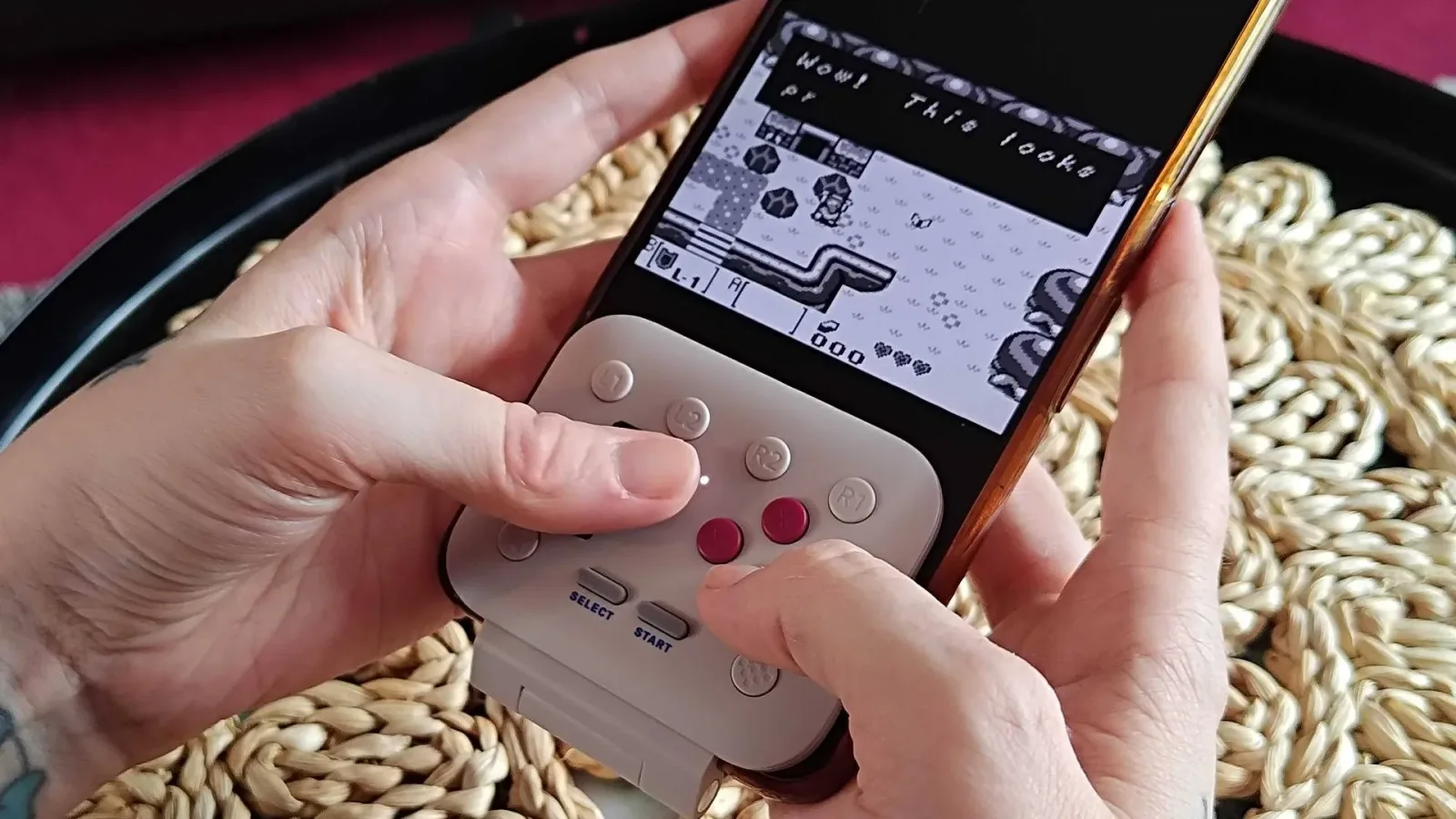
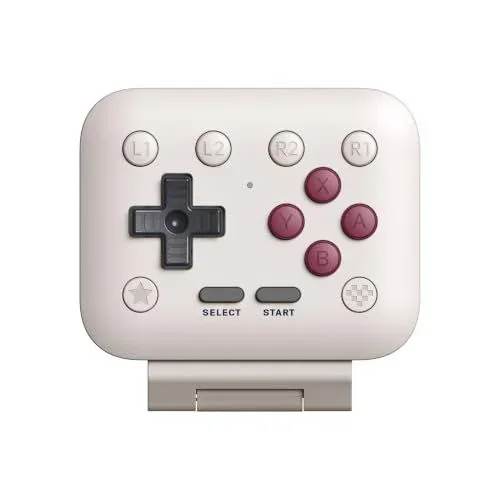
The 8Bitdo FlipPad is already positioned as an unusually elegant answer to a familiar problem for retro players: how do you make Game Boy games feel better on a modern phone without permanently turning that phone into a bulky handheld console? At its standard $29.99 price, it is a relatively affordable USB-C controller built around quick sessions and portability. But with Prime Day scheduled for October 6 and 7, a possible discount could make the accessory far more tempting for anyone who wants physical controls without buying another dedicated device.
A price close to $20 would be particularly appealing. That is the sort of discount 8Bitdo hardware can receive during major sales, and it would put the FlipPad firmly into inexpensive gift territory ahead of the holiday season. It would also further distinguish the device from GameSir's Pocket Taco, a competing retro-focused mobile controller that normally costs $34.99.
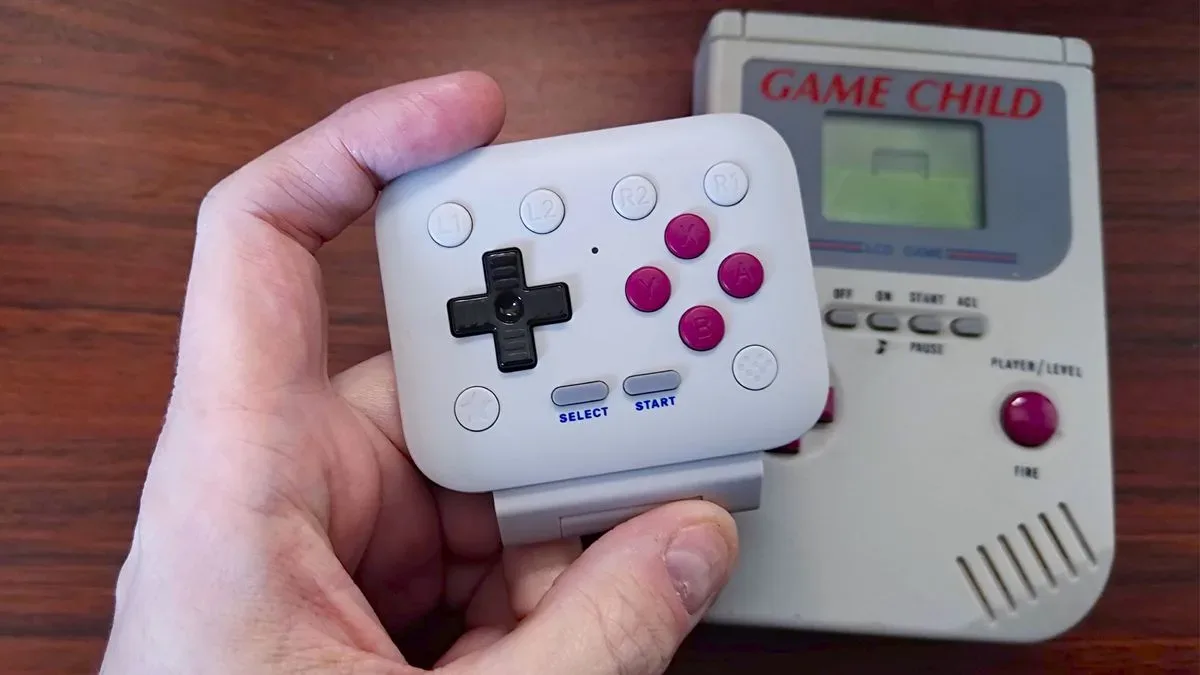
The two devices target much the same audience, but their designs reflect radically different ideas of what a Game Boy-style phone controller should be. The FlipPad prioritizes a thin profile, direct USB-C connectivity, and a folding mechanism that allows the controls to get out of the way when the phone needs to function like a phone. The Pocket Taco, meanwhile, embraces a chunkier form and a more complete feature set, including Bluetooth and shoulder buttons.
A controller designed around the phone you already carry
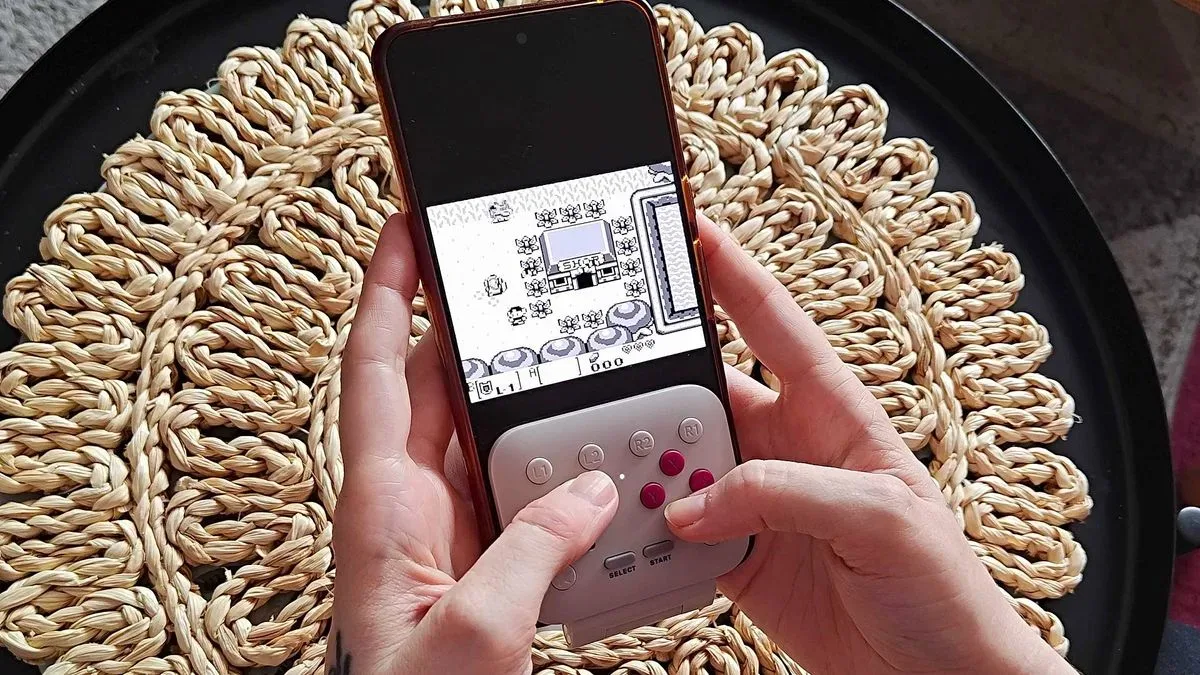
The central idea behind the FlipPad is convenience. Rather than requiring a separate handheld, it attaches to a compatible USB-C phone and creates a compact control layout for retro play. It is best suited to players who want to launch a Game Boy title for a short break, play a few battles in Pokémon, or squeeze in a little progress during travel without packing a dedicated system.
For useful background on this topic, read iFly Dreamcast Emulator Opens TestFlight Spots for iPhone and Apple TV.
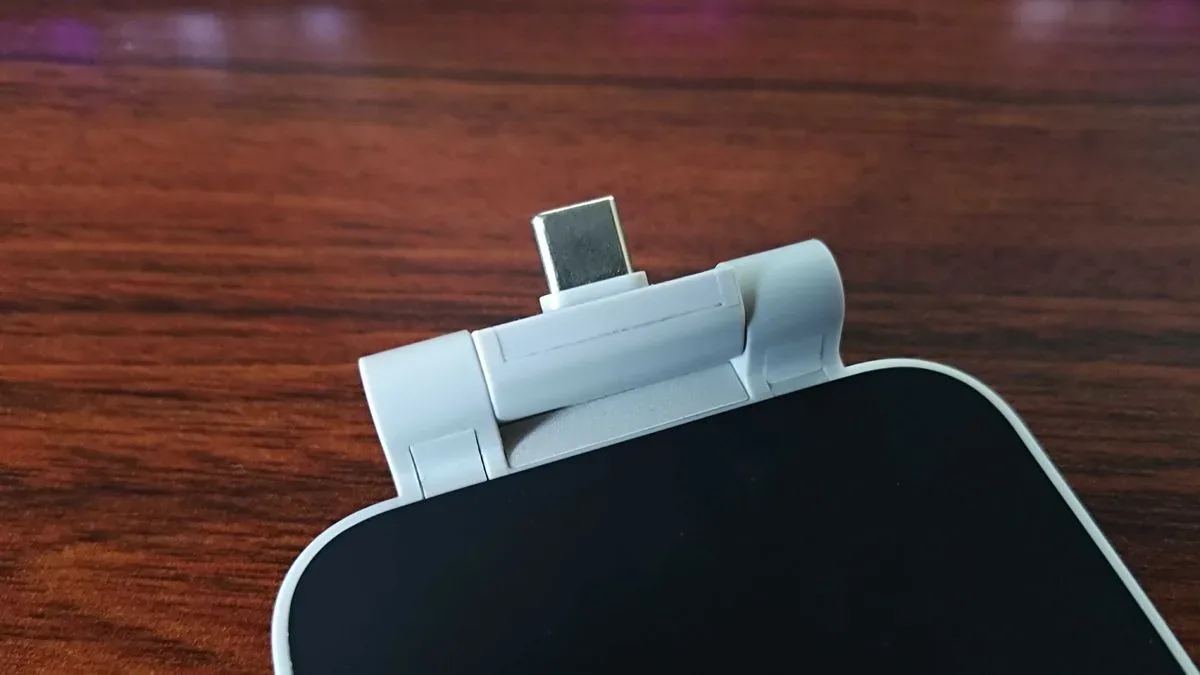
Its hinge is arguably its defining feature. The panel can be flipped away from the screen, producing a look reminiscent of flip phones from the early 2000s. More importantly, it gives the accessory a practical advantage over controllers that remain clamped onto a handset: when gaming is over, the buttons do not have to dominate the entire device. That makes the FlipPad feel less like a permanent conversion kit and more like an add-on for players who still need to answer messages, browse, and handle ordinary day-to-day tasks.
Direct USB-C operation is another major part of that pitch. Because the controller connects to the phone instead of using Bluetooth, there is no controller battery to charge, no pairing routine to manage, and no concern that the pad will run out of power mid-session. For a small accessory intended for casual retro gaming, that simplicity is meaningful. Pick up the phone, connect the pad, and play.
There are limits to that straightforward approach. The FlipPad requires a compatible USB-C device, so it is not the broadest solution for every handset or every screen setup. Its fit is especially oriented toward a standard phone configuration with iPhone-like dimensions and a case up to 2mm thick. Players using particularly large devices, thicker protective cases, or more unconventional phones may need to take greater care before assuming the fit will be ideal.
Why its Game Boy focus matters
The FlipPad's strengths line up well with the Game Boy and Game Boy Color libraries. Those systems were built around simple directional controls and face buttons, and the FlipPad brings dedicated physical inputs to games that can otherwise feel awkward through a touchscreen. For many retro enthusiasts, that alone is enough to transform the experience of playing older games on mobile hardware.
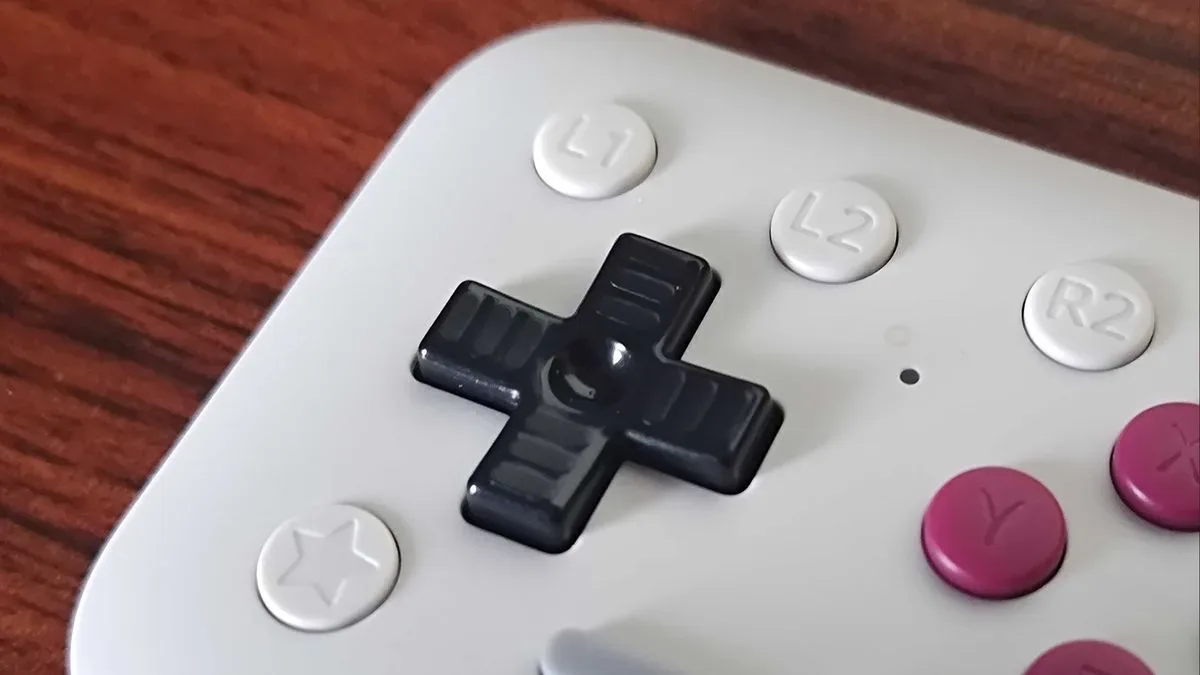
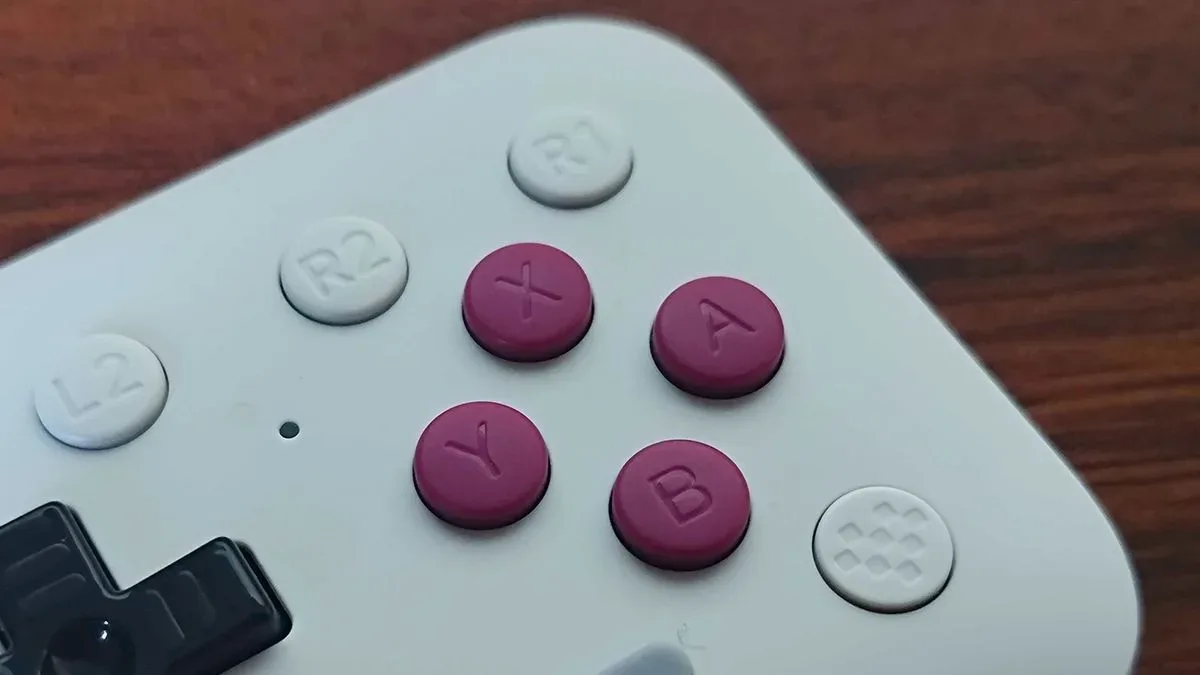
The controller's clicky dome buttons and sturdy overall feel are key advantages. A compact pad can easily feel like a novelty if its inputs are mushy or unstable, but the FlipPad has been regarded as the more satisfying controller to press and hold than the Pocket Taco. Physical feel is subjective, particularly when nostalgia is involved, but responsive buttons can matter more than an elaborate feature list when the intended use is quick, repeatable play.
That focus also explains why the FlipPad is not necessarily the perfect answer for every piece of Game Boy history. Game Boy Advance titles can rely on shoulder buttons, which are not part of the FlipPad's minimalist layout. Anyone hoping to work through the full GBA library, including games built around L and R inputs, may be better served by a more feature-rich controller or a standalone portable.
In other words, the FlipPad is not trying to be a universal replacement for every retro handheld control scheme. It is a specialized mobile accessory that makes the most sense when its boundaries match the player's habits. For original Game Boy and Game Boy Color games, or for software that does not demand extra shoulder inputs, that can be a very good match. For a wider range of systems and genres, the compromises become more important.
The GameSir Pocket Taco takes the opposite route
The GameSir Pocket Taco is the FlipPad's clearest rival because it aims for the same nostalgic destination through a more traditional design. It clamps onto the bottom of a phone and makes the setup look more overtly like a Game Boy-inspired handheld. Its larger shell is less subtle than 8Bitdo's folding design, but the extra size supports a broader set of controls and connections.
Bluetooth is the Pocket Taco's major flexibility advantage. Unlike a controller tied directly to a USB-C phone port, it can work with a Nintendo Switch and even an Analogue Pocket when that handheld is docked for play on a bigger screen. That makes it useful beyond a single phone setup and may justify its usual $34.99 price for players who regularly move between devices.
Its shoulder buttons also make it the more complete option for Game Boy Advance games. The Pocket Taco is therefore better suited to someone who sees a retro controller as a compact all-purpose companion for the entire Game Boy family, rather than a streamlined way to enjoy a smaller selection of titles on a phone.
The trade-off is that it feels bulkier and, in direct comparison, less premium in the hand. Its plastics do evoke the original Game Boy more closely, which will be a feature rather than a flaw for some players. Yet the more authentic-looking material does not necessarily translate to the same solid, clicky impression offered by the FlipPad. The choice comes down to priorities: tactile quality and unobtrusiveness on one side, broader compatibility and extra inputs on the other.
What to watch for during October sales
At $29.99, the FlipPad is already $5 cheaper than the Pocket Taco's normal $34.99 price. That makes it a reasonable value for someone who knows they want a small USB-C controller for mobile Game Boy gaming. Still, waiting for Prime Day could be sensible, especially for buyers who are not in a hurry and who view this as a complementary accessory rather than an essential purchase.
A reduction to roughly $20 would change the calculation. At that level, the FlipPad would become easier to recommend as a low-risk purchase for curious retro fans, a stocking-stuffer-sized gift, or an impulse upgrade for someone tired of touchscreen controls. It would also make the device's narrower compatibility and lack of shoulder buttons easier to accept, because the asking price would better reflect its focused role.
There is no guarantee that the FlipPad will receive a Prime Day discount, even if 8Bitdo commonly participates in large promotional events. Shoppers should compare the sale price to the usual $29.99 list price instead of assuming every advertised promotion represents a substantial saving. The Pocket Taco is also worth monitoring, since a stronger discount on the more feature-packed rival could shift the value comparison.
If October's event does not produce an attractive price, Black Friday sales in November offer another opportunity. Retro controllers and small gaming accessories frequently appear in seasonal promotions, and neither product seems like an item that must be bought immediately at full price unless a player has a particular trip or gaming plan coming up.
A narrow idea executed with real appeal
The 8Bitdo FlipPad will not replace a dedicated retro handheld for enthusiasts who want original hardware, wide emulator support, or controls suitable for every Game Boy Advance game. Nor is it the most flexible wireless option for players who also want to use a controller with a Switch or a docked Analogue Pocket.
What it does offer is more specific: a sleek physical-control solution for compatible USB-C phones that can disappear when it is not needed. Its folding hinge, battery-free direct connection, compact design, and crisp button feel give it a clear identity in a market where many mobile controllers solve the problem by simply adding more bulk.
For players whose retro habits consist of brief Game Boy sessions on a phone, that may be exactly the point. And if Prime Day brings the FlipPad closer to $20 on October 6 or 7, this already distinctive little controller could become one of the easier retro-accessory buys of the season.
Community
Discussion
Start the conversation.
No comments have been posted yet.