

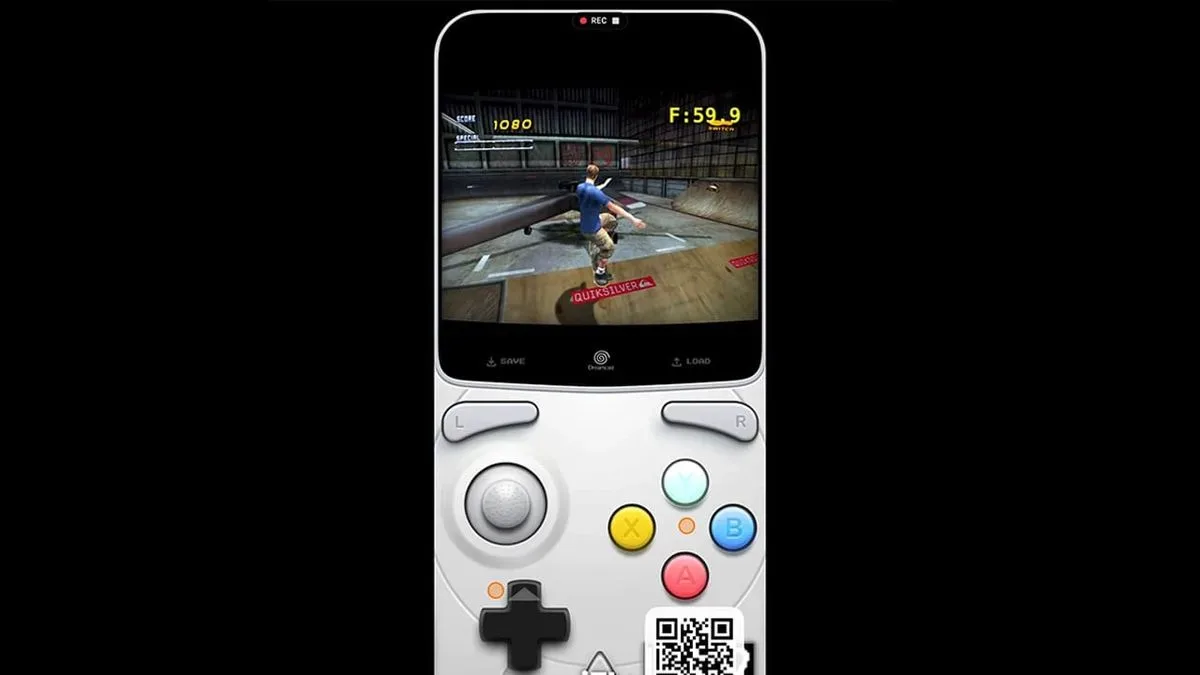
Dreamcast emulation may be moving closer to Apple's mainstream ecosystem. iFly, a JIT-free emulator project derived from Flycast technology, has opened up TestFlight spots for users interested in trying Sega Dreamcast games on iPhone and Apple TV.
The development is notable because Dreamcast is a more demanding target than many of the older systems already represented by iOS emulators. Apple device owners can now access a growing selection of emulation apps without jailbreaking a handset or using sideloading workarounds, but technical restrictions still shape which systems can be supported and how well they can run. iFly's approach is designed specifically around those restrictions.
The project is being developed by the team behind Provenance Emu and is intended for both iOS and tvOS. Rather than relying on Apple-permitted exceptions or a separate installation method, iFly removes the component of Flycast associated with dynamic recompilation, allowing it to operate without Just-In-Time compilation.
Embedded X/Twitter post
Why JIT Matters for Dreamcast Emulation
Just-In-Time, usually shortened to JIT, is an important concept for modern emulation. In broad terms, an emulator has to reproduce the behavior of one machine's hardware on another machine with a different architecture. Efficiently translating code at runtime can greatly improve performance, especially for systems that are significantly more complex than 8-bit and 16-bit consoles.
For useful background on this topic, read Nerial to Close After Nearly 13 Years as Reigns Creator Returns to Independent Development.
Apple has long treated runtime code generation and related execution methods as a security concern. That stance creates a practical obstacle for emulators that depend on JIT techniques. Although there are technical nuances depending on the app, environment, and entitlement involved, the overall result for ordinary users is straightforward: an emulator can be much harder to distribute and use on iPhone or iPad if it requires JIT to achieve usable speeds.
Dreamcast is precisely the kind of console where that limitation matters. Sega's final home console used a Hitachi SH-4 processor and distinctive supporting hardware, and accurately running its software has historically demanded more from an emulator than platforms such as the Nintendo 64, PlayStation, or many earlier cartridge-based systems. Fast dynamic recompilers are commonly used to make that workload more manageable on current devices.
iFly instead takes a JITless route. The team has built the emulator from an offshoot of Flycast after removing the dynarec, or dynamic recompiler. That decision may introduce performance trade-offs compared with configurations that can use runtime recompilation, but it also gives the project a path that is better aligned with Apple's distribution environment.
A TestFlight Build Means Testing Is Still the Point
TestFlight availability is an invitation to help evaluate software before a broader release, not a promise that every game or device combination is finished. Users who secure a spot should expect the normal realities of a beta: compatibility gaps, stability issues, interface quirks, performance variation, and features that may still be incomplete.
That feedback is especially useful for an emulator attempting to cover a wide spread of Apple hardware. The iFly project is described as supporting older iPhones as well as the newest models, an ambitious target given the substantial differences in processor performance, memory, display size, and operating-system support across Apple's device generations.
Testing on older phones will be particularly meaningful. A JIT-free emulator may place more pressure on the device's raw CPU resources, so results can differ considerably from one iPhone to another. A game that feels smooth on recent hardware may require further optimization on an older model, while other titles may work well because their individual technical demands are lower. TestFlight participants can help establish those boundaries through practical use.
Apple TV support also gives iFly a potentially appealing role in a living-room retro setup. The Dreamcast library contains many games that benefit from a larger screen and a controller-first experience, from arcade-style racing and fighting games to multiplayer titles and quirky Sega originals. tvOS support does not automatically guarantee universal controller behavior or flawless compatibility, but it expands the project beyond a phone-focused novelty.
Built From Flycast, With an Open-Source Foundation
iFly's technical lineage is central to its appeal. Flycast is a well-known Dreamcast emulation project, and iFly has been created from an offshoot of that work while adapting it to Apple's JIT restrictions. The emulator is described as free and open-source, with the necessary licensing obligations being met.
That detail matters in a period when emulator projects are receiving more public attention, along with more scrutiny over how they are developed, maintained, and shared. Open-source software allows its codebase and license compliance to be examined by the community. It also gives technically inclined contributors an avenue to report issues, suggest improvements, or potentially participate in development.
The team's emphasis on iFly's open-source status also distinguishes the project from concerns that have surrounded some recent emulator announcements. Emulation software can involve years of specialized work: hardware research, graphics rendering, audio behavior, controller handling, user-interface design, and compatibility testing. Clear development practices and proper respect for upstream licenses are meaningful considerations for users deciding which apps to support and test.
For iFly, the important practical claim is that its Apple-compatible solution is not simply a closed experiment attempting to sidestep those norms. It is a free project based on established emulator work, modified to avoid the JIT dependency that would otherwise make a conventional Dreamcast solution difficult on iOS and tvOS.
The Apple Emulation Landscape Keeps Expanding
The arrival of Delta helped turn iPhone emulation from a niche activity into something far more visible. For years, Apple users who wanted to emulate classic hardware often needed to jailbreak their devices, sideload apps, or navigate restrictive installation processes. Native app availability changed the conversation, particularly for players interested in systems such as the Nintendo Entertainment System, Super Nintendo, Game Boy family, Nintendo 64, Nintendo DS, and PlayStation Portable.
However, that progress did not erase technical limits. A platform's age does not perfectly predict whether it is easy to emulate, and the Dreamcast presents a meaningful step beyond the systems that initially became common on the App Store. Its presence through a JIT-free solution would demonstrate that developers can still pursue more advanced platforms even when they must design around Apple's policies.
That does not mean iFly should be judged solely on whether it can launch Dreamcast games. The standard for a polished emulator is much higher. Players will care about consistent performance, responsive controls, controller support, audio quality, visual presentation, save handling, library organization, and an interface that feels at home on Apple devices. A beta period is where those pieces begin to come together.
Early Interface Impressions Are Encouraging
Early impressions of iFly's interface have been positive. Its on-screen controller presentation, screen layout, and spacing have been highlighted as strengths, with a clean style that appears suited to mobile use. Good interface design can make a substantial difference for touch-based emulation, where virtual controls must remain accessible without unnecessarily covering the game.
The comparison point many Apple users will recognize is Delta, which established a high bar for approachable design in the iPhone emulation space. iFly will have its own challenges because Dreamcast games were made around a very different controller layout, including analog inputs and a broader set of buttons than the simplest retro platforms. A polished touch interface will need to balance fidelity to the original hardware with the limits of a phone screen.
Physical controllers may be the preferred option for many Dreamcast games, particularly on Apple TV, but touch controls still matter. They determine whether iFly can serve as a convenient handheld option for quick sessions rather than only a software showcase for enthusiasts with dedicated accessories.
What Interested Players Should Keep in Mind
Anyone joining the TestFlight should approach iFly as a work in progress. The best way to contribute is to test a range of legally obtained software and report clear details when problems occur: the device model, operating-system version, controller setup, game behavior, and the steps that reproduce an issue. Specific reports are far more useful than general statements that a title "doesn't work."
It is also worth remembering that emulators do not include rights to commercial games. Players remain responsible for using software they are legally entitled to access and for observing applicable laws in their region. The emulator itself is a technical tool; game files, firmware considerations, and copyright rules are separate matters.
For now, iFly's TestFlight availability represents a promising technical experiment with broader implications for Apple emulation. A free, open-source Dreamcast emulator that works within iOS and tvOS limitations could fill an important gap for players who want a legitimate, convenient Apple-device route to Sega's final console. The next question is how effectively the JIT-free build performs across real hardware and the famously varied Dreamcast library.
If the testing phase helps the team resolve bugs and refine performance, iFly could become one of the more interesting additions to Apple's rapidly evolving emulation scene. Dreamcast fans should keep expectations appropriate for a beta, but the project's open development model, Flycast roots, and support for both iPhone and Apple TV give it a strong foundation.
Community
Discussion
Start the conversation.
No comments have been posted yet.