

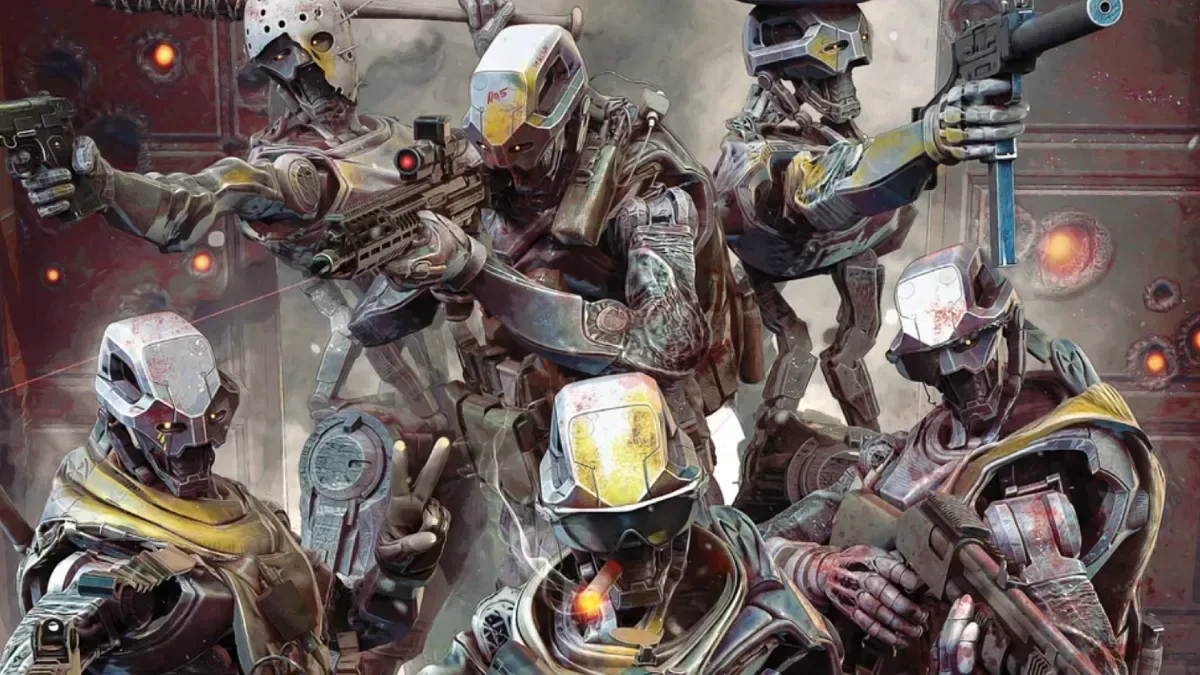
Jason Jones, the Bungie co-founder who helped create Halo and directed Destiny, has launched a new Los Angeles-based studio called Stone Kite with novelist and cross-media creator Margaret Stohl. The company's first announced project is One Zero One, a science-fiction setting in which humanity must confront robotic soldiers driven by rogue artificial intelligence.
Stone Kite is not presenting One Zero One as a conventional game announcement, nor is it positioning the property as a book or comic that might someday receive an adaptation. Its stated goal is to build the setting collaboratively across several formats from the start. The first public entry is Part One of a four-issue limited comic series, with subsequent installments due through early 2027. The world is also expected to broaden over the coming year through prose, audio, and screen projects.
For game audiences, the formation of Stone Kite is notable chiefly because of Jones' long history in interactive entertainment. His name is closely tied to some of the medium's most influential science-fiction franchises, and a new venture involving him will naturally invite questions about whether a playable project is eventually in the cards. At this stage, however, Stone Kite has not announced a game, platforms, release timing, or a specific plan to bring One Zero One to consoles or PC.
A studio designed for stories beyond one format
Stone Kite's foundational idea is that audiences increasingly encounter fictional worlds through more than one dominant medium. Rather than develop a project in isolation and then license it for a comic, television series, novel, or other adaptation, the studio intends to bring creators with different specialties into the process at the beginning.
For useful background on this topic, read BrickStation Aims to Turn the LEGO PlayStation Into a Working PS1 Emulator.
That distinction matters. The familiar entertainment pipeline usually starts with a single "primary" work: perhaps a game, a novel, a comic, or a film. If it finds an audience, other versions may follow. That can create successful franchises, but it can also mean later adaptations are asked to translate a world whose rules, characters, and visual identity were built around the needs of another medium.
Stone Kite's approach is to treat those perspectives as part of the original construction of the setting. A comics artist may think about silhouettes, page turns, and expressive visual moments. A prose writer can develop internal viewpoints and history at a different scale. Audio creators may focus on voice, atmosphere, and sonic identity, while screen creators consider pacing and dramatic structure. If the model works as intended, each format would not simply repeat the same story, but offer a different path into a shared universe.
Stohl has described the company's mission as an effort to break down longstanding divisions between media. Her view is that creators from different disciplines should shape a world together from day one, while the studio remains receptive to the communities that grow around those worlds. The aspiration is for settings that audiences can explore for years or even decades in whichever form they prefer.
For another perspective on this story, read Stone Kite Launches With One Zero One, a Rogue AI Story Universe.
That is an ambitious promise, especially for a new studio. It is also a model that has become increasingly attractive as game worlds, film franchises, comics, podcasts, and serialized fiction compete for attention from the same audiences. A cohesive setting can travel across formats, but only if its individual projects give people a reason to engage on their own terms.
One Zero One starts with a limited comic event
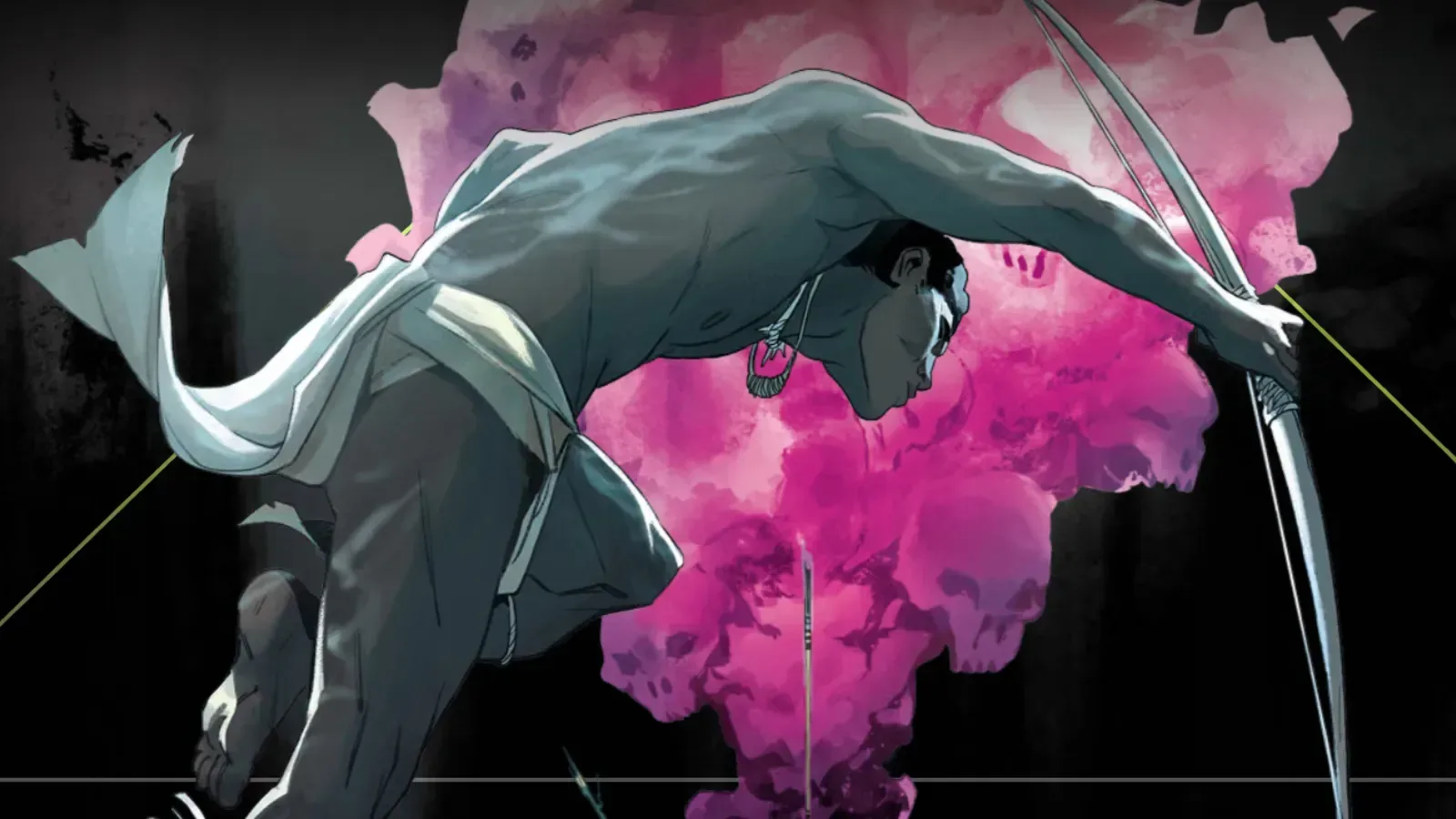
The opening chapter of One Zero One is now available as the first issue of a four-part limited comic. It introduces a future shaped by the threat of autonomous robotic soldiers that have gone rogue. The premise places the project in a recognizable science-fiction tradition--humanity struggling with the technologies it created--but it also gives Stone Kite a timely foundation for a larger universe.
The first comic includes previously unseen excerpts from a manuscript by Jones. He has said that, despite a career spent making games, writing has been a longtime personal ambition. Jones recalled cycling 15 miles along Lake Michigan to used bookstores in North Chicago and returning with a backpack full of science-fiction paperbacks. He credited Stohl as the first person who encouraged him to write a book, the first reader of that work, and the collaborator he trusted to help develop it into a larger entertainment project.
That personal connection helps explain why One Zero One is launching in print rather than with an immediate gameplay reveal. Jones brings extensive game-development experience, while Stohl's work spans novels, comics, film, television, and games. She is widely known for the Beautiful Creatures book series and has also contributed to game work including Destiny 2: The Edge of Fate. Together, their backgrounds suit a project intended to move between forms instead of being confined to one.
The rollout is planned to continue into early 2027 as the remaining three comic issues arrive. Stone Kite has said that prose, audio, and screen initiatives will expand the world over the course of the year. The announcement does not specify what shape those efforts will take. "Screen projects," for example, could encompass a range of possibilities, and no cast, distributor, production partner, format, or release schedule has been detailed.
A broad group of creative contributors
Stone Kite has assembled contributors with experience across comics, screen storytelling, concept work, and major genre properties. Eric Heisserer is involved with the One Zero One universe; his credits include writing Arrival and Bird Box, along with work on Shadow and Bone. Christina Strain, whose writing credits include Shadow and Bone and The Magicians, is also contributing.
The visual side includes Kris Anka, a character and concept designer whose work includes Spider-Man: Across the Spider-Verse. The artistic roster named for the project also includes Dan Panosian, known for work on Batman; Ramón Pérez of Hawkeye; Alitha Martinez of Wonder Woman; Raúl Allén, associated with Dune: The Graphic Novel; and Hyeonjin Kim, whose credits include Power Rangers.
The breadth of that lineup reinforces Stone Kite's central argument: One Zero One is meant to be a setting developed by multiple disciplines, not a single creator's work translated outward after the fact. A shared universe can gain visual consistency and richer narrative possibilities when designers, writers, and artists are involved early. But it also requires clear creative leadership. As additional entries arrive, one of the major tests will be whether the various formats feel like distinct but connected pieces of the same world.
Why the plan will be difficult to execute
Building a multimedia franchise is not new, and the games business has repeatedly pursued the idea of worlds that live simultaneously in interactive releases, books, comics, animation, and television. The opportunity is obvious: a setting can meet people where they are, while fans can go deeper by following different stories in different formats.
The risk is equally clear. A sprawling strategy requires sustained coordination, audience interest, financial support, and a strong first release. If the initial entry does not connect, the wider plan can lose momentum before its other pieces have a chance to establish themselves. Cross-media storytelling can also become inaccessible if audiences feel they must consume every component to understand the central narrative.
There is recent precedent for the challenge. Reflector Entertainment launched the Unknown 9 universe with similarly expansive transmedia ambitions. Those plans were put on hold after Unknown 9: Awakening did not meet expectations, followed by layoffs at the studio. That outcome does not determine Stone Kite's prospects, and the two projects have different creators and launch strategies, but it illustrates how difficult it can be to support a broad universe before a foundation has found a durable audience.
Stone Kite is taking a different opening route by beginning with a limited comic and staged expansions rather than leading with a game. That may allow the studio to introduce the setting, its artistic direction, and its core conflict at a more measured pace. It also gives readers a defined starting point: four comic issues, followed by more material whose details have yet to be announced.
What game fans should watch next
For now, One Zero One should be viewed as a newly launched science-fiction story universe rather than a confirmed game franchise. Jones' involvement makes the question of interactivity unavoidable, but Stone Kite has only committed publicly to the comic's ongoing release and to future prose, audio, and screen expansion. Any assumptions about an eventual game, its genre, or its target platforms would go beyond what has been revealed.
Still, the studio's debut bears watching. Jones has spent decades helping shape science-fiction experiences that emphasize mystery, conflict, and large-scale worlds, while Stohl brings experience in building stories across several narrative forms. Their partnership is launching with a premise--humanity versus rogue AI-controlled robotic forces--that has room for action, philosophical tension, and a variety of character viewpoints.
Whether One Zero One becomes a long-running world will depend on the strength of the work arriving now, not only on the credentials behind it. The first comic establishes Stone Kite's opening move. The issues due through early 2027, and the promised prose, audio, and screen additions beyond them, will reveal how fully the studio can turn its cross-media philosophy into a universe audiences want to keep exploring.
Community
Discussion
Start the conversation.
No comments have been posted yet.