

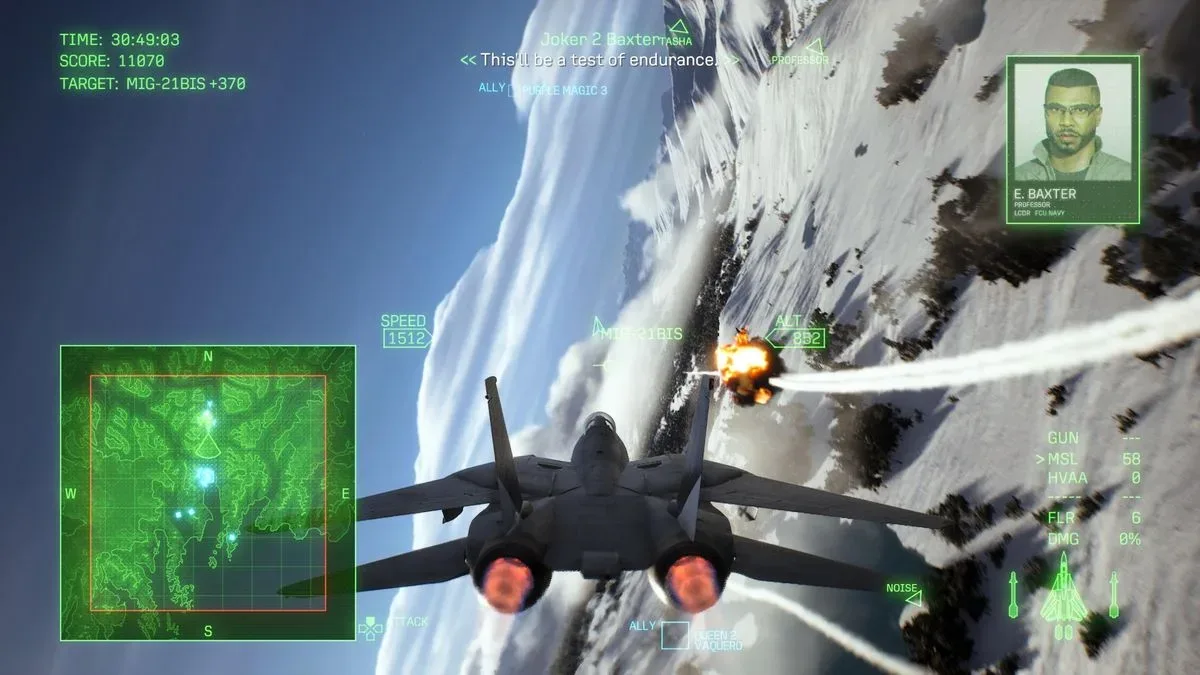
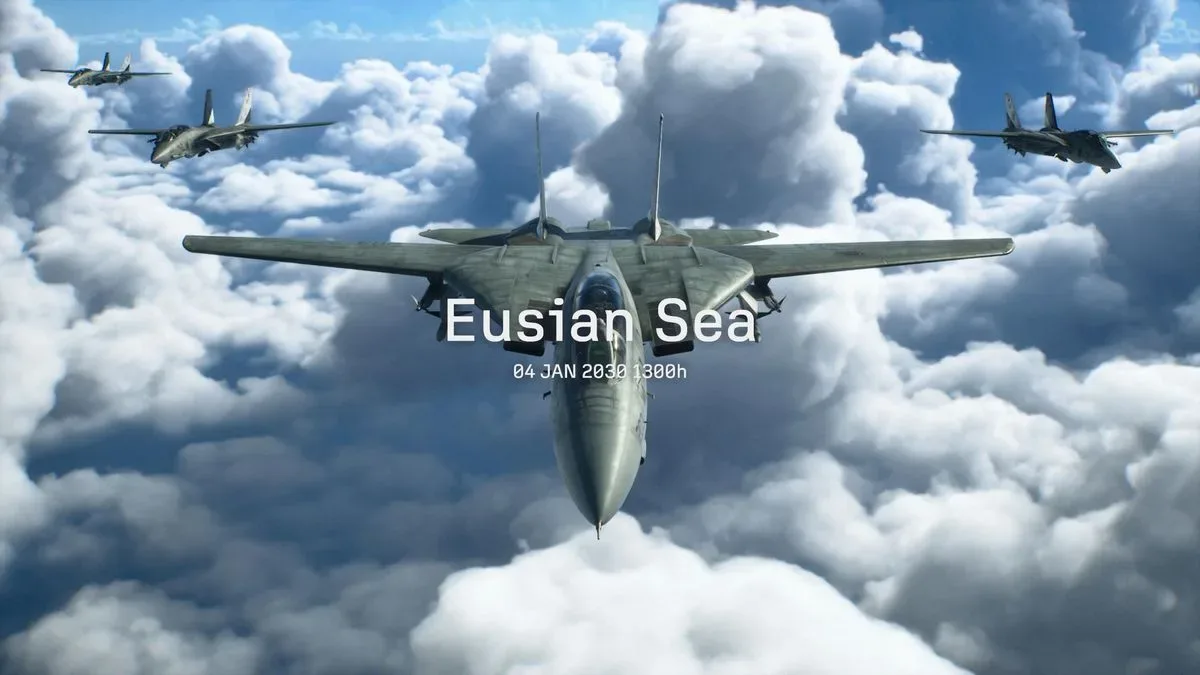
Ace Combat 8: Wings of Theve arrives with an enormous task ahead of it: deliver the arcade flight combat the series is known for while giving its fictional war drama greater dramatic weight. It succeeds on both fronts more often than not. Its opening is notably deliberate, especially for a game built around missiles, afterburners, and reckless turns through dense battlefields. Once the campaign gathers momentum, though, Wings of Theve becomes a remarkably assured action game, coupling exhilarating aerial battles with a story about propaganda, corporate power, and the uncomfortable utility of heroes in wartime.
Developed by Bandai Namco Aces and published by Bandai Namco Entertainment, Ace Combat 8 launches on October 2, 2026 for PC, PlayStation 5, and Xbox Series X|S. The campaign places players in the cockpit as Rex, the silent pilot of Joker Squadron. As ever in Ace Combat, the protagonist is an extraordinarily capable flier called upon to do the impossible while a continent descends into chaos. What distinguishes Rex's situation is the title they inherit: the Wings of Theve.
That name is a legend meant to inspire the people of Usea as neighboring Sotoa invades. The truth is far less triumphant. The original Wings, Cope, died in action, and the public image of an untouchable ace has been deliberately sustained through a misinformation campaign. Rex steps into that constructed identity, and the tension between the person flying the missions and the symbol everyone needs them to be gives the game much of its dramatic energy.
A slow runway before takeoff
Wings of Theve takes longer than expected to get players into its rhythm. Its early emphasis on cinematic scenes means that the trip from starting a new game to completing the first mission can take roughly 45 minutes. That is a conspicuous change of pace for a series whose appeal has often been immediate airborne spectacle. The more polished presentation is a clear step forward from the comparatively static story delivery seen in Ace Combat 7, but the volume of early exposition can still feel at odds with the fast, accessible nature of the combat.
For useful background on this topic, read Cissy Jones Celebrates Games' Appetite for Bold, Personal Stories.
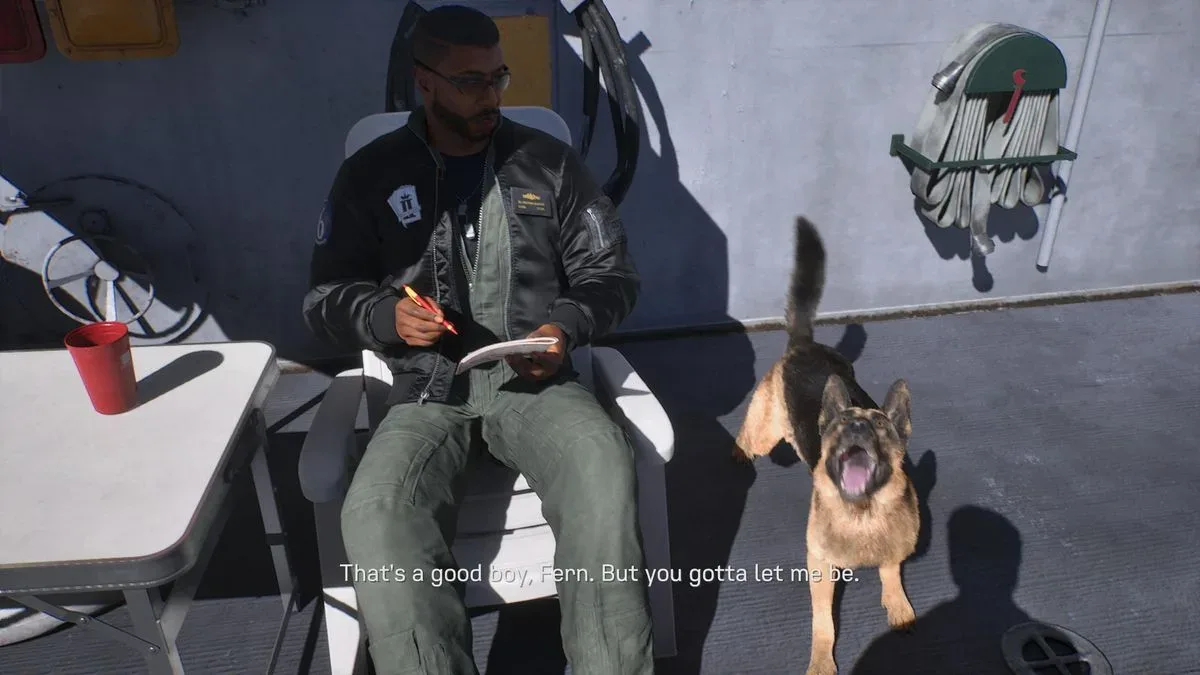
Fortunately, that imbalance does not define the entire experience. Cutscene density eases as the campaign progresses, while the personalities surrounding Rex begin to matter more. Joker Squadron's wingmen provide a strong core, and the game introduces a rival with the kind of presence that makes each eventual confrontation feel like more than another objective marker. Cope's voice, serving as an internal presence around Rex's otherwise silent protagonist, is particularly important. It keeps the legacy of the former Wings alive without letting it become a simple mystery-box device.
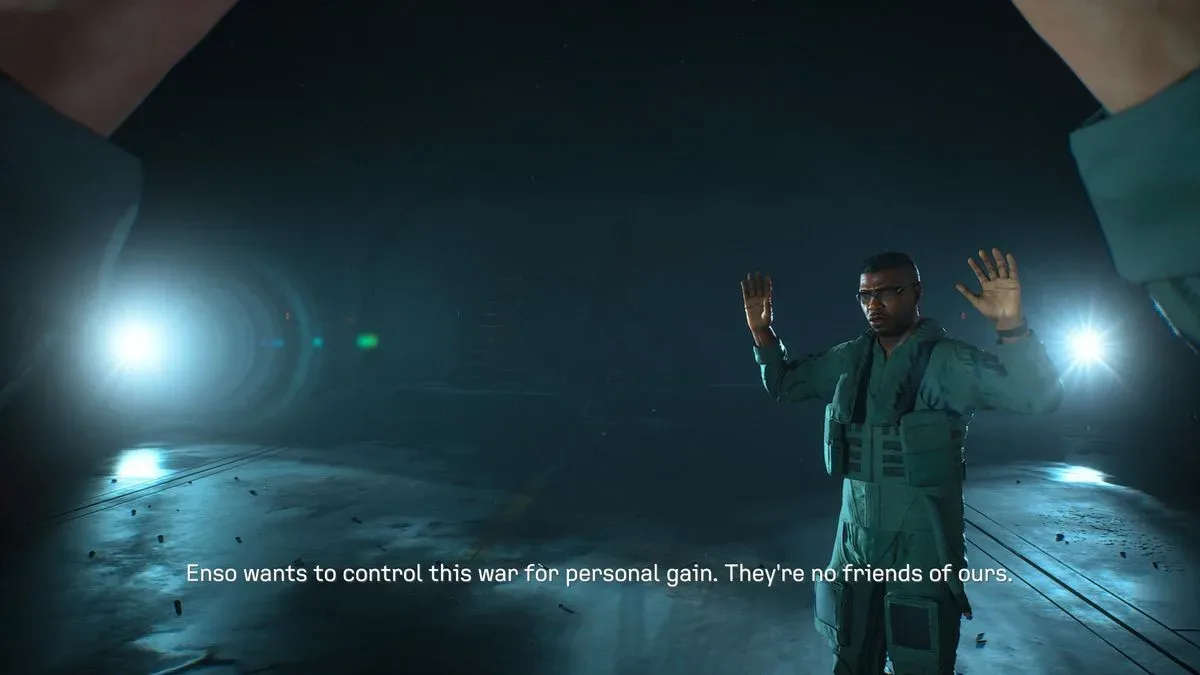
The result is a story that eventually earns its interruptions. Ace Combat has always combined fictional geopolitics with melodrama and superweapons, but Wings of Theve places unusual focus on the creation and exploitation of narratives. The game examines targeted misinformation on social media, the way corporations can profit within a war economy regardless of victory or defeat, and the strategic value of hope itself. Those ideas give the conflict a more pointed edge while remaining compatible with the franchise's heightened Strangereal setting.
Thirty missions built around momentum
Mechanically, Ace Combat 8 does not discard the foundation that made Ace Combat 7 so approachable. Players select aircraft, special weapons, and upgrade parts before heading into a lengthy 30-mission campaign. Anyone familiar with the previous game should understand the controls and the overall loop almost immediately: acquire targets, manage distance and speed, line up a lock, fire, evade retaliation, and keep moving.
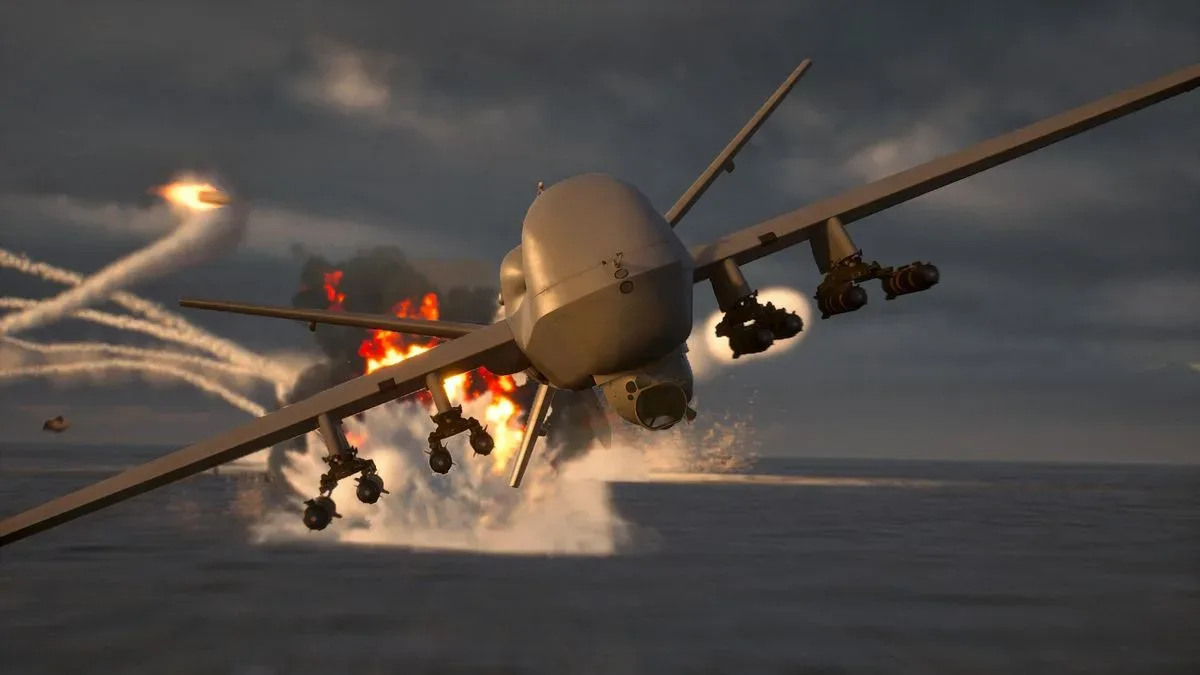
The strength of Wings of Theve is not radical reinvention. It is the consistency with which the game finds new contexts for those familiar tools. One mission may ask Rex to weave through an urban combat zone while supporting ground forces. Another puts the player in an underpowered aircraft and transforms the usual power fantasy into a desperate escape. Elsewhere, missions demand broad destruction of fortified enemy installations within strict time limits. Rival encounters punctuate the broader war with more personal, high-speed clashes.
This variety matters because the campaign is one of the series' largest. A 30-mission structure could easily become repetitive if every sortie amounted to clearing the sky of red markers, but Wings of Theve repeatedly changes the pressure placed on the player. Some sorties ask for careful prioritization; others want aggressive area control; still others make survival itself feel like the key accomplishment. The best missions stack several responsibilities at once and let the chaos sell the stakes of the war.
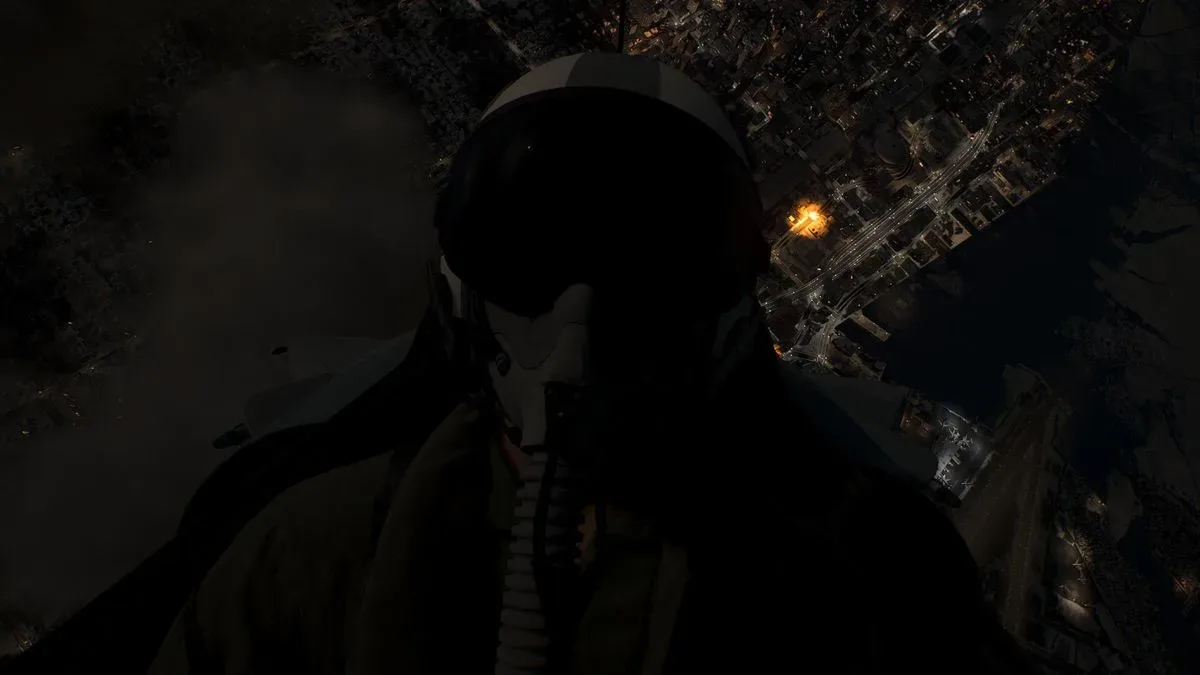
In one especially demanding situation, Rex must deal with rival aircraft, destroy as many enemy anti-air installations as possible, and protect friendly troops advancing into a city. There is always another threat demanding attention, often in a completely different direction. That could have become exhausting busywork, but the game turns it into a thrilling expression of battlefield desperation. Racing from one side of the combat zone to the other makes the player feel less like a lone pilot casually cleaning up objectives and more like an essential piece of a force that is running out of options.
From competent pilot to legendary ace
That escalation is the campaign's greatest achievement. Wings of Theve steadily develops the sensation that Rex is becoming worthy of the myth surrounding the Wings title. The game's later mechanical demands and narrative turns support one another rather than competing for attention. High-stakes objectives, last-second maneuvers, and desperate flights through hostile airspace are not just set dressing for a cutscene; they are scenarios the player must actually survive.
By the final stretch, the game delivers some of the most extravagant missions the franchise has attempted. There is a major sense of occasion to its climactic runs, including a moment that frames Rex's task as a near-suicidal defiance of overwhelming odds. The storytelling leans into spectacle, but it is made more effective because the player has spent so much time handling the aircraft, responding to radio chatter, and fighting alongside the people whose relationships are now being tested.
There is a pleasing progression from simply trying to stay on an enemy's tail to confidently threading an aircraft through missile warnings, terrain hazards, and converging targets. Ace Combat has always been less concerned with strict simulation than with the fantasy of being a world-class fighter pilot, and Wings of Theve understands that identity completely. It wants each successful sortie to feel barely believable in retrospect.
The soundtrack is a weapon of its own
Music remains one of Ace Combat's most reliable strengths, and Wings of Theve continues that tradition with confidence. The score moves between sweeping orchestral arrangements, electric guitar-driven energy, and in-universe music that gives the conflict a distinct atmosphere. It does not merely decorate the dogfights; it helps dictate their emotional scale.
The Shadows theme is an early standout. Its group chant immediately creates a sense of looming danger, then grows in intensity during the third mission at exactly the right moment. That kind of musical timing is central to why Ace Combat's biggest sequences land so effectively. A well-placed chorus or orchestral surge can turn a difficult target run into something that feels mythic, and Wings of Theve regularly finds that connection between sound, action, and story.
Online potential, but limited first impressions
Ace Combat Online provides the multiplayer component, offering both PvP and PvE activities. During the review period, however, it was only available for a single day, making it difficult to judge its long-term appeal with confidence. The available modes were enjoyable in that limited window, and the mix of competitive and cooperative play gives the mode a sensible foundation.
There are reasons for caution. The mode selection appeared relatively small, while the lobby structure can leave players unable to do much while waiting for a match. That is the sort of friction that may be easy to overlook during the excitement of launch but more noticeable once the initial player surge fades. The campaign is clearly the main attraction, and the online suite currently feels more like an additional diversion than a defining reason to return.
Verdict
Ace Combat 8: Wings of Theve is a superb new entry in the series. The extended early setup and cutscene-heavy introduction can make it seem as though the game is taking too long to trust its strongest asset: flying. But once the story and mission design gain altitude, the experience becomes difficult to put down. Its political themes add substance to the familiar Strangereal drama, its supporting cast makes the central myth of the Wings matter, and its mission variety keeps a long campaign from losing urgency.
Most importantly, the dogfights deliver. Every tight turn around a building, every missile lock broken at the last moment, and every impossible-looking kill feeds into the fantasy of becoming a genuine ace. Add an outstanding soundtrack and an endgame that embraces full-scale aerial spectacle, and Wings of Theve stands as a campaign worth revisiting whenever the need for speed, noise, and sky-high heroics returns.
Review details
- Release date: October 2, 2026
- Platforms: PC, PlayStation 5, Xbox Series X|S
- Developer: Bandai Namco Aces
- Publisher: Bandai Namco Entertainment
- Review platform: PlayStation 5 Pro, using Frame Rate Priority mode
Community
Discussion
Start the conversation.
No comments have been posted yet.