

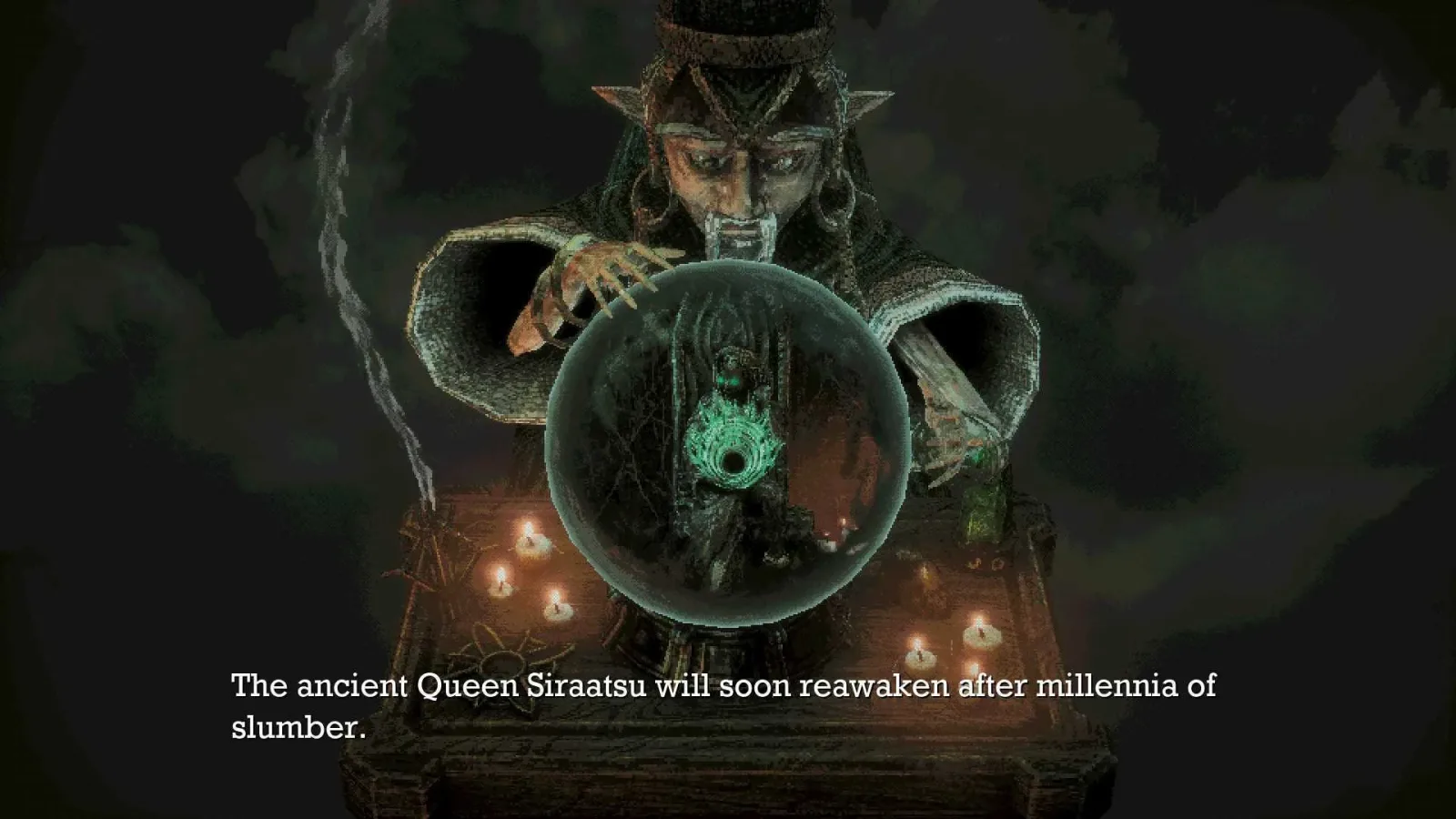
Queen's Domain is a new indie fantasy adventure from Freshly Baked Games that wears its inspiration proudly. Its first-person perspective, melancholy ruins, opaque quest structure, stamina-based combat, unsettling enemies, and low-poly visual language all evoke FromSoftware's early King's Field games--particularly King's Field IV. But its goal does not appear to be pure historical reenactment. Instead, it takes the strange, lonely appeal of that PlayStation-era series and applies a few welcome lessons learned over the decades since.
That distinction is important. The original King's Field games remain hugely significant to FromSoftware's history, offering an early glimpse at the studio's fascination with hostile fantasy worlds, indirect storytelling, dangerous exploration, and the feeling that every newly opened path might conceal catastrophe. They can also be difficult games to revisit. Their pacing is deliberate, their systems can be obscure, and their controls carry the weight of their era. Queen's Domain appears determined to preserve the atmosphere without insisting players also inherit every inconvenience.
The early impression is of a game that understands exactly why people still find King's Field compelling. It is not trying to turn the formula into a fast action game, nor does it fill the silence with constant instructions or lore explanations. The island at its center is meant to be navigated cautiously, patiently, and with a growing suspicion that nearly everything in it would prefer the player dead.
A familiar journey into a cursed island
Queen's Domain puts players in the role of a prince searching for his missing father. The father had traveled to the Isle of Neasied in an effort to stop the emergence of a sinister sleeping queen, but he has disappeared. The prince's own voyage goes badly from the outset: he is shipwrecked and arrives on the island with nothing.
For useful background on this topic, read Warren Spector Questions Executive Accountability After BioWare Closure.
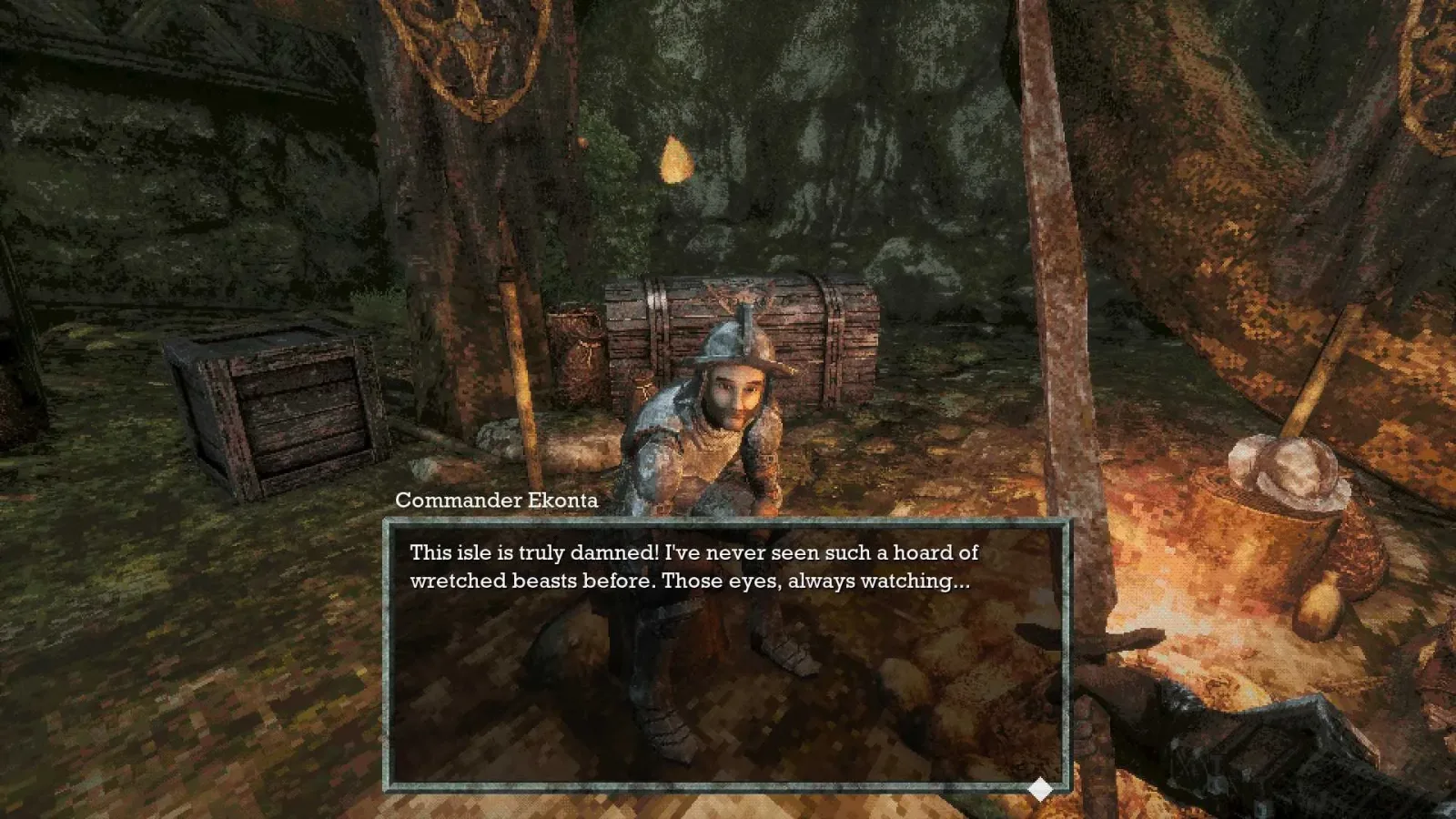
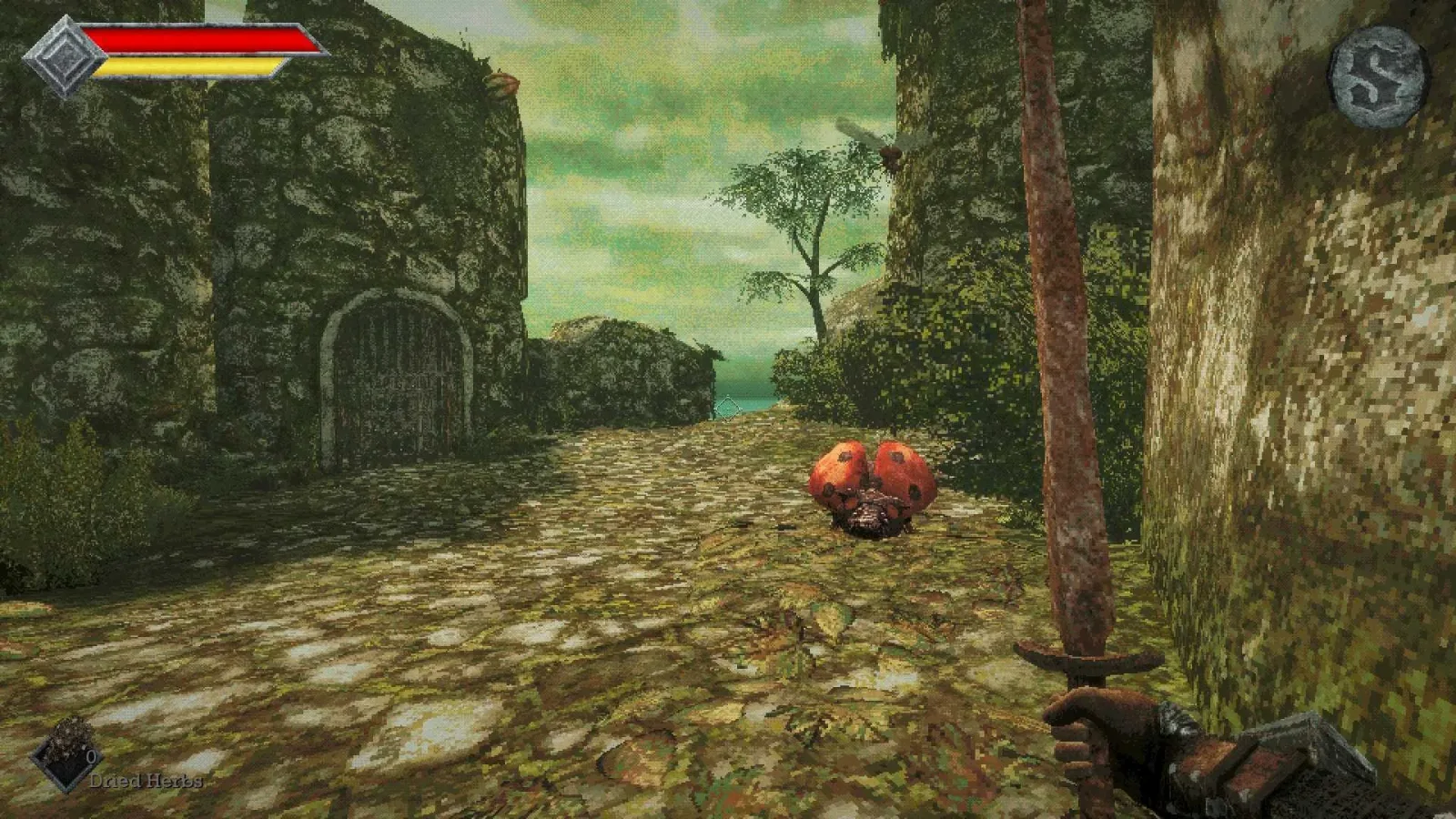
Once ashore, the situation is bleak. The father is nowhere in sight, his soldiers are scattered, and the island's outer reaches are inhabited by aggressive creatures. Early encounters include slow-moving, bug-like enemies that need to be carefully circled and struck when an opening appears. There is a despondent figure near a bonfire, a thoroughly unimpressive starting weapon, and a landscape that immediately suggests its secrets will have to be uncovered rather than handed over.
Anyone familiar with King's Field IV will recognize the broad shape of that opening. The resemblance extends beyond the setup to its pacing and emotional temperature. Progress is not about racing from mission marker to mission marker. It is about finding a weapon, surviving a new enemy, discovering a locked door, and wondering whether the key is in a nearby tunnel, behind an unseen passage, or much farther into the island than expected.
That sense of being underprepared is a feature, not a flaw. Early exploration can bring players face to face with poisonous centipede-like monsters, bizarre ladybug-rat hybrids, skeletons, and other threats that make every modest upgrade feel meaningful. A rusty spear is not merely loot; it is a practical new way to keep danger at a slightly safer distance. Even the discovery of several locked doors without any apparent keys contributes to the central mood: this is a place with its own logic, and the player has arrived too late to understand it.
Modern movement without losing the old-school pace
The clearest improvement over the older games is the control scheme. Queen's Domain does not replicate the tank-like movement associated with many first-person console games of the era. It offers a more natural range of camera motion with both sticks, alongside dependable walking and sprinting. That may sound like a basic expectation in a contemporary game, but it makes a substantial difference for a title whose combat and navigation are built around observation.
In a game where enemies can lurk around corners and an environmental hazard can kill without much warning, responsive looking and movement are not simply conveniences. They allow the player to engage with the intended tension instead of fighting an aging interface. One early surprise involves a huge flower positioned atop a tower that abruptly attacks with a laser beam. It is exactly the kind of bizarre, unfair-seeming threat that fits this kind of fantasy nightmare, but it is easier to appreciate when the response is limited by danger rather than clumsy camera control.
Freshly Baked Games also includes some basic tutorials. They do not seem designed to overexplain the adventure, but they establish vital fundamentals such as weapon use and the stamina system. That is a sensible compromise. Older dungeon crawlers often expected players to infer even their most foundational mechanics, which could turn initial curiosity into confusion. Queen's Domain explains enough to make its rules legible, then steps back.
The result is a game that can remain cryptic in the ways that matter. It can withhold directions, conceal its item progression, and leave players uncertain about the safest route forward. It does not need to hide how swinging a sword works. That separation may be one of the project's strongest ideas: preserving mystery does not require obscuring basic usability.
PS1-inspired ruins with a deliberately ominous texture
Visually, Queen's Domain leans hard into a PlayStation-inspired aesthetic. Its environments are full of pixelated moss-covered boulders, muddy stone paths, weathered ruins, shadowy caverns, eerie columns, heavy doors, and fluttering leaves. The visual style is not simply a nostalgic filter applied over a modern world. It supports the game's entire identity.
Low-detail geometry, compressed-looking textures, and carefully chosen color schemes can make a location feel less stable and less easily readable than a pristine high-definition fantasy environment. A distant structure may look inviting or threatening. A dark opening may be a passage or a dead end. A creature's silhouette may be recognizable only once it is already close enough to cause problems. Those qualities suit a game that wants exploration to feel anxious and intimate.
The approach also recalls the peculiar visual language of early 3D role-playing games, where technical limitations often produced places that felt abstract, dreamlike, and haunted. Queen's Domain uses that language purposefully. Its island is not a cheerful retro theme park. It is a place of damp stone, abandoned people, grotesque wildlife, and unexplained ancient structures.
The soundscape is equally central to the throwback. The music has a distinctly retro character, including bass work that strongly recalls the era that inspired the game. Alongside the sparse storytelling and distressed landscapes, the soundtrack helps establish the feeling that the Isle of Neasied is suspended somewhere outside of ordinary time.
Combat, repetition, and the value of small gains
The early combat loop is intentionally humble. Players start weak, face plodding enemies, manage a stamina meter, and gradually learn the timing and spacing needed to survive. Rather than delivering immediate power fantasy, the game asks players to chip away at threats and become more competent with inadequate equipment.
That progression is another direct connection to the design sensibilities that later became more widely associated with FromSoftware. The satisfaction does not come from being declared a legendary hero at the beginning. It comes from becoming less helpless through persistence, knowledge, and incremental gains. A sword or spear can be improved over time, and repeated encounters become a way of learning how to dismantle enemies that initially seemed overwhelming.
There is an inherent risk in building around that kind of friction. If the exploration lacks rewards, or if combat does not become more interesting as players learn, deliberate pacing can simply feel slow. But the early material suggests that Queen's Domain knows its audience. The locked doors, strange creatures, sparse guidance, and sudden environmental surprises are all part of a world designed to tempt players onward even after it has killed them.
An alternative route into King's Field's legacy
Queen's Domain is not a new King's Field, and it does not need to be. Its value may be that it gives players access to the older series' spirit without demanding total devotion to every antiquated design decision. The game retains the lonely first-person dungeon crawling, indirect narrative, uncomfortable monster design, and oppressive atmosphere that make FromSoftware's early work so fascinating. At the same time, it offers contemporary camera movement, sprinting, and minimal onboarding that can make the experience easier to inhabit.
For players curious about the roots of games such as Dark Souls and Elden Ring, that could make it an especially appealing prospect. It offers a path into a branch of fantasy game design that is often discussed more than played: slow, solitary, obscure, and willing to let a player wander into disaster. It also arrives with its own setting, its own missing king, and its own sleeping queen at the center of the nightmare.
There is still much to uncover beyond the island's earliest areas. The unanswered questions are numerous: where the missing father went, what has happened to his soldiers, how to pass the many sealed doors, and what awaits deeper within Neasied. But uncertainty is precisely the point. Queen's Domain makes the next door, the next weapon, and the next impossible-looking corridor feel like reasons to continue.
Community
Discussion
Start the conversation.
No comments have been posted yet.