

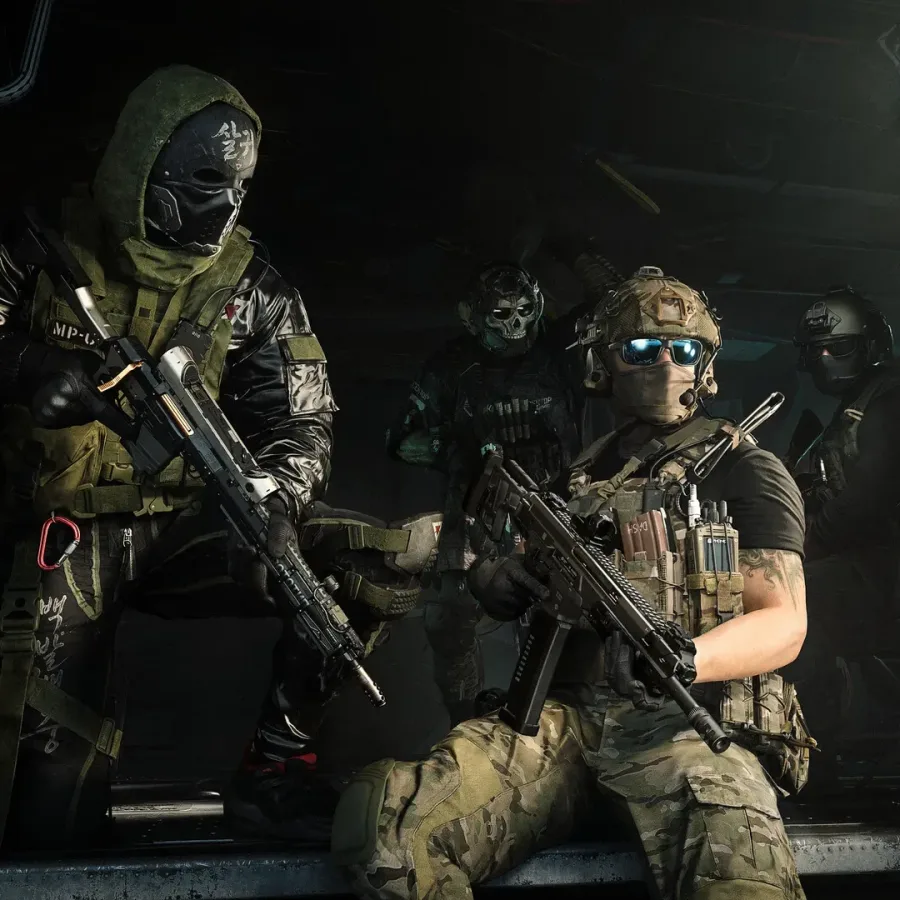
November is shaping up to be one of the most crowded and closely watched months gaming has seen in years. Grand Theft Auto 6 is scheduled for November 19, while The Legend of Zelda: Ocarina of Time remake is due to arrive as a Nintendo Switch 2 exclusive on November 5. Between those releases sits Call of Duty: Modern Warfare 4, a game Activision needs to make a strong impression after the commercial disappointment of 2025's Black Ops 7.
It would be easy to frame Rockstar's open-world giant as a threat to every other major game attempting to earn players' money and time this fall. Activision, however, is taking a notably different view. The company believes the enormous attention surrounding GTA 6 can increase interest in gaming overall, bring people back to their PlayStation and Xbox systems, and create an opportunity for Call of Duty to reach an even larger audience.
Speaking about the looming release calendar, Activision chief marketing officer Tyler Bahl argued that Call of Duty belongs in the discussion around the year's biggest releases. In his view, a major launch such as GTA 6 does not simply pull attention away from competitors. It can also put more eyes on the wider medium, revive inactive console audiences, and encourage social groups to start playing together again.
"More people coming in to the dashboards, more people taking the dust off their Xbox or PlayStation and starting to play again," Bahl said, describing the potential upside of a massive gaming moment.
For useful background on this topic, read GTA 6 Meets The Game Awards 2026 Eligibility Deadline by One Day.
A bigger gaming conversation could lift Call of Duty
The logic behind Activision's position is straightforward: GTA 6 will likely be a cultural event as much as a conventional game launch. A release of that scale can generate mainstream conversation, motivate hardware purchases, and get former players to reconnect with their libraries and friends lists. Once those people are active again, Activision believes Modern Warfare 4 has a chance to be one of the games they try, particularly because of Call of Duty's familiarity and multiplayer infrastructure.
That approach differs from the usual "one game can dominate the market" narrative. Big releases absolutely compete for attention, but they can also expand the active audience. Players returning for GTA 6 may renew subscriptions, update consoles, reconnect controllers, and begin looking at other current releases. For a long-running series such as Call of Duty, which has spent decades building an enormous player base, that renewed activity may be more valuable than trying to avoid a busy window entirely.
Activision's confidence also rests on what it considers Call of Duty's defining strength: the ability to play with friends. Bahl said the company's research indicates that community and shared experiences are frequently more important to players than individual elements such as combat or weapon handling. The appeal is not solely about winning a match or trying new equipment. It is about spending time with established groups across a broad range of devices.
Modern Warfare 4's cross-platform reach is central to that argument. Call of Duty players will be able to connect across PC, PlayStation, and Xbox, with Switch 2 joining the franchise's platform lineup this year. That makes Modern Warfare 4 an especially useful game for friend groups whose members do not all own the same hardware. If players are already returning to the hobby because of GTA 6, Activision hopes those groups will choose Call of Duty as a regular shared space.
Modern Warfare 4 must answer criticism of Black Ops 7
That optimism comes with pressure. Activision needs Modern Warfare 4 to perform better than Black Ops 7 did last year. The prior entry was a high-profile commercial disappointment, and Bahl acknowledged that the publisher's recent pattern of releasing direct follow-ups within the same Call of Duty sub-series did not line up with what the community wanted.
The release sequence included Modern Warfare 2 followed by Modern Warfare 3, then Black Ops 6 followed by Black Ops 7. Even when those games featured distinct settings, mechanics, and content, the rapid return to the same brands may have created a sense that the annual franchise was not changing quickly enough in ways players could feel.
"It was not something that our community was looking for," Bahl said of the back-to-back sub-brand strategy. "They wanted something new and fresh."
His comments point to a broader challenge for annualized franchises. New maps, modes, progression systems, campaign settings, and technical features can be meaningful additions, yet audiences often judge freshness on a larger level. They want a clear tonal shift, a new creative identity, or a reason to believe an installment represents more than an incremental evolution of the previous year's game.
Activision says Modern Warfare 4 is designed to address feedback it heard loudly from the community. The company has also previously indicated that this entry will bring the current Modern Warfare run to its conclusion. Meanwhile, Treyarch, the studio associated with Black Ops, has said it is moving on from Black Ops for its next project. Together, those developments suggest that 2027 is positioned to introduce a new Call of Duty sub-franchise rather than another immediate sequel to either Modern Warfare or Black Ops.
An ending for one era, and preparation for another
Modern Warfare 4 therefore carries a dual role. It is both this year's major Call of Duty release and a potential closing chapter for a familiar branch of the series. That can work in the game's favor if it delivers the kind of event-like package fans expect from a finale. At the same time, it raises expectations. Players who felt fatigued by repeated sub-series will be watching to see whether the game meaningfully distinguishes itself before Activision turns toward a different identity in 2027.
Bahl's comments make clear that Activision sees innovation as a necessity, not merely a marketing phrase. He pointed to a market where player tastes are changing rapidly and where new games can emerge with striking speed. In that environment, Call of Duty cannot rely only on its history, scale, or annual visibility. It has to offer experiences that feel new, better, or different enough to hold a community with more choices than ever.
That does not mean Activision is abandoning what has traditionally made Call of Duty successful. Quite the opposite: its stated plan appears to be combining change at the franchise level with continuity in the social experience. Cross-platform play, large communities, recognizable competitive action, and easy ways for friends to gather remain major advantages. The question is whether Modern Warfare 4 can make those established strengths feel compelling at a moment when players are asking for a clearer sense of evolution.
November's release calendar will test the theory
The near-term test begins immediately. Modern Warfare 4's campaign early access launches tomorrow, giving players their first opportunity to see how this installment approaches its single-player offering before the broader release period. The timing places it at the beginning of an unusually intense stretch: the Ocarina of Time remake follows on November 5, and GTA 6 arrives on November 19.
Each game serves a very different audience and fulfills a different role. Zelda's remake represents a major Nintendo Switch 2 exclusive and the revival of one of the industry's most celebrated adventures. GTA 6 is expected to command enormous attention as Rockstar's next open-world release. Modern Warfare 4 brings the familiar annual Call of Duty model, anchored by campaign content and a multiplayer ecosystem built around repeat play with friends.
There will inevitably be overlap in the audience, especially among players with limited time or budgets. But Activision's public stance is that the month does not have to be a zero-sum contest. If GTA 6 creates a larger wave of enthusiasm around games, hardware, and online play, Modern Warfare 4 could benefit from being accessible on the systems where returning players already spend their time.
It is a confident assessment, and one that depends on Modern Warfare 4 delivering on its promise to respond to community feedback. The scale of November's competition will make any weakness more visible. Yet it will also give Activision a chance to demonstrate that Call of Duty's longevity is rooted in something other than annual momentum: a social network of players who return because their friends are there. If that community responds, a month dominated by GTA 6 headlines may indeed become an opportunity rather than an obstacle.
Community
Discussion
Start the conversation.
No comments have been posted yet.