

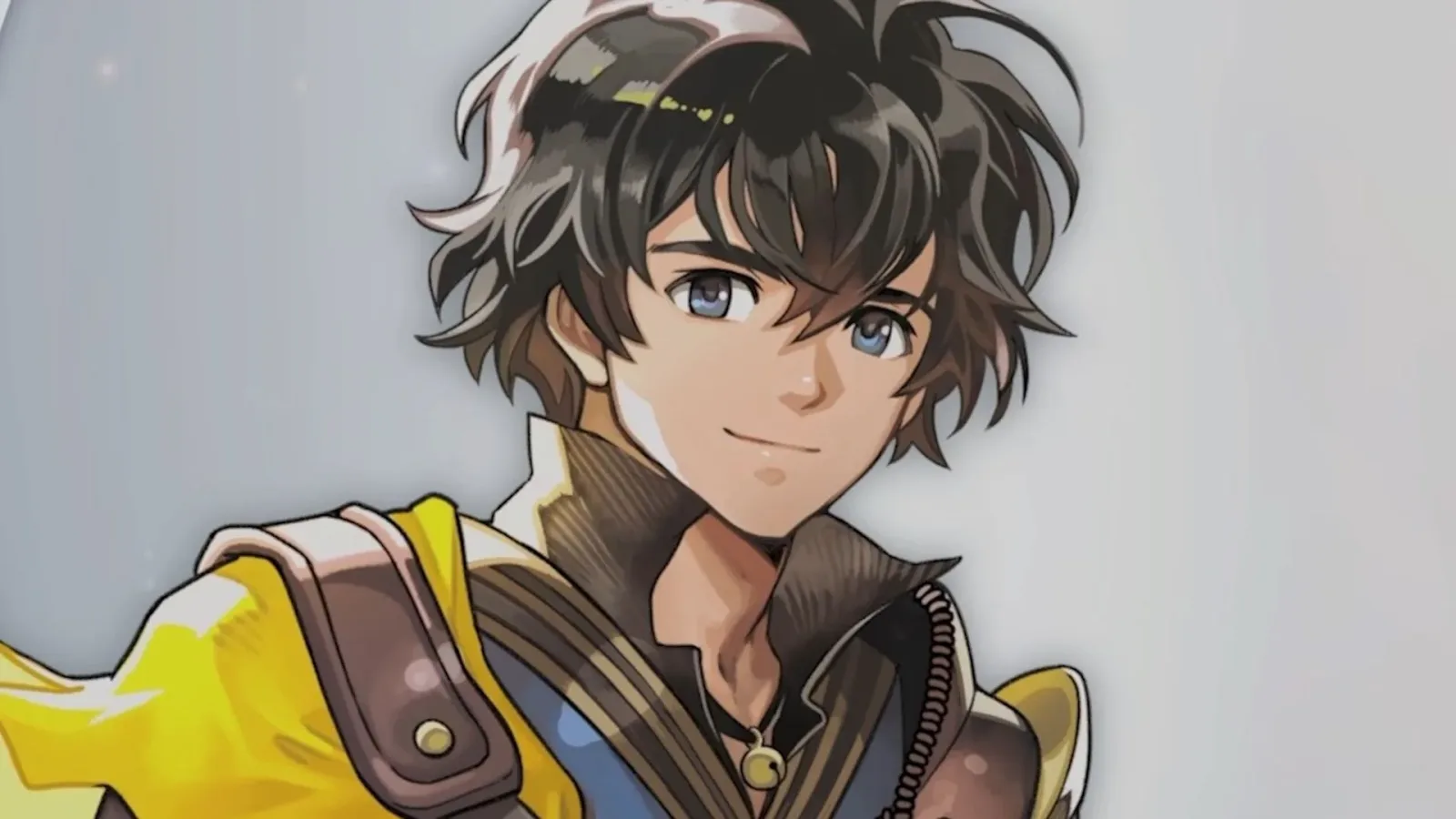
Another Eden Begins arrives at a moment when more Japanese role-playing games originally built around mobile live-service models are being reconsidered as works worth preserving. The newly overhauled version of Another Eden: The Cat Beyond Time and Space is now available on Steam, Nintendo Switch, and Nintendo Switch 2 for $40, replacing the pressures and limitations of an ongoing service with a premium release designed to stand on its own.
Producer Shinnosuke Hirasawa, who supervised the overhaul, sees the growing interest in this approach as an encouraging development. In comments about the broader trend, Hirasawa praised the idea of games surviving beyond the point where their original services can no longer operate. His view is straightforward: live-service titles are vulnerable by design, because their continued playability depends on servers, ongoing support, and a business model that may not last forever.
For players, that concern has become increasingly familiar. A game can receive years of updates, collect a passionate audience, and accumulate a large story archive, only to become inaccessible when its service reaches its end. For developers and creators, it can mean substantial work disappears from practical reach despite the care invested in writing, music, systems, characters, and world-building. Premium re-releases such as Another Eden Begins offer one possible answer: remove the live-service framework, reshape the content into a complete package, and give the game a future outside its original mobile infrastructure.
A live-service game's most difficult ending
Hirasawa identified the central issue facing online games: once service is terminated, they can no longer be played. That is a particularly significant problem for story-focused JRPGs, where years of events and character material may be tied to a single app or server environment. A shutdown does not merely stop new additions; it can close off the entire work.
For useful background on this topic, read Epomaker GX1 Headset Review: Stylish Open-Back Ambition, Tinny Results.
He also noted a second long-term challenge. As a game continues for many years, its development scale can begin to contract. That can happen for many reasons, from the changing needs of a player base to the demands of maintaining a mature service. Regardless of the cause, it creates a difficult reality for games that were initially built to expand indefinitely: eventually, the model may no longer support the same level of production that defined earlier years.
Another Eden Begins is positioned as a way to move beyond those constraints. Rather than simply preserving the old mobile experience unchanged, the project improves on the original game and is constructed with longevity in mind. The goal is not only to make the material available again, but to present it in a form suited to players who expect a traditional, self-contained JRPG experience.
That distinction matters. Preservation can mean maintaining old software exactly as it was, but a premium adaptation can also involve reworking the design so that a game makes sense without the loops that once supported its live-service economy. In a gacha-driven title, those loops can include random acquisition systems, daily incentives, limited-time campaigns, and ongoing monetization structures. Removing or reducing them leaves design gaps that developers must actively address rather than ignore.
More JRPGs are taking the premium route
Another Eden Begins is not the only project following this path. Hirasawa pointed to the broader wave represented by Final Fantasy Resonance and Octopath Traveler 0, games connected to mobile online origins that have been adapted into premium releases. The general formula is similar across these projects: strip away the live-service mechanics, expand or adjust story content where necessary, and turn the result into a full-priced game that can appeal beyond the original mobile audience.
The approach is especially notable because it reframes a type of game often treated as temporary. Mobile RPGs can have elaborate narratives, high-quality art, extensive soundtracks, and large casts, yet their association with gacha systems and online service can make them seem inseparable from their monetization model. A premium version challenges that assumption. It suggests that the creative work can have value after the systems built to sustain the original service are gone.
Hirasawa's reaction to other developers making similar choices was enthusiastic. He said he would like to see more such releases, arguing that creators take pride in what they make and that it is wonderful when live-service works are released in a form that allows them to remain available and continue receiving recognition. In his view, that outcome is beneficial not only for the teams behind the games, but for games as a medium.
That is an important point in the conversation around preservation. The issue is not limited to whether an individual player can revisit a favorite title. It also concerns the ability to understand the history of game design. Live-service RPGs have become a major part of the industry's output, particularly on mobile platforms. If they vanish completely at end of service, future players and developers lose access to a large body of work that helped define an era of interactive entertainment.
From mobile service to a complete RPG
Converting a live-service game into a premium release is not necessarily simple. The original structure may have been built around ongoing updates and character acquisition over a long period. Story arcs might have been released in installments, while progression and rewards were balanced around repeat engagement. A new edition has to consider how players encounter all of that content without the old framework.
For games such as Another Eden Begins, the opportunity is to make the experience more approachable. Players who avoided the original because of mobile expectations, gacha mechanics, or the fear of eventually losing access can instead approach a version intended to last. The $40 Steam and Switch release gives the game a clear premium identity, while its availability across Steam, Switch, and Switch 2 broadens the potential audience beyond phones and tablets.
The early Steam reception has been mostly positive, suggesting that the game has found at least some support among PC players. That response is meaningful because premium adaptations have to satisfy both returning fans and newcomers. Returning players may want a respectful treatment of the original's world and story, while new players need an experience that does not require familiarity with a defunct or changing service model.
There is no universal template for handling that transition. Some games may need extensive restructuring, while others may lend themselves more naturally to offline or complete editions. But the examples now appearing in the JRPG space show that developers are increasingly willing to explore the idea rather than accept service closure as the final state of a project.
Preservation questions extend far beyond JRPGs
The discussion surrounding these releases connects to wider concerns about ownership, access, and the lifespan of digital games. Players have become more conscious of what can happen when games rely on servers, licenses, storefronts, or publisher support. The issue affects single-player mobile RPGs as much as multiplayer games, although the practical problems can look different.
Campaigns such as Stop Killing Games have pushed the question into public and legal debate, particularly around games that cease functioning after online support ends. At the same time, industry plans affecting physical distribution have added to worries about what happens when access is tied almost entirely to digital ecosystems. The future availability of a game is no longer something players can automatically assume, even when they have spent money and time on it.
Mobile games make the concern especially visible. Their services can host years of content, but they can also depend on constant operational support. Even massive games face the eventual question of what happens if development winds down. Genshin Impact, for example, remains a giant of the live-service space, but its long-term future will ultimately raise the same basic preservation questions faced by far smaller titles. Whether an official offline version can exist years or decades later is a question that remains uncertain.
Premium adaptations are not a complete solution for every live-service title. A heavily multiplayer game may be much harder to preserve in its original form, and not every publisher will choose to fund a major conversion. Still, the emerging JRPG examples show that another outcome is possible for some projects. Instead of being treated as disposable products whose stories expire with their servers, they can be rebuilt as enduring games.
A promising model for story-driven games
For Hirasawa, the key value is that the work remains in the world. That phrasing captures why the transition matters. A game does not need to continue operating forever as a live service in order for its creative achievements to remain meaningful. In fact, a premium edition may offer a cleaner way to appreciate those achievements, allowing the narrative and adventure to take center stage without the original service's economic demands.
Another Eden Begins now stands as one part of that evolving model. Its launch on Steam, Nintendo Switch, and Nintendo Switch 2 gives players a new entry point into a game that originated in the mobile live-service space, while its redesign signals an effort to ensure the experience can continue beyond that era. Alongside Final Fantasy Resonance and Octopath Traveler 0, it adds momentum to a welcome idea: games that were once bound to an online service do not always have to disappear when that service ends.
For JRPG fans, the hope is that more developers will see their long-running mobile worlds as worth saving. If that happens, stories once confined to temporary apps could gain a much longer life on PC and console platforms, where players can discover them without wondering whether the adventure will someday become impossible to play.
Community
Discussion
Start the conversation.
No comments have been posted yet.