


Epomaker's GX1 is easy to want before it ever produces a sound. This is the company's first headset, and it arrives with a combination that is remarkably uncommon at its $49.99 / £45.99 asking price: an open-back over-ear design, 50mm drivers, wired and wireless connections, RGB lighting, and a claimed 70-hour battery life with the lighting switched off. On paper, it is an ambitious effort to make a usually premium-style listening experience accessible to players on a tighter budget.
It also looks far more distinctive than many affordable gaming headsets. But gaming audio hardware ultimately has to be judged on what reaches the ears and microphone. That is where the GX1 falls short. Its dialogue presentation can be clear and involving, and its PC software provides EQ options that improve the experience to a degree. Yet the overall sound is too thin and tinny, music lacks the energy and warmth it needs, and the microphone output is muddied by an unpleasant boominess. Add software that can be confusing and occasionally refuses to launch, and this stylish headset becomes difficult to recommend despite its strengths.
A budget open-back headset with genuine visual flair
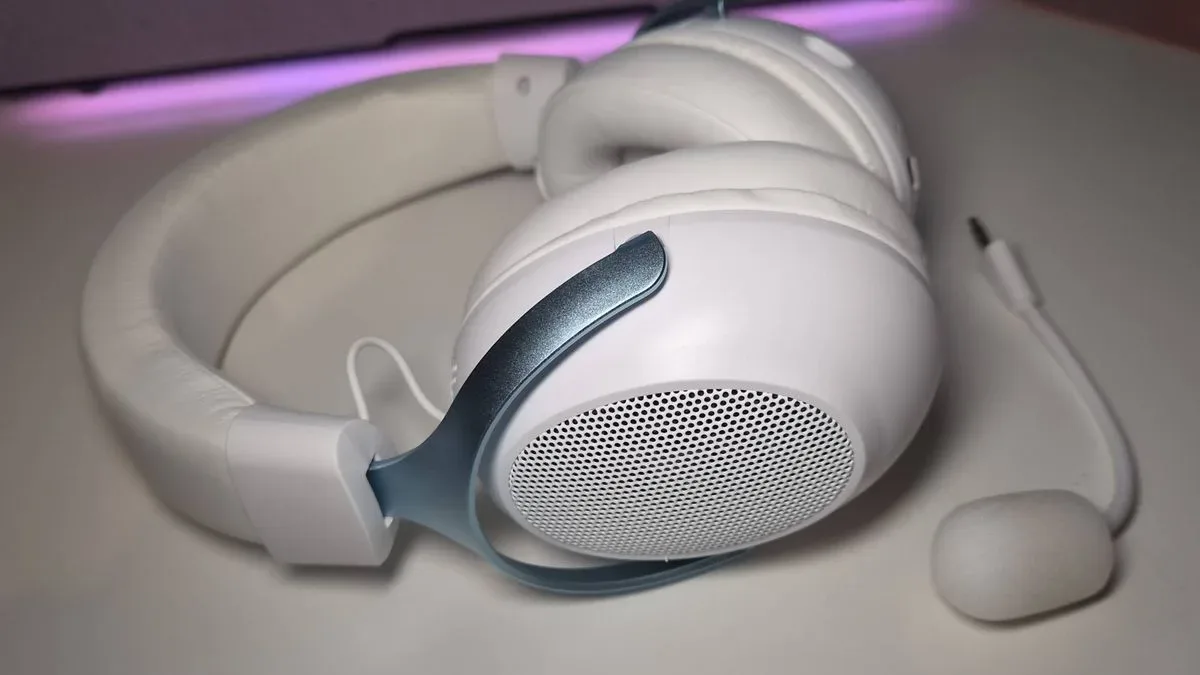
The GX1 makes an immediate visual impression, particularly in its white finish. Its pale body is paired with shiny baby-blue metal yokes, giving it a playful early-2000s, Y2K-inspired feel that sets it apart from the usual black plastic gaming peripheral. The Black and Pink versions offer alternative looks, but the white-and-blue model is the standout choice for anyone who wants a headset with a little personality on a desk or headphone stand.
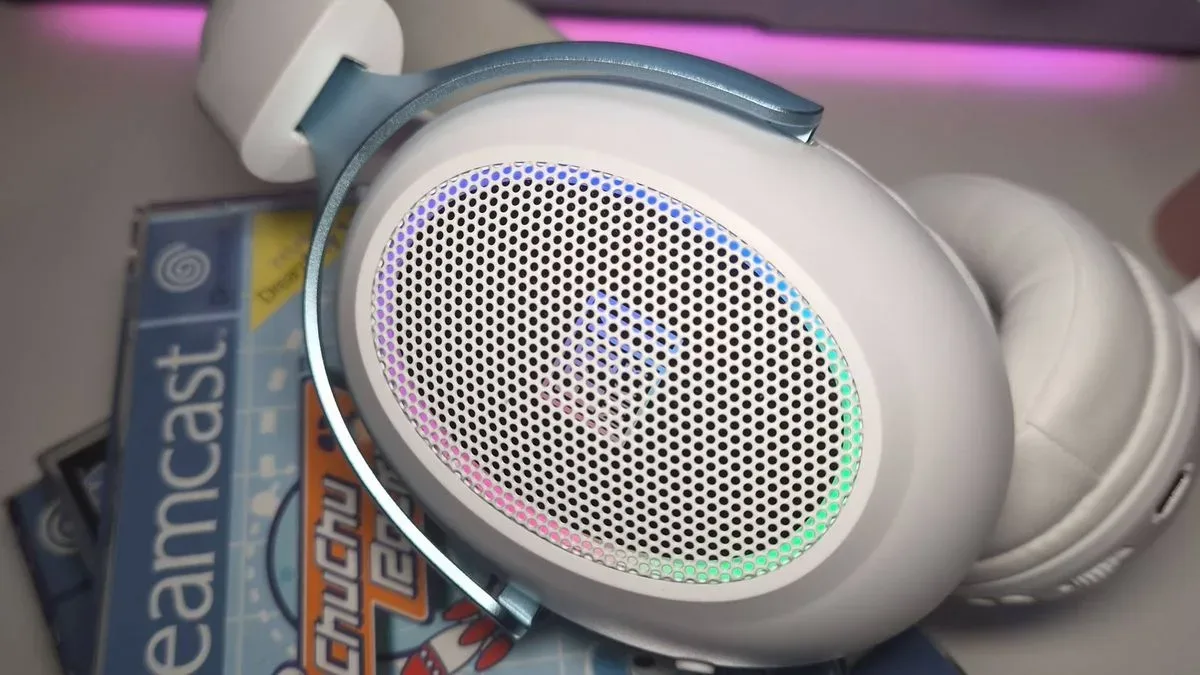
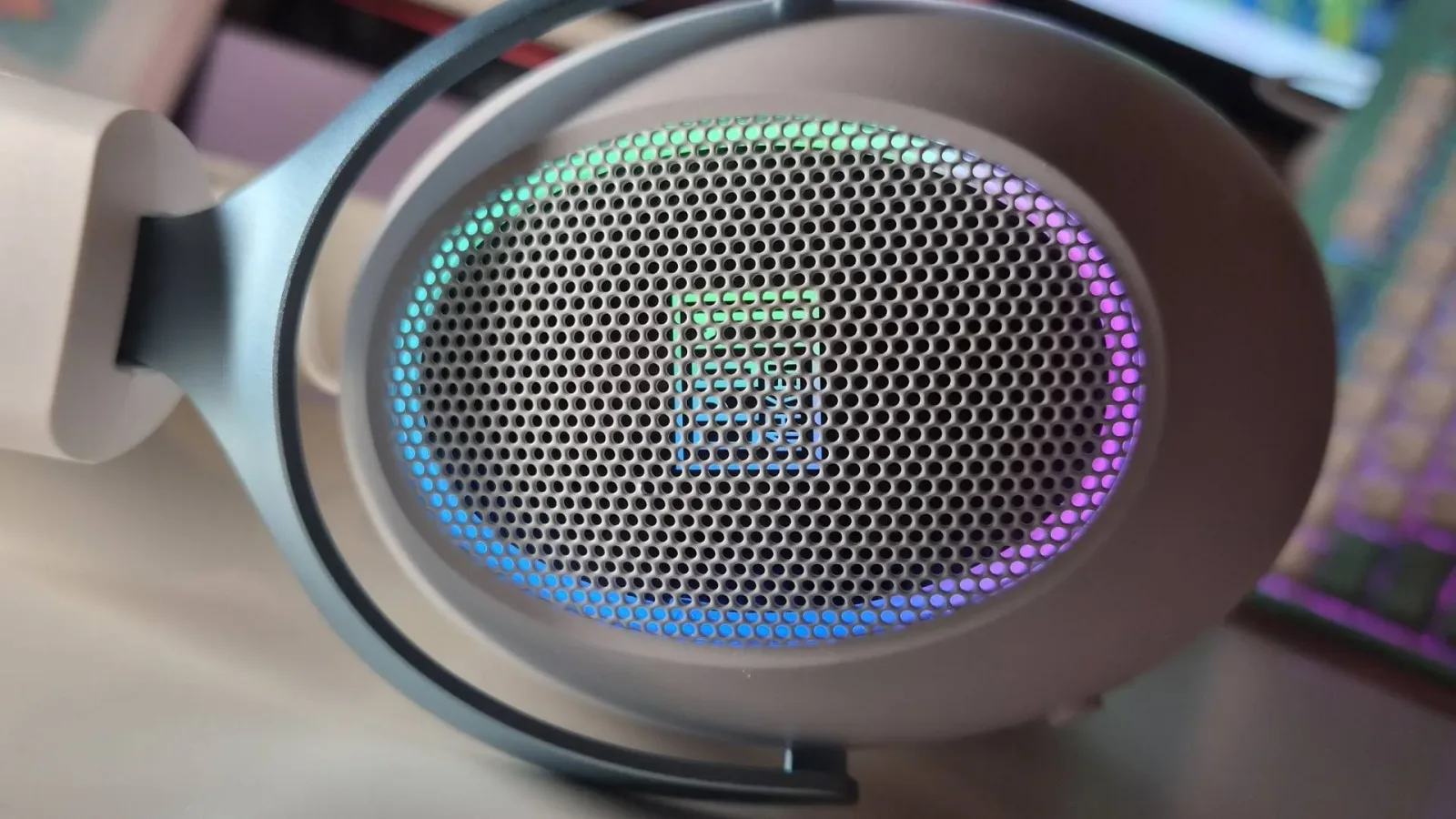
Its RGB implementation is unusually restrained in a good way. Rather than placing a conspicuous lighting ring around each earcup, Epomaker positions the pastel rainbow illumination behind the open-back grilles. Light shines subtly through the exterior ventilation dots alongside a faint logo, creating an effect that complements the hardware rather than overwhelming it.
For useful background on this topic, read Diablo 5 Chosen Over More Diablo 4 Expansions Because Blizzard Says Diablo Needs a Full Game.
Comfort is another substantial positive. At a listed weight of 320g, the GX1 is not exceptionally light on a specification sheet, but it wears more lightly than that number suggests. It remains comfortable over long sessions, which is especially important for a headset designed for open-back listening and extended wireless use. For players who dislike the clamping sensation or heat buildup that can come with many closed-back gaming models, this design has real appeal.
Features that exceed the price tag
The GX1's open-back construction is its defining feature. Open-backed headphones allow air and sound to pass through the earcup grilles, typically creating a more spacious presentation than closed-back alternatives. The trade-off is sound leakage: people nearby may hear what is playing, while outside noise remains audible to the wearer. That makes this style better suited to quiet bedrooms, home offices, and private setups than busy shared spaces, travel, or competitive environments full of background noise.
At this price, however, simply offering the format is notable. Open-back gaming headsets are often considerably more expensive, so Epomaker deserves credit for bringing the option down to $49.99 / £45.99. The rest of the specification list is similarly generous. The headset uses 50mm dynamic drivers with a stated 20Hz to 20kHz frequency response, supports virtual 7.1 surround sound, and offers tri-mode connectivity through 2.4GHz wireless, Bluetooth, or a wired USB-C-to-3.5mm/USB connection.
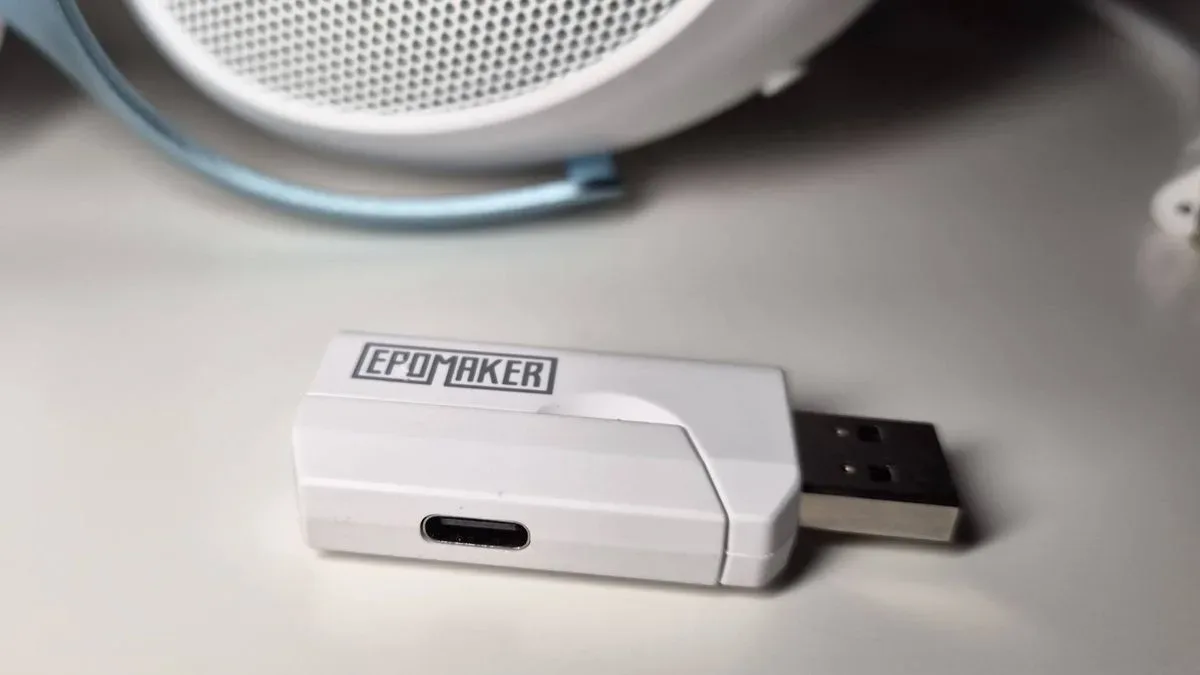
The wireless receiver is especially thoughtful. It can function as either a USB-C or USB-A dongle, reducing the usual concern over which ports are available on a PC, handheld, console dock, or mobile device. It is a small practical touch, but one that makes moving between devices less frustrating. Compatibility covers PC, PS5, Nintendo Switch 2, and mobile hardware, while wired use broadens its potential with older and retro-focused setups that still use 3.5mm audio.
Controls are handled through a volume dial, power button, microphone mute button, RGB button, and a Bluetooth/2.4GHz switching control. There is no active noise cancellation, which is unsurprising for the price and open-back construction. The GX1 also includes two microphone options: a detachable boom microphone with ENC noise cancellation and an internal microphone that takes over when the boom is removed.
Clear dialogue cannot overcome a thin overall sound
Open-back headphones often earn praise for natural sound staging, detail, and a sense of space. The GX1 does demonstrate part of that potential. Dialogue comes through clearly, and voice-focused scenes can feel notably immersive with virtual surround processing enabled. Character exchanges in story-heavy games benefit from the headset's clarity, making conversations easy to follow and voices consistently intelligible.
That strength does not extend evenly to everything else. The overall tuning is too tinny, with music and more energetic soundtracks lacking body. When a score should surge, it instead feels flat and undernourished. Open-back headsets generally do not deliver the deep, sealed-in bass response of closed-back models, but the GX1's problem is more than simply a reduced low-end thump. It lacks the warmth and fullness necessary to make music sound satisfying.
This becomes especially noticeable in games with prominent soundtracks. A jazzier title theme can gain a little life from EQ adjustment, but the default output does not give those tracks the bounce or richness they deserve. Competitive games, action titles, streamed shows, films, and everyday music listening all expose the same limitation: voices are acceptable, but the wider mix does not consistently feel balanced or engaging.
PC users have a partial remedy in the XearOne Audio Center software. Its Dynamic Bass preset adds some welcome resonance and makes music noticeably warmer. There are also volume controls, left-right panning, EQ adjustments, and other presets. These tools are useful, but they do not transform the GX1 into a naturally strong-sounding headset. More importantly, they are restricted to PC, so console, handheld, and mobile users cannot rely on the same correction.
Software and microphones are frustrating weak points
XearOne's feature set is decent for an entry-level headset, but the program itself is not dependable enough. Tutorial text may appear in another language despite the software being set to English, creating an immediately awkward setup experience. More seriously, the application can fail to boot correctly, briefly appearing before disappearing again. The exact cause may vary by system, and Windows 11 could potentially be a factor, but the result is the same: a key tool for improving the GX1's sound may not be available when it is needed.
When it does work, the software includes microphone volume adjustment, selectable levels of noise reduction, and novelty Xear Magic Voice effects. The latter may amuse some users, but they are not a meaningful substitute for solid core microphone quality.
Unfortunately, neither microphone leaves a strong impression. Friends should be able to understand a GX1 user in casual multiplayer chats, so it is functional for basic communication. But isolated recordings reveal a muddy, boomy, fuzzy quality. The detachable boom mic does not deliver the expected improvement, and the automatic internal-mic fallback is not an attractive alternative. Considering the low price, studio-quality capture would be unreasonable to expect, but cleaner and less congested speech should still be the baseline.
Battery life is a major advantage
Battery longevity is the GX1's best technical win. With RGB disabled, Epomaker rates the headset for up to 70 hours of playback. That is an excellent figure at this price and compares favorably with a number of more expensive gaming headsets that manage roughly 30 hours. In practical terms, it means the GX1 can go for long stretches without becoming another device that needs constant charging.
Turning the RGB lighting on reduces the estimate to 30 hours, which is still respectable. Buyers who value the visual effect can use it without making the headset inconvenient, while those who prioritize endurance have a simple way to extend the time between charges.
Who should consider the Epomaker GX1?
The GX1 is best suited to someone who values its design, comfort, flexible connectivity, and battery life above all else. It may be tempting for players specifically seeking a low-cost open-back headset for a quiet home setup, especially if they mostly play dialogue-heavy games and spend much of their time on PC where EQ options are available.
However, anyone who prioritizes music, impactful game soundtracks, a strong microphone for party chat or streaming, or reliable companion software should look elsewhere. The headset's flaws strike at the central reason for buying audio hardware. Its features are plentiful, but those features cannot compensate for sound that often feels thin or microphones that make voices sound muffled and fuzzy.
Those willing to spend more may be better served by waiting for discounts on higher-end open-back alternatives, such as the Turtle Beach Atlas Air. The Sony Inzone H6 Air is another capable option to watch for during sales, although it is wired-only and normally carries a substantially higher price.
Final takeaway
The Epomaker GX1 is a handsome and comfortable headset built around an excellent budget-minded idea. It delivers a rare open-back design at a low price, adds genuinely useful tri-mode connectivity, includes a clever adaptable dongle, and offers battery life that comfortably exceeds many better-known rivals. Its visual design is among the most appealing aspects of the package.
But an audio product needs to sound good before anything else. The GX1's clear dialogue and adjustable PC EQ are not enough to offset its tinny presentation, weak musical warmth, muddy microphones, and temperamental software. This first headset shows promise from Epomaker, but it needs much stronger audio tuning and a more polished software experience before it can be a serious budget gaming-headset contender.

Community
Discussion
Start the conversation.
No comments have been posted yet.