

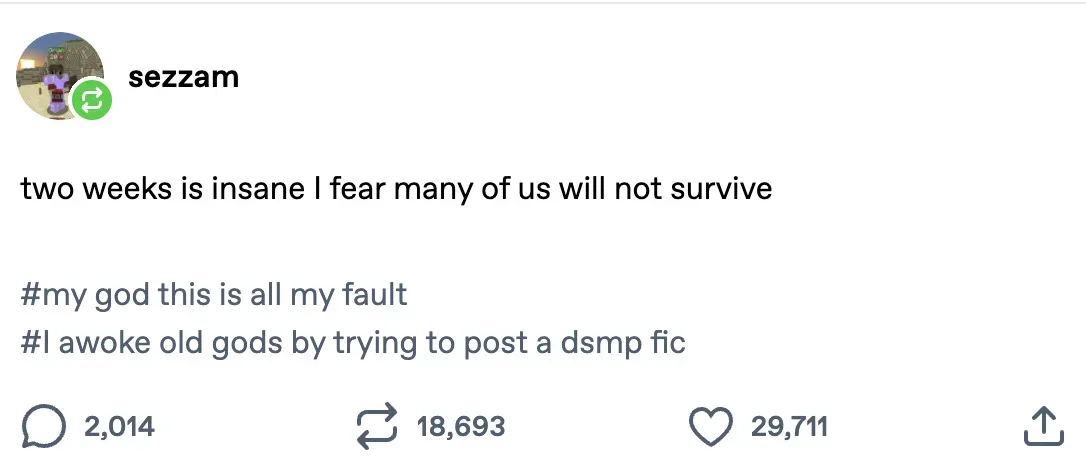
Archive of Our Own, widely known as AO3, is facing a major service outage that may keep the fanfiction archive inaccessible for anywhere from two to four weeks. The Organization for Transformative Works, the nonprofit that operates the site, initially indicated that the interruption could be comparatively brief. A later status update substantially extended that expectation, estimating roughly two weeks for service restoration while warning that the process could take as long as four.
There is at least some hope that readers and writers will be able to return sooner in a limited capacity. The site's status messaging said it may be possible to bring AO3 back in a degraded state before full restoration is complete. That would mean the archive could be intermittently unavailable, or certain features could be restricted while work continues. For a community accustomed to using the site as an everyday reading library, writing workspace, recommendation hub, and social record, even a partial return would be a significant relief.
The precise reason for the extended downtime has not been confirmed. That uncertainty has made the lengthier estimate especially unsettling for users, who are now waiting not only for the archive to return but also for a clearer explanation of what happened and what recovery will look like.
Embedded X/Twitter post
Embedded X/Twitter post
A central library for internet fandom
AO3 is not simply another website where people post stories. Over the years, it has become one of the internet's most important repositories for transformative works: fanfiction, fan art, podfic, fan-made videos, meta essays, and countless other projects inspired by games, films, TV series, comics, books, music, real people, and historical or religious texts. Its tagging system, extensive filtering tools, and nonprofit structure have made it a foundational space for readers looking for highly specific material and creators sharing work outside traditional publishing channels.
For useful background on this topic, read Donald Glover to Write, Direct and Star in Netflix's Live-Action PUBG Series.
For game communities, that role is especially visible. A major release can produce a flood of fan writing within days, while long-running series can sustain active archives years or decades after their latest installment. Players use fanfiction to explore alternate story routes, expand on underused companions, imagine crossovers, reinterpret endings, and build entirely new stories around worlds that may otherwise exist only in a finite number of official games.
Games with relationship-driven casts and branching narratives tend to thrive in this environment, but the appeal is much broader than romance or adult material. Fans write character studies, comedy, horror, lore speculation, missing scenes, post-canon continuations, modern-setting adaptations, and stories that focus on a single obscure NPC. An archive outage therefore removes a major avenue for enjoying and preserving the communal side of a game long after players have seen the credits.
That breadth helps explain the scale of the reaction. For many users, AO3 is part of a daily routine: a place to read before bed, follow a serialized story during a commute, revisit bookmarks, leave comments, or upload a chapter for readers who have been waiting. A multiweek interruption does not just postpone access to new material. It also temporarily cuts people off from personal libraries built through subscriptions, saved searches, tags, histories, collections, and bookmarks.
Readers react with humor, anxiety, and support
Social media responses to the outage have ranged from dramatic jokes about being unable to cope to sincere appreciation for the volunteers handling the recovery. The tone is familiar to anyone who has watched an online community react when a beloved service goes down: exaggerated panic sits beside genuine concern, and both stem from how deeply a platform has become integrated into people's lives.
Many users have emphasized that the people maintaining the archive deserve time to resolve the issue safely and properly. At the same time, the prospect of two to four weeks without reliable access has prompted plenty of gallows humor. Readers who had saved a favorite ongoing work for later, writers who planned to post on a certain schedule, and fans who use AO3 as their primary entertainment outlet are all confronting an unexpectedly long interruption.
That reaction should not be dismissed as trivial. Fandom spaces can be meaningful sources of creativity, friendship, identity, and comfort. Fanfiction communities frequently organize around shared excitement for a game or show, but they also support people through difficult periods, offering familiar characters and welcoming discussion spaces. Losing access to a major archive can be frustrating on a practical level and emotionally disruptive on a personal one.
AO3's importance comes from more than the volume of stories it hosts. It is also a living record of how communities respond to the media they love.
The outage also highlights how much cultural material is concentrated in digital spaces that people do not directly control. Even if an individual has downloaded some favorite stories, a personal folder cannot replace the discovery tools, comment threads, creator profiles, tags, and ongoing conversations that make an archive feel alive. It is a reminder that online preservation is not only about retaining files; it is about maintaining the context that gives those files meaning.
What a degraded return could mean
The possibility of a degraded restoration is encouraging, but users should prepare for instability if that happens. The status update specifically cautioned that there may be periods when the site is unavailable. A limited return could also involve performance problems or features being temporarily unavailable while the underlying issue is addressed.
For writers, the sensible approach is to keep local copies of drafts and avoid assuming that publishing schedules will resume immediately once the site becomes reachable. For readers, this is a useful moment to check whether they have copies of works they are currently reading, provided creators have made downloads available and the archive returns in a stable enough state to access them. Patience will matter: restoration after a serious outage is often a process rather than a single on-switch moment.
Users should also be cautious about misinformation during a high-profile disruption. When a large community is anxious for updates, rumors and fake notices can spread quickly. Official AO3 status communications are the best place to watch for changes, rather than unverified screenshots or posts claiming to offer alternate access. People should be particularly wary of unsolicited messages, suspicious mirrors, or requests for account credentials.
AO3 has weathered disruption before
This is not the first time AO3 has been knocked offline. In 2023, the archive was affected by a distributed denial-of-service attack that disrupted access for several hours. A hacktivist group claimed responsibility at the time and reportedly demanded a $30,000 ransom. That incident demonstrated both the vulnerability of a prominent community service and the intensity of the response when a site used by millions suddenly disappears from the web.
The current outage is different in one major respect: the expected recovery window is much longer. While the cause has not been disclosed, a two-to-four-week estimate indicates that the work required is more substantial than a routine interruption. The Organization for Transformative Works has not publicly tied the present situation to the 2023 attack, and there is no basis to assume the events are connected.
For now, the practical reality is simple. AO3 readers and creators may need to find other ways to spend their fandom time while the archive is repaired. That could mean returning to unfinished games, catching up on official novels and comics, revisiting downloaded stories, talking in community spaces, or finally working on a draft without the temptation to refresh for comments. None of those options fully replaces the archive, but they may make the wait more manageable.
A difficult wait for a volunteer-supported institution
The size of the reaction underlines AO3's unusual place on the modern internet. It is free to access, sustained by volunteers and donations, and designed around an enormous range of fan interests that commercial platforms often ignore or struggle to accommodate. Its value is not measured solely in traffic or engagement metrics. It exists in millions of individual connections between creators, readers, characters, and fictional worlds.
That is why a potentially month-long outage feels so consequential. The archive is a practical tool for publishing and reading, but it is also a shared institution for fandom culture. Until more is known about the problem, the best outcome is a careful restoration that protects the site and the work stored within it--even if that means the community has to endure a longer wait than anyone hoped for.

Community
Discussion
Start the conversation.
No comments have been posted yet.