

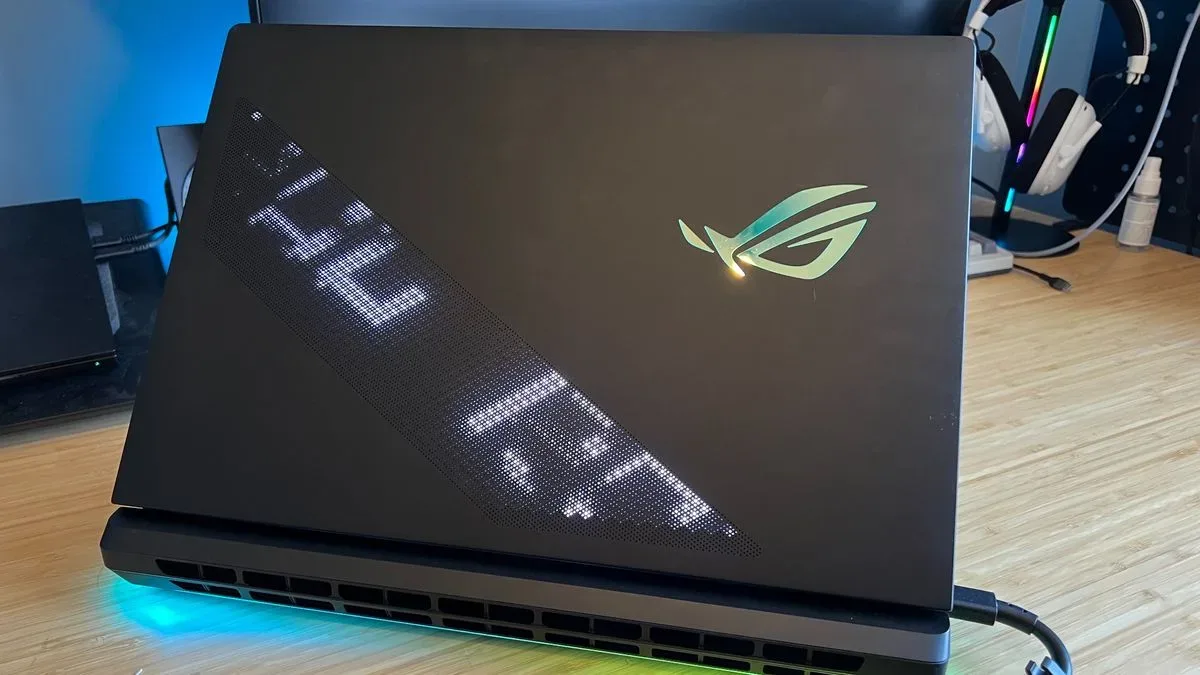
The Asus ROG Strix Scar 18 (2026) is not trying to be a laptop in the usual sense. This is a huge, expensive, thoroughly uncompromising desktop replacement designed for players who want high-end PC gaming performance without putting together a tower. Its strengths are clear: a new 4K Mini LED display that can run at 240Hz, powerful RTX 5080 and RTX 5090 configurations, and revised cooling built to keep its premium components working hard.
It also arrives at a time when flagship gaming hardware costs are climbing rapidly. The top configurations move well beyond $4,000, while an RTX 5090 model with a conventional amount of storage is expected to land at roughly $5,000. That makes the Scar 18 a highly selective purchase. Yet for buyers already committed to this rarefied category, Asus has made a convincing case that refinement matters just as much as raw benchmark wins.
After three weeks of use and testing, including two weeks as a daily machine, the 2026 Scar 18 stands out as one of the most capable 18-inch gaming laptops available. It does not decisively beat every rival in every workload, but its combination of gaming results and an unusually flexible display gives it a powerful all-around advantage.
Configurations and core specifications
Asus keeps the Scar 18 firmly at the top of its product stack. There are no entry-level graphics options here: buyers are limited to Nvidia GeForce RTX 5080 and RTX 5090 models, joined by Intel's Core Ultra 9 290HX Plus processor. Memory comes in either 32GB or 64GB configurations, while storage begins at 1TB and can rise to 2TB or beyond depending on the retailer and configuration.
For useful background on this topic, read The Witcher 3 Remastered Loot Merge Explained: When It Combines Items and When It Does Not.
The tested system paired an RTX 5090 with 64GB of RAM and a 4TB NVMe M.2 RAID storage arrangement. That exact setup did not have a broadly listed street price, but it represents the kind of specification that pushes the Scar 18 into the $5,000 range. Extra storage will be useful for the increasingly enormous installs demanded by modern games, even if it is not the primary driver of gaming frame rates.
- Display: 18-inch ROG Nebula HDR Mini LED, 4K, up to 240Hz
- Processor: Intel Core Ultra 9 290HX Plus
- Graphics: Nvidia GeForce RTX 5080 or RTX 5090
- Memory: 32GB or 64GB
- Connectivity: Wi-Fi 7 and Bluetooth 5.4
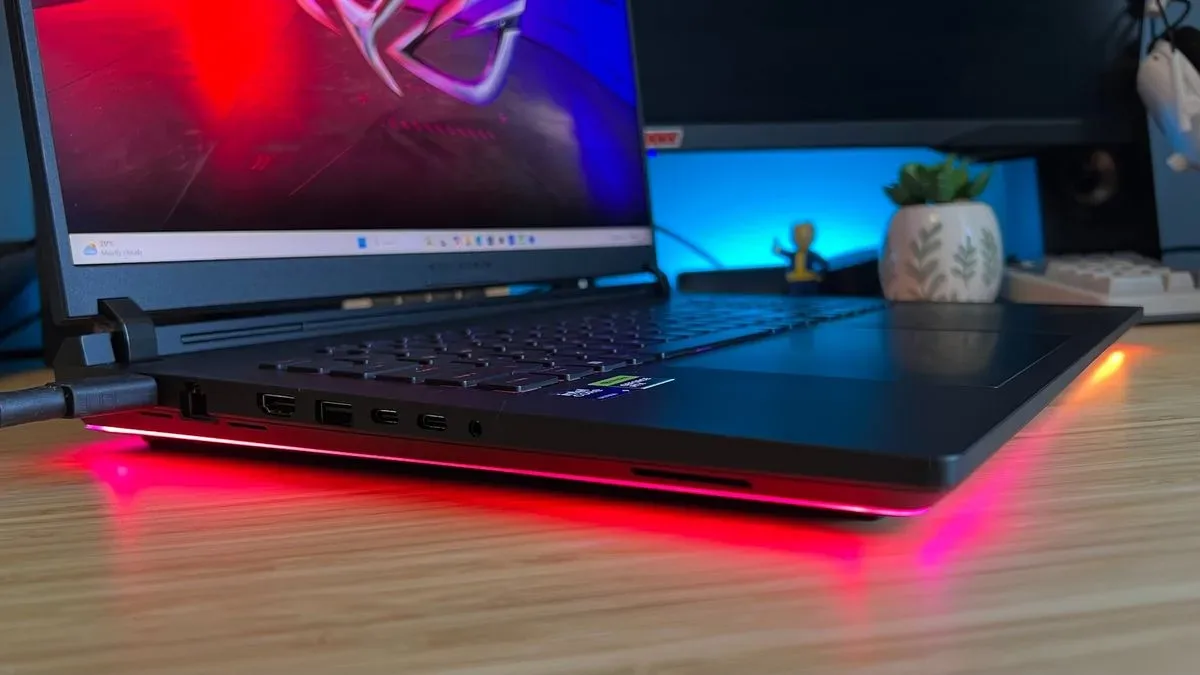
- Ports: HDMI 2.1, three USB 3.2 Gen 2 Type-A ports, two Thunderbolt 5 ports, 2.5G LAN, and 3.5mm audio
- Dimensions: 1.38 x 15.71 x 11.73 inches
- Weight: approximately 3.7kg
The new Intel chip is not expected to transform real-world game performance on its own. Its more notable benefit is its improved positioning for intensive AI tasks. The RTX 5090, abundant memory and refreshed thermal design are the more important ingredients for users focused on demanding games and creative workloads.
A more mature look, but still a massive machine
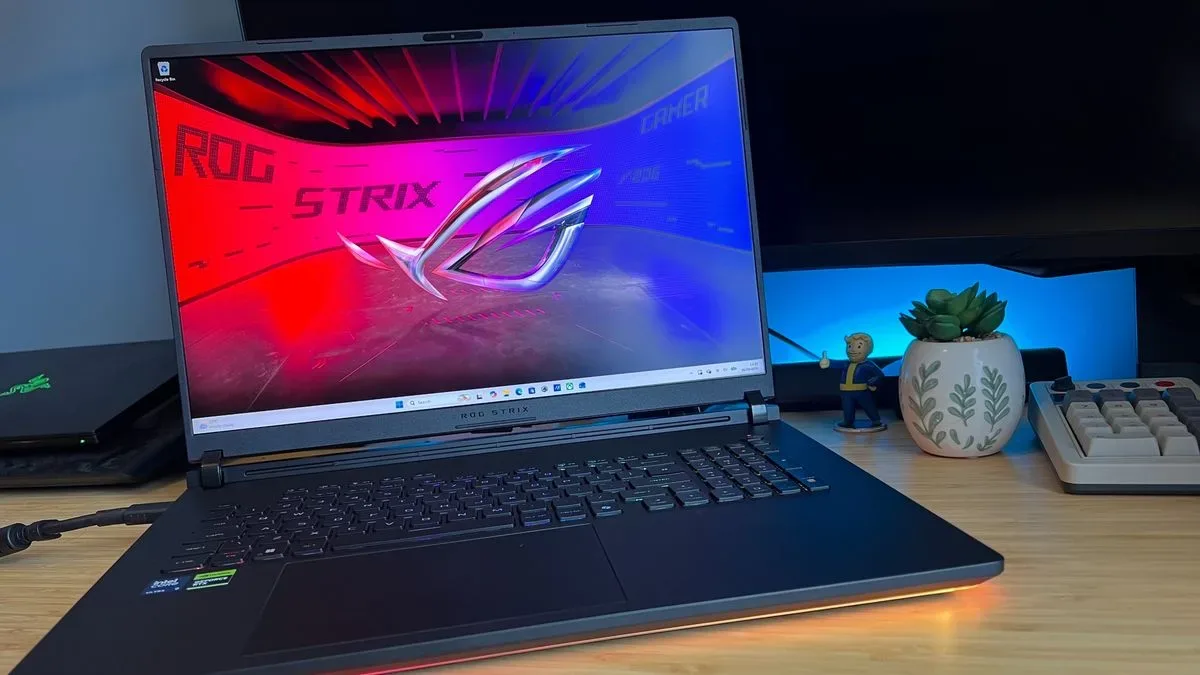
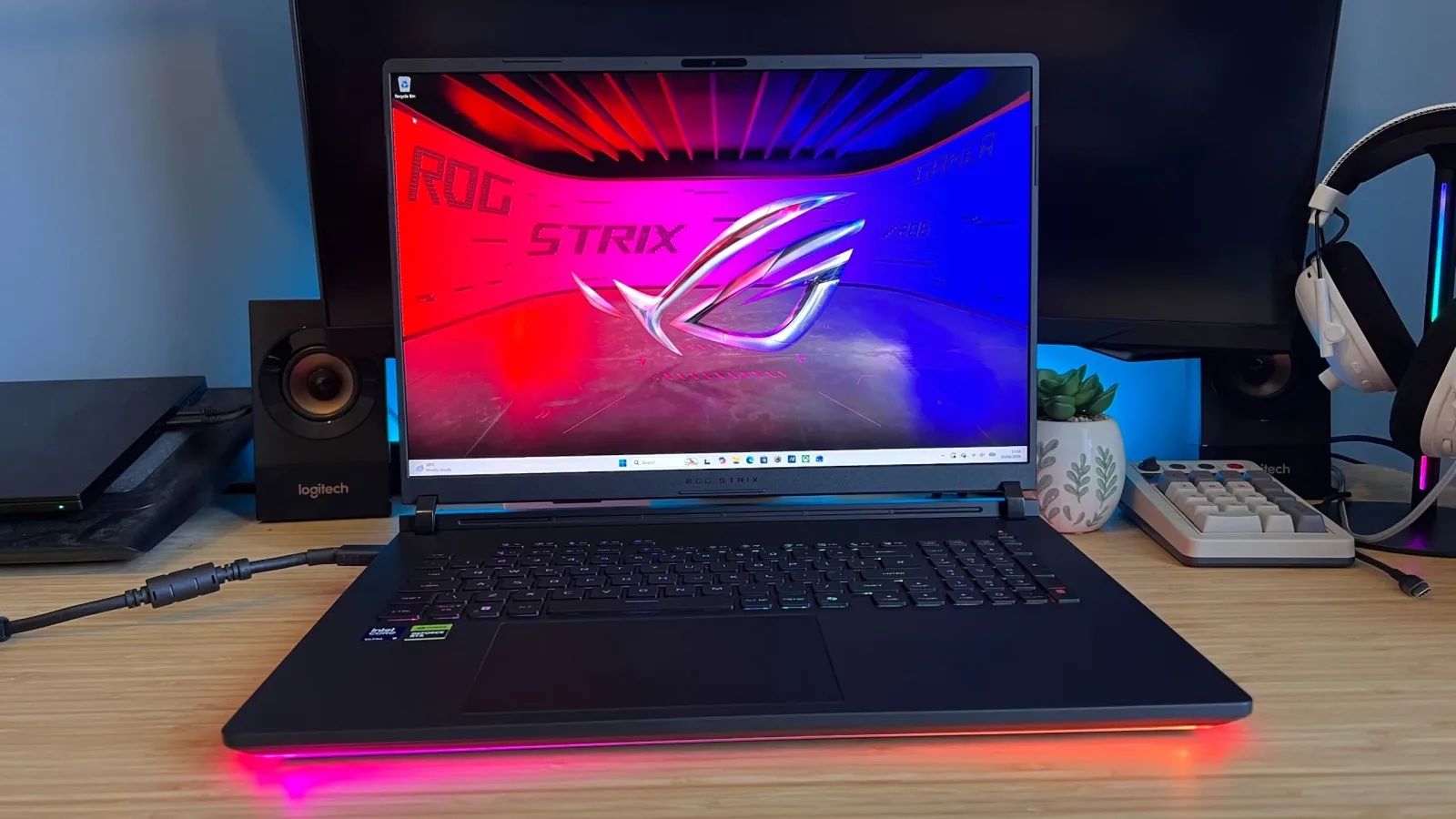
Last year's redesign gave the Scar 18 a more premium visual identity, and the 2026 version wisely retains that direction. The older translucent design language has given way to a matte black chassis that is better suited to a premium machine. The interior uses a restrained soft-touch plastic finish, and the overall construction feels dependable even if there is a little more flex in the main deck than its price might suggest.
The hinges open smoothly and support one-handed operation, though there is some visible wobble. That is not a deal-breaker, but it is a reminder that the Scar 18 is not built with the same slim, CNC-milled aluminum emphasis as the Razer Blade 18.
Asus also continues to include its dot-matrix panel on the back lid. It is a divisive flourish. Some buyers will appreciate the extra customization, while others may see it as an unnecessary addition that interrupts an otherwise clean design and potentially adds cost. Thankfully, it can be switched off through Armoury Crate.
Portability is the inevitable trade-off. At about 3.7kg, the RTX 5090 Scar 18 is heavier than the previous generation's 3.3kg figure. It is also larger and thicker than its two main comparisons. Razer's Blade 18 is around 3.1kg and 1.1 inches thick, while the MSI Raider A18 HX A9W measures 1.26 inches thick and weighs around 3.6kg. The Asus is plainly intended to stay on a desk most of the time, perhaps moving between rooms or traveling occasionally rather than commuting daily.
The display is the Scar 18's defining feature
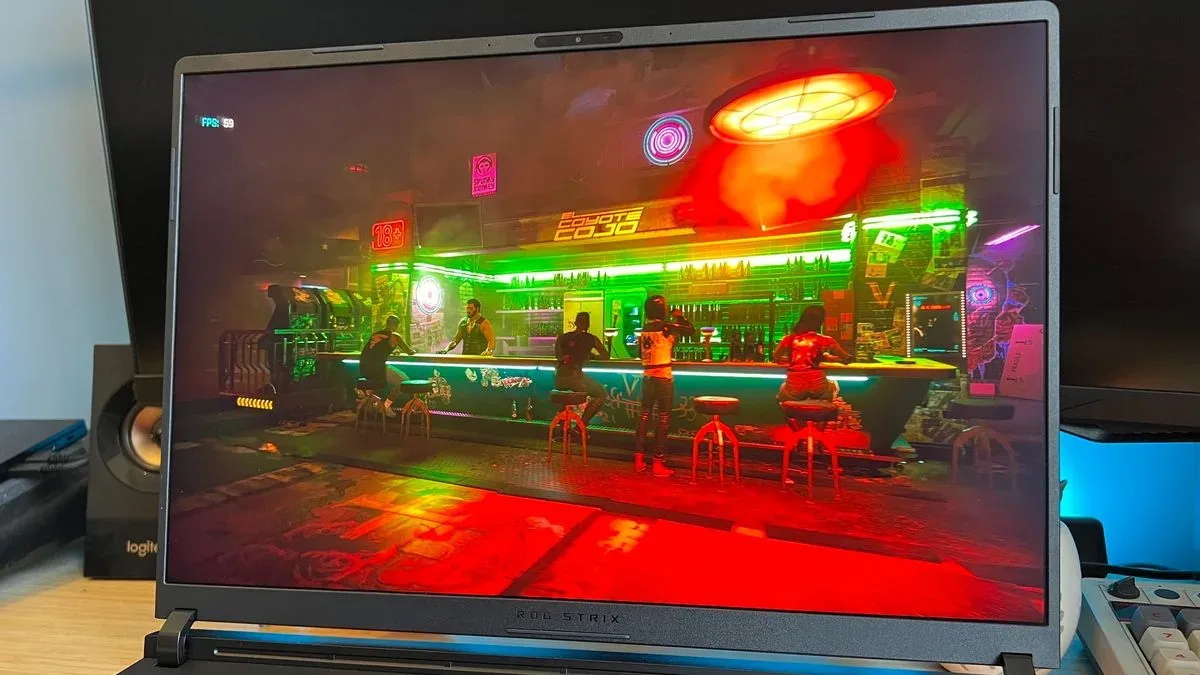
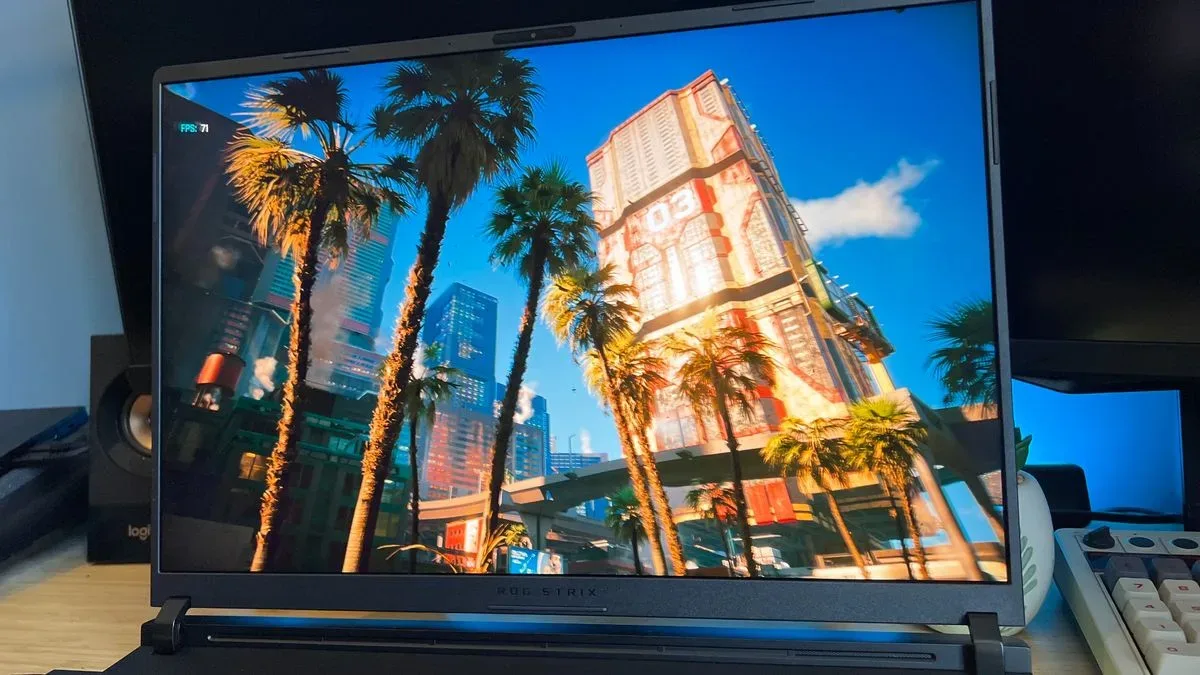
The 2026 model is the first Scar 18 with a full UHD+ 4K panel, and it is the strongest argument for choosing Asus over similarly specified rivals. The 18-inch Mini LED screen remains vivid, bright and richly colored, but the jump to 4K makes it feel better suited to both current games and desktop-style use.
Its roughly 2,000 dimming zones deliver deep black levels that approach an OLED-like impression while preserving the major brightness advantages associated with Mini LED. The panel is bright enough to handle sunnier rooms, and uniformity and color presentation are strong. More importantly, Asus has paired its 4K resolution with a 240Hz refresh rate when the machine is set to Ultimate mode. That is an uncommon combination in an 18-inch gaming laptop.
The display offers three local-dimming approaches: one-zone, multi-zone balanced and multi-zone strong. These options let users prioritize contrast, balanced highlights and shadows, or a more forceful bright presentation. There is substantial room for adjustment, although that flexibility can also make it harder to identify the ideal setting quickly before launching a game.
True Color HDR was the most effective overall choice in testing. Enabling it removes access to some additional Armoury Crate image adjustments, but it provides a convincing HDR result without requiring constant tweaking. Players can still switch SDR zoning behavior based on the game they are playing.
The competition underlines the appeal. The Blade 18 reaches 120Hz at its UHD setting on an IPS panel, though it can climb to 440Hz at FHD+. The MSI Raider A18 HX A9W also uses Mini LED but falls to 120Hz at its sharpest setting. Asus offers the valuable middle ground of a high-resolution, high-refresh display without asking buyers to choose completely between pixel density and speed.
Connectivity is plentiful, cable management is not
The Scar 18 is well equipped with three USB 3.2 Gen 2 Type-A connections, dual Thunderbolt 5 ports, HDMI 2.1, Ethernet and a 3.5mm audio jack. Wi-Fi 7 and Bluetooth 5.4 provide equally current wireless support.
The complaint is placement rather than quantity. All of these connections sit along the laptop's sides. On a system intended to replace a desktop, rear-mounted display, power and accessory connections would have made much more sense. A keyboard, mouse, Ethernet cable, external drive and monitor can make the sides of the machine look crowded quickly. At least the HDMI and Thunderbolt 5 ports are positioned on the left, keeping the typical mouse side clearer.
Comfortable controls for gaming and work
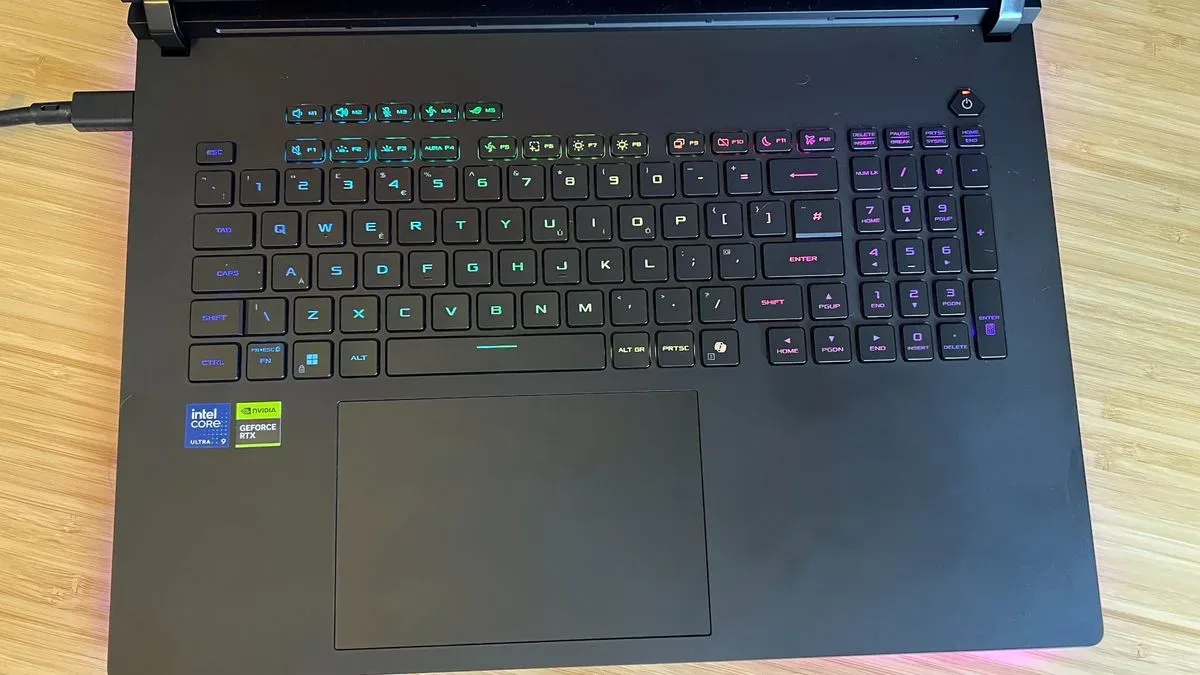
Asus has not chased unusual keyboard technology here, but the standard deck is effective. Key actuation is light and responsive for games, with a tactile bump and a pleasant return. Typing feels a little softer than expected at this price, and the deck flex is noticeable, but the overall experience remains comfortable.
The layout is especially practical for a gaming laptop. It includes a half-size number pad, properly sized arrow keys, and dedicated controls for volume, microphone, fan behavior and Armoury Crate. The trackpad is smooth, stable and accurate with reliable gesture recognition, offering a better-than-usual experience for those moments away from a mouse.
Performance: close battles at the high end
With an RTX 5090, 64GB of RAM and Intel's latest high-end mobile processor, the Scar 18 delivers the kind of performance expected from a $5,000-class laptop. The revised cooling helps it sustain demanding operation and puts it comfortably among the strongest 18-inch systems tested.
In 1080p gaming benchmarks, it surpassed the MSI Raider A18 HX A9W in Total War: Three Kingdoms and Horizon Zero Dawn Remastered, while sitting slightly behind MSI in Shadow of the Tomb Raider and Cyberpunk 2077. It remained ahead of the Razer Blade 18 overall in these comparisons.
The Scar 18 was particularly strong at QHD-class testing, outperforming both the Blade 18 and Raider in Shadow of the Tomb Raider, Total War: Three Kingdoms and Cyberpunk 2077. It only slipped behind in Horizon Zero Dawn Remastered.
At 4K, the margins became tighter. The Blade 18 held a slight lead in Shadow of the Tomb Raider, though its results were close to Asus. The Scar and Raider returned identical results in Total War: Three Kingdoms, while the Raider edged ahead in Horizon Zero Dawn Remastered. In Cyberpunk 2077, all three machines hovered just above 60fps, with the Scar taking a narrow lead and the Blade dropping behind at RT: Ultra settings.
Synthetic testing produced a similarly nuanced picture. The Scar 18 led in 3DMark Time Spy with a score of 24,194 and came close to the Raider in Fire Strike, where Asus scored 41,777. MSI retained an edge in the more demanding Steel Nomad test and in single-core Geekbench 7 performance, aided by its AMD Ryzen 9 9955HX3D processor.
Across game resolutions and 3DMark runs, the Scar finished ahead of its MSI and Razer competitors in seven tests, while MSI led in six. The Raider was more competitive in the harshest workloads, but Asus was the more consistent leader across the broader collection of results.
Verdict
The 2026 Asus ROG Strix Scar 18 is expensive, heavy and not especially graceful when every peripheral is plugged in. It is also one of the most complete ultra-high-end gaming laptops available. The Razer Blade 18 remains the choice for buyers who value a thinner, more premium-feeling design and somewhat easier transport. MSI's Raider A18 HX A9W can take the lead in certain maximum-demand scenarios.
But the Scar 18 counters with extremely competitive performance, solid thermal support, and a superb 4K 240Hz Mini LED panel that is brighter, more configurable and more versatile than what its nearest rivals offer. For players shopping specifically for a no-compromise 18-inch desktop replacement and willing to accept the enormous investment, Asus has retained a compelling crown.
Community
Discussion
Start the conversation.
No comments have been posted yet.