

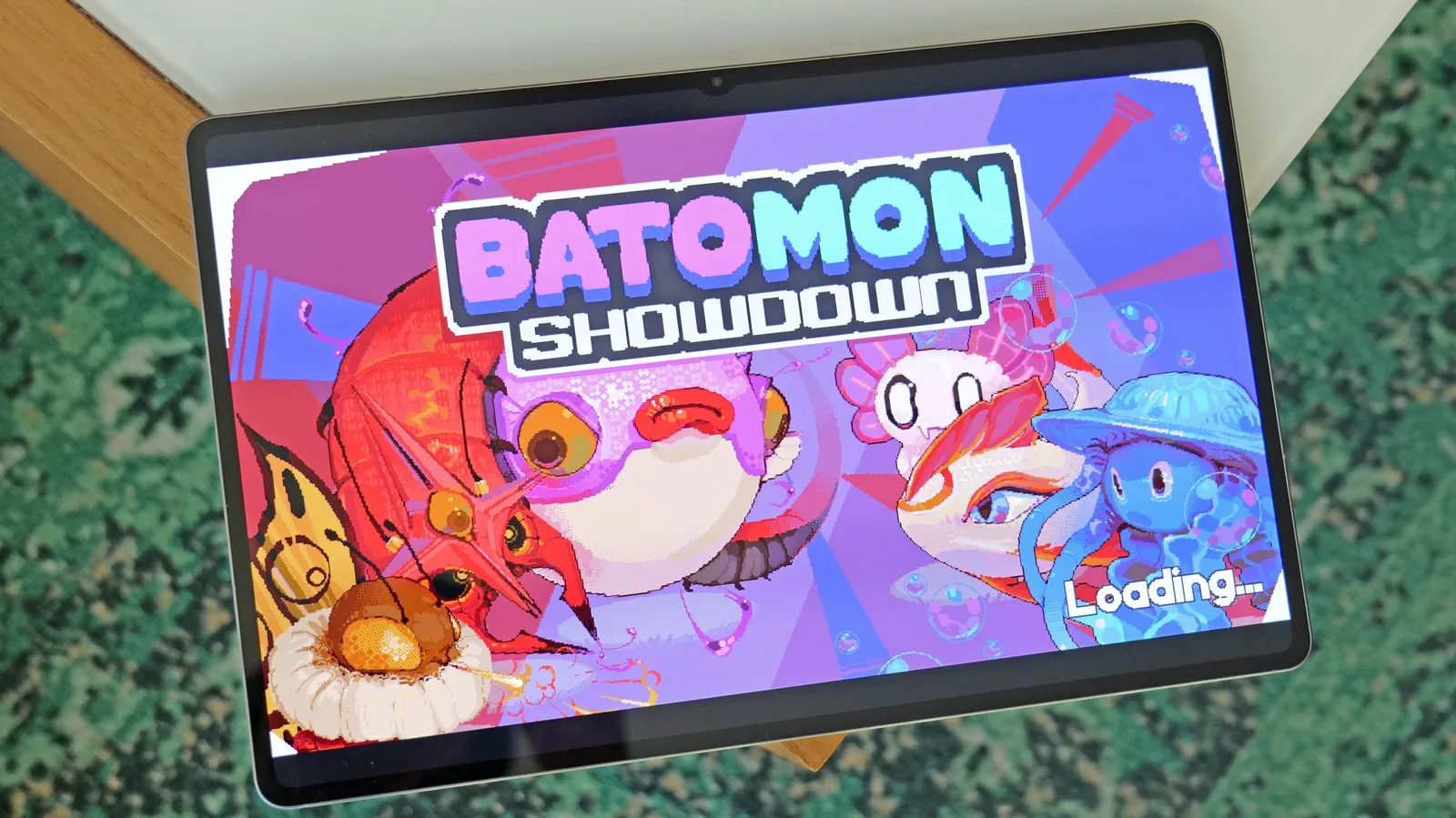
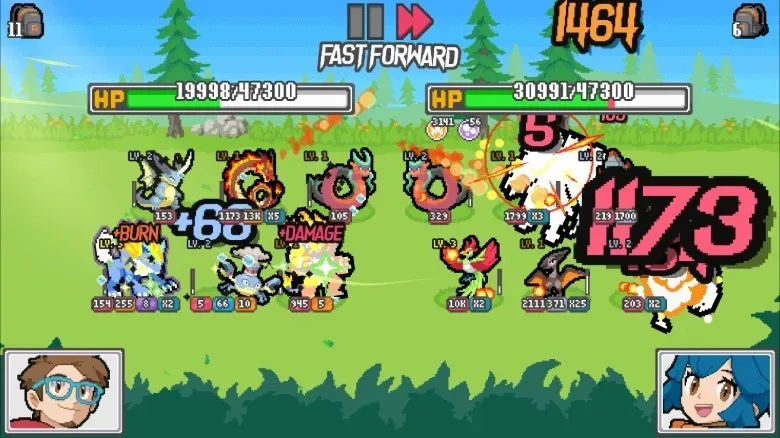
Batomon Showdown has entered the auto battler arena with a familiar core loop and a monster-building identity of its own. Developed by Berrymint, the game asks players to build a squad from a shifting shop selection, arrange that team for automated fights, combine duplicate creatures for stronger versions, and chase the kind of escalating synergies that can turn a modest lineup into an overwhelming machine.
It is available on PC through Steam for $15 and on Android for $6. That lower mobile price point makes it an especially approachable prospect for players looking for a compact strategy game, but its appeal is not limited to quick sessions. The structure has the "one more run" momentum associated with roguelikes: a defeat encourages experimentation, while a promising combination of monsters and items can make a fresh run feel impossible to abandon.
The broad premise will be recognizable to veterans of Teamfight Tactics, Hearthstone Battlegrounds, and Dota Auto Chess. Batomon Showdown's distinction is in the details--particularly its creature designs, type-based game plans, trainer passives, permanent growth effects, and room for unexpectedly explosive combinations.
A shop-driven battle loop built around adaptation
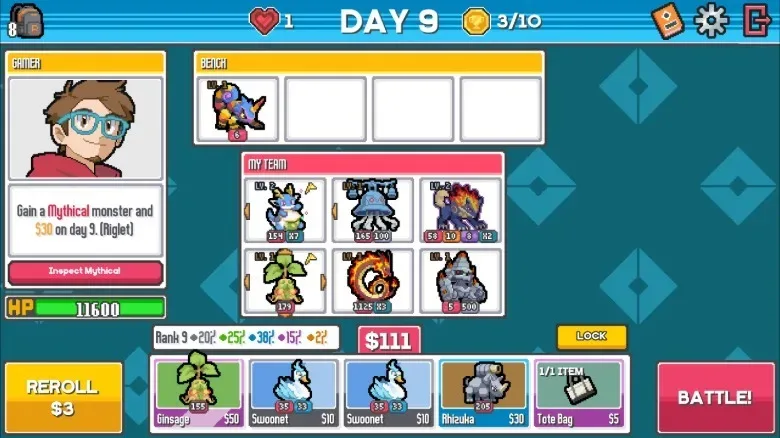
Each day, players receive currency that can be spent on new monsters and items. The available creatures come in multiple rarity tiers, including common, uncommon, and legendary options. They also belong to one or more elemental or thematic types, with examples including fire, toxic, flying, rock, water, and ghost.
For useful background on this topic, read Disney Says It Is Not Discussing an Epic Games Acquisition 'Right Now'.
Building around a shared type can unlock powerful payoffs. A team with enough members from a particular faction can gain offensive boosts, defensive advantages, or other benefits tied to that group's intended style of play. Toxic teams, for instance, emphasize poison damage, while water-focused compositions often lean toward healing and sustaining themselves through incoming pressure.
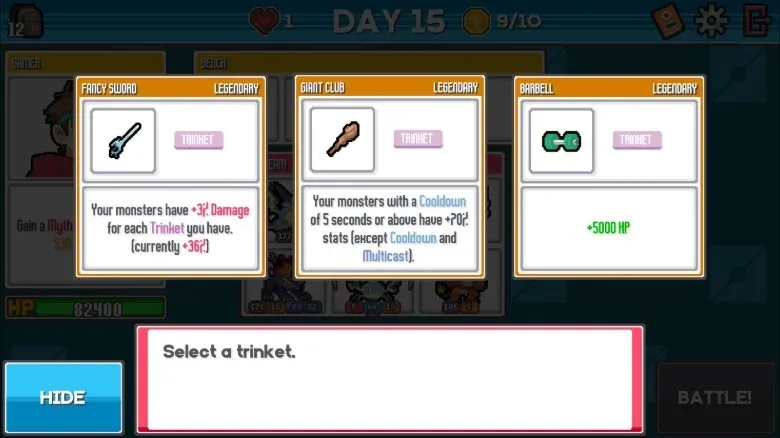
That baseline faction system is only part of the decision-making. Players can purchase three copies of the same monster to merge them into a leveled-up version. The upgrade provides more than a simple stat increase: it also awards a trinket, adding another potential enhancement for the wider squad. This creates a constant tension between buying immediately useful monsters, saving money, searching for a key duplicate, and investing in a larger long-term plan.
Items broaden those choices further. Depending on what appears in the shop, an item may reduce cooldowns, create trinkets, produce extra money, or otherwise reshape the pace and potential of a team. When the store does not offer what a build needs, players can spend currency to reroll its selection. As in the genre's other major games, the challenge is not merely recognizing a strong creature. It is knowing when to commit resources to finding it, when to pivot, and when an imperfect lineup is already good enough to protect an economy.
Trainers and pixel monsters give each run character
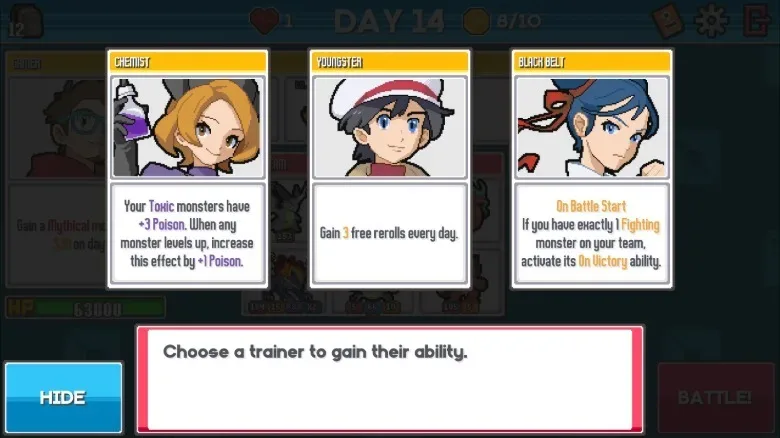
Batomon Showdown presents this strategy framework through modern pixel art, with cute creature sprites and a rotating cast of trainers. At the start of a run, players choose one of three trainers. Each brings a passive trait that applies to the squad, immediately giving runs different priorities before the first battle even begins.
The trainer choice can influence how players value certain units, items, and type combinations. Still, the monsters are clearly the focus. The game's strongest moments emerge when an individual creature's mechanic starts to feed into the entire team's plan.
One notable example is Pipskull, a low-cost common monster with a ghost-type identity. Initially, it may seem relatively unremarkable. Its real potential is revealed through repeated knockouts, a central part of the ghost playstyle. Once Pipskull evolves, it gains multicast, allowing it to unleash multiple attacks whenever it casts. After that evolution, every additional knockout permanently adds more multicast.
The numbers can get dramatic. Individual hits in the range of 25 to 50 damage do not sound extraordinary on their own, but those attacks become far more threatening once multicast climbs into the dozens. A Pipskull that has reached 30, 40, or even 50 casts per activation can become a backline-destroying barrage of small strikes. It is the sort of build-around unit that gives a run a clear story: protect it, enable it, and survive long enough for its scaling to become absurd.
Rock teams showcase the game's layered synergies
Another strategy centers on Bonshell, a rock creature whose silhouette and theme evoke a sturdy, land-dwelling monster. With an early upgrade, Bonshell can gain damage and shielding every time it casts for the remainder of a battle. That makes longevity the priority. The longer the fight continues, the more dangerous and harder to remove Bonshell becomes.
From there, a player can look for additional rock creatures, including Rhizuka. Rhizuka has an ability that attacks whenever another allied monster applies a shield. The interaction is easy to understand but can become increasingly potent in practice. Shield-generating allies delay or deny enemy damage, while each new layer of protection also triggers Rhizuka's offense from the back of the formation.
The resulting team can feel like a fortress with artillery support. Defensive effects keep the squad intact, Bonshell continues gaining value over time, and Rhizuka turns those protective actions into a steady stream of extra attacks. Batomon Showdown appears particularly effective when it lets players find these linked systems naturally instead of simply following a predetermined recipe. A few fortunate upgrades, a well-timed store reroll, or an item that enhances the right cooldown can transform a reasonable concept into a run-defining engine.
Regions leave room for growth and unusual combinations
The monster roster is also organized into regions. Beyond adding flavor to the collection, that structure gives Berrymint a clean way to expand the game later. Updates are planned to be free, making the regional framework potentially important as the roster grows and new mechanics are introduced.
Regions are not only a future-facing organizational tool. Some traits can allow creatures from outside a player's normal region to join the action, creating further possibilities for hybrid teams. That matters in a game where a single unusual unit can solve a weakness, supply a needed trigger, or create an unexpected new direction for a build.
It also helps Batomon Showdown avoid reducing every decision to a single faction checklist. A player may begin a run trying to force rock shields or toxic damage, then discover that a visitor from another region offers a better answer than any expected in-faction option. That possibility is central to the best auto battlers: strategy matters, but flexibility and improvisation matter just as much.
Early balance changes and a case for an endless mode
As with many new strategy games built around a wide pool of units, balance is an ongoing consideration. Monsters from the Jinto region were initially notably stronger than many alternatives. Berrymint has already responded with a balance patch intended to address that disparity, a positive sign for a game whose replayability depends on multiple team paths feeling viable.
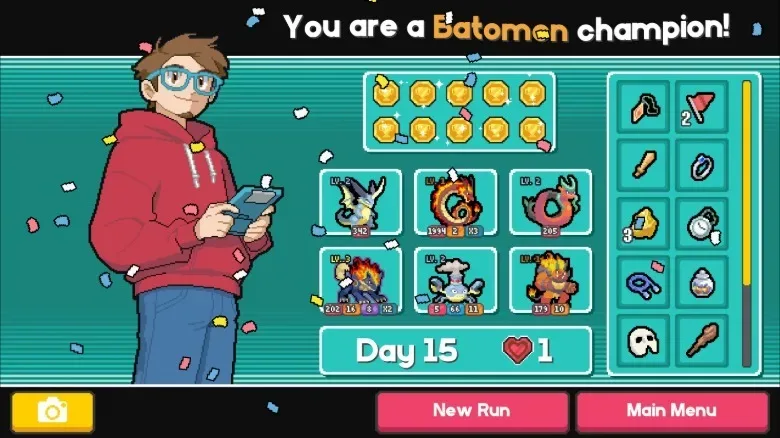
One area that could benefit from expansion is the end-of-run structure. Players earn a badge for each victory in a face-off against another trainer, and a complete run can end after reaching 10 badges. The format gives sessions a clear finish line, but some strategies only begin to hit their full stride near that endpoint. A squad that has finally assembled its core pieces may have little time left to demonstrate how far its scaling can go.
An infinite mode could be a natural addition. Similar post-victory modes in roguelikes let players continue after a successful run while difficulty rises until even the most powerful combinations eventually fail. Batomon Showdown seems well suited to that format because its monsters can accumulate permanent boosts, build intricate trigger chains, and reach extremes that are entertaining precisely because they are difficult to sustain.
Such a mode has not been confirmed, but the pace of recent updates leaves room for optimism that the game's systems will continue to develop. Even without it, Batomon Showdown already offers a satisfying auto battler package: accessible rules, attractive pixel presentation, meaningful shop decisions, and enough monster-specific mechanics to reward repeated experimentation.
A promising option for auto battler fans
Batomon Showdown does not need to reinvent every convention of the genre to stand out. Its familiar economy-and-combat foundation gives players an immediate foothold, while its trainer passives, regional structure, type identities, evolving creatures, and trinket systems supply the individuality needed to keep runs interesting.
For players who enjoy watching a carefully assembled plan unfold in automated combat, it offers plenty of reasons to return. Whether the goal is turning Pipskull into a volley-firing ghost menace, constructing an ever-thickening wall of rock shields, or discovering a new crossover between regions and types, Berrymint's game has the ingredients for deep, replayable tactical sessions on both PC and Android.
Community
Discussion
Start the conversation.
No comments have been posted yet.