

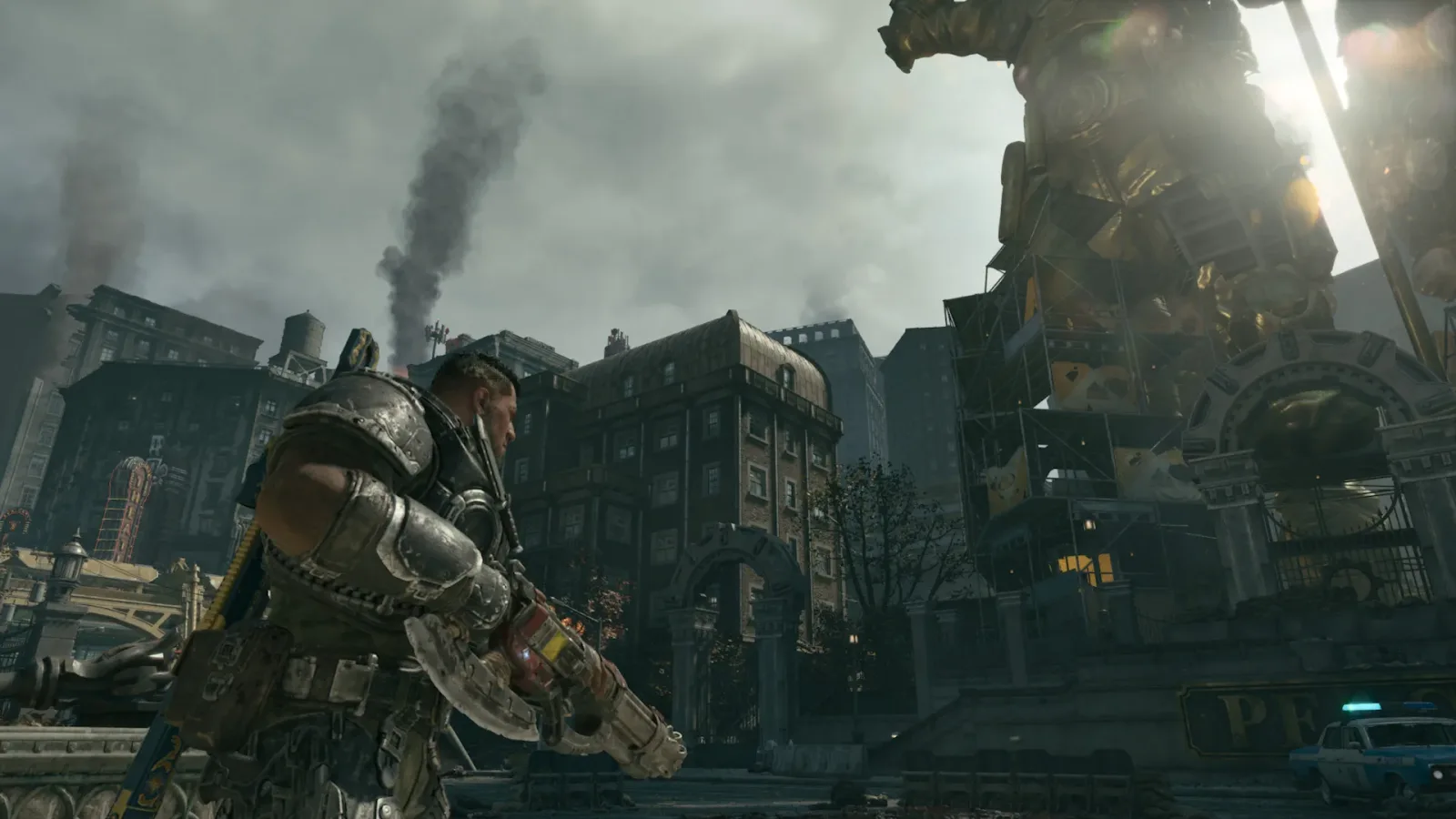
Gears of War: E-Day has arrived with a visual presentation that makes stopping to admire the scenery feel like part of the experience. The latest entry from The Coalition returns players to an earlier, catastrophic point in the series timeline: the beginning of the war against the Locust. It is a setting built for upheaval, but it is also one that lets the world of Sera be seen in a very different light.
That visual strength makes one omission especially conspicuous. Gears of War: E-Day does not include a dedicated photo mode. For a game that leans so heavily into elaborate city design, dramatic lighting, environmental detail, and cinematic combat spaces, players have no built-in way to pause the action, move a camera freely, hide interface elements, and compose a clean image.
Screen capture functions on Xbox can preserve a moment, of course. But a console screenshot is not the same thing as a proper photo mode. The difference matters more in a game whose strongest visual flourishes can be fleeting, interrupted by HUD elements, subtitles, combat prompts, or the simple difficulty of catching the ideal angle while the world continues to move.
A Series Once Defined by Gray and Brown
The early Gears of War games were inseparable from the aesthetic trends of the Xbox 360 generation. Their heavy armor, ruined battlefields, worn metal, concrete structures, and rocky landscapes formed a deliberately bleak style. The muted palette was appropriate for a world under siege, and it became part of the series identity. At the same time, it helped establish Gears as one of the defining examples of an era frequently associated with gray steel and brown earth.
For useful background on this topic, read Disney Says It Is Not Discussing an Epic Games Acquisition 'Right Now'.
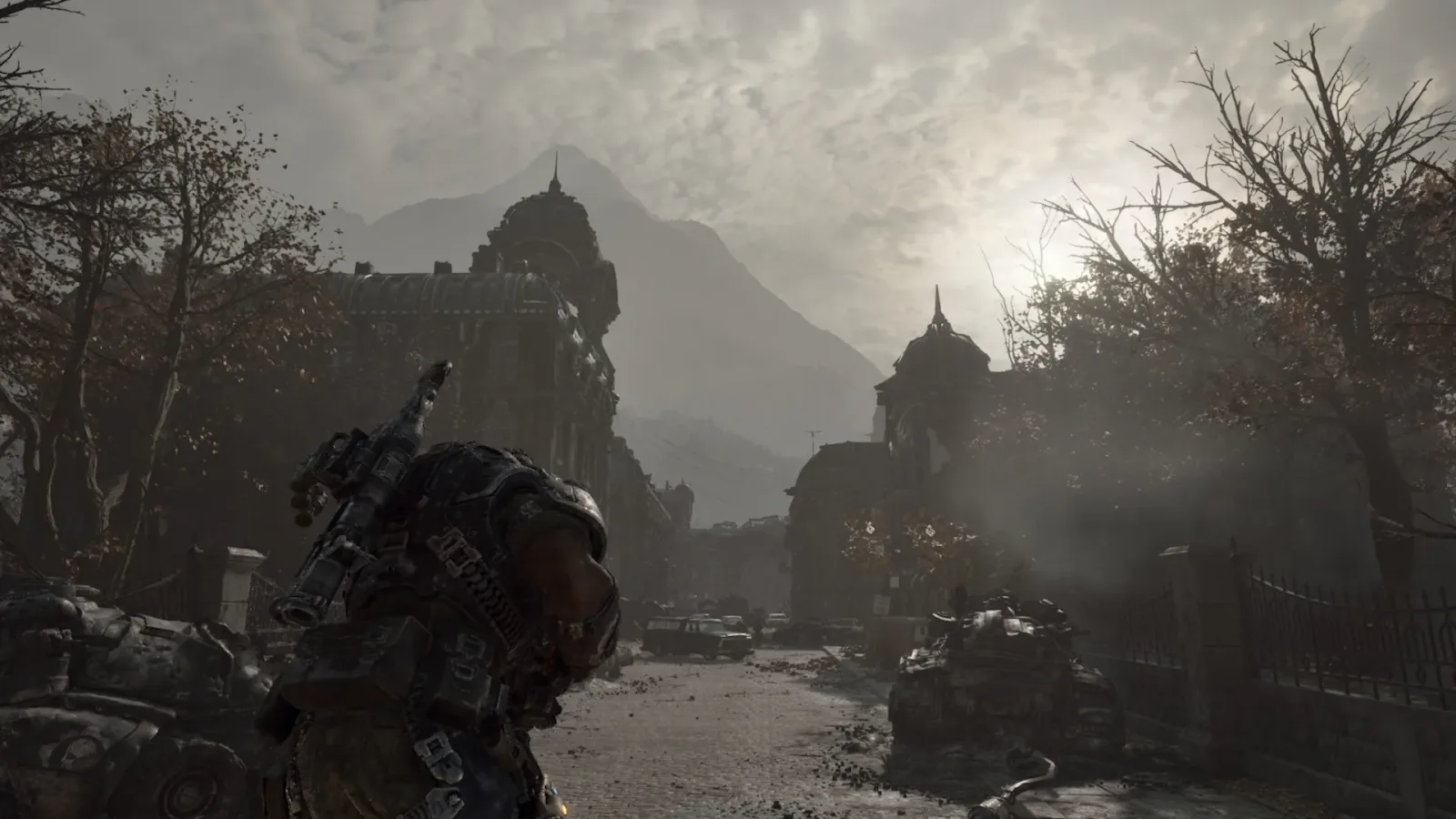
Later games began widening that visual vocabulary. Gears 4 and Gears 5 brought brighter spaces, more varied environments, and especially memorable skyboxes to the franchise. The world remained dangerous and weathered, but it no longer had to look uniformly drab. Those entries showed that Gears could retain its weighty tone while embracing more color, stronger contrasts, and a greater sense of scale.
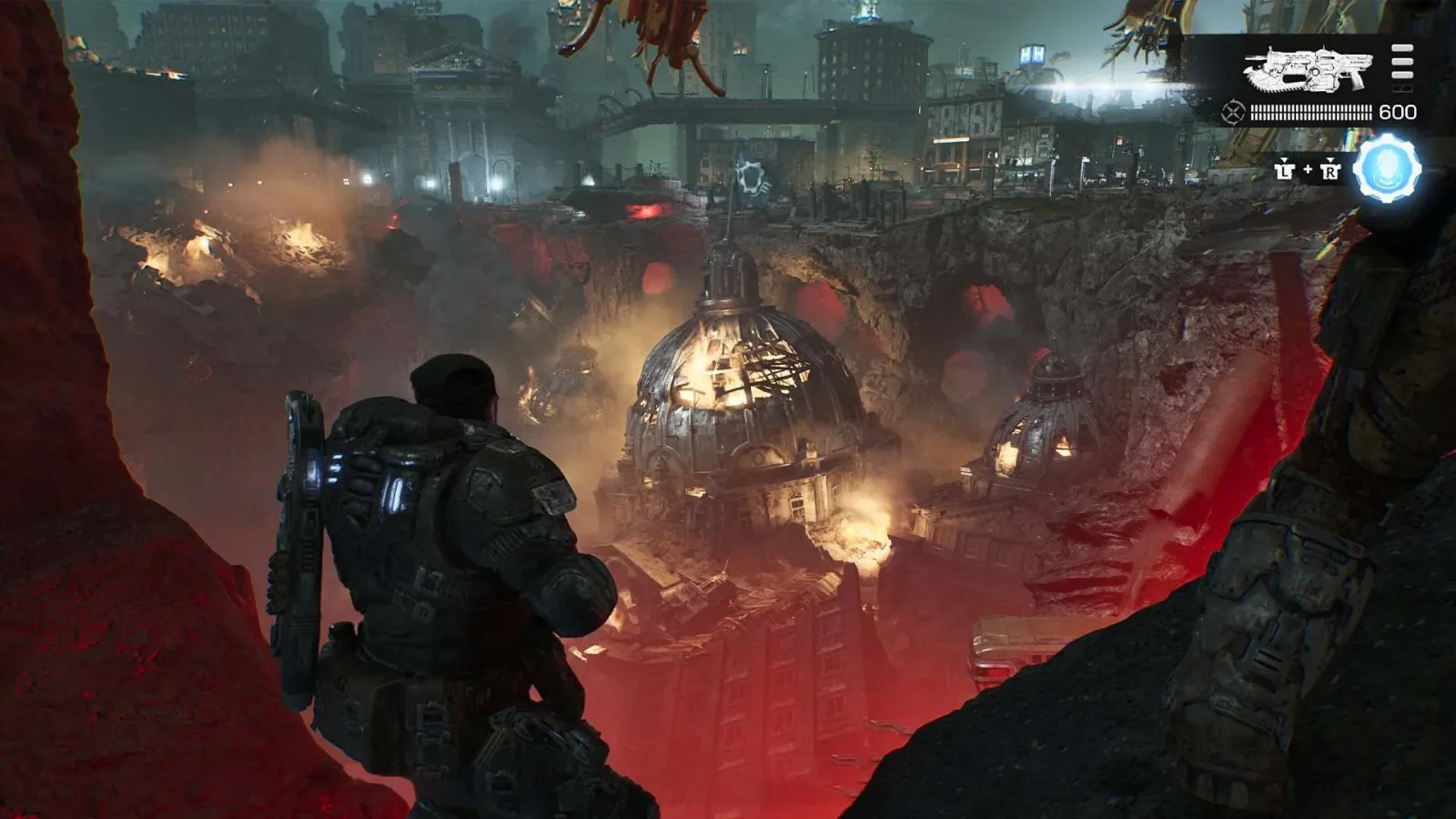
E-Day pushes that progression further. As the first new main Gears release to arrive during the Xbox Series X/S console cycle, it takes advantage of Unreal Engine 5 to depict a city at the moment its normal life is shattered. Rather than presenting only the aftermath of destruction, the game can show the grandeur, density, and ornamentation that existed before war reduced so much of Sera to ruins.
That distinction gives its environments a different texture. The city spaces are not merely piles of damaged infrastructure. They contain ornate architectural details and the signs of a functioning society, set against the dread of an invasion that changes everything. The contrast between beauty and devastation has always suited Gears of War, but E-Day has the technical presentation to make that contrast more immediately striking.
Unreal Engine 5 Gives E-Day a More Detailed Sera
Modern rendering technology is not automatically a substitute for strong art direction, but E-Day's appeal appears to come from the combination of both. Lighting is a major part of the game's atmosphere, helping individual locations feel more layered than the series' older industrial battlefields. Surfaces, structures, and streets can catch illumination in ways that draw attention to material detail without making the game lose its hard-edged character.
The urban environments are particularly well suited to photography. Ornamental construction, towering structures, and the visual clutter of a living city offer plenty of potential focal points. In a photo mode, players could isolate a statue, angle a shot through a broken structure, frame soldiers against a distant skyline, or use depth of field to emphasize the small details that are easy to miss while moving through a combat encounter.
A dedicated camera would also make it easier to appreciate the game outside of its intended forward momentum. Third-person shooters are designed around motion, cover, enemies, and objectives. Players normally have good reason not to stand still. Yet games with rich environment work often benefit from tools that let people temporarily step outside that flow and look around with more intention.
Photo modes have become a common feature in visually ambitious games because they recognize that players do more than simply finish missions. They document their experiences, share striking scenes, and search for perspectives the standard gameplay camera does not naturally provide. The best implementations turn a visual showcase into a creative toolset.
Nature Scenes Also Make the Case
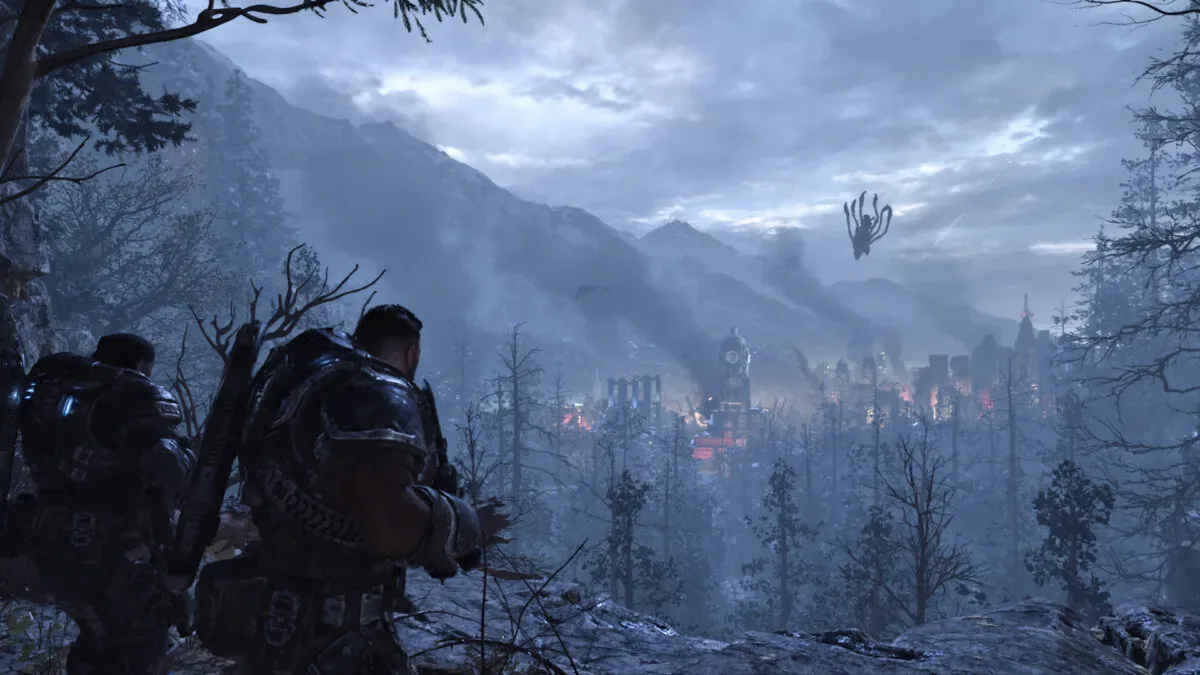
E-Day's visual showcase is not limited to city streets and imposing architecture. A nighttime woodland sequence around the middle of the game demonstrates that the new entry can be just as impressive when it heads into nature. Moonlight filtering through the environment, reflecting from leaves, and catching the texture of tree bark creates an atmosphere far removed from the stereotypical image of Gears as an endless chain of dark, metallic ruins.
These quieter spaces are precisely where a photo mode would be most valuable. A combat screenshot can be exciting, but a carefully framed landscape offers another side of a game's visual design. The player could stop beneath the canopy, alter exposure, adjust the field of view, and capture how the light falls across the woods. Instead, the standard screenshot button requires quick timing and accepts whatever the live gameplay camera, interface, and on-screen text happen to provide.
There is also a practical benefit to being able to freeze the game. Ambient conversations and subtitles may appear at the exact moment a player wants to capture an image. HUD elements can be necessary during play while still being undesirable in a screenshot. Without a dedicated photography feature, players may need to change interface settings, wait for dialogue to end, or repeatedly attempt captures in the hope that the screen is clear at the right second.
Those compromises can make even a beautiful game more difficult to document. They also mean the images shared by players may not represent the full quality of what is happening in real time.
Series S Results Make the Missing Feature More Noticeable
The game's appearance is also said to hold up well on Xbox Series S, despite the expected technical concessions compared with more powerful hardware. Resolution is lower on the smaller console, and there have been reports of choppy frame-rate performance in various sections. Even so, E-Day's environments retain much of their visual appeal on the budget-focused Xbox system.
That is significant because the Series S remains an accessible way to play current-generation Xbox releases. A game does not need to be viewed on a top-end display or played on the most powerful console configuration for its art direction and lighting work to land. If E-Day can still look impressive on a modest television and hardware bought years ago, its environmental design is doing more than relying on raw resolution.
At the same time, performance inconsistencies can make a flexible photo mode even more useful. Capturing a scene with an ordinary system-level screenshot while the game is running is inherently limited by timing. A photo mode that pauses the action would let players choose images on their own terms, rather than trying to grab a frame during moments when performance, movement, or combat activity are less cooperative.
Gears of War Has Yet to Embrace the Modern Camera Toolset
The absence is not unique to E-Day. The Gears of War series has not historically offered the kind of robust, dedicated photo mode that has become familiar across many major action games. That context explains why the feature is missing, but it does not make the gap feel any smaller in a release that appears designed to show off the current generation's visual capabilities.
The Coalition has built a game that gives players reasons to look closely. Sera's cityscapes have detail worth preserving before their destruction. Its natural spaces add mood and variety. Its lighting provides dramatic opportunities that can change from one angle to another. A standard screenshot can capture evidence of those things, but not always the best possible version of them.
A future update could still change that. Photo modes are often added after launch, and there is room for E-Day to receive one alongside other currently absent features. The essentials would be straightforward: a free camera, character visibility controls, HUD removal, filters, focal-length options, depth-of-field settings, exposure controls, and the ability to pause or advance a scene cleanly.
More elaborate features would be welcome, but even a basic implementation would be a meaningful improvement. The important thing is giving players a way to capture E-Day's environments without fighting the game's interface and active gameplay camera.
A Showcase That Deserves to Be Framed
Gears of War: E-Day seems positioned as both a return to a pivotal chapter in the franchise's story and a technical statement for the current Xbox generation. Its visual approach moves beyond the old shorthand of gray-and-brown Gears, while still preserving the weight, danger, and industrial character that define the series.
That makes the lack of a photo mode feel less like a minor missing extra and more like a mismatch between the game's presentation and its feature set. Players can admire the ruined beauty of Sera, its ornate city spaces, and its moonlit forests. They simply do not yet have the best tools for turning those moments into images of their own.
For now, the Xbox capture button will have to do. But for a game with visuals this detailed, a proper camera mode would not be a luxury. It would be an overdue way to let players linger over the world The Coalition has created.
Community
Discussion
Start the conversation.
No comments have been posted yet.