

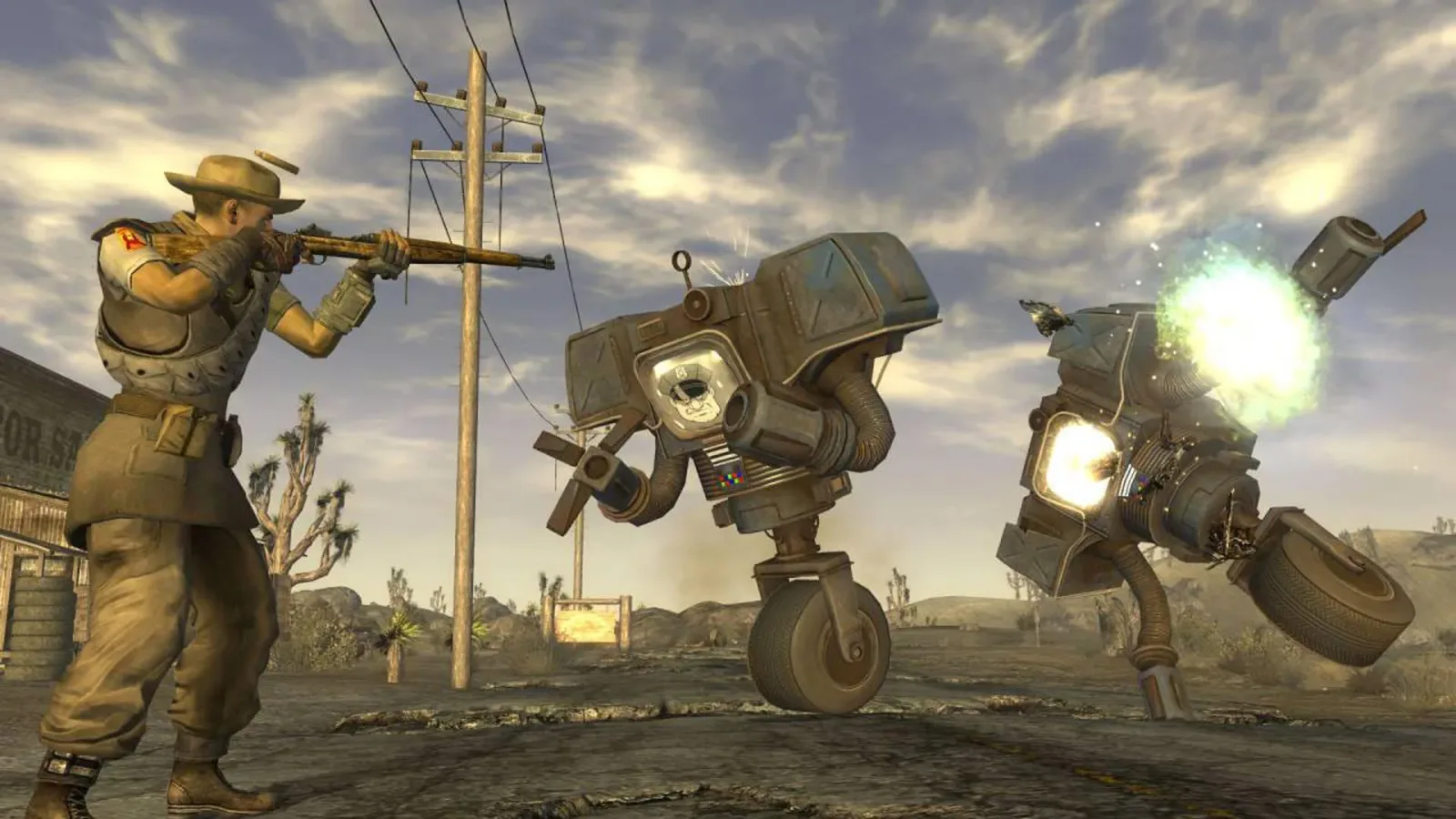
Obsidian Entertainment's return to the Fallout universe is taking shape during a period of major upheaval across Xbox's internal studio network. The developer best known for Fallout: New Vegas has moved beneath the Bethesda Softworks umbrella and is now collaborating with Bethesda Game Studios on an unannounced Fallout role-playing game. Bethesda president Jill Braff has addressed one question hanging over that change: whether teams are being directed onto franchises regardless of what they want to make.
In a recent interview, Braff said that "nobody's forcing anybody to build anything they don't want to build." The comment arrives as Bethesda restructures its organization, expands its collection of studios, and seeks what Braff described as a steadier cadence of releases without making sheer volume the goal.
That distinction matters for Obsidian. The studio has a close history with Fallout thanks to 2010's Fallout: New Vegas, one of the most celebrated entries in the series, but much of its more recent work has been devoted to original settings and series. Its portfolio has included Pillars of Eternity, Grounded, and The Outer Worlds, while it has also continued to develop new projects within the broader Xbox organization. Moving it back toward Fallout is therefore both a reunion with a major part of its legacy and a notable shift in priorities.
Obsidian is back in Fallout, but details remain scarce
What the new Fallout project will ultimately be has not been revealed. Bethesda has confirmed that Obsidian is working with Bethesda Game Studios on the mysterious RPG, but it has not announced a title, setting, release window, or the exact division of responsibilities between the two teams. There has been no confirmation that the game is a direct sequel to Fallout: New Vegas.
For useful background on this topic, read GTA 6 Cyber Monday deals: Discounts on the Game, DualSense Edge, Headsets and More.
That uncertainty has not stopped the announcement from attracting attention. Obsidian's earlier work on New Vegas established a reputation for rich faction politics, meaningful choices, reactive quests, and a distinctly regional take on the Fallout wasteland. Bethesda Game Studios, meanwhile, remains the core studio behind the modern mainline Fallout games. A collaboration between the two could potentially combine different design traditions within one of gaming's largest RPG properties, although it is far too early to know what form that will take.
The Fallout plans are only one element of Bethesda's current slate. Braff also confirmed that Wolfenstein 3 is in development. In addition, remasters of both Fallout 3 and Fallout: New Vegas are in development. Specific release timing, supported platforms, and feature sets for those remasters have not been detailed.
For fans, the combined news means Fallout is receiving attention on several fronts at once: an all-new RPG involving Obsidian and Bethesda Game Studios, plus updated versions of two older games. But it also raises practical concerns about how Bethesda intends to handle multiple long-running franchises at the same time, particularly while The Elder Scrolls 6 remains in production.
Bethesda's new structure brings several studios together
The corporate changes extend beyond Obsidian's new reporting structure. ZeniMax Media is now operating simply as Bethesda Softworks, a name that encompasses a larger group of developers and publishing operations. That broader organization includes Bethesda Game Studios, id Software, MachineGames, and Obsidian Entertainment.
The reshuffle follows an Xbox-wide reset earlier in the year. Xbox planned to eliminate 3,200 jobs and separate from several first-party studios. Compulsion Games, the developer of South of Midnight, became independent, as did Double Fine, known for Psychonauts, and Undead Labs, the studio behind State of Decay. The status of Ninja Theory, creator of the Hellblade series, and Arkane Lyon, which is developing Marvel's Blade, remains uncertain.
Other changes have reshaped the ownership and management of recognizable Xbox brands. Activision gained control of Halo, Age of Empires, and Rare. Against that backdrop, bringing Obsidian into Bethesda Softworks signals a desire to align one of Xbox's most experienced RPG makers more directly with Bethesda's established properties.
It is an arrangement that may look surprising to players who associate Obsidian with its independent creative identity. The studio has spent years building worlds that are separate from Fallout, and its games have often been praised for letting teams explore very different tones and structures. Fallout provides a familiar space, but it is also a heavily watched franchise with considerable expectations attached to it.
"Quality and a steady pace" rather than volume
Braff framed Bethesda's approach as an attempt to balance consistent releases with a focus on quality. "It's not about volume," she said. "It's about quality and a steady pace so that we have steady revenue, steady player involvement."
That language suggests Bethesda is looking for a more dependable long-term rhythm across its games, rather than relying on occasional huge launches separated by lengthy quiet periods. The Fallout remasters, a new Fallout RPG, Wolfenstein 3, and the ongoing work on The Elder Scrolls 6 indicate how much the company is trying to coordinate.
However, the aim of a stable release schedule comes after difficult reports surrounding Obsidian itself. Recent cuts reportedly affected 25 percent of the studio's workforce. The same reset reportedly led to several cancelled projects, including a planned sequel to Avowed. Those reports give added weight to Braff's insistence that developers are not being compelled to work on projects they do not want to make.
There is an important difference between creative enthusiasm and broader business realities. Even if individual teams are able to pursue work they care about, studio staff reductions, project cancellations, and changes in management can substantially alter what a developer is able to create. Obsidian's involvement with Fallout comes at a moment when its opportunities and constraints are both being redrawn.
Why Obsidian's creative identity remains central
A leaked internal memo previously indicated that Obsidian would retain its "creative identity" under Bethesda. Braff's newer comments reinforce that message. The challenge will be demonstrating it in practice while the studio works on one of the industry's most recognizable post-apocalyptic series.
Obsidian's strengths have long been tied to player agency and world-building. From the ideological conflicts of Pillars of Eternity to the corporate satire of The Outer Worlds, the studio has cultivated a style that places conversation, consequences, and distinct communities at the center of role-playing experiences. Those qualities made its first Fallout project memorable, and they are likely to be the reason many players are excited about its return.
At the same time, collaboration with Bethesda Game Studios means the new project will not simply be an attempt to recreate the conditions behind New Vegas. The teams, corporate structure, technology, and wider expectations around Fallout are all different now. It may be more useful to view the new RPG as a fresh partnership than as an automatic repeat of a beloved earlier chapter.
For now, Bethesda's message is one of continuity and choice: familiar franchises are moving forward, internal teams are being organized under a consolidated Bethesda Softworks brand, and the company says creators are not being forced into unwanted assignments. Whether that balance produces the steady, high-quality output Braff described will become clearer as Bethesda shares more about the Fallout RPG, the remasters, and its other projects.
Until then, Obsidian's return to the wasteland remains one of the most intriguing outcomes of Xbox's sweeping restructuring. The studio's Fallout history gives the collaboration enormous potential, while the circumstances surrounding it ensure that players will be watching closely for signs of how much creative freedom the team has retained.
Community
Discussion
Start the conversation.
No comments have been posted yet.