

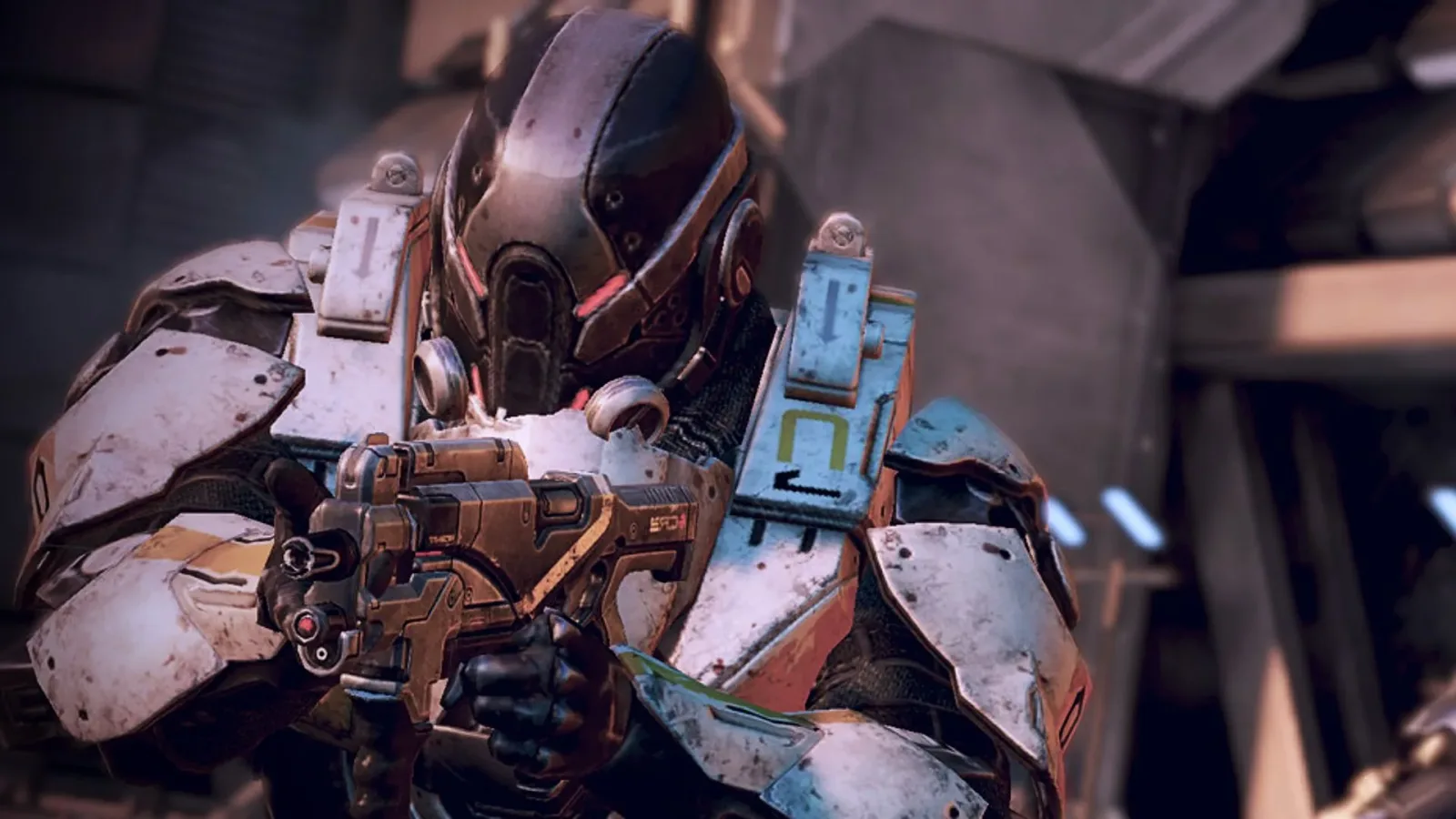
The closure of BioWare and cancellation of Mass Effect 5 have renewed difficult questions about the future of major game studios, the value of experienced development teams, and the growing pressure to use artificial intelligence across game production. Greg Zeschuk, BioWare's co-founder and former general manager, has offered a blunt assessment of a business culture he believes is missing a crucial part of the equation: actually knowing how games are made.
Speaking after the closure of the studio he helped establish, Zeschuk argued that there is a mistaken assumption at the leadership level that successful games can be reproduced simply by assembling new staff, applying technology, and keeping a recognizable intellectual property alive. In his view, that does not account for the creative relationships, practical expertise, and accumulated judgment that teams develop over years of working together.
"There's this weird belief that you can just kind of recreate great games with random people and AI," Zeschuk said. "It doesn't work."
His comments arrive at an especially painful moment for fans of BioWare's role-playing games. The studio was known for franchises including Mass Effect and Dragon Age, series whose reputations were built around player choice, companion characters, extensive worldbuilding, and the complicated task of tying narrative decisions to large-scale role-playing systems. With Mass Effect 5 no longer moving forward, players are now left wondering whether either series will receive another major continuation and, if so, what form it could take without the team that carried those names for decades.
For useful background on this topic, read GTA 6 Aims for a More Personal Role-Playing Sandbox Without Overloading Players.
A Closure With Wider Industry Implications
BioWare's shutdown followed Electronic Arts going private in a $55 billion acquisition involving Saudi Arabia's Public Investment Fund, Jared Kushner's Affinity Partners, and Silver Lake. Concern had already been building among EA developers when the proposed arrangement was first announced. Less than three months after the deal closed, BioWare's closure became a high-profile example of the disruption employees had feared.
Zeschuk described the acquisition as the "final nail in the coffin" for BioWare. He left the company in 2012, meaning he had long since separated himself from its day-to-day operations. Even so, he said he had to emotionally break away from the studio around 15 years ago. That distance has not removed his concern for the people who make games, or for what is lost when companies dismantle teams with specialized institutional knowledge.
That loss can be easy to underestimate in a financial model built around headcount, schedules, quarterly targets, and the apparent security of well-known brands. A studio, however, is not just a collection of job titles. Designers learn how specific producers communicate. Artists discover the fastest ways to work with particular technical constraints. Writers, quest designers, animators, audio teams, and quality assurance staff develop shared language for solving problems that are rarely visible to players. Senior staff pass down lessons that may only exist because a team has previously shipped a difficult project.
For a studio associated with branching RPGs, those lessons are particularly significant. Systems-heavy games demand coordination across enormous volumes of content. A narrative promise made early in development may affect dialogue, animation, combat spaces, user interface design, save data, testing, localization, and dozens of later production decisions. Replacing people is not necessarily the same thing as replacing that capability.
Why Development Experience Matters
Zeschuk's broader criticism was aimed at a familiar divide inside the games business. He argued that many people following the corporate and business side of the industry have never gone through the process of making a game from beginning to end, even on a smaller project. As a result, he said, they may not understand the realities of production or the human experience that enables a studio to finish a game.
"The other harsh reality of almost all these companies, the people that go down the business track never really come from the development track," Zeschuk said. "Because none of these people have ever made a game, like, never really sat and made one, like, from start to finish, even a small thing, they just don't know how it works."
This is not an argument that business leadership has no role in game development. Large projects need financing, organization, distribution, marketing, legal support, and long-term planning. But Zeschuk's point is that decisions about studios and staff can become detached from the work required to create games. When that happens, leaders may treat teams as fully interchangeable resources rather than as groups of people whose effectiveness depends on trust, continuity, and specific experience.
The games industry has seen repeated waves of layoffs and closures in recent years, affecting independent developers, support studios, and some of the biggest publishers in the world. The immediate impact is devastating for the people losing jobs. The longer-term impact can be equally severe: veteran developers leave the industry, knowledge gets scattered, projects are restarted, and remaining employees may be asked to accomplish more with fewer people and less certainty.
For players, those consequences may appear later as delayed games, changing creative direction, reduced ambitions, or series that disappear entirely. A studio closure can also remove an environment that had been training new developers and sustaining specialized disciplines. That is why the question is bigger than a single project, even one as prominent as Mass Effect 5.
AI Pressure Adds to Employee Concerns
The discussion around BioWare also intersects with reports that AI tools are being pushed within EA. Developers speaking anonymously have said the tools are not formally mandatory, but described a workplace environment in which doing their jobs without them could become extremely difficult. Managers have reportedly framed AI adoption as unavoidable, telling employees that it is the future and that they need to get on board.
That distinction matters. A technology does not have to be explicitly required to shape a workplace. If internal workflows, expectations, staffing decisions, or performance standards increasingly presume AI use, employees may feel they have little practical choice. Concerns about morale at EA have reportedly been severe, especially against the backdrop of corporate changes, layoffs, and uncertainty over the future of teams and projects.
Zeschuk's warning does not suggest that every AI tool is useless or that development teams never adopt new technology. Game creation has always evolved alongside new engines, middleware, automation tools, asset pipelines, and hardware. The central issue is whether technology is being used to support skilled developers or whether decision-makers believe it can substitute for the people whose craft gives a game its identity.
AI may assist with certain repetitive tasks or accelerate parts of a workflow, but it cannot automatically recreate a studio's collective creative judgment. It does not independently resolve disagreement over a game's tone, understand why a companion character is resonating with players, or take responsibility for the thousands of compromises required to ship a cohesive RPG. Those are human production problems as much as technical ones.
What Could Happen to Mass Effect and Dragon Age?
The fate of BioWare's two most recognizable series remains uncertain. Fans have already called for Mass Effect to be saved, with some hoping EA could sell the property or hand it to another developer. Former BioWare staff, however, have not shown much optimism that the franchise will be sold to a different studio, particularly while considering work that had already begun on Mass Effect 5.
There is also reported concern around the creative direction of the unfinished project. The game's team was said to have reduced elements of inclusivity with EA's preferences in mind, seeking to avoid causing offense. Without an announced path forward, it is impossible to know whether any future Mass Effect project would retain, reverse, or further alter that direction.
Neither a famous name nor an established universe guarantees that a successor will capture what audiences loved about prior entries. The history of games is full of franchises that changed teams, styles, technologies, or priorities over time. Sometimes those transitions produce worthwhile new interpretations. Other times, they demonstrate exactly why a studio's identity was inseparable from the work it made.
A Warning Beyond One Studio
Zeschuk's remarks extend beyond nostalgia for BioWare. They are a challenge to the increasingly common belief that creative output can be optimized like any other corporate process. Games are products, but they are also complicated collaborative works. Their quality depends on technical skill, artistic vision, iteration, leadership, communication, and a team's ability to learn from its own mistakes.
The end of BioWare and the cancellation of Mass Effect 5 are therefore not only disappointing for longtime players. They represent another reminder that the people behind a game are not a disposable detail. If publishers want enduring series and memorable new worlds, preserving development experience may be just as important as protecting the logos, trademarks, and technology associated with them.
For now, the future of Mass Effect and Dragon Age is unresolved. What is clearer is the concern voiced by one of BioWare's founders: losing experienced teams cannot simply be fixed by replacing them with strangers, relying on a brand name, or betting that AI will fill the gap.
Community
Discussion
Start the conversation.
No comments have been posted yet.