

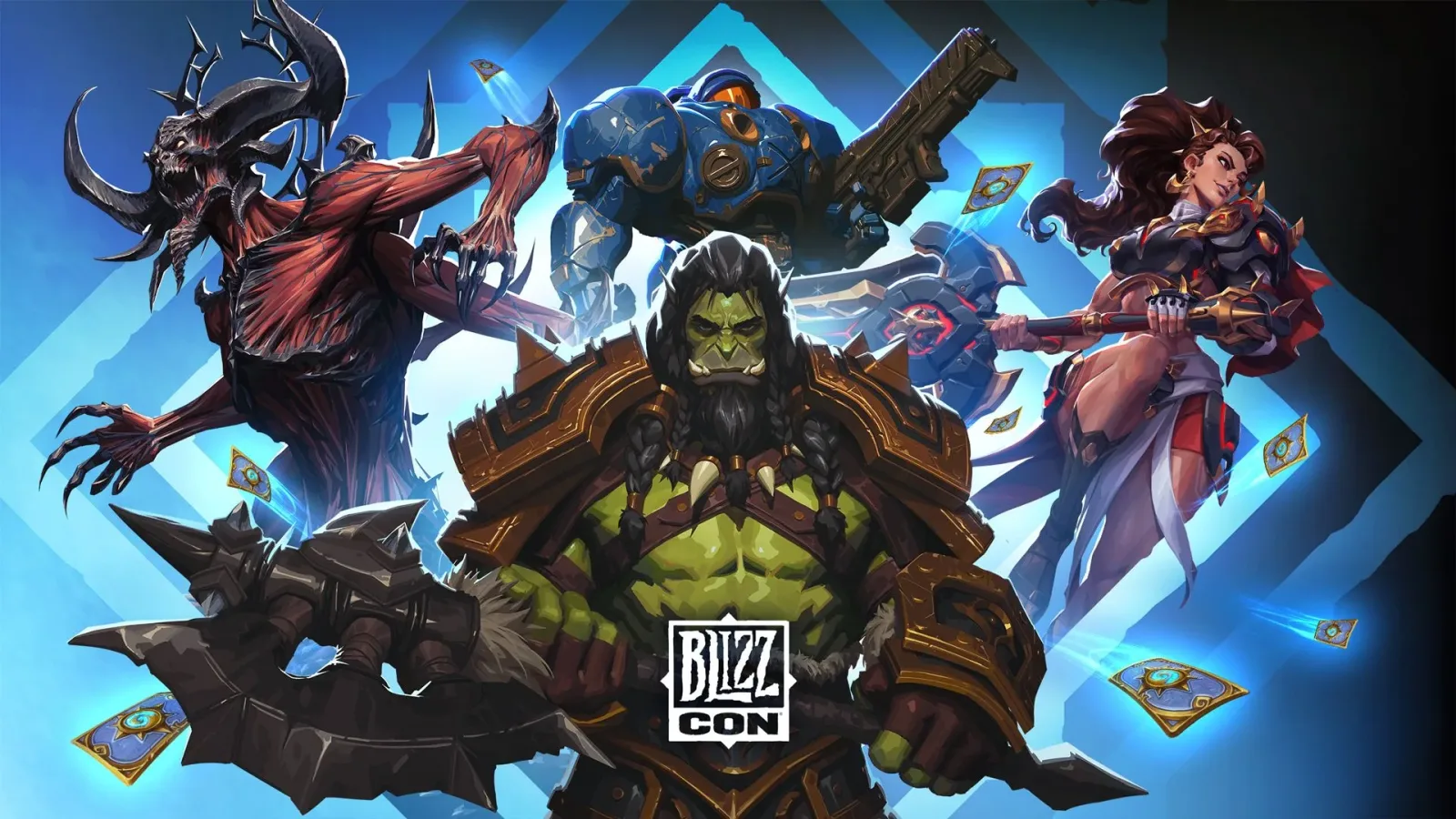
Blizzard has made an unusually bold statement about its long-term release plans. Diablo 5 has been announced with a 2029 target, while a newly revealed StarCraft project carries a 2030 release window. In an industry where major games are often shown years before launch without any date at all, putting those years on screen has immediately raised questions about how firm those promises can realistically be.
Blizzard president Johanna Faries has addressed that concern with an emphatic commitment to execution. Speaking ahead of BlizzCon 2026, Faries said the company wants to project confidence in its largest upcoming projects and described a Blizzard determined to "ship, and ship big, and ship on time."
That is a significant message for a studio whose biggest series have historically operated on long timelines. Blizzard's games are often associated with extended development cycles, long periods of live support, and large gaps between numbered installments. The prospect of a new Diablo arriving in 2029 and StarCraft following in 2030 may excite fans, but it also creates expectations that will be difficult to manage over several years of changing technology, shifting player tastes, and the normal unpredictability of game production.
Why the dates stand out
Release windows have become increasingly cautious across the games business. Publishers frequently announce projects when they are still far from completion, sometimes showing a logo, cinematic teaser, or broad development update rather than committing to a calendar year. That approach gives teams room to respond to creative changes and production issues without publicly delaying a game that may still be years away.
For useful background on this topic, read Diablo 4's Lord of Hatred Will Be Its Final Expansion as Blizzard Turns Toward Diablo 5.
Blizzard has chosen a different route with these announcements. A 2029 target for Diablo 5 and a 2030 window for StarCraft give the community a clear view of the company's intended roadmap. Neither window is close in conventional video game terms, yet the decision to disclose them suggests Blizzard wants players, Microsoft, and its own teams to see those franchises as active long-term priorities rather than distant possibilities.
Faries framed the approach as a way to show assurance in the company's biggest bets. Her comments also carry an implicit acknowledgement of what is at stake. Diablo and StarCraft are two of Blizzard's defining names, and any new entries will arrive with the weight of decades of player expectations behind them.
For Diablo, the 2029 plan points to a future beyond the current era of the series while leaving years for Blizzard to continue supporting its existing games and communities. For StarCraft, the reveal is especially notable because it confirms a return for a franchise that has remained influential across strategy gaming and esports even without frequent mainline releases.
StarCraft's team says 2030 is a confident target
The StarCraft project's leadership has offered a similarly positive assessment of its schedule. Project lead Dan Hay said the team feels "really confident" about the 2030 date. He also indicated that the developers have already been working on the project for some time and are comfortable sharing its existence and targeted launch period now.
That distinction matters. An early announcement does not necessarily mean a game has only just entered production. In this case, Hay's remarks indicate that work was underway before the public reveal, though Blizzard has not detailed exactly how long the project has been in development or how far along it currently is.
There is still a vast amount that players do not know. Blizzard has not used the announcement to lay out a full feature list, confirmed platforms, competitive plans, or a detailed explanation of how this StarCraft will fit beside the franchise's past real-time strategy legacy. The first trailer and the 2030 window are a statement of intent, not a complete breakdown of the game.
Even so, putting a date range on the project establishes a concrete standard against which Blizzard will be judged. Fans have heard confident early messaging from many major developers over the years, only to see projects move as production demands changed. Blizzard's leadership is now making clear that it believes this situation is different.
Diablo 5 begins with three confirmed classes
Diablo 5 also came with a substantial early detail: its first confirmed playable classes. Blizzard has named the Demon Hunter and Monk, both familiar to longtime Diablo players, alongside an entirely new class called the Plague Knight.
The return of the Demon Hunter and Monk immediately provides clues about the sequel's potential combat identity. The Demon Hunter has traditionally centered on agility, ranged attacks, traps, and relentless movement, while the Monk has brought martial-arts-inspired melee combat, spiritual techniques, and supportive tools. Their inclusion suggests Blizzard is willing to revisit class archetypes with established histories in the series while rebuilding them for a new generation.
The Plague Knight is the bigger unknown. As an all-new class, it gives Diablo 5 a fresh centerpiece for players to speculate about. Its name naturally evokes disease, decay, toxic effects, battlefield control, or corrupted martial power, but Blizzard has not yet confirmed its abilities, weapons, resources, or story role. Until the studio shares more, the class remains an intriguing concept rather than a fully understood playstyle.
Blizzard has also said Diablo 5 will feature "more classes than ever before." That is an ambitious claim, although the company has not specified the final roster size or explained whether it is comparing the sequel with a particular earlier Diablo release. What is clear is that the Demon Hunter, Monk, and Plague Knight are only the beginning of the announced lineup.
With a 2029 target, Blizzard has ample time to reveal the remaining classes gradually, discuss systems in depth, and show how Diablo 5 will distinguish itself from the franchise's previous entries. The challenge will be maintaining enthusiasm without overexposing a project that is still years from its intended release.
A promise shaped by Blizzard's Microsoft era
Faries' commitment comes during a major period of transition for Blizzard under Microsoft and Xbox. The company is now part of a much larger games organization, one that has faced highly visible restructuring and broad job cuts in recent years. Those wider changes have prompted understandable concern about how Blizzard's teams, culture, and creative independence may be affected.
Asked about the broader wave of Microsoft and Xbox layoffs, Faries did not discuss specific effects on Blizzard. Instead, she emphasized that preserving Blizzard's distinctive culture has been her central focus. She described that culture as the company's particular creative and organizational "special sauce," while also presenting strong performance for Microsoft as something that should benefit both sides.
It is a careful balancing act. Blizzard has an identity built through decades of recognizable franchises and a reputation for highly polished, enduring games. At the same time, it must operate within Microsoft's larger strategy, where performance, release planning, subscriptions, platform ecosystems, and organizational efficiency all matter. Faries' comments suggest Blizzard sees cultural preservation and corporate success as connected rather than opposing goals.
The studio has recently become Xbox's best-performing studio, adding more significance to the company's confidence around Diablo 5 and StarCraft. From the outside, that performance makes Blizzard an especially important part of Microsoft's gaming portfolio. It also means the pressure to turn ambitious announcements into successful releases will be substantial.
Confidence is not the same as certainty
For now, Blizzard's pledge should be understood as a public commitment rather than an absolute guarantee. A 2029 or 2030 target can be backed by serious internal planning, experienced developers, and projects that are already well underway, but game development remains vulnerable to unexpected obstacles. Technical challenges, design revisions, staffing changes, market conditions, and the simple desire to improve a game can all alter a schedule.
Still, there is value in Blizzard stating its intentions clearly. The company is not merely teasing beloved franchises to generate a brief burst of excitement. By attaching years to Diablo 5 and StarCraft, and by having senior leadership defend those plans publicly, Blizzard is asking fans to believe that it has a deliberate release strategy behind the reveals.
Whether that confidence proves justified will only become clear over time. Diablo 5's first classes already offer players a foundation for discussion, while StarCraft's 2030 target signals a major return for one of strategy gaming's most celebrated series. The years ahead should bring the details that are currently missing: gameplay, systems, additional classes, modes, story direction, and confirmed platform plans.
Until then, Blizzard has set an unusually high bar for itself. Its message is straightforward: the studio wants its future releases to be large, meaningful, and delivered when promised. With Diablo 5 planned for 2029 and StarCraft for 2030, the countdown has begun far earlier than usual.
Community
Discussion
Start the conversation.
No comments have been posted yet.