

Bruce Straley, the game director known for his work on The Last of Us and Uncharted 4: A Thief's End, has offered a blunt assessment of the modern AAA space: he believes many of its core experiences have become too familiar. While he remains deeply impressed by the technical craft, scale, and visual detail that major studios can achieve, Straley says he is no longer automatically excited by what players are actually asked to do in these enormous productions.
His comments arrive as he prepares a very different kind of project with Wildflower Interactive, the studio he runs. Its first game, Coven of the Chicken Foot, is positioned as a smaller, stylized adventure with an unusual protagonist and a deliberately less conventionally heroic perspective. The contrast appears central to Straley's thinking: where large-budget games often chase familiar forms of polish, power fantasy, and broad commercial appeal, his current work is aimed at stranger ideas and more distinctive creative choices.
Admiration for AAA craft, but not its familiar gameplay
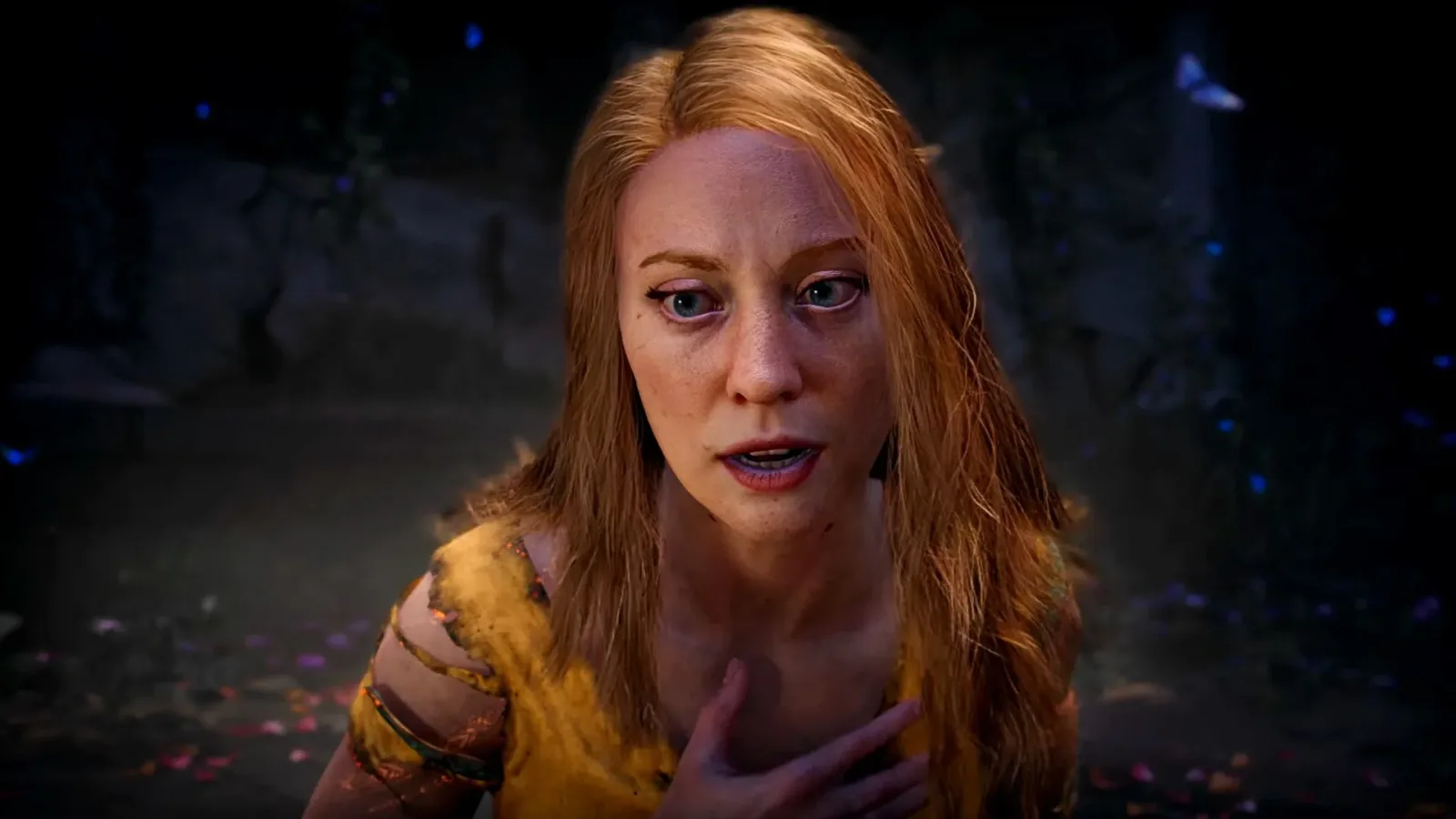
Straley's criticism is not a dismissal of the people making high-budget games. In fact, he specifically acknowledged the extraordinary talent and labor required to create a modern blockbuster. He pointed to Sony Santa Monica's upcoming God of War Laufey as an example of the kind of game whose visual fidelity can still be astonishing.
He described every part of its presentation as mind-blowing, emphasizing the immense work and skill visible in each frame. That response carries particular weight coming from a developer with decades of experience on high-profile productions. Straley has contributed to major franchises since 1999 and has firsthand knowledge of what it takes to build cinematic, premium games at the highest level.
For useful background on this topic, read Razer Tartarus V2 Pro Revives the Gaming Keypad With TMR Stick and Deep Key Controls.
But technical excellence is not the same thing as personal excitement. Straley said that, when he looks beyond the visuals and considers the actions available to the player, he does not find himself drawn in. He stressed that this was not meant as a criticism of the God of War team specifically. Rather, he sees it as a wider issue affecting AAA development across the industry.
"I think the verbs and experiences we're delivering in the triple-A space are... I wanna say boring."
In game design, "verbs" commonly refers to the actions a player performs: moving, climbing, fighting, shooting, solving puzzles, upgrading equipment, talking to characters, or navigating a world. Straley's argument is not simply that expensive games look too similar. It is that many of them rely on a familiar set of interactions, even when they are presented through different stories, settings, franchises, and technology.
A concern about creative opportunity
The former Naughty Dog lead believes the AAA environment can make it difficult to introduce ideas that are truly unfamiliar. He said the space feels as though it offers little opportunity to inject fresh, innovative concepts. That is a notable observation from someone whose past projects are frequently associated with defining the cinematic action-adventure formula that became especially influential during the PlayStation 3 and PlayStation 4 eras.
The Last of Us, in particular, combined stealth, combat, survival mechanics, exploration, and character-driven storytelling into one of gaming's most celebrated blockbuster experiences. Uncharted 4 similarly represented a lavishly produced, cinematic adventure built around spectacle and polished character work. Straley is therefore not criticizing AAA games from the outside. He has helped make some of the most prominent examples of the format.
That background also explains why his remarks are more complicated than a simple rejection of large productions. He plainly recognizes the achievement represented by games with extraordinary animation, environments, performance capture, and visual detail. His concern is that escalating production values can coexist with increasingly conservative design decisions.
For publishers and studios, that conservatism is understandable. AAA games can require enormous teams, lengthy development cycles, advanced technology, and substantial marketing campaigns. The more a project costs, the harder it can be to justify taking chances on mechanics or structures that have not already proven themselves. Familiar genres, established franchises, and widely understood gameplay systems can appear safer when so much money is at stake.
Yet that safety can create a creative trade-off. If the largest games repeatedly center similar combat loops, progression systems, open or semi-open world structures, cinematic pacing, and protagonist fantasies, even technically outstanding releases can begin to feel predictable. Straley's comments speak to that tension between production ambition and design experimentation.
Wildflower Interactive is taking a different path
Straley is not merely voicing frustration without pursuing an alternative. Wildflower Interactive has been established around the idea of making "small-ish," creatively driven, uniquely stylized games. Its debut, Coven of the Chicken Foot, appears intended to embody that philosophy.
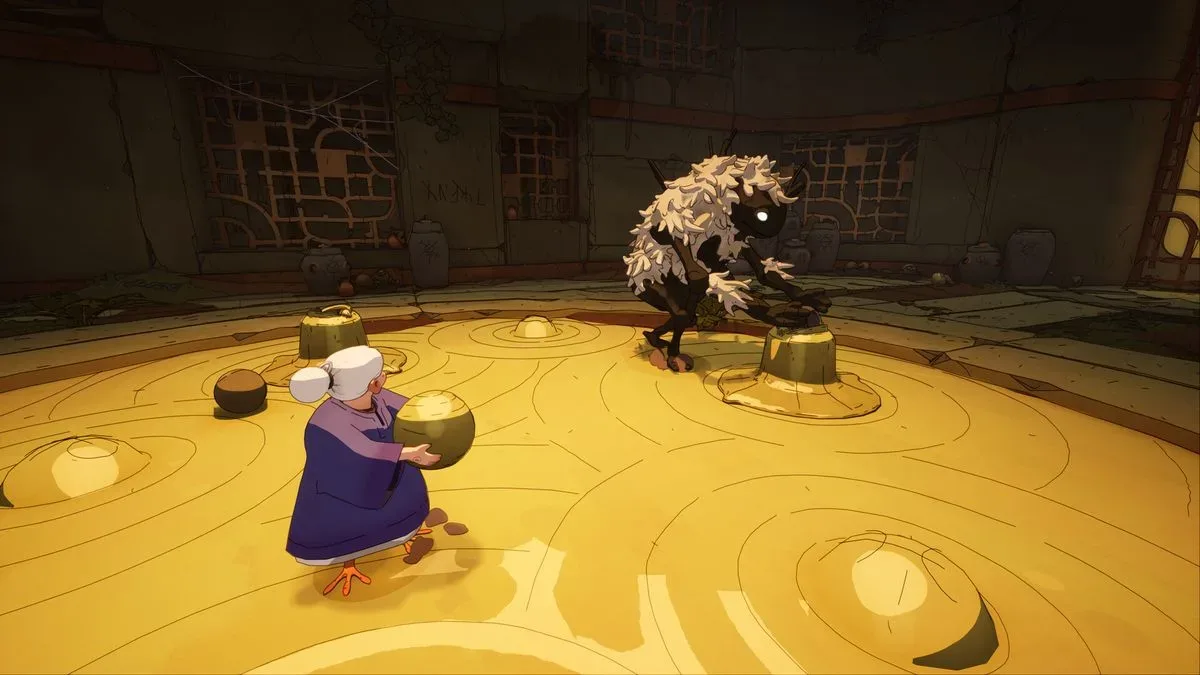
The game follows an elderly witch with chicken feet after the heroes have left her land behind. Rather than playing as the polished savior at the center of a conventional fantasy epic, players inhabit someone who exists in the aftermath of the heroic adventure. The forests are left scattered with abandoned shields and cleaned skeletons, while the witch explores alongside a hairy, otherworldly companion creature.
That premise alone is a clear departure from the conventional AAA power fantasy. Straley highlighted that players are not presented as an impossibly beautiful hero, are not given the expected heroic role, and will not be acquiring an iconic oversized weapon such as the Buster Sword. Instead, the game uses slower movement through a semi-open world, with the character and tone doing much of the work to distinguish the experience.
It is too early to treat that contrast as proof that smaller games are inherently more inventive or that every blockbuster must abandon familiar foundations. Big-budget games can still surprise players, and independent or mid-sized games can also rely on established formulas. The important point is that Wildflower's project is explicitly being built around a different creative appetite than the one Straley associates with much of the AAA market.
The growing appeal of games between indie and blockbuster
Straley's position also connects with wider interest in the so-called AA space. The term is used loosely, but it generally describes projects that sit between the smallest independent productions and the largest publisher-funded blockbusters. These games may have more limited budgets, narrower scope, smaller teams, or less photorealistic presentation than AAA releases, but they can gain flexibility in return.
That flexibility can allow developers to focus on a single unusual premise, a strong art style, a compact campaign, or mechanics that might be considered too risky for an enormous franchise. It may also reduce pressure to fill every release with the widest possible range of features. Rather than trying to become a permanent platform with dozens of systems, some projects can be more comfortable being specific, odd, concise, or experimental.
For players, that does not necessarily mean choosing between small games and huge games. There is room for both. A massive action adventure can provide a kind of spectacle that smaller teams cannot realistically match, while a more contained production may offer a voice or design angle that would struggle to survive a blockbuster approval process. Straley's remarks instead raise the question of whether the industry's most expensive games have left enough room for novelty within their own designs.
A challenge from a veteran of the format
The most striking element of Straley's criticism is his acknowledgement that he once found these productions impressive in a different way. He has made games in that mold, and he still sees their remarkable craftsmanship. His dissatisfaction is not rooted in ignorance of the process or a lack of respect for the developers involved. It comes from a veteran creator asking whether visual escalation alone can sustain excitement.
God of War Laufey remains a particularly useful example because Straley did not question the quality of its presentation. His reaction separates the work visible on screen from the design possibilities beneath it. In other words, a game can look extraordinary and still leave an experienced player wanting more surprising interactions, structures, or perspectives.
That is the creative space Coven of the Chicken Foot is trying to occupy. Its old witch protagonist, post-hero fantasy world, unusual companion, and slower semi-open traversal signal an interest in experiences that are less concerned with making the player feel like an idealized champion. Whether the game ultimately delivers on that promise will be judged when more is shown, but its concept already illustrates the kind of alternative Straley wants to pursue.
AAA gaming is unlikely to stop chasing cinematic presentation or massive production values, nor should it need to. But Straley's comments are a reminder that audiences can admire a game's technical accomplishment while still craving something less expected. For an industry built on interaction, the next major leap may not be another increase in detail alone. It may be finding new things for players to do.
Community
Discussion
Start the conversation.
No comments have been posted yet.