

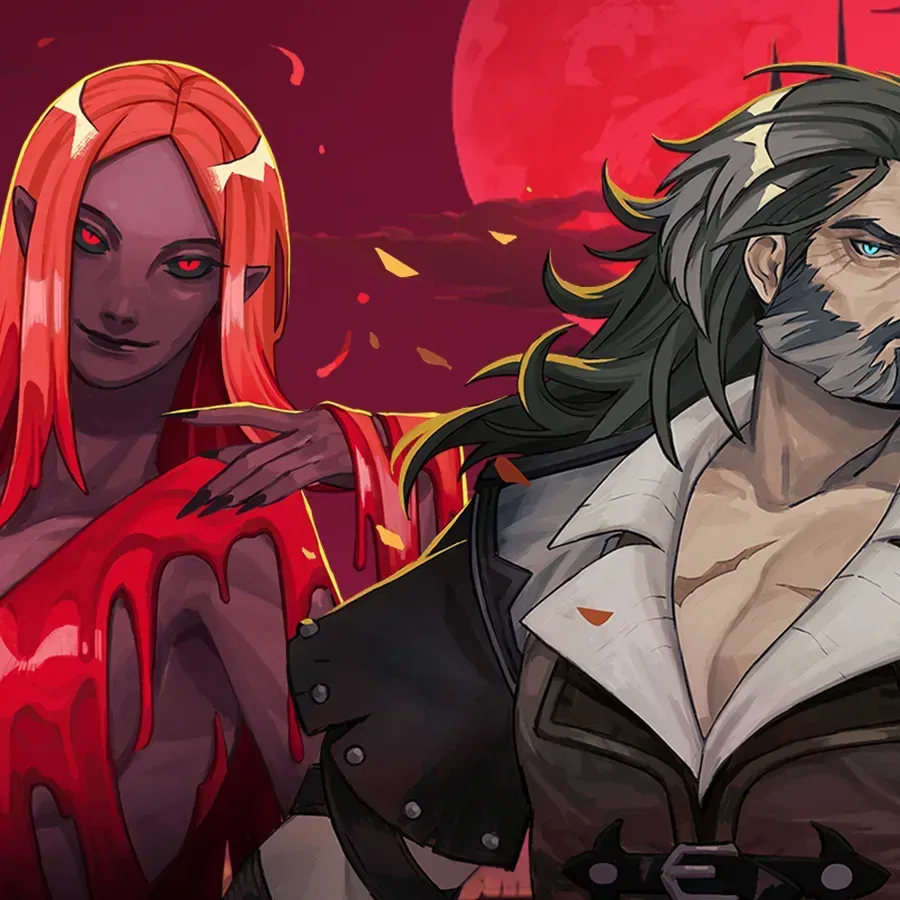
Castlevania: Belmont's Curse has barely had time to settle into players' hands, but its developers are already seeing one of the internet's most predictable reactions to a lavishly designed gothic action game: an avalanche of passionate, flirtatious fanart.
Released on October 15, Belmont's Curse has prompted plenty of discussion around its fast-paced combat, its Paris setting, its hidden secrets, and its relationship to Konami's long-running vampire-hunting series. Yet for marketing director and lead designer Bérenger Dupré and Sandro Bordier, one particularly enthusiastic community response has stood out. Fans are openly thirsting after Trevor Belmont, as well as the game's monsters and other characters--and the developers are not merely taking that reaction in stride. They say it was part of the intended vibe from the beginning.
The pair have been candid and amused about the fan creations appearing across social media. Bordier joked that the process had started quickly and that the team had already seen plenty. Dupré singled out Trevor in particular, saying they did not expect him to be received quite so strongly. Their conversation soon turned to the possibility of a "Hot Dads Edition," followed by the suggestion that the games industry ought to have an award category specifically for hot dads.
It is a playful response, but it also offers an unusually direct look at how the team approached character design. Bordier explained that the attractiveness of certain characters was a conscious choice, not an accidental byproduct of stylized art direction. The goal was to create a particular feeling around the cast and to make designs that would appeal to longtime fans.
For useful background on this topic, read Pokémon's Holiday Helper Plush Line Brings Tree Pikachu and a Clodsire Sled to the Season.
A Deliberate Design Choice, Not an Unexpected Meme
Game studios often speak broadly about wanting audiences to connect with their characters. It is less common for developers to plainly acknowledge that visual appeal, glamour, sensuality, and fan enthusiasm can all be part of that connection. In the case of Castlevania: Belmont's Curse, Dupré and Bordier have embraced the conversation instead of trying to steer it away from the more openly horny corners of fandom.
Bordier said the team knew some of the characters were hot and described that quality as an intentional choice. He added that the developers were proud of it. That sentiment matters because it frames the early reaction as a success of communication between artists and players. The team established a visual identity, the audience understood it immediately, and fanart became a highly visible expression of that shared understanding.
For a series with a history of ornate gothic imagery, aristocratic drama, dramatic silhouettes, monsters, and memorable heroes, this response is not entirely surprising. Castlevania has long existed in a space where horror and theatrical beauty overlap. A game can be grim, violent, and packed with supernatural threats while also presenting its cast with a heightened sense of style. Belmonts, vampires, creatures, and rival figures are not simply gameplay pieces; they are part of a fantasy that invites audiences to fixate on costumes, posture, voice performances, and personality.
Belmont's Curse appears to understand that legacy and push it forward through a modern lens. The team's comments suggest that the designs were meant to be bold enough to spark instant reactions, rather than merely filling familiar genre roles. Trevor's reception has become the clearest example, but the developers' remarks indicate that the care extended throughout the cast.
Fanart Is an Emotional Sign of Reception
Behind the jokes, Dupré also described a more heartfelt reason the team enjoys seeing fanart. These characters are important to the audience, and introducing fresh stories for familiar figures can be stressful. That pressure is especially real for a series with established iconography and generations of player attachment. A new interpretation has to offer something distinct while still feeling worthy of the names, themes, and history that fans care about.
For Dupré, the early reaction has been "very, very emotional." That wording points to why fanart carries weight beyond a viral post or a quick joke. Players creating art, discussing character appeal, and sharing their reactions can signal that a game's cast has become memorable enough to travel beyond the game itself. It shows that people are not only progressing through stages or mastering mechanics; they are responding to personalities and designs in a way that inspires them to make something of their own.
The team was also pleased by the reactions to character reveals and voice actor announcements before launch. Those are key moments for any story-led action game. Character art is often the first point of contact, while voice work can transform a striking visual into someone players want to follow, fear, admire, or obsess over. When both land, the community starts building its own language around the cast long before a game's full narrative is widely experienced.
That kind of response can be especially valuable when developers are telling new stories with established characters. Familiarity brings attention, but it also brings scrutiny. Fans know what certain names mean within a franchise. They bring expectations for attitude, visual presentation, and dramatic purpose. The developers' happiness at the response to Trevor and the rest of the roster suggests they feel they have cleared an important early hurdle: players are engaging with these versions of the characters on an emotional and creative level.
Paris, Monsters, and a Fast-Paced New Direction
While character discourse has dominated a portion of the online conversation, Castlevania: Belmont's Curse has more to offer than handsome heroes and eye-catching monsters. The game sends players through chaotic streets in Paris, where Trevor Belmont confronts a range of supernatural threats. That setting provides a fittingly dramatic stage for a series rooted in gothic horror, while giving the new installment a distinct atmosphere of its own.
Early critical response has been solid. One prominent review awarded the game an eight out of ten, describing it as a successful effort to bring the beloved series into a more modern era through a fast-paced, action-first approach. That assessment positions Belmont's Curse as a game focused on immediacy and momentum, while still drawing from the franchise's recognizable tone and mythology.
The combination of brisk action and heavily considered character presentation may be central to why the game is generating so much discussion right after release. Action games often live or die by how clearly they sell power, danger, and personality. Players need to understand who they are controlling, what forces stand against them, and why every encounter has dramatic energy. A strong visual cast can make those elements feel sharper before a single line of lore is explained.
In this case, even the monsters are part of the appeal. The team's acknowledgment that players are reacting strongly to multiple designs--not only Trevor--suggests that the aesthetic direction is cohesive. The enemies are not just obstacles placed in the way of the protagonist. They are contributors to a world designed to be stared at, discussed, and reinterpreted by fans.
Secrets Show a Team Having Fun With Its Influences
The developers' sense of humor also seems to be present within the game itself. Players have been uncovering Easter eggs and secret codes, adding another layer for those willing to search beyond the most direct path. Hidden details can be a powerful way to reward curiosity, particularly in a series whose atmosphere has always benefited from mystery and discovery.
Among the discoveries is an homage to classic fighting-game characters. Players can encounter it by obtaining a hidden weapon in one of the game's early areas. It is a small detail, but it helps communicate the affection the team has for the wider history of video games. References like this can turn a routine replay into a scavenger hunt and give communities another reason to compare notes, share discoveries, and speculate about what else may be tucked away.
That attention to secrets matches the broader personality on display in Dupré and Bordier's comments. The developers appear comfortable letting players see their enthusiasm, whether they are discussing fighting-game nods, celebrating voice reveals, or laughing about a fictional industry trophy for attractive dads. The tone is not detached or defensive. It is one of a team enjoying the fact that people are paying close attention.
The Community Has Taken the Invitation
There is no embarrassment required from fans who have reacted to Trevor Belmont and the rest of Castlevania: Belmont's Curse with overwhelming enthusiasm. The developers have made it clear that they recognize the nature of that response, appreciate the art it has produced, and intentionally built characters capable of drawing it out.
That does not reduce the game to a joke about attractive character designs. Instead, it highlights how deliberate design can support a broader action experience. Strong silhouettes, memorable styling, expressive performances, a vivid gothic setting, and combat-forward pacing all contribute to a game's identity. The fanart is simply one of the most immediate ways players are showing that the identity has landed.
For Dupré and Bordier, the early reception is both funny and meaningful. They can joke about hot dads and enjoy the internet's wildest creations, while also taking genuine pride in the affection fans have shown for characters that the team treated with care. In a franchise built on spectacle, melodrama, monsters, and iconic heroes, that is a response worth embracing.
Community
Discussion
Start the conversation.
No comments have been posted yet.