

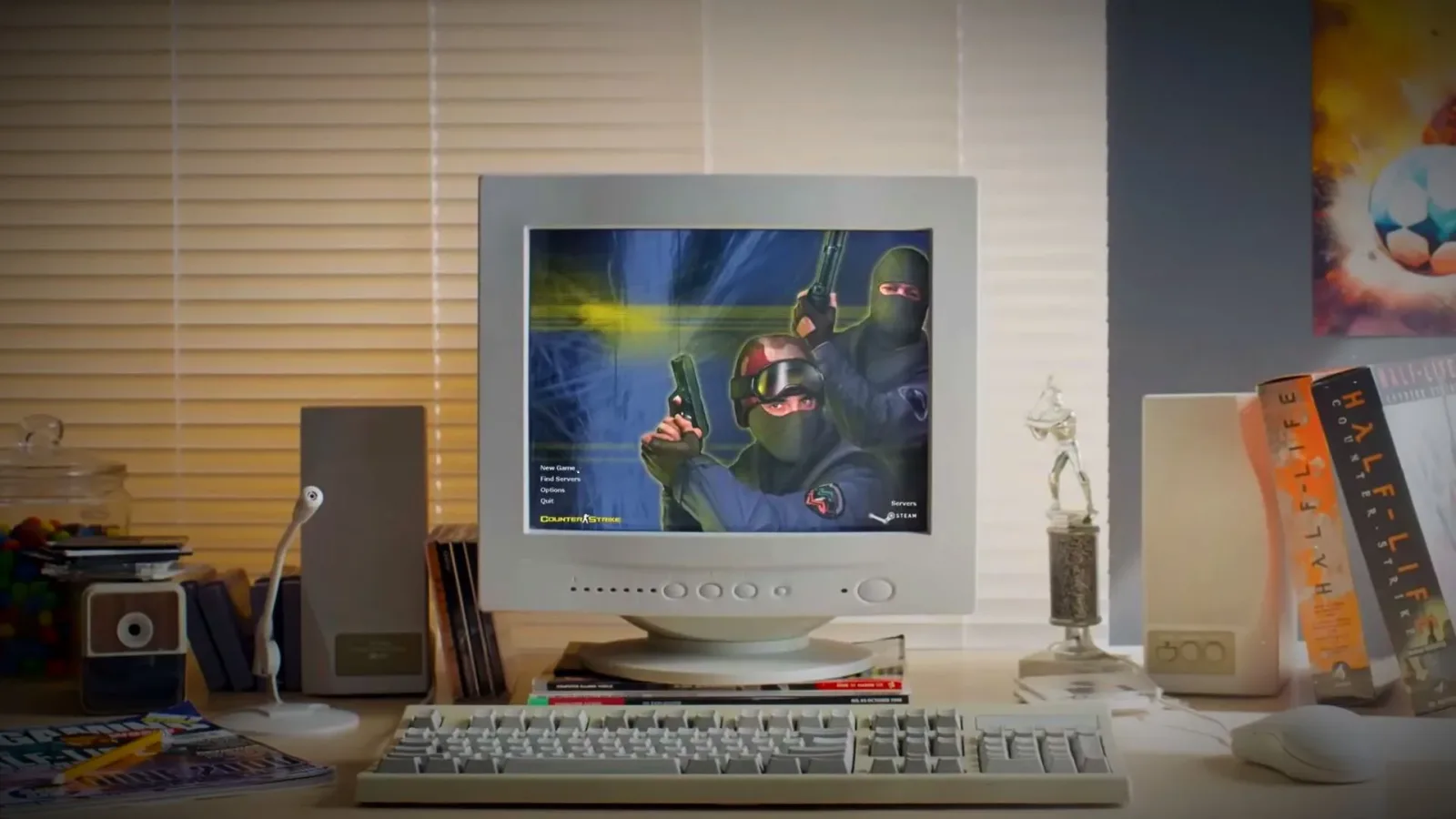
Counter-Strike 2 has received a sizeable new update dubbed Rush Hour, bringing a fresh competitive mode, changes to Premier's map-selection process, visual quality-of-life refinements, and a new Music Kit. Yet for many players, the headline additions have been overshadowed by a familiar and increasingly urgent demand: stronger anti-cheat measures.
The patch gives Counter-Strike 2 players a notable amount to explore. Its centerpiece is Rush, a new queueable 3v3 mode designed around shorter, quicker encounters than the game's traditional five-player formats. Valve is also making adjustments to Premier, improving the readability of blood and bullet effects, and adding the Starjunk 95 Music Kit. There is even an unexpected chicken-related discovery that has set off plenty of conversation among players.
But while the update's new systems offer a different kind of Counter-Strike experience, community responses make clear that many players see the ongoing fight against cheaters as the game's most pressing issue. The calls are not a rejection of new content so much as a plea for trust in competitive matches to be treated as the priority it is.
Rush brings an arena-based 3v3 format to Counter-Strike 2
Rush is described as a fast-paced 3v3 queued mode. Rather than centering on the established bomb-defusal structure associated with Counter-Strike's most recognisable maps, it sends teams through a series of randomly chosen battle arenas. The objective is to capture the opposing team's castle.
For useful background on this topic, read Wardogs CEO Acknowledges Infantry Server Shortfall as Bulkhead Refines Its Balance Plans.
That premise suggests a deliberately more direct mode, built around rapid rounds and repeatable play rather than the lengthy tactical buildup of a conventional competitive match. Counter-Strike has always rewarded communication, aim, utility knowledge, positioning, and economic discipline, but a 3v3 mode can put different pressure on each of those fundamentals. Fewer teammates mean more individual responsibility, while smaller teams can also make fights easier to read and potentially more immediate.
Random arena selection is a significant part of Rush's identity. The mode is designed so that its arenas vary from match to match, preventing players from entering every session with a fixed sequence of locations. That variability could help Rush feel less like a reduced version of the main game and more like a separate playlist with its own rhythm.
For players who want a shorter Counter-Strike session, or for groups that do not have a full five-person squad, Rush could be a useful alternative. It may also serve as a lower-commitment space for experimenting with weapons and coordination under pressure. At the same time, the mode's long-term reception will likely depend on how broad its arena pool is, how consistently rounds play out, and whether its random structure remains engaging after the initial novelty fades.
Premier map voting now gives both teams more input
The Rush Hour update also changes how Premier approaches map selection. Instead of both teams banning maps until just one remains, teams now vote to select two maps each. Once four maps have been chosen, one of those four is selected at random for the match.
It is a meaningful adjustment to a system that shapes every competitive game before a player fires a shot. Map choice in Counter-Strike can heavily influence a team's confidence and approach. Some groups have finely practiced executes and retakes on particular locations, while others are more comfortable adapting across a wider range of maps. The older ban-down process put emphasis on eliminating uncomfortable choices; the new method asks both sides to put forward maps they are willing to play.
By leaving the final choice to a random selection among four mutually offered maps, Premier may produce more variety while still preserving player agency. Teams cannot guarantee their preferred destination, but they also have a clearer chance to avoid a single dreaded map dominating the decision process. It is the sort of structural change that may appear modest in patch notes yet can affect the feel of ranked play across a large number of matches.
Whether players embrace the revised system will come down to how it balances preparation and unpredictability. Competitive Counter-Strike has always involved a mix of both. Teams plan carefully, but they must also react quickly when an opponent disrupts that plan. A four-map voting pool extends that philosophy into the pre-match stage.
Visibility improvements and a new Music Kit round out the listed additions
Beyond new modes and competitive matchmaking procedures, Rush Hour includes several quality-of-life improvements. Among them are changes intended to improve the visibility of blood and bullet impacts. In a game where split-second information can decide a round, clarity matters. Being able to more easily identify where shots landed or where a player was hit can make moment-to-moment combat feedback more useful, whether someone is actively fighting, reviewing a chaotic exchange, or trying to understand why a peek went wrong.
The update also adds the Starjunk 95 Music Kit. Music Kits have long been one of Counter-Strike's cosmetic personalization options, altering the soundtrack elements that accompany a player's matches. They do not change competitive balance, but they offer players another way to make their in-game presence feel distinctive. For collectors and cosmetic-focused users, a new kit is a welcome addition to the update's broader package.
Together, these changes underline that Rush Hour is not solely about the new 3v3 queue. It is a patch touching several layers of the game: alternative play formats, Premier procedures, combat readability, and personal customization. Even so, one unlisted discovery has attracted a disproportionate amount of attention.
Chicken eggs appear to signal a new pet-focused system
Players have shared images of differently coloured chicken eggs appearing in Counter-Strike 2 following the update. The eggs were not included in the official patch notes, making their arrival an unexpected surprise. Their presence appears connected to a new pet system, introducing an unusually playful wrinkle to a game better known for rifles, smokes, precise angles, and tense clutch situations.
Counter-Strike has featured chickens on maps for years, often becoming accidental comic relief amid otherwise intense matches. Turning that familiar environmental creature into something tied to collecting or ownership is therefore both fittingly absurd and potentially consequential. The reaction has mixed amusement with unease, particularly around the possibility of another system that encourages spending on chance-based cosmetic items.
Players are understandably alert to how any pet or egg mechanics may develop. Cosmetic collecting has been a major part of Counter-Strike's wider ecosystem for a long time, and even a whimsical concept can prompt serious questions when rarity, trading, or random rewards enter the picture. At this point, the chicken eggs are a notable discovery rather than a fully explained feature, so there is still room for further clarification about their role and scope.
For now, the eggs have given the patch an oddball talking point. A major competitive shooter adding colourful chicken eggs is the sort of detail guaranteed to spread quickly. But the humor surrounding them has also sharpened the contrast between optional novelty content and the competitive integrity issue players continue to raise.
Anti-cheat remains the community's central concern
Responses to the update have repeatedly returned to anti-cheat. Players in the patch discussion have called directly for VAC to be improved, with requests for better protection appearing prominently alongside reactions to Rush and the other additions. Similar comments elsewhere have praised the update's ideas while arguing that Counter-Strike 2 cannot afford to leave cheating concerns unresolved.
The frustration is easy to understand in the context of a ranked tactical shooter. Competitive matches require participants to believe that outcomes are determined by legitimate skill, teamwork, decision-making, and the inevitable mistakes that make each round tense. When players suspect opponents are using unauthorized assistance, that foundation weakens. Even the perception that matchmaking cannot reliably address the problem can discourage people from investing time in Premier or other serious queues.
This is why a new mode and visual improvements, however appealing, do not answer the concern many players are voicing. Rush can offer a fun diversion, and Premier's new voting rules may improve map variety, but neither change directly reassures players who feel their competitive sessions are compromised. The request is fundamentally about confidence: confidence that suspicious behavior is detected, confidence that reports matter, and confidence that fair play is actively protected.
Anti-cheat is especially sensitive for Counter-Strike because of the game's long competitive history. The series has built its reputation on demanding mechanical skill and a strategic depth that rewards thousands of hours of practice. A healthy competitive environment is not merely a feature alongside maps, cosmetics, or modes; it is the framework that allows all of those systems to retain their value for players who take the game seriously.
A content-rich patch faces an expectation problem
Rush Hour is, on its face, a content-rich Counter-Strike 2 update. It provides a new 3v3 format, introduces a different progression through randomized arenas, revises Premier's map voting, improves combat-effect visibility, adds a Music Kit, and has apparently opened the door to chicken eggs and pets. There is plenty here for players who enjoy novelty, cosmetics, or simply another way to play with friends.
Its reception, however, demonstrates the gap that can open between what a developer adds and what a committed community most wants addressed. Players can welcome Rush while still believing that anti-cheat needs urgent attention. They can laugh at chickens while questioning whether collectible eggs should arrive before a stronger response to cheating. Those positions are not contradictory; they reflect different priorities for a game that is both a social pastime and a serious competitive platform.
The next steps will matter more than the surprise factor of this patch. Rush has the potential to establish itself as a lively addition to Counter-Strike 2's mode selection, while the revised Premier system could meaningfully change how players approach ranked matches. Yet the sustained discussion around VAC shows where expectations remain fixed. For many in the community, the most important future update will be the one that makes competitive Counter-Strike feel dependable again.
Community
Discussion
Start the conversation.
No comments have been posted yet.