

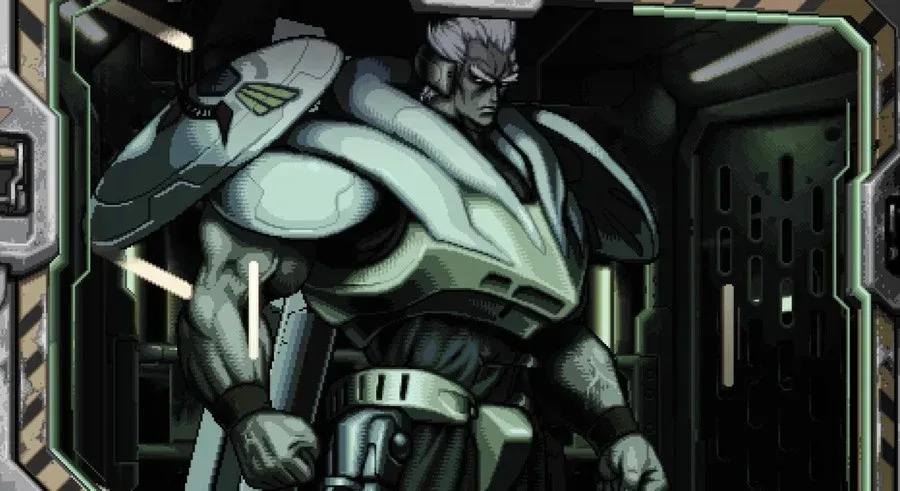
Another cult 8-bit shooter is preparing for a return. Tengo Project is developing Cybernetic Attack Final Mission, a new remaster of Natsume's 1990 Famicom action game Final Mission. In North America, players may know that game by a much more memorable, if somewhat unwieldy, name: S.C.A.T. Special Cybernetic Attack Team.
Winning Entertainment Group has announced the project, confirming that it will be shown at Tokyo Game Show 2026, which begins on September 17. No release date or target platforms have been disclosed yet, but the reveal already gives retro shooter fans a promising outline: a modernized version of an unusual NES/Famicom-era scrolling shooter, built by a studio with substantial experience revisiting classic Natsume games.
The new title preserves the core name of the original Japanese release while framing the game as a cybernetic action mission. It also appears set to retain the source game's distinct science-fiction identity: airborne cyborg soldiers, relentless alien forces, screen-filling weapon fire, and the hovering support units that made the original feel different from the average run-and-gun shooter of its time.
New York faces an invasion in the year 2029
Final Mission began with a decidedly dramatic premise. Set in 2029, the game places New York City in the path of intergalactic warlord Vile Malmort. After devastating multiple American cities, Malmort establishes a link between his space station and New York, effectively creating a route for an invading army to descend upon Earth.
For useful background on this topic, read Ancient Magic: Bazoe! Mahou Sekai Returns on Switch in Japan This November.
Humanity's answer is S.C.A.T., a special unit composed of cyborg warriors. In the original version, players could choose Arnold or Sigourney, two characters whose names were conspicuously reminiscent of major action-film stars. Those names apparently will not be used in Cybernetic Attack Final Mission, suggesting the remaster is giving its returning cast a fresh presentation rather than directly carrying over every localized detail from the 1990 release.
The objective, however, remains wonderfully straightforward. Take to the skies, blast through Malmort's forces, push through the chaos consuming New York, and ultimately stop the invasion before the gateway becomes an irreversible catastrophe. It is the kind of high-concept arcade scenario that fits an 8-bit shooter perfectly: the world is threatened, the enemy is overwhelming, and the only viable response is a heavily armed cybernetic hero flying directly into danger.
A scrolling shooter with a flexible battlefield
The original Final Mission was developed by Natsume and released for the Famicom in 1990. Its US localization arrived under the S.C.A.T. name, and it remains one of the more distinctive shooters in the NES library. Rather than locking the player to a purely side-scrolling format, the game mixes horizontal and vertical scrolling sections. That shifting viewpoint gave its missions a broader sense of movement and helped sell the idea that the player was flying through an active war zone instead of simply marching through a fixed corridor.
For another perspective on this story, read Cybernetic Attack Final Mission Revives Natsume's 8-Bit S.C.A.T. With New Heroes and a Tokyo Game Show Showing.
One or two players can fight together, and cooperative play is a major part of the game's appeal. Two cyborgs filling the screen with projectiles is naturally more chaotic than a solo run, but it also gives the action a lively arcade energy. The setup is reminiscent of Capcom's Forgotten Worlds, another late-1980s shooter built around airborne heroes and a constant barrage of hostile targets.
A defining mechanic in Final Mission is the use of orbiting satellites. These support devices circle the player character and can fire in multiple directions, making positioning important even amid the game's heavy gunfire. Weapons can also be upgraded, allowing the player to steadily become more capable as the enemy pressure rises. Together, the eight-direction satellite coverage and upgrade system give the game a tactical wrinkle beyond simply holding down the fire button.
For a remaster, those ideas offer a strong foundation. The original's systems are easy to understand but leave room for skillful play, especially when enemies approach from different angles and the screen scrolls in more than one direction. A successful modern edition would not need to radically reinvent that formula. Instead, it can refine the feel of movement, clarify visual information during crowded battles, and make the satellite-and-weapon mechanics satisfying for new players while preserving the original's sharp arcade challenge.
Tengo Project's history makes this a notable revival
Tengo Project has become a recognizable name for fans of remastered pixel-art action games. The studio specializes in bringing older titles forward with detailed modern visuals that honor their original era instead of abandoning it. Its work is not about turning 8-bit and 16-bit games into something unrecognizable; the attraction is seeing familiar concepts re-created with more elaborate animation, richer backgrounds, and sharper character art while retaining an old-school spirit.
That approach is especially fitting for Cybernetic Attack Final Mission. The early material points toward a retro-futuristic visual direction that enhances the source game's audio and visual style. The Famicom original had to convey a full-scale alien invasion with the limits of 8-bit hardware. A present-day remake can present that same premise with larger sprites, more expressive environments, denser effects, and a more dramatic sense of scale--without losing the bold, readable design associated with classic console shooters.
Tengo Project's connection to Natsume's catalog also matters. The studio previously remastered The Ninja Warriors, another Natsume-developed game that followed Taito's arcade original. That history makes Cybernetic Attack Final Mission feel less like a random archival selection and more like a continuation of a clear effort to revisit action games that deserve another chance in the spotlight.
For games like these, preservation and reinterpretation often go together. The original versions remain important historical works, but remasters can introduce their design to audiences who may never have encountered the Famicom release or its S.C.A.T. localization. The best outcome is not replacing the older game; it is making its ideas accessible in a form that encourages more people to understand why they were compelling in the first place.
New playable characters expand the mission
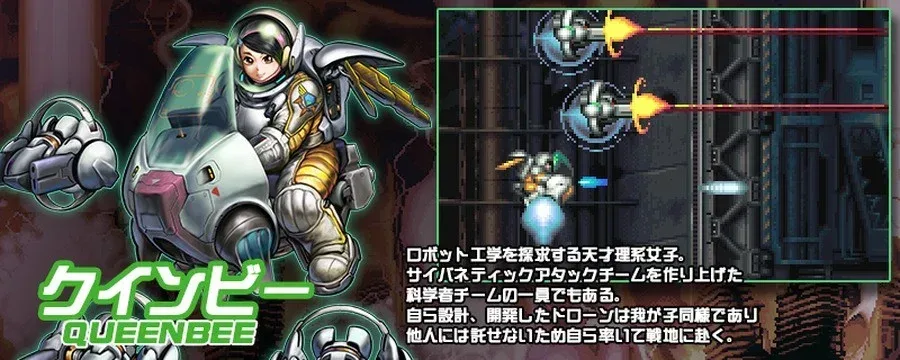
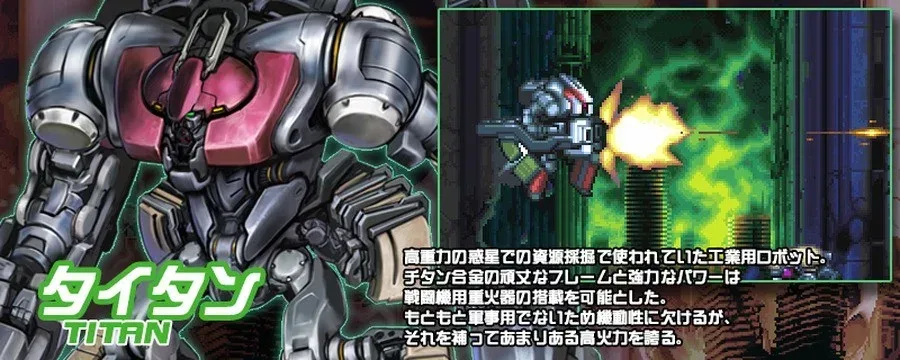
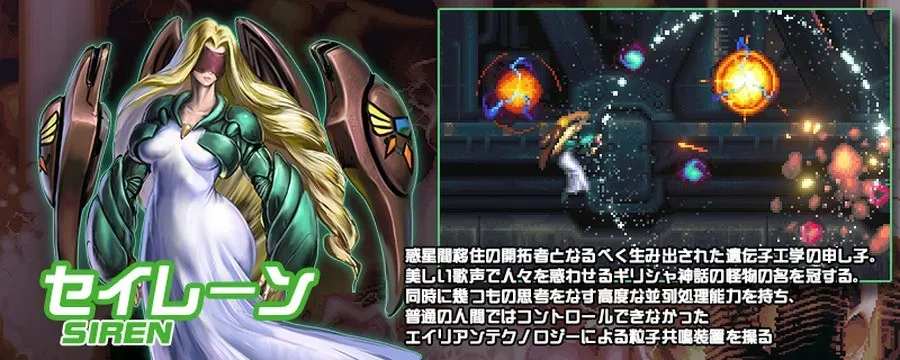
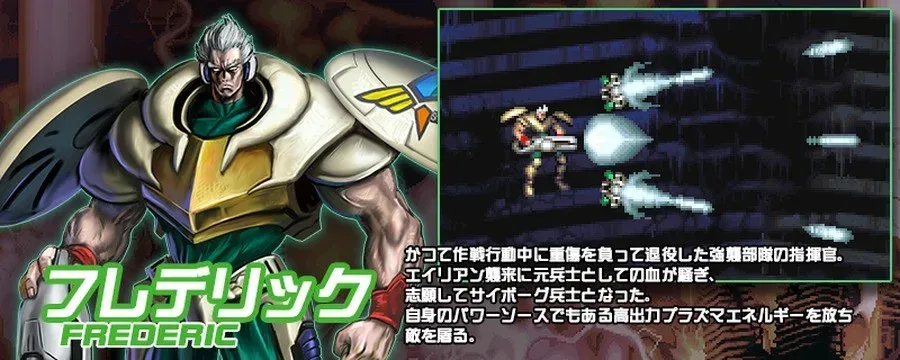
The clearest new gameplay addition revealed so far is an expanded selection of playable characters. Alongside the returning concept of cybernetic defenders, Cybernetic Attack Final Mission will include Titan, described as a powerful mech monster, and Queen Bee, a character who rides a jetbike. Their presence suggests that the remaster may offer more than a visual overhaul and renamed protagonists.
Exactly how Titan and Queen Bee will play has not been detailed. Still, their very different imagery raises interesting possibilities. A mech monster could imply heavier firepower, a larger body, or a more forceful close-range presence. A jetbike rider, meanwhile, sounds naturally suited to speed and agility. Whether those expectations translate into unique weapons, movement traits, satellite behavior, or other mechanical differences remains to be seen.
The expansion is important because the original game's central appeal is tied to its player character and combat options. New heroes can meaningfully change replay value if they do more than alter a sprite. Distinct combat identities would give both solo players and co-op pairs new combinations to explore. At the same time, players who want the closest possible connection to the 1990 game will likely be watching for confirmation of how the original heroes and their play styles are represented in the new release.
Tokyo Game Show should answer the biggest questions
There is still plenty that has not been announced. No platforms have been confirmed, and there is no launch window beyond the game's planned appearance at Tokyo Game Show 2026. Details on modes, difficulty options, online features, soundtrack treatment, and the extent of the remake's changes have also not been provided.
That makes the September showcase an important next step. Tokyo Game Show is likely to offer a closer look at the remake in motion, which should be particularly valuable for a fast-paced shooter. Screenshots can show the project's pixel-art direction, but video footage will better demonstrate whether the action captures the momentum, responsiveness, and visual clarity required of this genre.
For now, Cybernetic Attack Final Mission is an exciting prospect for fans of Natsume's older catalog, the Famicom and NES shooting scene, and Tengo Project's distinctive approach to modern retro remasters. The original may have carried different names across regions, but its core identity has endured: cyborg warriors, orbiting satellites, alien armies, and a city-sized emergency that can only be solved with overwhelming firepower.
With an expanded cast and a newly polished retro-futuristic presentation, this mission could give Final Mission its most substantial return yet. More information is expected as its Tokyo Game Show 2026 appearance approaches.
Community
Discussion
Start the conversation.
No comments have been posted yet.