

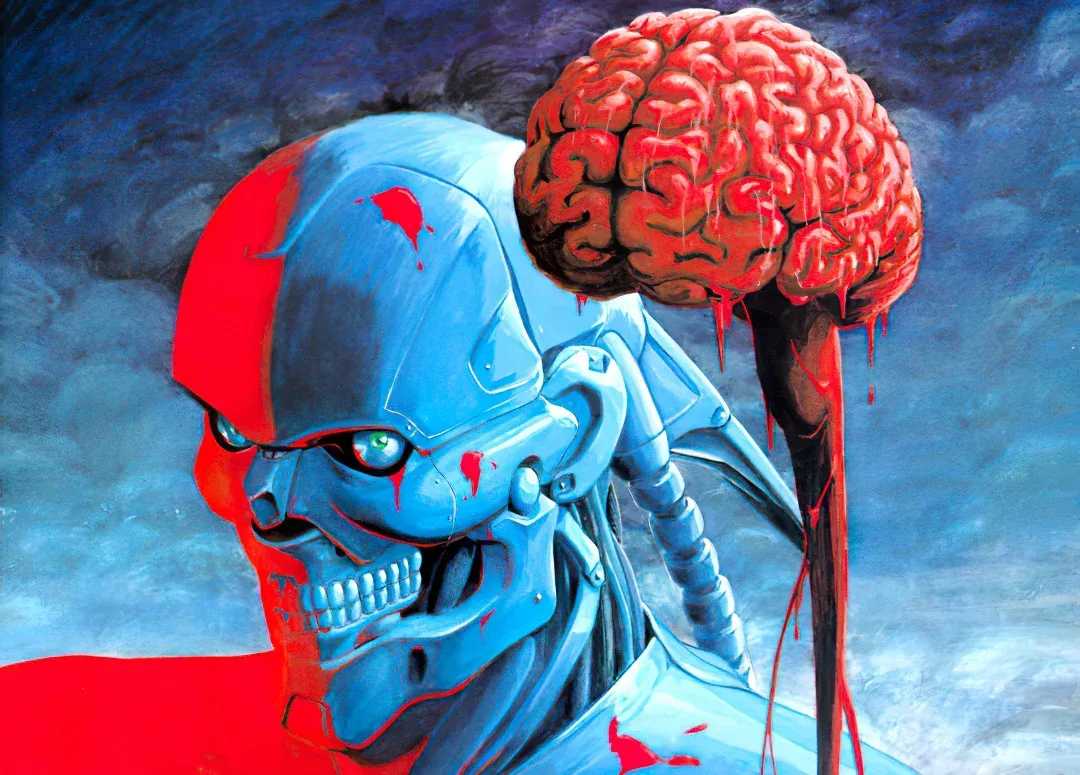
Dead of the Brain, the lurid 1992 Japanese computer horror adventure from developer FairyTale, has been revived for modern PC players on Steam. The new edition represents the game's first official English-language release, opening up one of the PC-98 era's stranger cult titles to an audience that has largely known it through import discussion, archival interest, and fan translation efforts.
The timing is appropriate for a game so closely tied to Halloween-season excess. Dead of the Brain is an unapologetically gory point-and-click tale of science gone catastrophically wrong, rampaging undead, and a city whose escalating nightmare has more behind it than a straightforward zombie outbreak. Its horror is knowingly pulpy, with obvious affection for the creature features and splattery undead films that shaped its premise.
While Japan's PC-88 and PC-98 machines supported enormous libraries, many of their games remain difficult for international players to access in an official capacity. Their distinct hardware, text-heavy designs, and the sheer scale of untranslated software have left a considerable number of notable releases outside the usual retro-gaming conversation. Dead of the Brain is among the more infamous examples to emerge from that catalog, in part because of its graphic imagery and its unusual place in FairyTale's history.
A zombie experiment immediately goes wrong
Dead of the Brain begins with Cole receiving a late-night call from Dr. Cooger. The setup may initially evoke the classic young sidekick and eccentric scientist dynamic, but the emergency is considerably less charming than an experimental time machine. Cooger has created a formula capable of restoring the dead to life, and he has tested it on his cat.
For useful background on this topic, read GTA 6's Greater Detail Demanded More Believable NPC Reactions, Rockstar Says.
The result is not a scientific breakthrough for the history books. The revived animal turns vicious and kills a police officer passing nearby. As Cole and Cooger struggle to contain the immediate disaster and conceal what has happened, the strange glowing substance spreads beyond their control. Before long, the city is flooded with decaying, oozing ghouls.
Players investigate the outbreak through adventure-game exploration, selecting points of interest, gathering information and items, and using firearms when the situation demands more direct action. The goal is not simply to survive an undead infestation, either. The story develops into a larger conspiracy, ensuring that the game's title and its surface-level zombie chaos are only part of what is waiting beneath the mess.
The game draws heavily from recognizable horror traditions. George A. Romero's Living Dead films are a clear influence on its zombie-ravaged setting, while the bodily grotesquerie and mad-science energy of Brian Yuzna's Re-Animator movies also loom large over its presentation. Rather than treating those influences with complete solemnity, Dead of the Brain approaches them with a broad, irreverent grin.
Its young characters understand the kind of horror story they have stumbled into. They recognize the familiar patterns, the absurdity of the escalating events, and the danger of every bad decision surrounding an untested resurrection formula. Yet that awareness does not spare them from having to endure the genre's inevitable turns. The new English localization is intended to preserve that tongue-in-cheek personality for players experiencing the game officially in English for the first time.
FairyTale's move from erotica to horror
Dead of the Brain is significant not only as a particularly nasty zombie adventure, but also as FairyTale's first move into horror. Before the game's 1992 release, the studio was known almost entirely for erotic titles. The shift did not mean abandoning provocative sensibilities altogether; the game has long carried a reputation for material that pushes beyond conventional mainstream horror boundaries. But it did establish a new direction for the developer and produced one of the better-remembered oddities from its catalog.
The game later received a direct sequel and a spin-off included in the Nightmare Collection. That continued output suggests Dead of the Brain found an audience in its original context, even if its international visibility remained limited for decades. For players interested in the development of Japanese computer games, it is also a reminder that PC-98 software was never restricted to the visual novels, role-playing games, and shooters most frequently discussed today. The platform's history includes a huge range of experimental hybrids and adult-oriented studios moving between genres.
Bringing a game like this to Steam requires more than simply making old files executable on a current operating system. A new localization gives the game a chance to communicate its deliberately silly dialogue, horror references, and story twists in a form designed for a modern English-speaking audience. That is particularly valuable for an adventure game, where comprehension of clues and conversation is central to the experience.
FAKKU expands into retro game publishing
Dead of the Brain's return is also notable because of the company handling the release. FAKKU, best known as a long-running hentai platform, has begun publishing retro Japanese games that are not pornographic for modern hardware. Given FairyTale's own roots in erotic software, there is a certain symmetry in the partnership, even though Dead of the Brain itself is being presented primarily as a horror release.
Some of the game's racier sequences have been removed from the Steam version to avoid a more restrictive rating on Valve's storefront. FAKKU has said that players who want to restore those portions can do so through a free patch available from its own homepage. That arrangement allows the Steam release to fit within the storefront's requirements while preserving a route for fans seeking content closer to the original game's full presentation.
The release is part of a broader plan rather than a one-off curiosity. FAKKU has also announced plans to publish Dengeki Nurse, a wild 1992 role-playing game. Both projects point toward a niche but potentially important lane for preservation-minded publishing: giving older Japanese PC games legitimate modern releases without requiring players to navigate old hardware, untranslated text, or uncertain archival downloads.
A welcome moment for retro horror preservation
Dead of the Brain arrives during a strong period for resurrected horror curiosities. The retro-horror space has recently seen several games that once felt inaccessible or stranded on aging formats return to modern PCs. Both Ecstatica games have received Steam remasters, while the FMV oddity The Dark Eye has also become available again, albeit with a confusing new title.
Those projects do not all preserve their games in exactly the same way, and each comes with its own questions about enhancements, naming, compatibility, or content. Still, their existence matters. Horror games are particularly vulnerable to slipping through preservation gaps because many were experimental, technically tied to specific machines, or too niche to receive repeated reissues. The genre's history is filled with works that took risks larger publishers would never approve, from unusual interfaces to awkward live-action footage and aggressively tasteless gore.
Dead of the Brain fits that tradition perfectly. It is not being revived because it is polished in the manner of a modern blockbuster. Its appeal lies in its personality: the grotesque art, the gleeful B-movie plotting, the collision of adventure-game mechanics with zombie violence, and the unmistakable sense that its creators were pursuing a kind of horror that could only come from that particular corner of early-1990s Japanese PC development.
For retro fans, the Steam launch means a far more straightforward way to encounter a game that has long occupied a shadowy place in the PC-98 library. For newcomers, it offers a chance to see a different branch of zombie-game history--one made years before the genre became a regular home for huge action franchises and survival-crafting sandboxes.
Dead of the Brain is now available on Steam with an official English localization. Players should expect a deliberately grisly, adult-leaning horror adventure and should note that additional racier material is handled separately through FAKKU's free patch rather than being included in the Steam version by default.
Community
Discussion
Start the conversation.
No comments have been posted yet.