

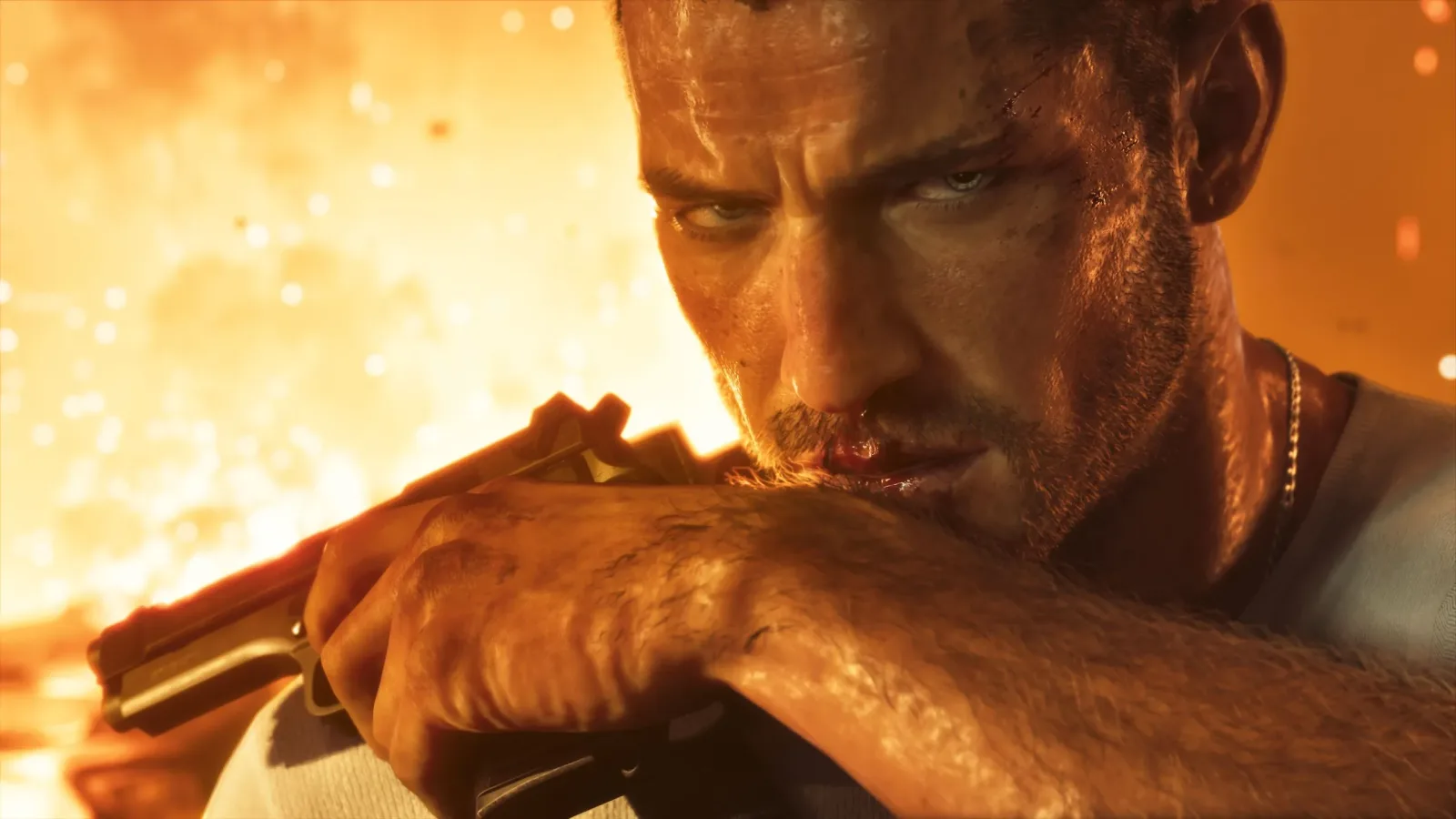
Grand Theft Auto 6 is not simply pursuing a larger or sharper version of the formula established by Grand Theft Auto 5. Rockstar North boss Rob Nelson has explained that the jump in visual fidelity also forced the studio to reconsider the small behavioral rules that make an open world feel convincing.
In an interview with Edge, Nelson discussed why systems and pacing that were acceptable in Grand Theft Auto 5 no longer worked when applied to the new game. His central point is straightforward: as players can see more detail in a world, they can also more easily spot when its inhabitants fail to behave like they belong there.
That applies to the speed at which the world operates, but it is especially relevant to pedestrians. Nelson pointed to a familiar Grand Theft Auto-style scenario: a player materializing a weapon in public. In the older game, nearby characters could ignore the action until the player actively aimed the weapon at them. For GTA 6, that kind of delayed reaction was no longer believable enough.
Higher fidelity raises the bar for simulation
Open-world games have always relied on a degree of abstraction. The player can move through a city filled with traffic, crowds, shops, activities, missions, and ambient events, but not every civilian can respond to every possible action with the nuance of a real person. Developers have to make choices about what is simulated, what is simplified, and what can happen instantly in order to keep the game responsive and coherent.
For useful background on this topic, read GOG Hopes Made-to-Order physical PC games Could One Day Return.
Nelson's comments illustrate how those choices change as technology advances. A lower-detail character model in a less densely rendered environment can leave more to the player's imagination. The game may be convincing overall even if a bystander has a limited set of reactions. But a highly detailed street scene, with characters close enough to inspect and a world designed to appear more natural, makes inconsistencies stand out more sharply.
"As the resolution of the worlds goes up, I think there are things you can't get away with in the same way," Nelson said. He used pedestrian response as an example, arguing that it does not make sense for a population intended to feel believable to remain unconcerned when a player suddenly produces an automatic shotgun in front of them.
The issue is not merely whether non-player characters run away. It is the timing and context of that reaction. A crowd that notices a visible threat only after a specific combat input may function mechanically, yet it can undermine the idea that the city is a place populated by people who are aware of their surroundings.
Grand Theft Auto 5's limitations were visible even then
Nelson was notably candid about Grand Theft Auto 5. Rather than treating its systems as a perfect foundation that only needed a visual upgrade, he said the weapon-response behavior was already beginning to feel dated in that game.
Grand Theft Auto 5 allowed players to bring out certain weapons in front of pedestrians without causing an immediate response. Characters would react once the player aimed, at which point they might flee. Nelson said that the compromise had only barely held up at Grand Theft Auto 5's level of visual resolution.
That observation matters because it frames GTA 6 as a project responding to more than a technical checklist. Rockstar is not only adding assets, rendering detail, and new locations. It is revisiting assumptions about how quickly the game's simulation should acknowledge player behavior.
For players, the practical effect could be a city that feels more attentive. If characters recognize suspicious or dangerous behavior earlier, the consequences of walking around with a weapon, confronting a stranger, or causing a disruption may feel less scripted and more connected to the immediate situation. A reaction does not need to be elaborate to be effective; it simply needs to arrive at a moment that seems natural.
Why old timing made GTA 6 feel too fast
Nelson also said that running GTA 6 using Grand Theft Auto 5's timing made the new game feel "too fast." That is an important distinction. Game timing is not just about how quickly a character runs or how rapidly an animation plays. It includes the rhythm of civilian reactions, encounters, movement, transitions, and the space players have to read what is happening around them.
A denser, more detailed world can require different pacing because the player is absorbing more information. Street-level interaction that once took place quickly may need more room to breathe when there are more visible details, more expressive characters, and more layers of activity in a scene. If every response uses an older, faster cadence, the world may appear rushed rather than alive.
That does not necessarily mean GTA 6 will be slower in the ways players usually associate with controls or action. Instead, Nelson's remarks suggest Rockstar has been working to make the simulation's tempo suit the new level of presentation. A believable reaction is partly about what happens, but also about when it happens.
In a game series built around unpredictable player actions, that timing challenge is substantial. Players can drive recklessly, enter crowded areas, pull out weapons, start fights, flee police, or simply wander through a neighborhood. The world needs to handle those actions in ways that remain readable while still supporting the chaos Grand Theft Auto is known for.
Red Dead Redemption 2 remains an important foundation
Rockstar's newer approach is also informed by work done on Red Dead Redemption 2. That game introduced a more developed way to engage with ordinary characters, allowing players to greet or antagonize people they encountered. GTA 6 builds on that interaction model rather than starting from scratch.
The significance of that system goes beyond giving players extra dialogue prompts. It encourages the surrounding world to register the player as a participant in social spaces, not only as someone who begins missions or triggers combat. Greeting a passerby, provoking them, or otherwise engaging with them gives a game more opportunities to establish personality, tension, and local atmosphere.
Bringing that approach into Grand Theft Auto creates an interesting fit for the series. GTA's cities have always been full of incidental characters, but greater interaction can make those people feel less like scenery. It can also add another layer to the contrast at the heart of the games: the player is free to act unpredictably, while the world around them is expected to respond in ways that preserve the illusion of a functioning society.
That does not mean every encounter will become a lengthy conversation or a fully simulated relationship. It does suggest, however, that Rockstar sees everyday contact with NPCs as a major part of making its next city feel convincing.
Small reactions can define a massive open world
Grand Theft Auto 6 will inevitably be judged on its headline features, from its setting and story to driving, missions, crime systems, and the scale of its world. Yet Nelson's comments highlight how much of an open world's credibility comes from seemingly minor details.
A pedestrian noticing an exposed weapon is a small event. A bystander reacting in a way that matches the threat is also a small event. But these interactions occur repeatedly, often outside formal missions, and players tend to remember the moments when a world either convincingly acknowledges them or visibly fails to do so.
That is why a more reactive civilian population could have effects far beyond individual encounters. It could alter the atmosphere of a street, the pressure of carrying out criminal activity in public, and the sense that player actions have an immediate social cost. It could also make spontaneous experimentation more rewarding, since the city would be better equipped to answer behavior that falls outside a mission's intended path.
Elsewhere, GTA 6 has been associated with more playful possibilities as well, including a South Park reference to the ability to throw dog poop. Whether the moment is used as a joke, a piece of environmental interaction, or both, it fits the series' long tradition of pairing highly detailed worlds with deliberately absurd player-driven behavior.
The broader takeaway from Nelson's explanation is that Rockstar's ambition is not limited to increasing surface detail. The studio is treating fidelity as a demand for stronger connective tissue between what players see and how the world reacts. Grand Theft Auto 5's systems established a hugely influential open-world model, but Rockstar North's leadership sees clear areas where the older game's compromises had become apparent.
Grand Theft Auto 6 is scheduled to launch on November 19. Its eventual success will depend on far more than pedestrian behavior, but the focus on those reactions offers a useful glimpse of Rockstar's priorities. The studio is aiming for a world in which greater visual detail is matched by greater awareness--and where even a sudden weapon draw on a busy street is no longer something the city can plausibly ignore.
Community
Discussion
Start the conversation.
No comments have been posted yet.