

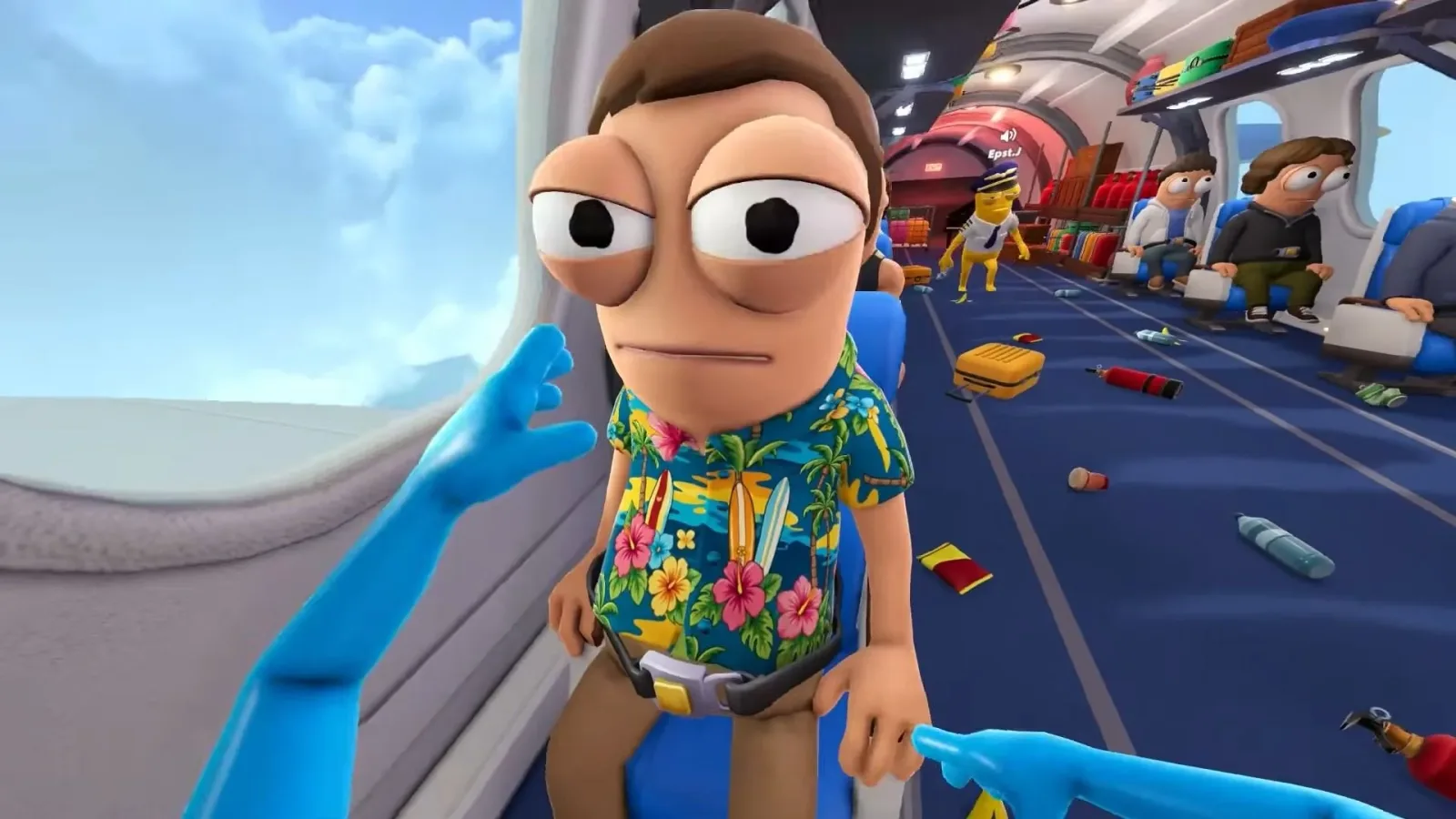
Dear Passengers, a comedy-focused online co-op game about running an airline that appears to be perpetually one malfunction away from catastrophe, has reached an extraordinary position on Steam's wishlist rankings. The game is now listed as the platform's third-most-wishlisted title, trailing Valve's PvP shooter Deadlock and Hello Games' survival adventure Light No Fire.
That would be an eye-catching result for any independent developer. It is especially notable in this case because Dear Passengers is being made by Flexus, a studio whose Steam profile does not show a previously released game. The title has risen above a slate of much more established forthcoming productions, including Fable, Phantom Blade Zero, Resident Evil Veronica, and Witchbrook.
The wishlist leaderboard is not a sales chart, and it does not guarantee that a game will become a hit after launch. It does, however, represent a powerful signal of pre-release interest. For a studio entering Steam without an existing release history on the storefront, reaching the top three suggests that Flexus has already found a remarkably broad audience for a concept built around co-op chaos, fast communication, and the kind of unexpected player-created disasters that travel well on social media and streaming platforms.
A troubled flight is the whole point
Dear Passengers puts players together as the crew of what it calls the world's worst airline. Its premise is deliberately absurd: aircraft are falling apart, cargo can be questionable, and passenger well-being is not necessarily the organization's central concern. Rather than presenting aviation as a polished simulation, the game turns the basic responsibilities of keeping a flight operational into a framework for escalating mistakes and group improvisation.
For useful background on this topic, read Chet Faliszek Argues Bigger Game Teams Do Not Automatically Make Better Games.
The game's passengers are depicted with exaggerated visual features, including bulging eyes and animated mouths, while the crew must deal with disorder on and around the plane. That broad cartoon presentation helps establish the tone immediately. The goal is not to portray a competent airline. The comedy comes from attempting to hold operations together as problems pile up and a group of friends creates new ones.
Flexus has openly leaned into the comparison with the recent wave of loose, streamer-friendly co-op games. One trailer even labels Dear Passengers as "Another Friendslop Game," using the community's own tongue-in-cheek term for a category that has become increasingly visible on Steam.
"Friendslop" is not a formal genre label, but it generally describes games designed around shared confusion, physical comedy, noisy teamwork, and replayable anecdotes. Their mechanics can be simple on paper, yet a successful session is driven by the people in it: a missed instruction, a mistimed jump, an emergency handled badly, or one player deciding to make an already bad situation substantially worse. Dear Passengers appears to be built for exactly that sort of dynamic.
An unusually large pre-release following
Flexus has documented the scale of the game's wishlist momentum through its social media account. On July 31, the studio said Dear Passengers had reached 2 million wishlists, a milestone that arrived as the game entered Steam's top five. The project then moved into fourth place on August 7. By September 5, Flexus announced that it had made the top three.
The studio's reaction has had the same slightly stunned energy as the game it is promoting. Flexus' account had roughly 440 followers when the top-three announcement was highlighted, making the contrast between its relatively small social following and Dear Passengers' enormous Steam interest particularly striking.
That disparity is a useful reminder that major wishlists are not always built through a single giant official social account. Trailers, creator coverage, clips, Steam visibility, and a premise that audiences can communicate in one sentence can all fuel discovery. "A co-op game about operating a disastrously unsafe airline with friends" is an easy pitch to understand, and the trailer's chaotic imagery gives potential players an immediate idea of what kinds of moments they might create together.
There is precedent for smaller co-op projects exceeding expectations. Games in this space often arrive without the conventional buildup associated with blockbuster releases, then spread rapidly once viewers see groups of players laughing at a situation that went off the rails. Flexus is attempting to enter that same territory before launch rather than after it, and its Steam position indicates the strategy is working so far.
Competing with far larger names
The most surprising part of Dear Passengers' rise is not simply that it has attracted attention. It is the company it is keeping. Deadlock is made by Valve, while Light No Fire is the next major project from Hello Games, the developer known for No Man's Sky. Both carry obvious recognition and enormous built-in curiosity.
Meanwhile, the titles positioned below Dear Passengers include games connected to long-running franchises, recognized publishers, or celebrated creative teams. Fable returns one of Xbox's best-known role-playing series. Resident Evil Veronica has the pull of the Resident Evil name. Phantom Blade Zero has been one of the more visible action games on the horizon, and Witchbrook comes with strong interest from players who have followed its development for years.
Wishlist placement can move frequently, particularly around showcases, new trailers, demos, and release announcements. Still, sitting above those projects at this stage demonstrates that a clean, accessible multiplayer hook can compete for attention with pedigree and brand recognition. It also underlines how much Steam's audience responds to games that promise a social experience rather than only a solo campaign or technical spectacle.
The gap to the next comparable cooperative game is also notable. The nearest similar co-op project sits around rank 20 and comes from Funselektor Labs, a developer with an established Steam background through its car games. Dear Passengers is therefore not merely one successful title within a crowded section of the list; it is standing apart from the rest of its particular co-op lane.
Flexus brings mobile experience to PC
Although Dear Passengers will be Flexus' first released game on Steam, the studio is not inexperienced. Flexus is based in Kyiv, Ukraine, and was founded in 2020. The company says it has grown to more than 70 people and reached over 300 million downloads across games released in more than 150 countries.
Its existing catalog is primarily associated with mobile. The studio's games include Tower Draft, an idle game with a blocky visual style; Mow My Lawn, a grass-cutting title; Dye Hard, a colorful territory-focused game; and Train Miner, another idle-oriented project centered on trains. The games have generally accumulated favorable mobile-store ratings, with 4.2 stars described as the lowest rating among those titles.
That background matters because mobile development can provide experience in readability, immediate hooks, broad accessibility, and serving very large audiences. Those lessons do not automatically translate into success on PC, where expectations for pricing, updates, community interaction, and depth can differ substantially. But Flexus is not approaching the market as a team learning game production for the first time. It is a studio with a substantial record of shipping games and reaching players, now applying that operational knowledge to a more core-focused PC release.
The studio also describes its development journey as one shaped by the pandemic and the full-scale war in Ukraine. Its continued growth under those circumstances adds important context to Dear Passengers' current success. The game's position is not just a surprise breakout from an unknown hobby team; it is the result of a Ukrainian studio with an extensive mobile footprint making a bold move into a new audience and platform ecosystem.
What the ranking does--and does not--mean
Two million wishlists and a top-three ranking give Dear Passengers a substantial foundation, but there are still important unanswered questions. No release date, price, or expanded platform plans are established here. Steam interest is valuable, yet the eventual launch will determine whether the game's co-op systems have enough variety and staying power to meet the expectations created by its trailers and its remarkable chart position.
That challenge is particularly relevant for games built around humorous multiplayer mishaps. The best games in the format offer simple entry points but continue to produce fresh complications after players understand the basics. If Dear Passengers can turn its airline-disaster premise into a deep pool of emergent moments rather than a joke players exhaust in a few sessions, it could convert its wishlist momentum into a lasting community.
For now, the achievement is difficult to overstate. Dear Passengers has pushed into one of Steam's most visible pre-release positions, ahead of games with substantially greater name recognition, while being developed by a studio without a prior Steam launch. Whether it holds that spot or shifts as the calendar fills with announcements, Flexus has already made sure that its chaotic airline is no longer flying under the radar.
Community
Discussion
Start the conversation.
No comments have been posted yet.