

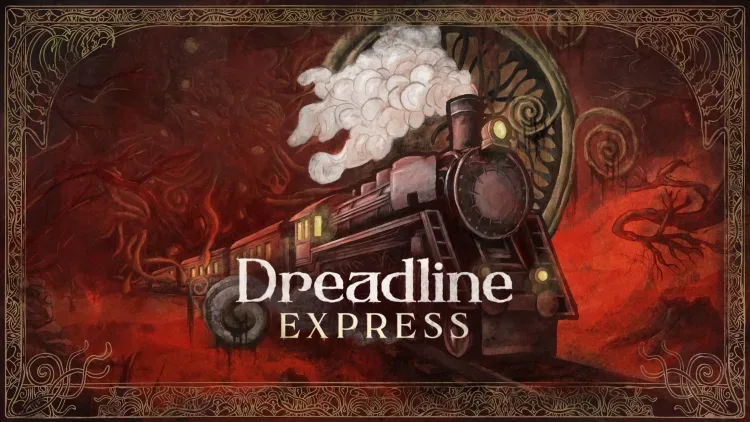
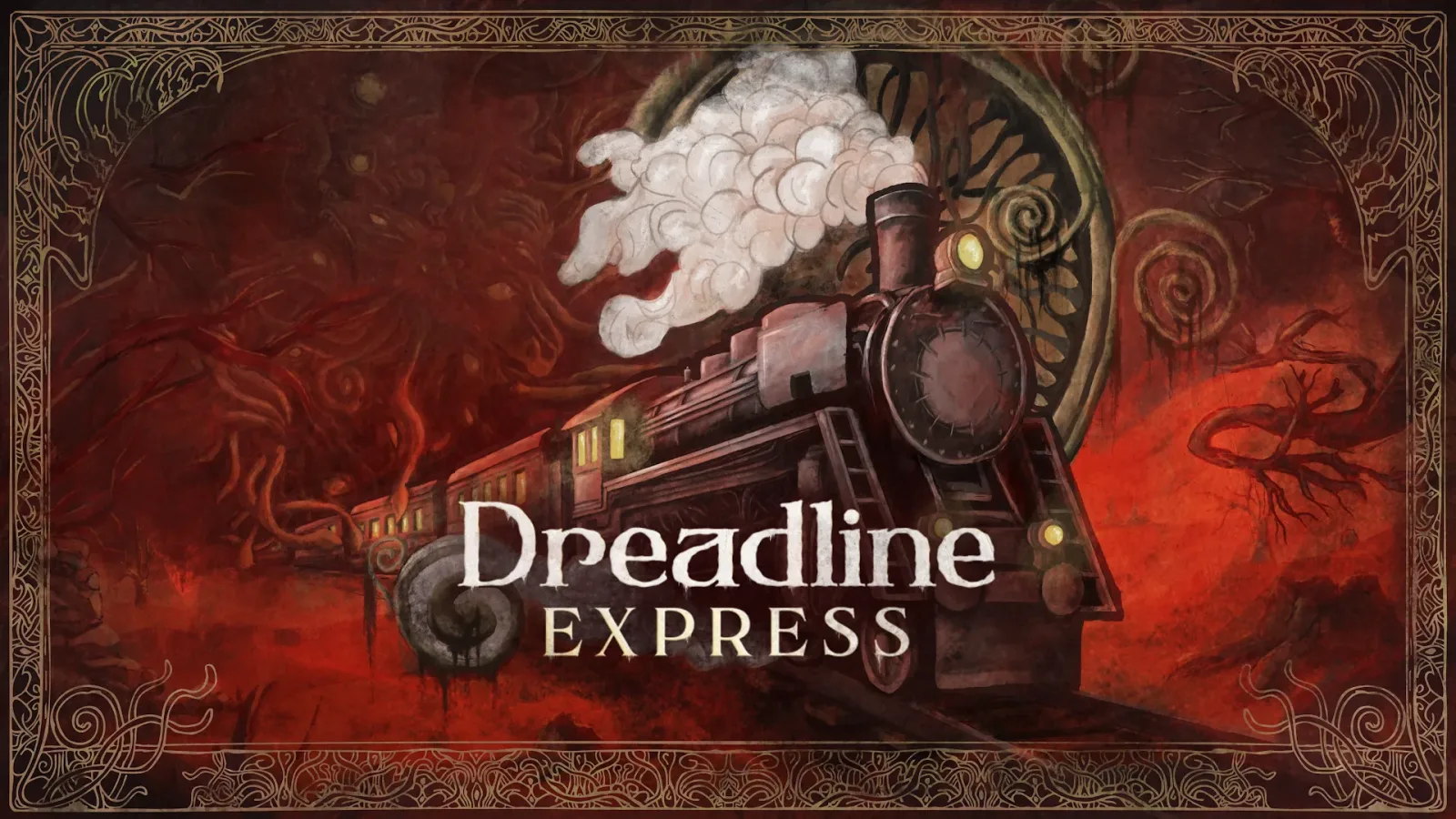
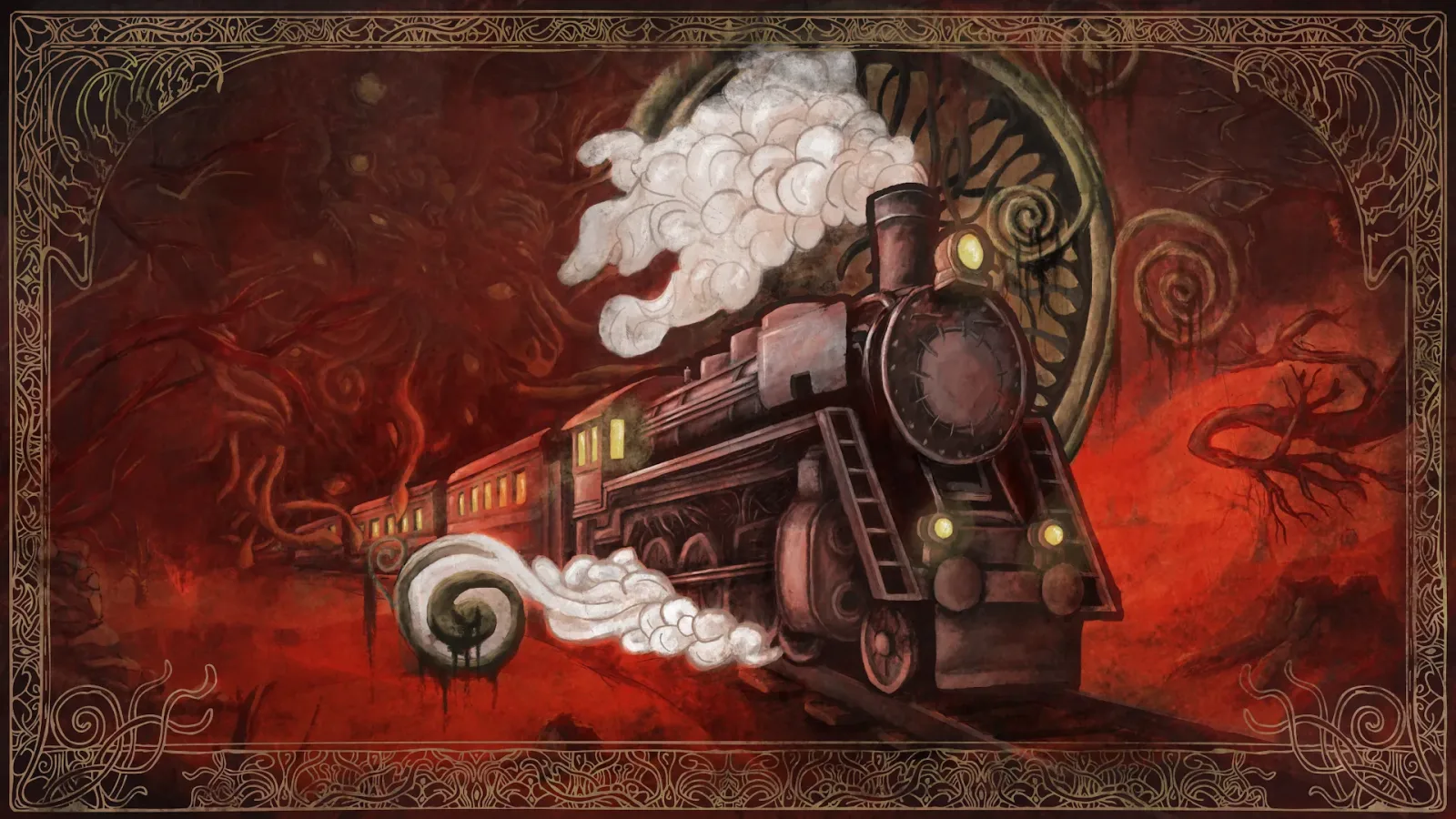
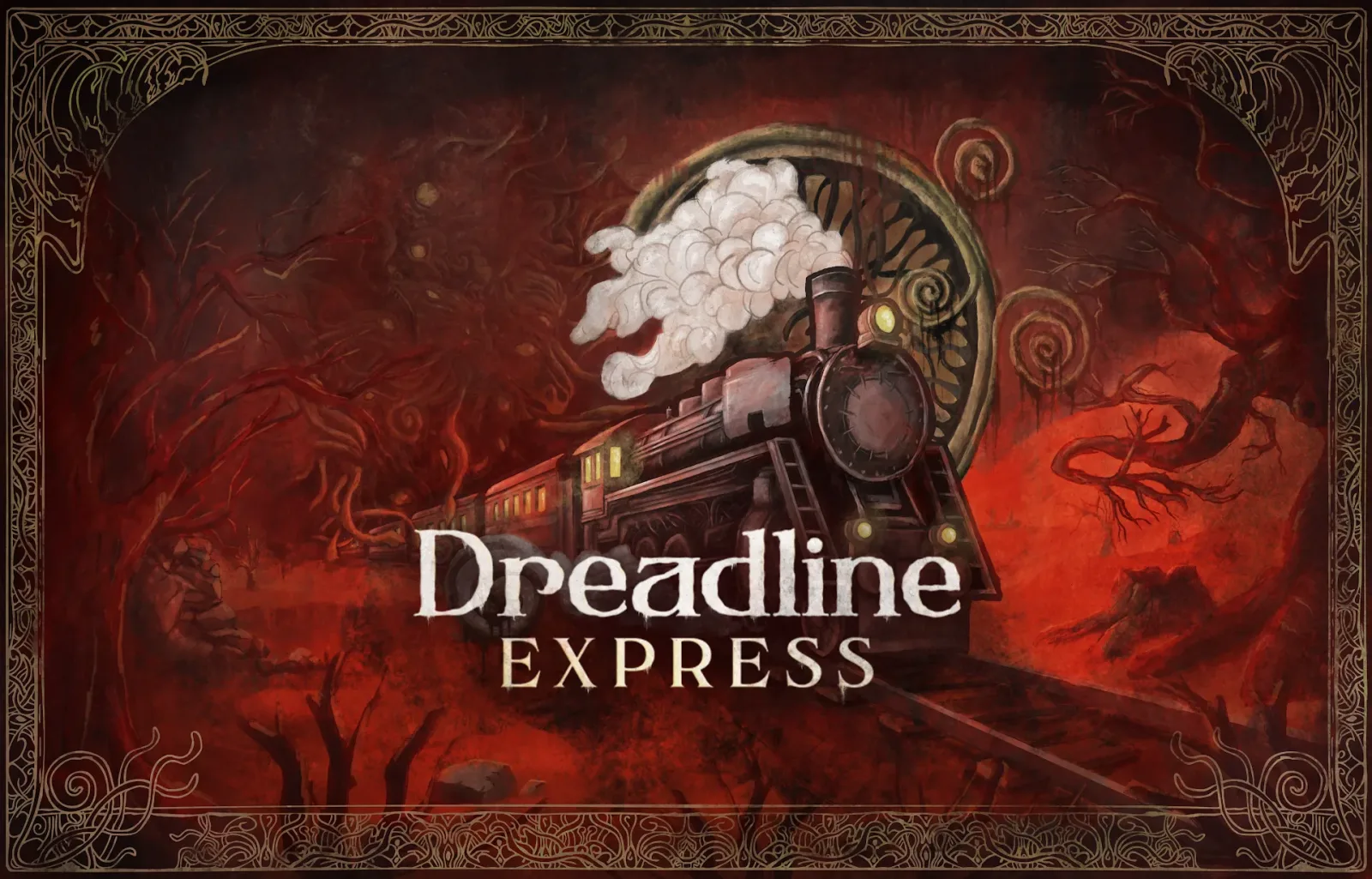
Dreadline Express is now available for PC through Steam. Published by Shoreline Games and developed by David Konecny, the first-person psychological horror game launched on October 16, 2026, placing players aboard what is described as the last train still carrying human survivors across a devastated Earth.
The setting is immediately bleak: stations have closed, destinations are gone, and the outside world has been reduced to the scars of a collapsed civilisation. The train is not simply a means of getting somewhere safer. It is the final moving refuge for a small group of people, and its passengers bring their own histories, motives, fears, and secrets into every compartment.
Konecny has framed the game as a "metroidbrainia," a label that signals a structure built around curiosity, observation, unlocking new possibilities, and revisiting mysteries with fresh understanding. Rather than directing players through a conventional sequence of objectives, Dreadline Express asks them to pay attention to the people around them and make sense of riddles that reveal where to go next.
"Dreadline Express asks you to be curious, pay attention, and make sense of the strange people sharing your journey," Konecny said. "After spending so long building this world, I'm excited to finally open the doors today and see what players discover for themselves."
For useful background on this topic, read Resident Evil 7 Fan Film Earns Koshi Nakanishi's Approval.
A train ride through a dead world
The central idea behind Dreadline Express is as much about confinement as it is exploration. The survivors are sheltered inside a steam train, but that shelter is limited, fragile, and full of unanswered questions. Outside lies a scorched planet that no longer seems to belong to humanity. Inside, each railcar offers another piece of a larger mystery.
The game draws on Lovecraftian themes and undertones, using an atmosphere of cosmic unease and psychological uncertainty rather than presenting its premise as a straightforward monster hunt. Its horror appears closely tied to what the passengers know, what they conceal, and what might be lurking within their minds. A locked door may lead to a practical puzzle, but it may also force the player to weigh whether opening it is actually wise.
That distinction is important to the game's tone. Progress is not presented as an uncomplicated good. Curiosity may uncover a route forward, a useful truth, or an opportunity to help someone. It may also expose a secret a character wanted buried, deepen a conflict, or reveal something that changes how the train and its inhabitants are understood.
For another perspective on this story, read Dreadline Express Brings Psychological Horror to Steam.
The premise turns the train into a compact but layered world. Every carriage can hold a fresh clue, an obstacle, an encounter, or a fragment of personal history. While the journey moves across an otherwise lifeless landscape, the real motion comes from the player's growing understanding of the people aboard and the systems connecting the train's mysteries.
Cards turn discoveries into possibilities
At the heart of Dreadline Express is a card-based narrative system. Discoveries, encounters, and achievements become cards in an evolving collection. These are not described merely as trophies or records of past events; they are intended to help players connect information, formulate plans, and discover ways through problems that initially seem impossible.
That system gives the investigation a tangible structure. As the collection grows, players can build a clearer picture of the train's situation and the relationships among its passengers. A discovery made in one part of the train may gain new relevance after another card is obtained. In that sense, advancement is tied not just to opening physical pathways, but to recognizing links between clues and deciding how to act on them.
The eventual goal is to fill out the album of cards and move closer to an understanding of the melancholy story behind the last human train and the fate of everyone travelling on it. The framing suggests that completion is connected to comprehension: the more players have seen, collected, and interpreted, the more fully they can understand the journey.
For players who enjoy games where information itself functions as a progression tool, the card collection may be one of the most distinctive parts of the experience. It turns encounters into resources for reasoning, while keeping the focus on narrative discovery rather than relying solely on keys, switches, or numerical upgrades.
Multiple ways to deal with a problem
Dreadline Express is designed around player choice. The game allows players to explore the train freely, decide whom to treat as an ally or an enemy, and confront obstacles with force, tactical thinking, or careful deduction. There is rarely only one stated answer to a challenge.
That flexibility fits a game built around ambiguous people and difficult decisions. A passenger can be approached as a potential friend, a threat, a source of information, or a person whose plans need to be stopped. The game's structure leaves room for different approaches rather than insisting that every player reach a solution through the same interaction or route.
Its choices also extend beyond immediate problem-solving. Relationships, discoveries, and player decisions all shape how the trip develops. The game's warning that the player is being watched gives those decisions an additional layer of pressure. It suggests that actions aboard the train do not simply vanish once a conversation ends or a door opens; the journey may remember them.
This approach can make even small moments feel consequential. Choosing to investigate, withholding trust, offering help, or escalating a confrontation may affect the player's path through the story. In a setting where the number of survivors is already small and the available refuge is a single train, social decisions can carry as much weight as mechanical ones.
Psychological horror built around attention
While the game is being positioned as psychological horror, its available description emphasizes deduction and unease alongside danger. Players are encouraged to observe carefully, follow their curiosity, and interpret the behaviour of an ominous cast. That makes the horror inseparable from the act of learning more.
There is a particular tension in stories set on trains: movement implies progress, yet passengers cannot easily leave. Dreadline Express uses that tension in a world where every familiar destination has effectively been erased. The train continues onward, but there is no promise that the next stop offers safety or even answers. Its passengers are trapped together by circumstance, and each discovery has the potential to change the balance between them.
The Lovecraftian influence further supports the game's interest in hidden knowledge. In this kind of horror, understanding can be dangerous, and the truth behind an event may be more disturbing than uncertainty. The question is not always whether players can solve a mystery, but whether they are prepared for what solving it might reveal.
That combination of first-person exploration, branching responses, collectible narrative tools, and a tightly contained setting gives Dreadline Express a deliberately introspective identity. It is a game about moving through a train, but it is also about investigating the emotional and psychological baggage carried by everyone within it.
Available now on PC
Dreadline Express launched today, October 16, 2026, for PC via Steam. Players entering the train can expect a first-person horror journey focused on its enclosed setting, a cast of suspicious survivors, open-ended obstacles, and a card collection that steadily expands the range of clues and possibilities at their disposal.
For those drawn to narrative-heavy horror that rewards observation over simple instruction-following, the game's premise offers a grim route into the unknown. Every station may be closed and every destination may be dead, but the train is still moving--and its passengers have plenty left to hide.
Community
Discussion
Start the conversation.
No comments have been posted yet.