

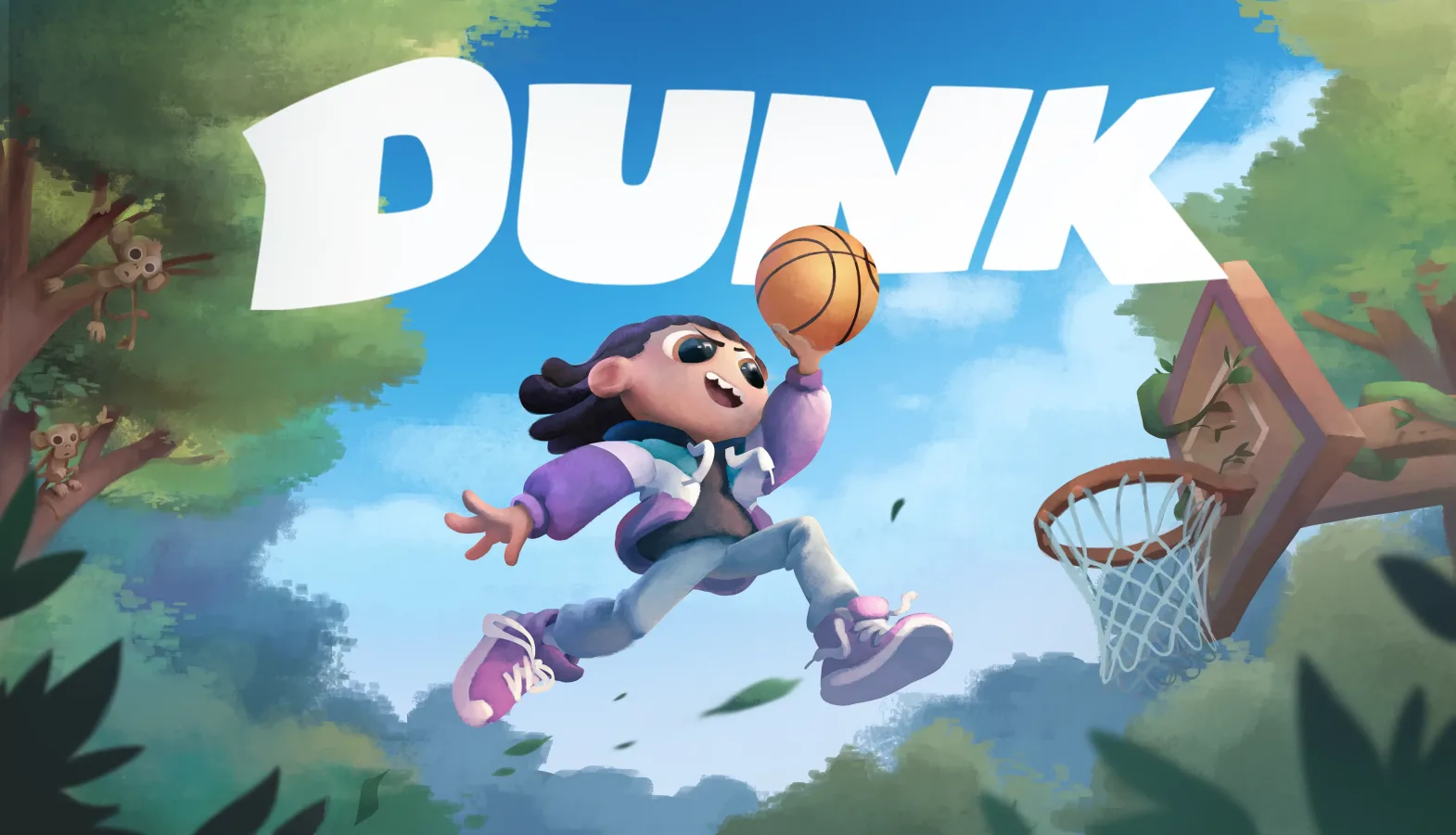
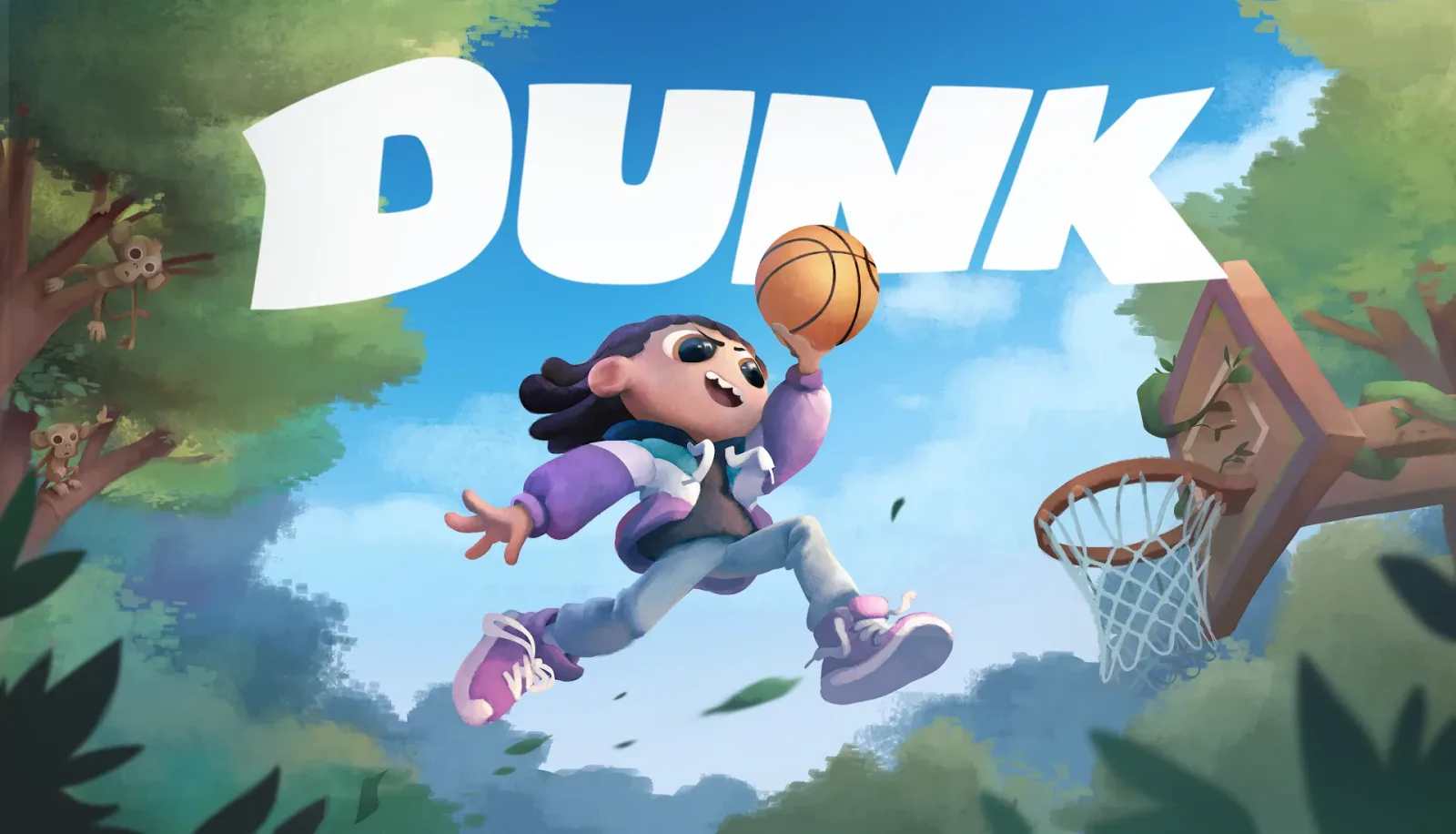
Katapult Games has announced DUNK, a first-person arcade basketball game planned for PC through Steam in 2027. The Dublin-based independent studio is approaching the sport from inside the player's perspective, putting the emphasis on shooting, passing, rebounds, positioning, and the unpredictable outcomes that can emerge when a match is driven by physics rather than heavily pre-authored animation sequences.
Basketball games have often pursued either a simulation style built around licensed leagues and detailed broadcast presentation or a broadly exaggerated arcade approach. DUNK appears to be aiming for a different balance: a fast, social multiplayer game that retains a strong focus on player execution. The result is intended to make every possession matter, whether a team is setting up a clean assist, fighting for a loose rebound, sinking a late three-pointer, or watching an ambitious dunk attempt turn into an unforgettable miss.
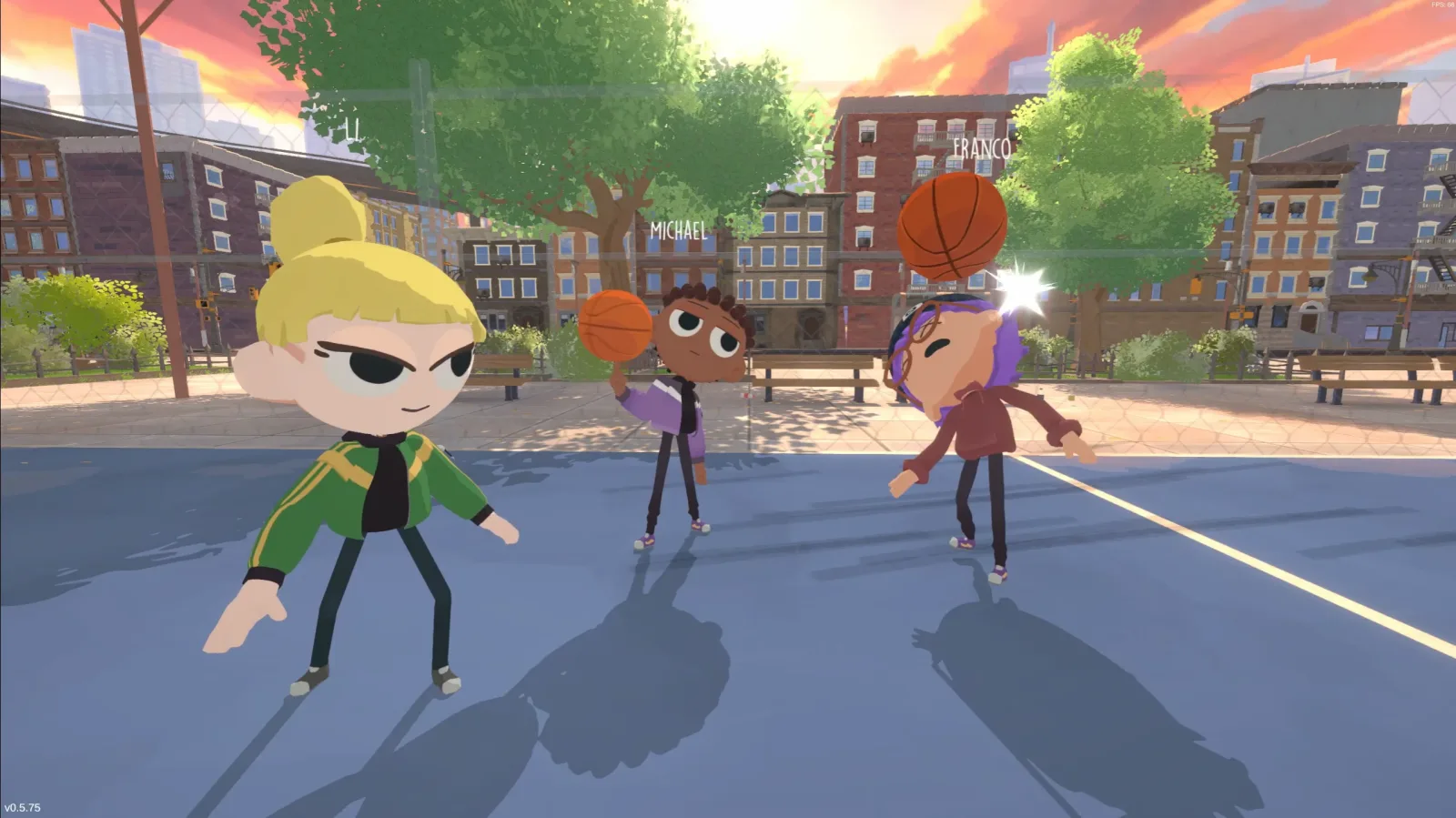
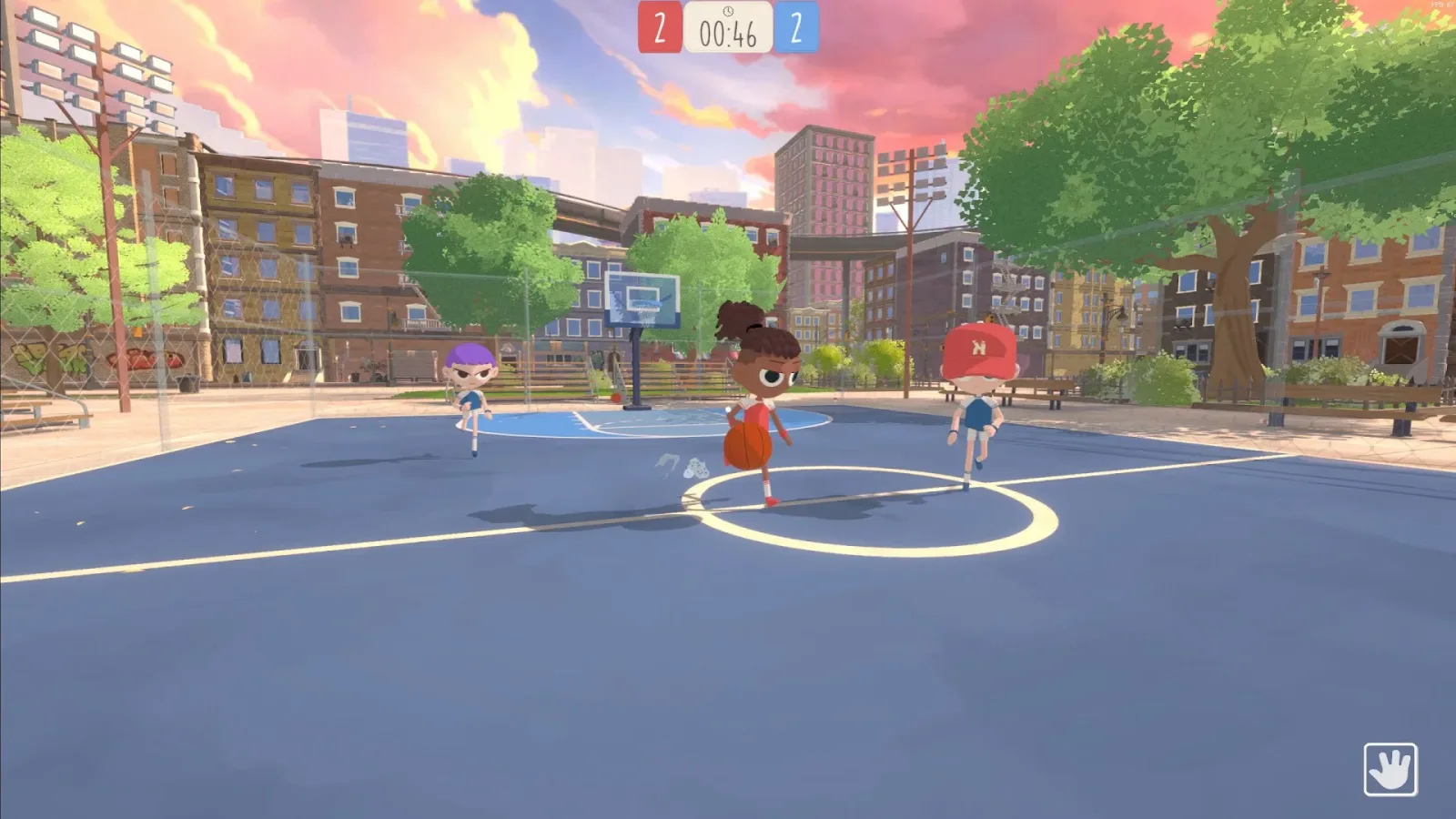
The first announcement confirms support for 1v1, 2v2, and 3v3 matches. Teams can include up to three players, while sessions can accommodate as many as six friends locally or online. That structure gives DUNK room for both quick individual contests and more coordinated games in which communication, spacing, and trust between teammates should become central to success.
A court-level perspective on arcade basketball
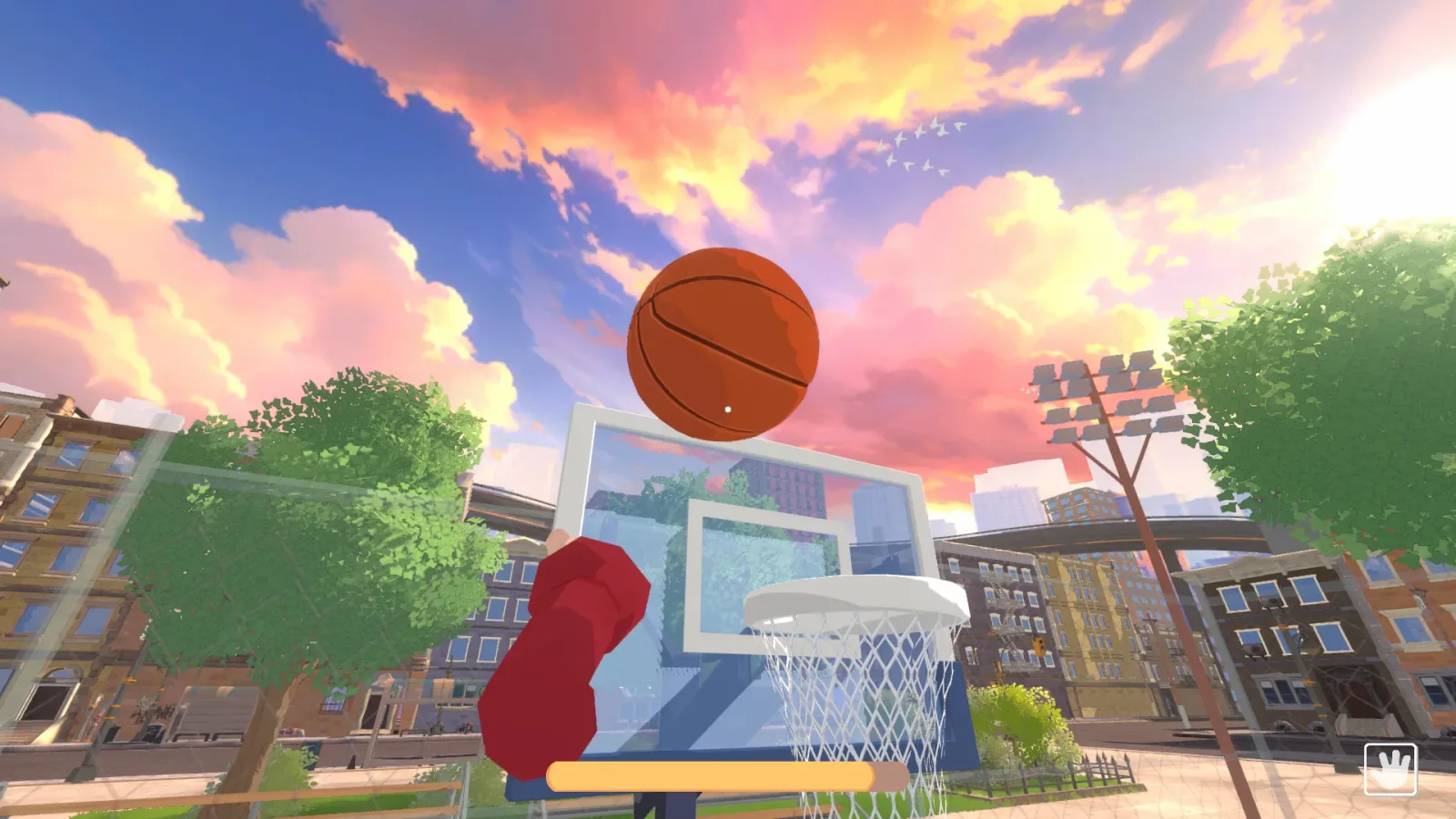
DUNK's defining feature is its first-person viewpoint. Rather than observing the whole floor from a typical elevated camera, players will experience the action at court level. This could make the game's central basketball decisions feel more immediate: recognizing an open teammate, tracking an incoming pass, judging the distance to the hoop, or anticipating where a missed shot will land.
For useful background on this topic, read Session: Skate Sim Heads to Barcelona in New DLC.
Katapult Games is framing the experience around measured physics and learned skill. Passes, shots, and rebounds are designed to follow physics-driven interactions instead of relying on standard scripted outcomes. In practical terms, players should need to develop a sense for timing and trajectory rather than expect the game to smoothly guide every action toward a predetermined result.
That philosophy also leaves space for failure, which is an important ingredient in an arcade sports game. A difficult shot can be clutch when it drops, but it can also go badly wrong. A rebound may create an instant second chance or bounce into the hands of an opponent. Those moments of uncertainty are positioned as part of DUNK's appeal, helping each match produce the kind of dramatic swings, narrow wins, and amusing mistakes that players will want to discuss afterward.
Skill will not be limited to scoring. The announced feature set stresses on-court awareness, solid positioning, and teamwork. A player who understands where to stand, when to move, and when to pass may be just as valuable as the person trying to dominate the scoreboard. That is especially relevant in 2v2 and 3v3 games, where a small team means every rotation and missed assignment can quickly change the flow of a possession.
For another perspective on this story, read DUNK Aims to Bring First-Person, Physics-Driven Arcade Basketball to Steam in 2027.
From solo practice to competitive multiplayer
Multiplayer is clearly at the center of DUNK, with options for casual games with friends as well as competitive encounters against rivals. The smaller match formats suggest rounds that can be easy to start and quick to understand, without requiring a full-sized virtual roster. Katapult Games also highlights rapid resets, indicating that the game is being designed to keep the pace high and reduce downtime after key moments.
For players who want to refine their fundamentals before stepping into a public game, DUNK will include solo challenges. The announcement does not yet detail the precise challenge types, scoring systems, or progression attached to them. Still, a dedicated practice option could be valuable in a first-person sports game where shot timing, movement, and ball handling may take time to master.
Proximity chat is another planned social tool. Players will be able to encourage teammates, call out opportunities, celebrate a big play, or engage in some friendly trash talk with opponents. Voice communication can be especially useful in small-team basketball, where an alert about an open lane or a defender closing in can be more valuable than a complicated playbook.
Of course, proximity chat also means the social tone of each session will depend heavily on the people in it. DUNK's focus on playing with friends gives groups a natural way to coordinate and have fun together, while competitive matches could provide the louder, more unpredictable energy associated with online sports games. The game's mix of competitive and casual play is intended to support both approaches.
Courts with different quirks to learn
DUNK will not be restricted to a single traditional gymnasium. The initial reveal names three settings: Schoolyard, Moon, and Jungle. Each court is said to have its own gameplay quirks for players to learn and exploit, though the announcement does not yet explain exactly how these locations will alter ball physics, movement, hazards, or match rules.
The Schoolyard setting sounds like the most familiar environment of the group and may provide a straightforward backdrop for learning the fundamentals. The Moon and Jungle courts, meanwhile, point to a more playful arcade sensibility. A lunar arena naturally raises questions about whether low gravity or other environmental effects could influence jumping and shot arcs, but Katapult Games has not confirmed those specifics. For now, the important detail is that court selection will be more than a cosmetic decision.
Distinct arena behavior could help keep repeat sessions fresh. Players may need to adjust their timing from one court to another, reconsider how aggressively they pursue rebounds, or discover new ways to create scoring opportunities. For a game built around fast resets and compact teams, that kind of variation can offer a reason to keep returning even after players become comfortable with its basic rules.
Courtside hangs, cosmetics, and expression
DUNK is also being presented as a social space rather than only a sequence of matches. Players will be able to remain courtside after games, hang out, and show off cosmetics, perks, and emotes. This feature could give the game a lighter in-between layer where players can celebrate a win, compare their looks, or simply stay connected with a group before jumping into another round.
The announcement has not outlined how perks will work or whether they will affect gameplay in competitive modes. That is one of several details that remains to be clarified as development continues. Likewise, there is no confirmed information yet about character customization depth, matchmaking, cross-play, controller support, system requirements, or whether all multiplayer modes will be available in every form of session.
Even so, the combination of courtside socializing, proximity chat, emotes, and compact multiplayer formats shows that Katapult Games wants the atmosphere around the basketball to matter. The pitch is not solely about becoming the best shooter on the floor; it is also about the shared stories created by a perfect assist, a desperate block attempt, or a spectacularly mistimed leap.
What comes next for DUNK
DUNK is currently slated to arrive on PC via Steam in 2027. No more specific release window has been announced. Katapult Games has also indicated that a playtest is on the way for media and players, offering an opportunity for people to get hands-on with the game before launch. Details on timing, registration, and the scope of that test have not yet been provided.
For now, DUNK's early identity is clear. It is a first-person basketball game that wants players to feel the pressure and possibility of every possession, while maintaining the welcoming speed and silliness expected from arcade competition. Its physics-based approach, small-team match formats, varied courts, and post-game social elements could make it a distinctive option for players looking for a basketball game outside the usual simulation framework.
Much will depend on how responsive shooting feels, how reliably the physics communicate outcomes, and whether the game can make teamwork accessible without losing its competitive edge. If Katapult Games can deliver on those fundamentals, DUNK may give PC players a fresh way to take the court in 2027: close to the action, surrounded by friends, and always one bounce away from either a highlight or a disaster.
Community
Discussion
Start the conversation.
No comments have been posted yet.