


Fakutori, an elemental factory-building puzzle game from developer Antoine Latour and publisher Mythwright, is scheduled to launch on Steam on December 16. Built around experimentation, automation and discovery, the PC game asks players to begin with four foundational materials--Earth, Fire, Water and Air--and turn them into an ever-expanding catalogue of unusual creations.
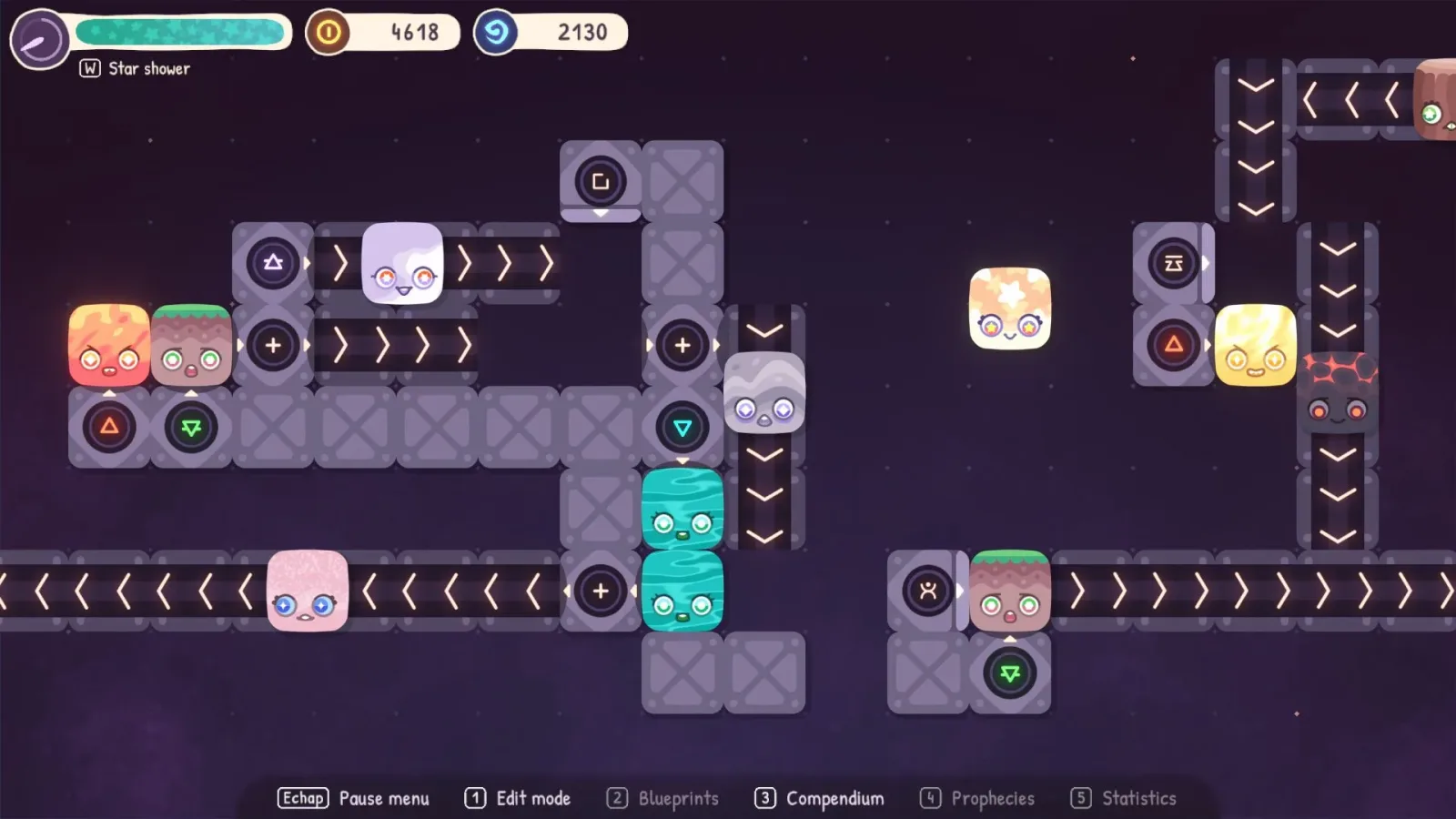
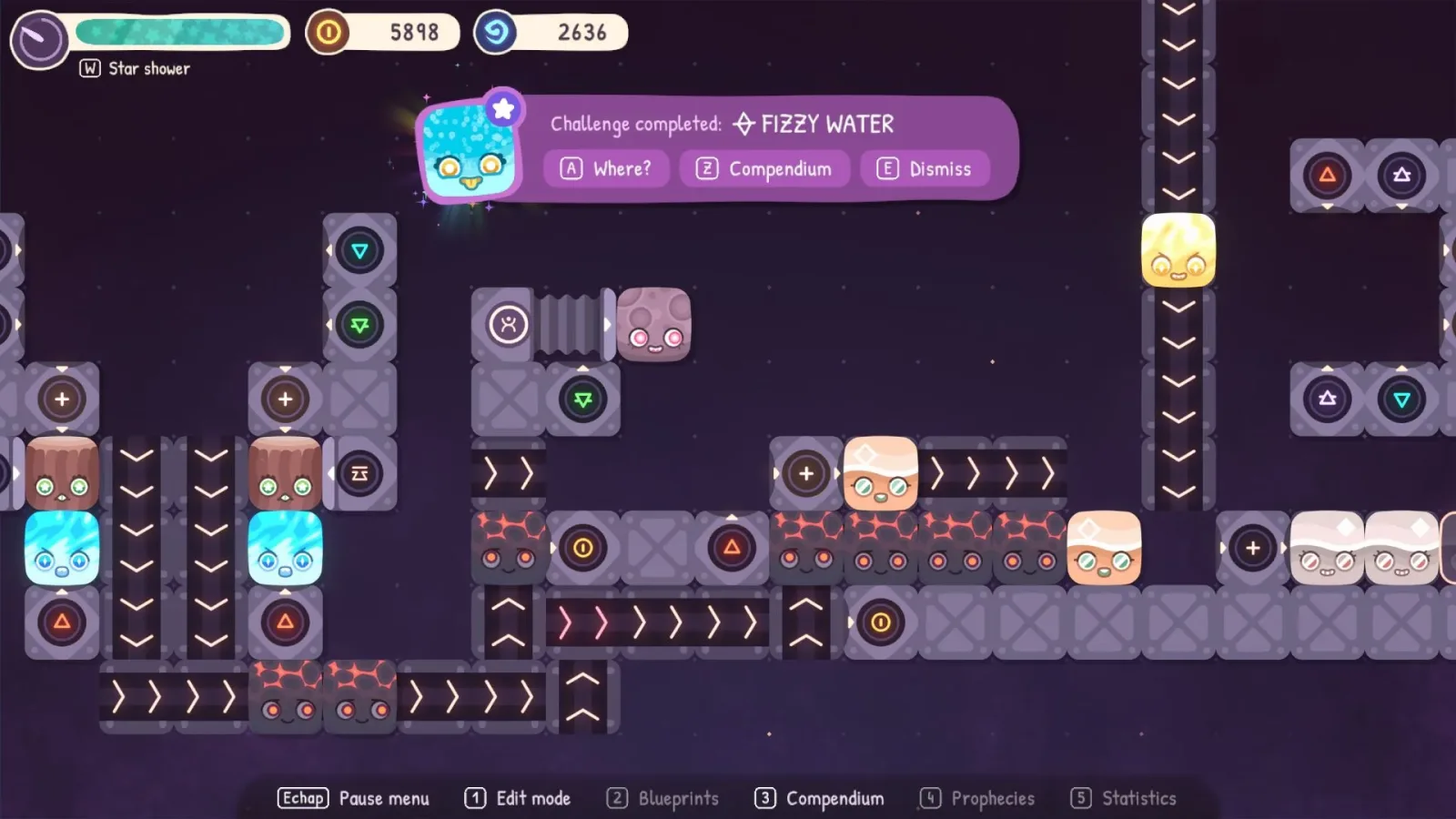
The central appeal is in seeing how far those basic elements can be pushed. A simple factory can gradually grow into a sprawling production network filled with conveyors, combination devices and programmable mechanisms, all working to transform resources into new blocks. Fakutori advertises more than 100 elements to uncover, ranging from recognizable natural concepts to stranger magical and cosmic outcomes.
Rather than framing factory construction purely as an optimization challenge, Fakutori combines it with a puzzle-like process of testing combinations and recording results. The game's compendium provides a clear long-term objective: find new materials, add them to the collection, then use those discoveries as ingredients for even more ambitious experiments.
Starting with the classical elements
Fakutori opens with a deliberately simple toolkit. Players have access to Earth, Fire, Water and Air, the four classical elements that serve as the roots of the game's production chains. The initial task is to place, combine and manipulate these materials to determine what they can become.
For useful background on this topic, read Melvor Idle 2: A RuneScape Adventure Reaches Steam Early Access on November 17, 2026.
That structure gives the game a sense of gradual escalation. Early discoveries should establish the principles behind material interactions, while later experiments appear designed to encourage broader factory layouts and more elaborate automated systems. Every newly uncovered block expands the possible routes forward, turning the search for recipes into a growing web rather than a linear series of tasks.
The announced material list points toward an intentionally playful tone. Experiments can yield creations including Shooting Stars, Ectoplasm and Rainbows. Further combinations may lead to Legendary Blocks, mystical magic blocks and even the concept of time. There is also room for failure--or at least spectacular unintended outcomes--as players can apparently create a black hole by accident.
Those examples suggest Fakutori is interested in surprise as much as efficiency. A well-functioning factory matters, but the next unexpected result is equally important. The game's unusual subject matter could make each new recipe feel less like a standard crafting unlock and more like a small scientific or alchemical breakthrough.
For another perspective on this story, read Fakutori Brings Elemental Factory Puzzles to Steam on December 16.
Automation is the route to a larger factory
Discovery may be the driving purpose, but Fakutori also includes the machinery needed to turn manual experimentation into a scalable operation. Players can use conveyors, combiners and programmable pushers to organize materials and automate their production lines.
Conveyors provide the expected foundation for moving blocks between different stages of a setup. Combiners are positioned as the key equipment for merging materials into fresh outputs, while programmable pushers appear intended to provide greater control over how blocks are routed or positioned. Together, those tools should let players move from individual tests to repeatable chains capable of producing a steady stream of components.
That transition is a familiar and satisfying part of the factory-building genre. A player might first handle a combination directly in order to see its outcome, then build a compact system to repeat it, before finally integrating it into a larger network that supplies several other processes. Fakutori's elemental premise adds a different kind of payoff to that loop: expanding an industrial layout also means expanding the range of strange materials that can be investigated.
The game takes place across an infinite world, giving factories room to spread as their requirements increase. That is important for a game built around discovery because a growing recipe catalogue can quickly create more complicated logistical needs. Separate lines may be needed to maintain core resources, generate intermediate materials, isolate rare results and keep experimental production from disrupting established output.
Players who enjoy neat layouts may be able to create orderly networks with dedicated pathways for each element. Others may prefer a more improvised workshop full of crossing conveyor lines and experimental branches. The stated focus on a laid-back experience suggests Fakutori is aiming to leave space for both approaches rather than demanding a single highly optimized design philosophy.
A compendium built around experimentation
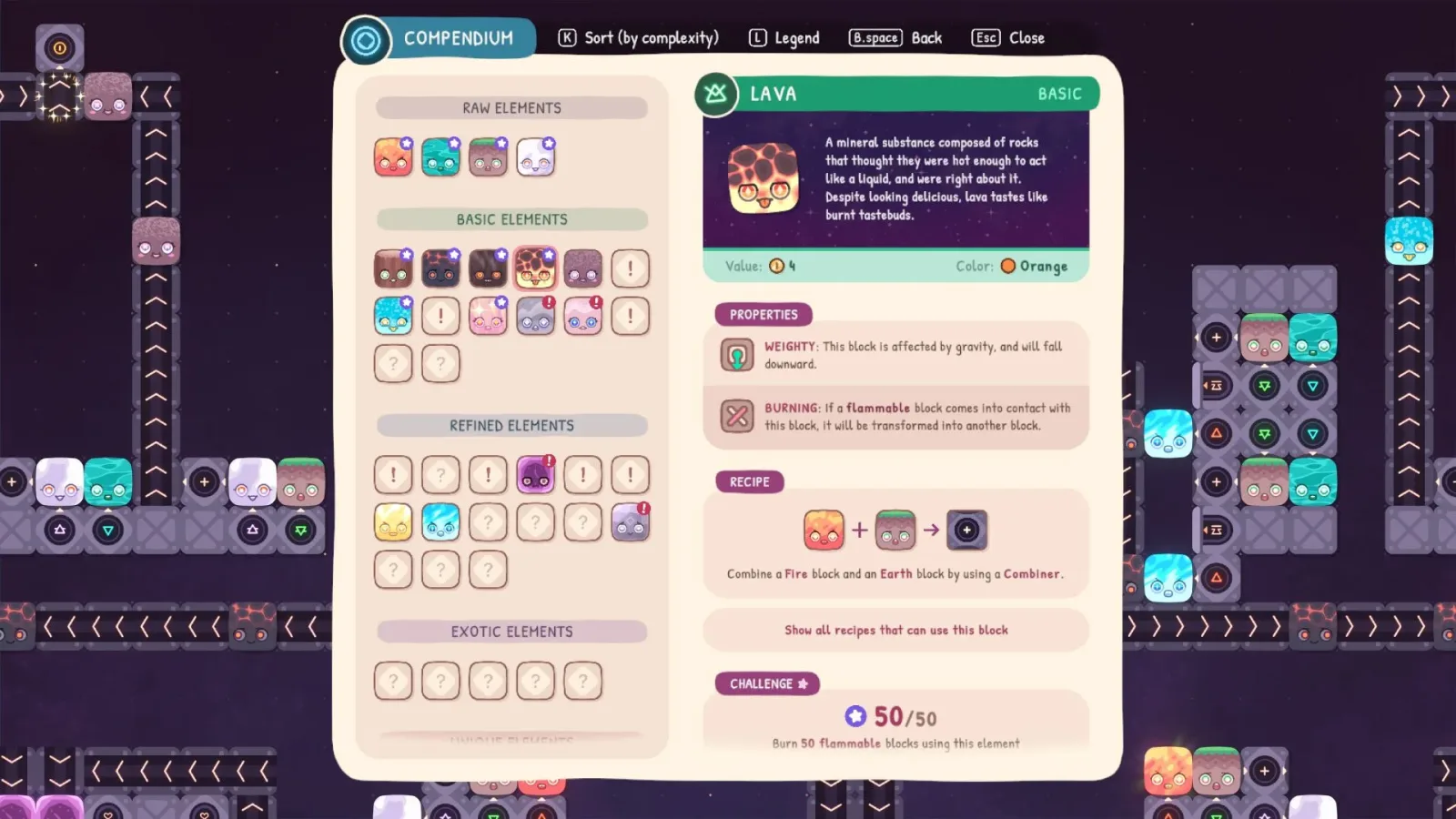
At the heart of Fakutori is a compendium that tracks the elements players have discovered. With over 100 different materials advertised, completing that record gives the game a substantial collecting dimension alongside its building systems.
A compendium can make experimentation more purposeful in a genre where players otherwise create their own goals. Instead of building only to maximize throughput or solve a fixed industrial problem, players are encouraged to ask what remains unseen and which materials might lead to it. New discoveries become both rewards and potential clues, since every addition could unlock a fresh set of combinations to test.
The range of named results also implies that the compendium is not limited to ordinary physical substances. Fakutori moves freely between elemental materials, magical phenomena, celestial objects and abstract ideas. Crafting time is a notably unusual promise for a factory game, while the possibility of producing a black hole introduces an appropriately absurd escalation point for a system that begins with Earth, Fire, Water and Air.
Legendary Blocks are another layer in the discovery hunt. Although details on their specific functions have not been outlined, their name indicates that some outcomes will be rarer or more significant than standard materials. Combined with mystical magic blocks, they could provide additional targets for players seeking to complete the compendium rather than simply establish a productive base.
A calmer take on factory-building puzzles
Factory games often emphasize relentless expansion, resource pressure or complex efficiency calculations. Fakutori is presented as a laid-back alternative, retaining the satisfaction of arranging interconnected machines while putting discovery at the center of the experience.
That approach may appeal to players who enjoy automation mechanics but want a less intimidating entry point than a heavily systems-driven industrial simulator. Beginning from just four core elements is easy to understand, and the goal of trying combinations provides a natural direction without requiring players to master a huge technology tree from the outset.
At the same time, the inclusion of programmable pushers and a limitless building space indicates that there should still be room for players who want to refine a design. Automation systems can become increasingly intricate even when the tone remains relaxed. The question is less about surviving a demanding environment and more about how elegantly--or how creatively--a player can turn discoveries into a functioning elemental production line.
Fakutori's premise also offers a different visual and thematic identity from factories focused on ore, fuel and manufactured components. Its materials can include spectral ectoplasm, colorful rainbows and shooting stars, giving the production process a whimsical quality. The gap between humble elemental inputs and universe-bending outcomes could be one of the game's most compelling features.
Demo available before launch
Players interested in testing the elemental factory loop ahead of release can already access a demo for Fakutori. The full game can also be wishlisted on Steam before its December 16 launch.
The demo offers a chance to get familiar with the basics of combining elements and setting up automation, as well as to see whether the game's blend of puzzle solving and open-ended construction suits a player's preferred pace. For factory-game veterans, it may be an opportunity to investigate how much freedom the available tools allow. For newcomers, the four-element starting point could make it an approachable way to try the genre's core satisfaction of building a process once and watching it run.
With its growing compendium, infinite construction space and deliberately unusual list of potential discoveries, Fakutori is positioning its factory systems around curiosity. On December 16, Steam players will be able to start with Earth, Fire, Water and Air, then find out how those simple ingredients might ultimately lead to rainbows, time--or an unexpected black hole.
Community
Discussion
Start the conversation.
No comments have been posted yet.