

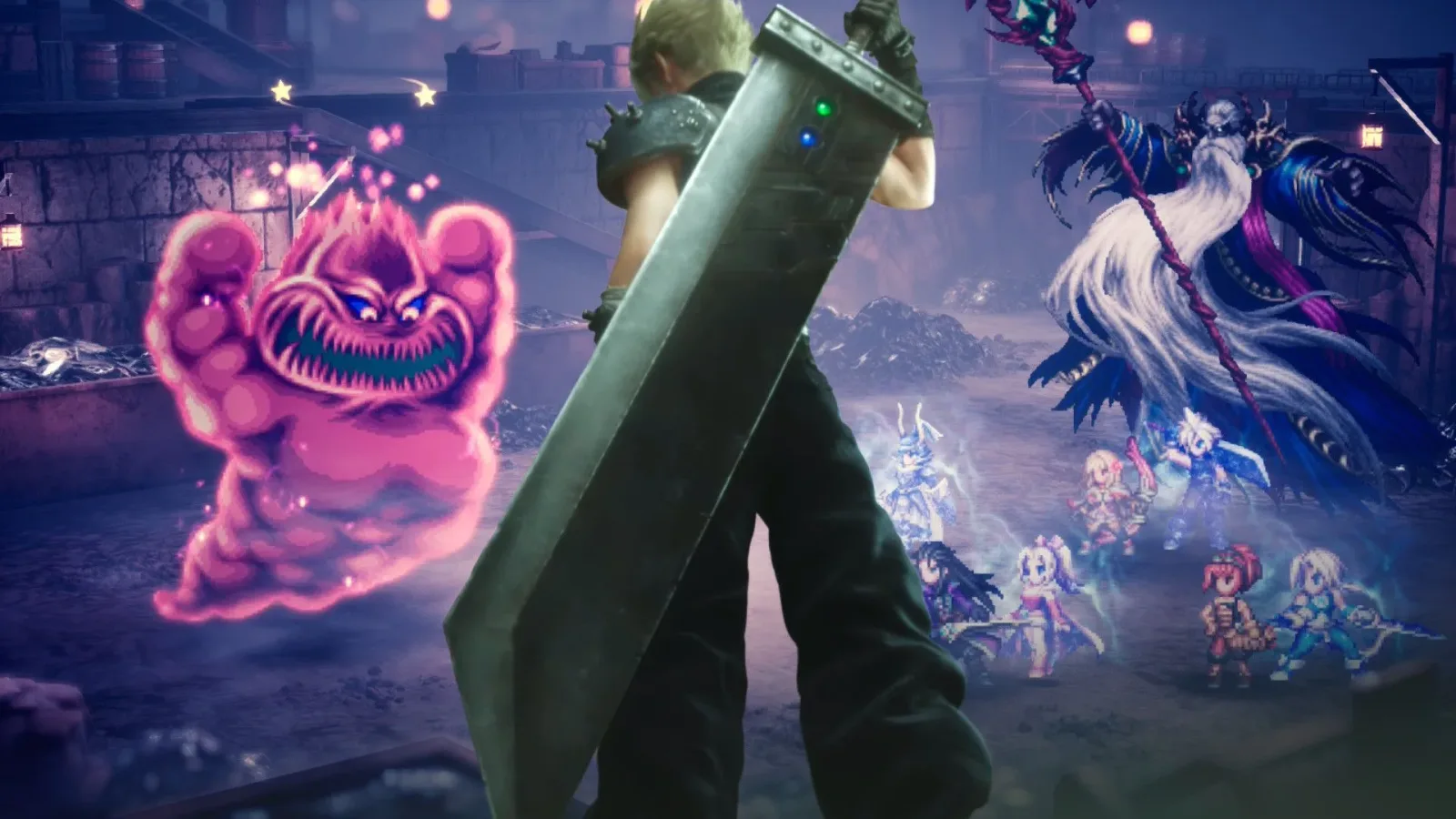
Final Fantasy Resonance has made an immediate mark on PC. The newly released HD-2D entry reached a peak of 42,885 concurrent players on Steam, establishing the highest recorded peak for a single-player game in the Final Fantasy series on Valve's platform.
That result puts Resonance just ahead of Final Fantasy 7 Rebirth, which previously held the relevant series record with 40,564 concurrent Steam players following its PC launch. It is a close race on paper, but it remains a major achievement for a game with a very different visual identity, combat structure, and place in one of gaming's longest-running role-playing franchises.
Resonance is Square Enix's first Final Fantasy title built around an HD-2D presentation, pairing pixel-art-inspired characters and environments with modern lighting, depth effects, and camera work. Its strong Steam performance suggests that the approach has connected with players during the crucial launch window, while also giving the series a notable new commercial and audience-engagement milestone on PC.
A rapid rise beyond its early Steam numbers
Resonance had already opened with a respectable Steam showing shortly after launch. Its initial high point was just under 28,000 simultaneous players, a total that made it Square Enix's second-largest Steam launch for a turn-based RPG, behind Dragon Quest 3 HD-2D Remake.
For useful background on this topic, read World of Warcraft Is Running on Dreamcast in a New Community Port Showcase.
Rather than immediately leveling off at that point, however, the game's audience continued to build. Data tracked through SteamDB shows that the player count later climbed to 42,885 concurrent users. That is a substantial increase from the early peak and indicates that interest extended beyond the first rush of players checking out the game at release.
Concurrent-player records are not a complete measure of a game's success. They do not include console audiences, do not represent total copies sold, and can be affected by launch timing, regional play patterns, promotions, updates, and the habits of different player communities. Still, they are one of the clearest public snapshots of how much attention a game is attracting on Steam at a given moment.
In Resonance's case, the number is especially meaningful because it is now the best Steam peak yet for a standalone, single-player Final Fantasy experience. The series has appeared on PC in many forms over the years, but releases have not always arrived at the same time as their console counterparts. Resonance benefited from entering the market while launch excitement was at its highest.
Why the comparison with Final Fantasy 7 Rebirth needs context
Passing Final Fantasy 7 Rebirth's Steam record is significant, though the two launches were shaped by very different circumstances. Rebirth first debuted on PlayStation 5 and only came to PC almost a year later. By the time its Steam version became available, a considerable portion of its most enthusiastic audience may already have played the game on console.
Resonance, by contrast, launched simultaneously on PC and consoles. That gave Steam players the opportunity to join in from day one rather than wait through a period of console exclusivity. A synchronized release can concentrate a larger share of the game's opening audience on the PC storefront, particularly for a franchise with a sizeable global following and an established Steam user base.
This does not diminish the appeal of Rebirth or the scale of its achievement. A 40,564-player concurrent peak remains a very large number for a premium single-player Japanese role-playing game, particularly one reaching PC after its initial console launch. But it helps explain why Resonance was in a stronger position to gather the full force of its launch-day momentum on Steam.
The comparison also illustrates how PC release strategy increasingly matters for major Japanese RPGs. Simultaneous multiplatform launches make it easier for communities to experience a game together, reduce the risk of story details spreading before every audience has access, and allow publishers to capitalize on a unified marketing campaign. For players, the immediate benefit is simple: they have more choice over where to play without being asked to wait for another version.
Not the overall Final Fantasy Steam record
Resonance now leads the single-player category, but it has not surpassed the franchise's all-time Steam concurrent-player peak. That distinction belongs to Final Fantasy 14, the long-running MMORPG, which reached 95,150 concurrent players on Steam around the launch of the Endwalker expansion nearly five years ago.
It would not be particularly useful to treat that as a direct contest. An MMO and a self-contained single-player RPG create player activity in very different ways. Final Fantasy 14 is designed around an ongoing online world, social play, recurring updates, long-term subscriptions, and expansion launches that bring veterans and newcomers together. Its population can also be driven by players returning for months of new quests, raids, crafting, and community events.
A single-player game follows a different rhythm. Players begin at different times, proceed at different paces, and may finish their journeys without returning on a regular schedule. A strong launch peak for that kind of title therefore reflects a concentrated wave of interest rather than the ongoing engagement expected of an online service game.
Viewed within the more appropriate category, Resonance's 42,885 peak is an impressive result. It demonstrates that Final Fantasy can draw a major PC audience even outside the massively multiplayer format and even when the game is not built around the blockbuster modern presentation of the Final Fantasy 7 remake project.
An encouraging sign for HD-2D Final Fantasy
The success is also notable because Resonance represents a fresh stylistic path for Final Fantasy. The franchise is famous for reinvention, but its largest recent mainline releases have generally pursued high-end 3D visuals and cinematic spectacle. Resonance instead embraces a visual format that evokes classic-era role-playing games while applying modern production techniques.
That direction may have helped the game appeal to several groups at once. Longtime fans can find familiarity in its pixel-art heritage and turn-based RPG foundations, while newer players can experience a polished contemporary release without needing prior knowledge of a sprawling earlier storyline. The HD-2D look has also developed a following of its own through other Square Enix projects, making it a recognizable proposition rather than a purely nostalgic experiment.
Steam is a particularly fitting place to test that appeal. The platform has long had an enthusiastic audience for Japanese role-playing games, traditional turn-based systems, independent pixel-art releases, and older Final Fantasy ports. Resonance arriving day-and-date with console versions gave that audience a chance to turn anticipation into immediate playtime.
There is also an important distinction between a record being narrowly achieved and being unimportant. Resonance did not merely edge ahead of Rebirth by a small margin after a quiet launch; it first built a solid opening audience and then continued upward to cross the previous benchmark. That trajectory offers a positive early sign for the game's reception and its ability to sustain conversation beyond the initial release hours.
Final Fantasy 7 Revelation could challenge the new mark
Resonance may not hold the single-player Steam crown indefinitely. The next likely challenger is Final Fantasy 7 Revelation, the third and final installment of the Final Fantasy 7 remake trilogy, which is scheduled for release next April.
Unlike Rebirth, Revelation is expected to launch simultaneously across PC and consoles. That eliminates the delayed-PC factor that shaped Rebirth's Steam performance and could give the trilogy finale a major advantage when it arrives. The game will also conclude a story that has built anticipation across multiple releases, making it a natural candidate to draw a large day-one player base.
Nothing is guaranteed, of course. Player peaks depend on many variables, including release timing, hardware requirements, technical performance, reviews, competing launches, and the size of the audience that chooses Steam over other platforms. But the conditions around Revelation make it reasonable to expect that Resonance's newly earned record will face serious pressure.
For now, though, Final Fantasy Resonance owns an accomplishment that stands on its own. With 42,885 concurrent Steam players, it has become the biggest single-player Final Fantasy launch peak in the platform's history. It is an encouraging start for the game, a strong endorsement of its HD-2D direction, and further evidence that a simultaneous PC release can be a powerful part of a major RPG's launch strategy.
Community
Discussion
Start the conversation.
No comments have been posted yet.