

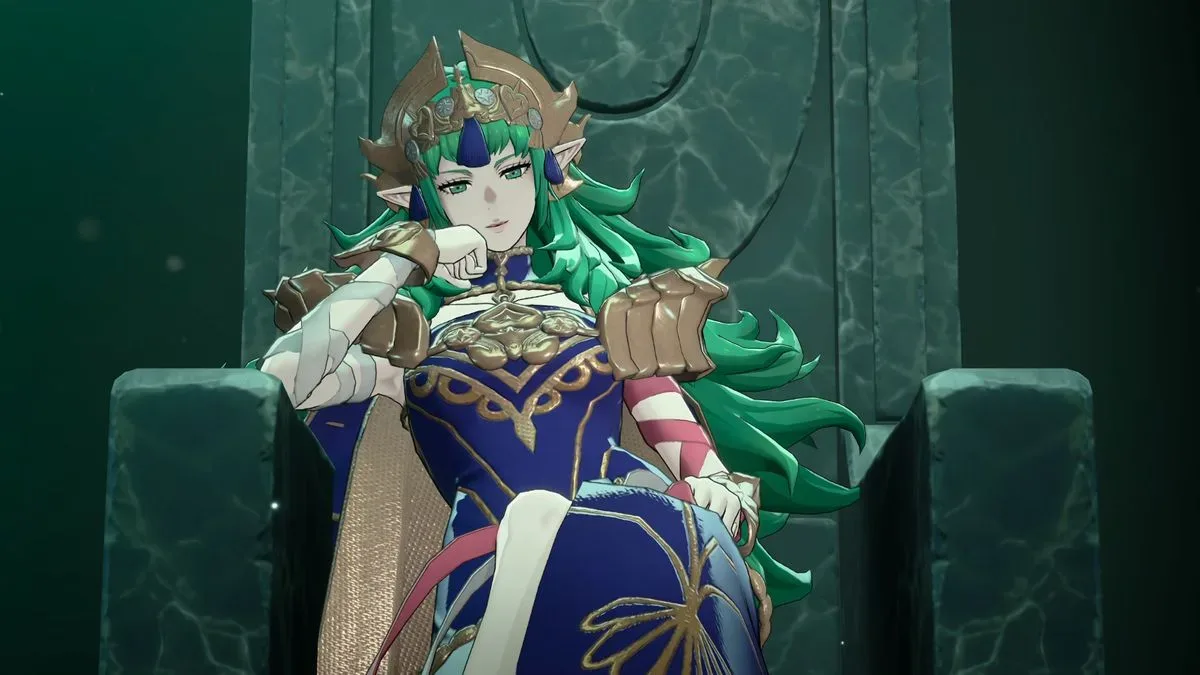
Fire Emblem: Fortune's Weave opens with a strikingly bold promise: the war is already lost. The world has been overrun by undead forces, the demon god Balor is nearing his return, and four central heroes have fallen at the hands of the player's powerful custom avatar, Eshmel. It is an unusually endgame-shaped prologue for a strategy RPG, immediately framing the adventure as an attempt to undo catastrophe rather than prevent it.
With Fortuna, a goddess tied to fate, Eshmel is sent five years into the past. The objective is to alter the destinies of Cai, Dietrich, Theodora, and Leda, four protagonists whose individual campaigns eventually feed into the larger conflict. It is a huge setup, and one that allows Intelligent Systems to revisit the multi-route structure associated with the series' most ambitious recent entries. This time, though, the four perspectives feel like parts of one deliberately interwoven story rather than isolated answers to the same premise.
That scope makes Fortune's Weave an absorbing, often excellent Fire Emblem. Its best maps are tense and inventive, its four leads provide very different emotional anchors, and its late-game confrontations become wonderfully ruthless. Yet the game is also weighed down by an overstuffed downtime structure, repetitive early onboarding, and a web of currencies, timers, requirements, and activities that can make the journey feel more laborious than it needs to be.
A story built around four fates
After the apocalyptic opening, Eshmel arrives in 1449 at Dagsion, a city inspired by Rome and host to the Heroic Games. Each of the four heroes has entered this contest for personal reasons, with the winner promised a wish. The larger narrative has room for ancient history, supernatural threats, strange advanced technology, and a growing undead crisis, so players should be prepared for a story with a lot of moving parts. Not every plot thread bears close scrutiny, but the game's central emotional throughline is much sturdier.
For useful background on this topic, read The Witcher 3 Team Says Songs of the Past Proves the RPG Is Still Worth Revisiting.
The key improvement is Eshmel's role. Rather than making every plotline orbit a silent avatar, the player character largely observes events through the guise of the Pale Raven. That distance gives Cai, Dietrich, Theodora, and Leda room to function as genuine leads instead of supporting players in somebody else's tale.
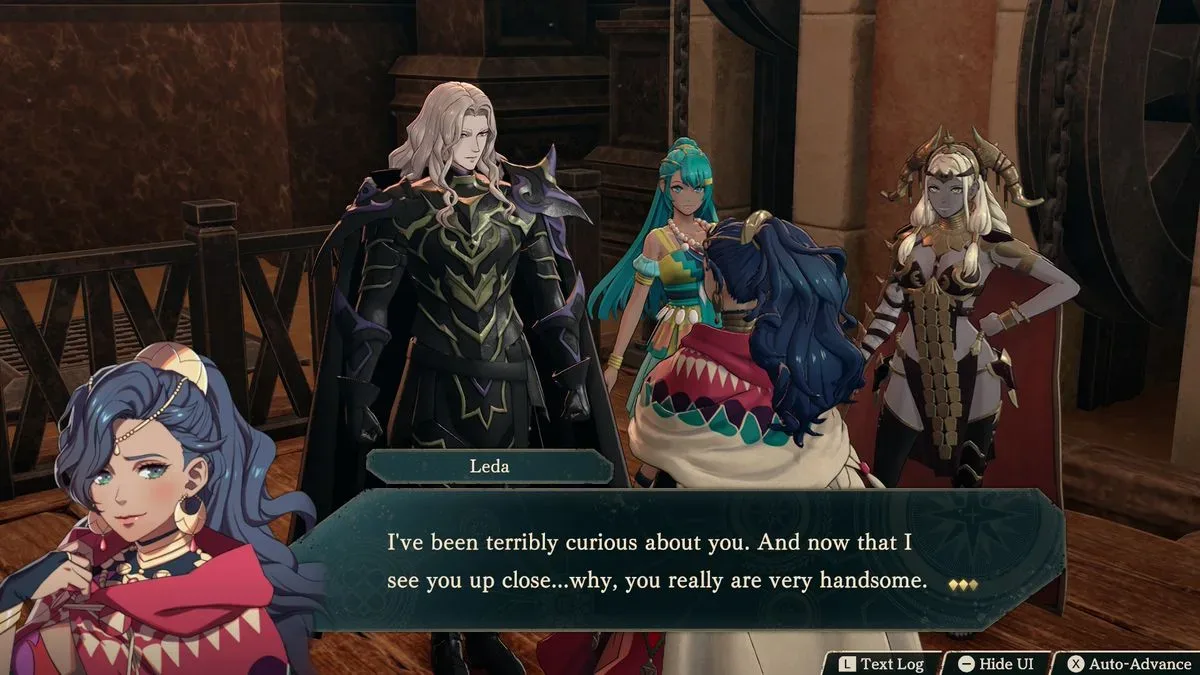
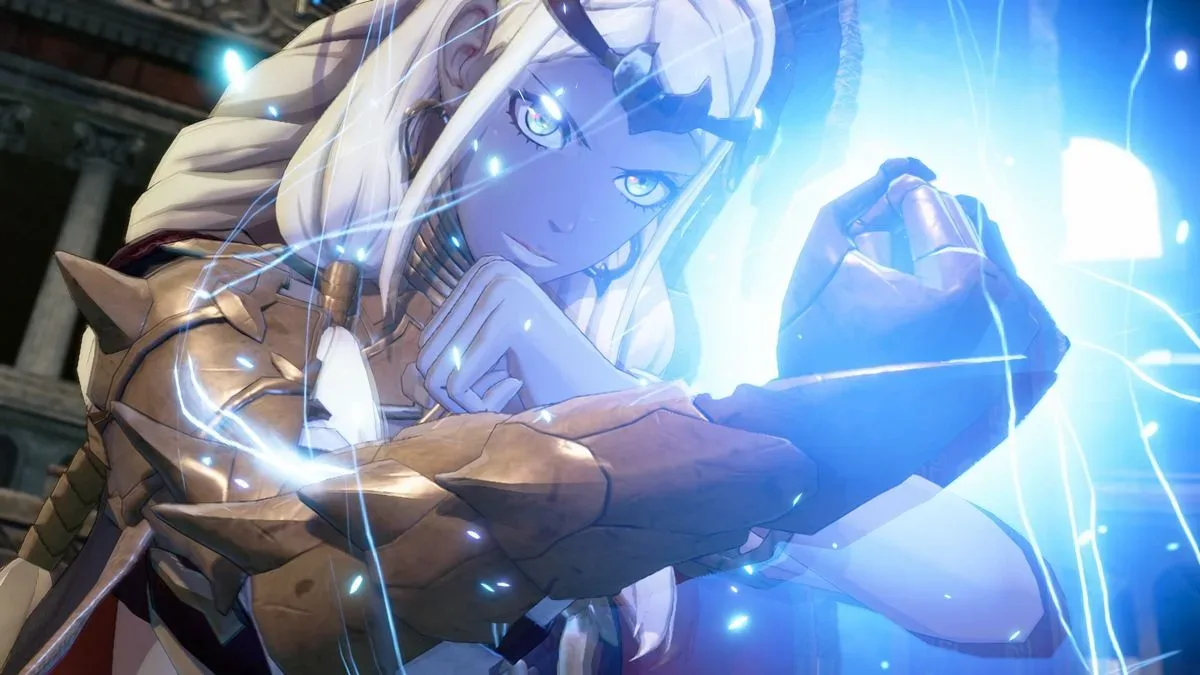
Cai is a young contender trying to save his imprisoned father from execution. Dietrich, a warrior from Fódlan, enters with an overwhelming appetite for combat. Theodora's route reaches further into the past to tell a story of assassination, betrayal, and her rise to the throne of Samaris. Leda, meanwhile, is a musician pursuing revenge after the destruction of her home and the murder of her father. Her campaign is especially effective because its anger and grief remain tangible even as the plot broadens into something much larger.
Players are free to shift among campaigns from the Obelisk Chamber in the present-day timeline. This flexibility is a clever way to show how the heroes' stories overlap. A group encountered as allies during one mission may become arena opponents from another perspective, and each route offers different starting companions, social access, and character-specific mechanics.
However, alternating routes can dilute momentum. The earliest chapters repeat several introductory beats and cinematics, even where details vary by protagonist. Moving continually between campaigns also means each narrative advances slowly. Focusing on one route for a longer stretch makes the drama land more strongly, though it does not entirely solve the game's broader pacing problems.
The strategic heart remains exceptional
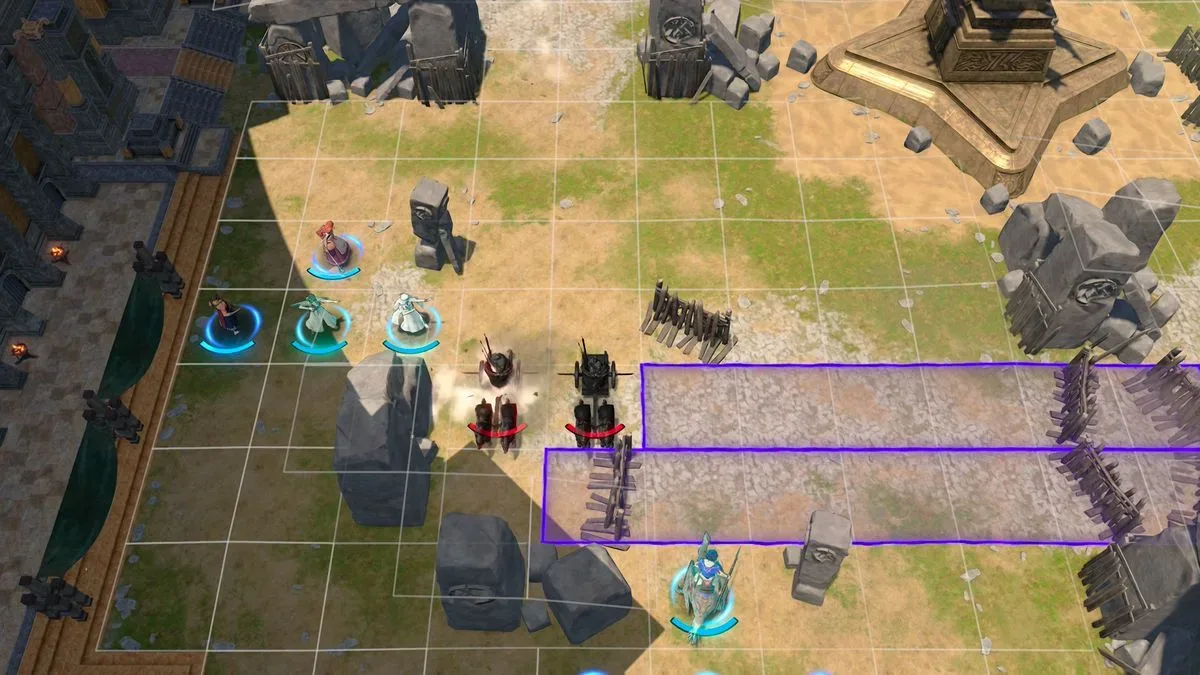
When Fortune's Weave puts units on a grid, it reminds players why Fire Emblem's tactical formula has endured. Battles present clear information about damage, hit rates, terrain, enemy ranges, and potential outcomes, but the maps still reward bold improvisation. Positioning a unit to exploit terrain while luring enemies into a vulnerable formation is satisfying; overturning an unfavorable forecast with a decisive critical hit is even better.
The Nintendo Switch 2's HD Rumble contributes a useful small touch. When moving a flying unit near an archer's lethal attack range, a subtle vibration warns that danger is close. It is a welcome piece of feedback in a game where a single mistaken placement can turn a clean plan into a crisis.
Every protagonist also brings abilities that reshape their route's tactical flavor. Leda can perform songs learned in towns to strengthen allies during combat. Cai can seek mentoring from other characters. Dietrich begins as a formidable fighter and can warp multiple spaces to strike distant targets. These features complement the shared Fire Emblem fundamentals without making the campaigns feel entirely separate games.
Combat arts return as another important layer of decision-making. An axe technique might increase accuracy, for example, but consume weapon durability. The new Blaze arts attached to protagonists are more dangerous: they cost HP, become more powerful with continued use, and can reduce a character's maximum health. That risk-and-reward design gives major attacks genuine weight. It can be tempting to spend health for an immediate advantage, especially when the alternative is letting a dangerous enemy phase unfold.
The Heroic Games premise also gives the developers an excuse to build elaborate arena maps. Battles can involve chariot units, unusual enemy immunities, and set pieces that draw on familiar mythic imagery. The tournament is only the opening act, though. Once the story moves beyond it, the game unleashes more punishing scenarios with shifting objectives, hazardous terrain effects, multi-health-bar bosses, regenerating shields, and relentless reinforcements.
These later battles are the highlight. They can feel closer to a siege than a conventional skirmish, applying pressure from multiple directions and demanding careful use of every tool available. Unlimited rewinds soften the harshest consequences, while divine blessings can provide turn-wide party buffs that are often crucial. Even so, the most difficult maps retain the tense, hard-won feeling that strategy fans want from Fire Emblem.
Too many systems competing for attention
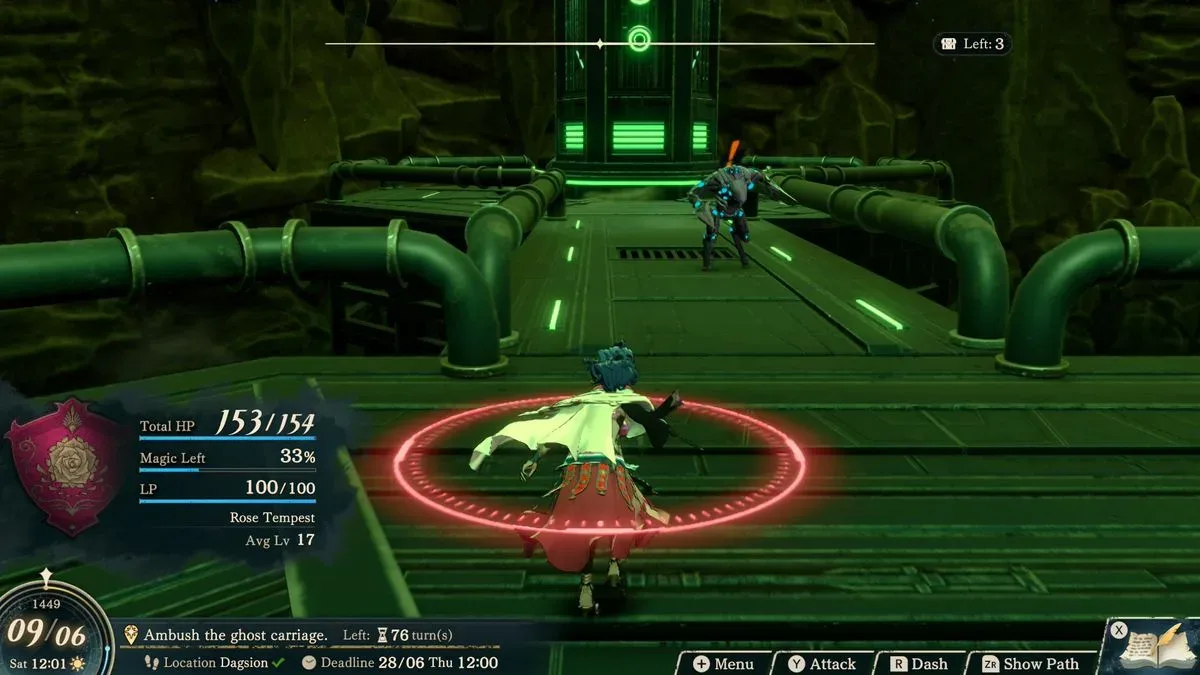
Outside combat, Fortune's Weave borrows familiar relationship and training ideas. Players can share meals, improve weapon skills, work toward advanced classes, recruit allies, and explore Dagsion. A wider world map adds towns, resources, merchants, small skirmishes, and third-person mini dungeons. On paper, there is an impressive amount to do.
In practice, much of it feels like friction between the player and the next great battle. The mini dungeons use a smaller party and switch to simple command-based clashes rather than the game's normal grid encounters. Those fights lack the tactical richness of the main missions and can be skipped for an automated result, making them feel more like an XP shortcut than a compelling new mode.
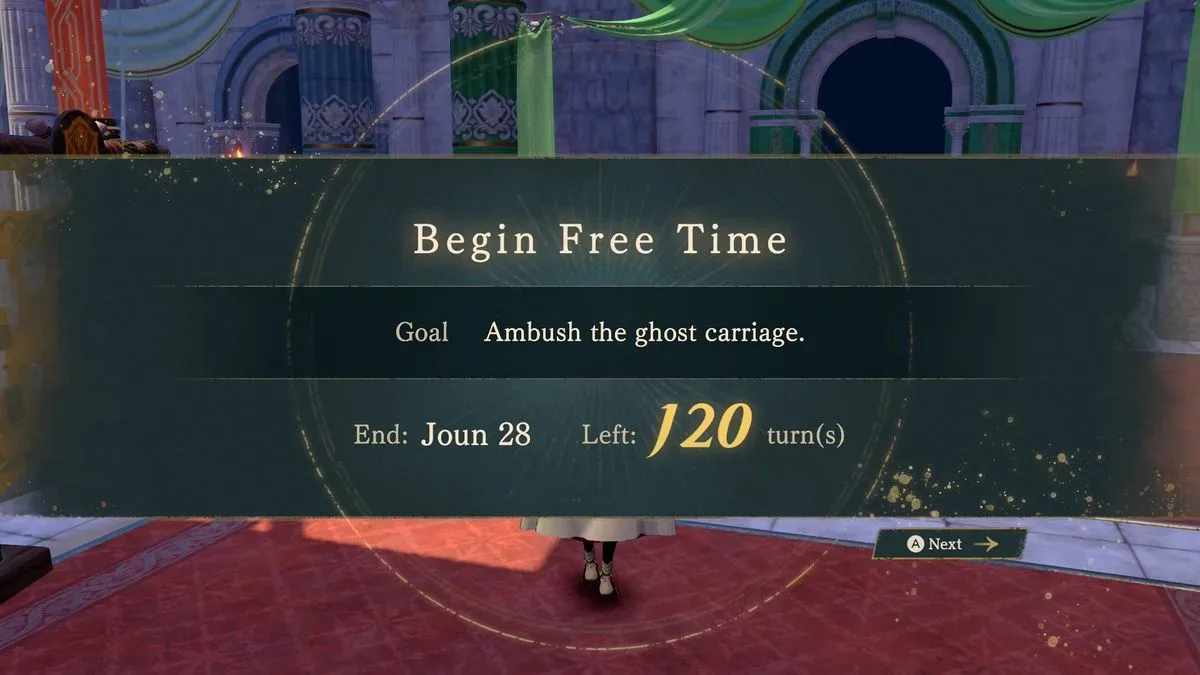
Travel and scheduling are also unnecessarily awkward. Free time is measured in turns, but reaching destinations takes turns one at a time, without an easy way to commit several at once to a distant location. Activities inside Dagsion often consume motivation instead, creating another resource to track. Weekly refreshes then limit meals, training, and bonding opportunities, which can leave players killing time on the world map simply to return for the next available social activity.
Some of this resource pressure is valuable. Choosing between an expedition for loot and experience or returning to the city for party development can be a meaningful trade-off. But Fortune's Weave frequently piles several limitations onto choices that do not feel consequential enough to justify the management burden.
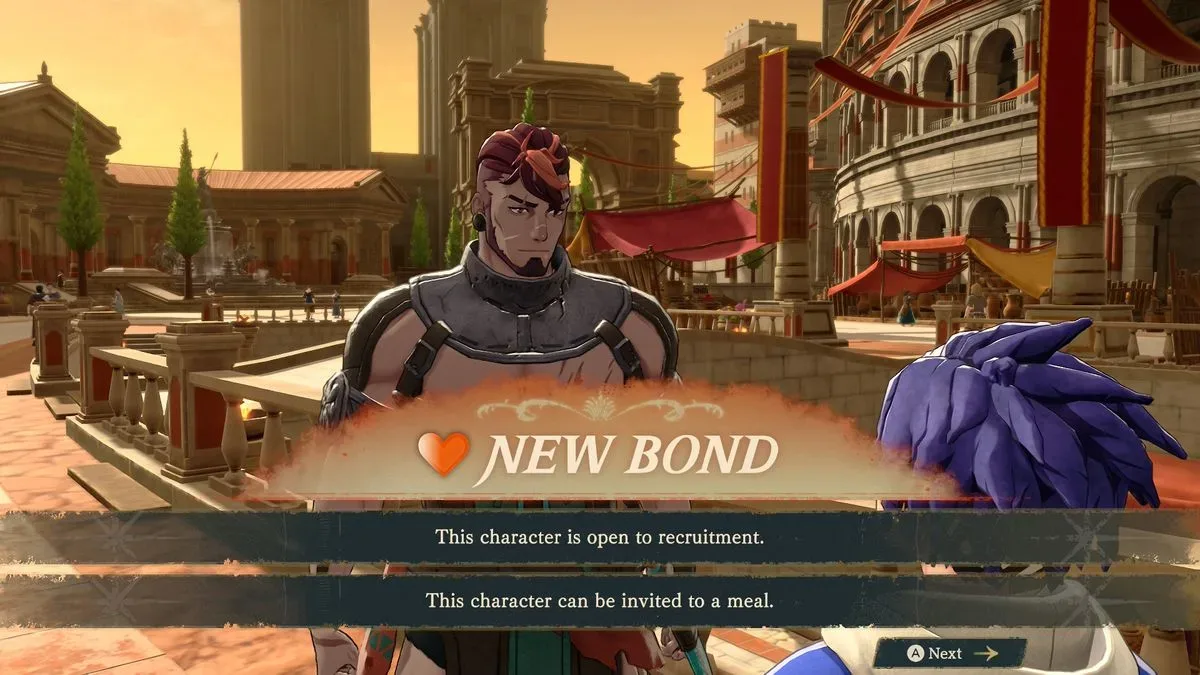
Recruitment carries similar issues. Potential allies may require a high Renown level, pushing them out of reach until later story progress, or demand a series of gifts and activities before joining. This can make recruiting feel arbitrary rather than organic. The relationships themselves also do not always achieve the warmth of the series' strongest casts. Adjacent allies receive useful battle bonuses, but there are comparatively fewer memorable support conversations between party members, and the game does not always dramatize those bonds as vividly through battlefield rescues or follow-up attacks.
Ambition that is worth the effort
Fortune's Weave is at its best when it stops asking the player to manage its many side systems and simply commits to drama and tactics. A substantial middle portion can even be skipped, but it is worth playing because it strips away much of the clutter for a sustained run of difficult battles and sweeping story developments. From there, the campaign continues to escalate effectively.
The presentation helps sell that scale. Flashy cinematics and a grand score make this a Fire Emblem that benefits from being played on a television, even for players who usually favor the series in handheld form. The world-spanning tale, intricate battlefields, and four-perspective structure all feel built to be experienced as a major Nintendo Switch 2 release.
Finishing one protagonist's campaign does not strictly prevent the others from contributing to the final arc. Completing an associated paralogue can make them available as battle allies, with class changes and upgrades still possible. But completing their routes gives them fuller story participation and additional support material, making the invitation to see every thread through difficult to resist.
Fire Emblem: Fortune's Weave is not always disciplined enough to match its towering ambition. Its filler activities, cumbersome progression loops, and repeated early material can make a long campaign feel longer. Nevertheless, its combat is consistently strong, its toughest missions are outstanding, and its four heroes provide a more cohesive multi-route saga than the premise initially suggests. For players willing to spend the turns, this is a rich tactical tapestry with plenty of fate left to unravel.
Community
Discussion
Start the conversation.
No comments have been posted yet.