

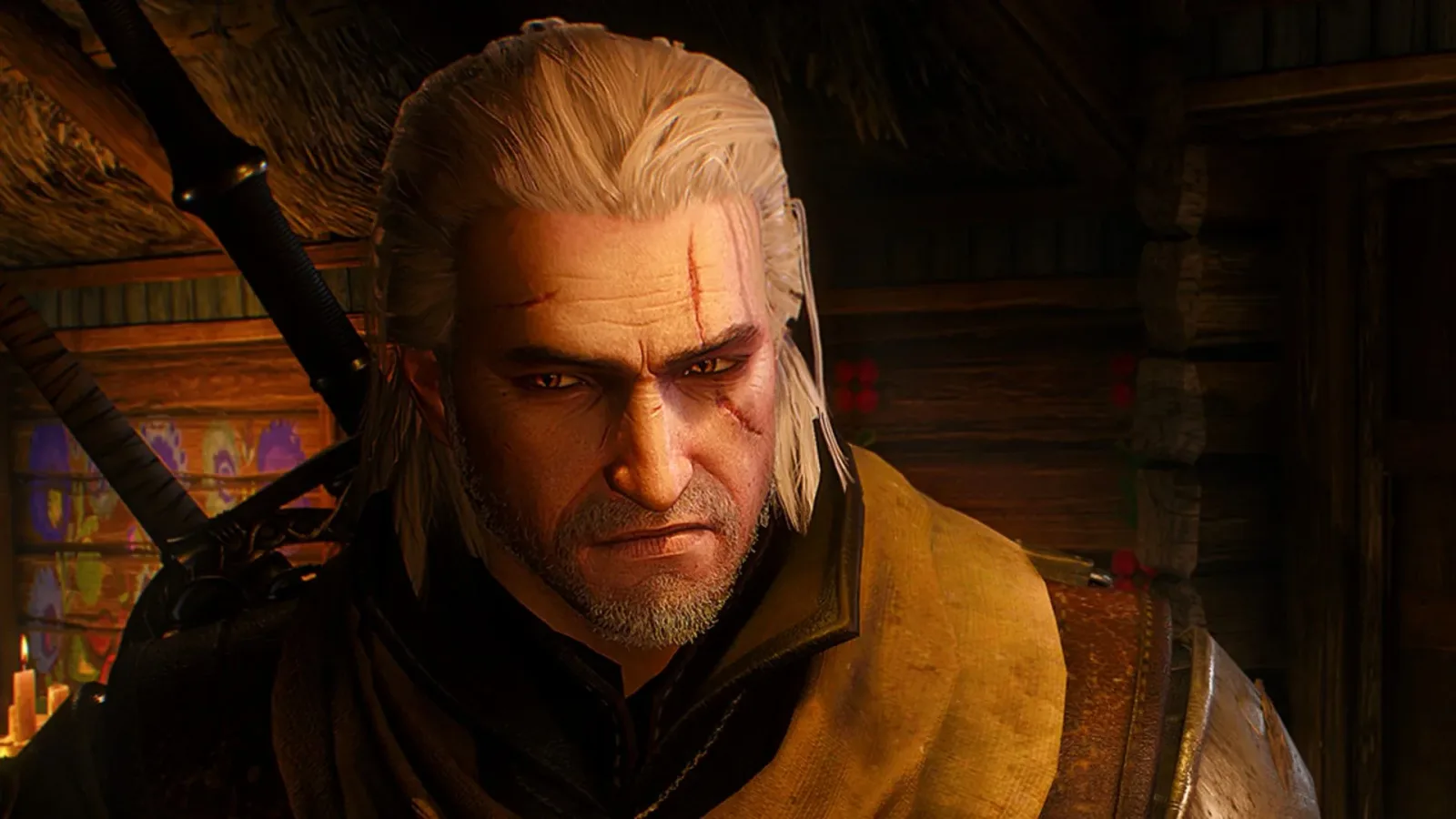
The Witcher 3: Wild Hunt has spent more than a decade as one of the defining open-world RPGs of its era, but CD Projekt Red does not appear to view that legacy as a reason to leave the game frozen in place. As the studio prepares a remaster alongside the newly announced Songs of the Past expansion, Marcin Blacha, the game's lead writer and CD Projekt Red's current vice president of narration, has described the return as a creatively energising opportunity rather than an act of preservation.
Blacha's central point is a strikingly practical one: The Witcher 3 is not a monument. It remains a game he can revisit critically, even after its immense success, numerous awards, and enduring reputation among RPG fans. In his view, time has not made the project untouchable. Instead, it has made certain decisions clearer. When he plays the game now, he still encounters moments where he believes the team could approach things differently with the perspective and experience it has today.
That outlook helps explain why CD Projekt Red is willing to revisit Geralt's adventure so substantially. The remaster is set to refresh the 11-year-old RPG, while Songs of the Past will add a new chapter to a game that already includes the major Hearts of Stone and Blood and Wine expansions. Rather than treating that scale as a problem, Blacha sees it as evidence that the world still has room for a story that belongs there.
A Return to a Familiar World, Not a Museum Piece
Calling a beloved game "not a monument" may sound provocative, particularly for players who consider The Witcher 3 a benchmark for quest design and narrative-driven fantasy. Yet the phrase reflects respect for the craft rather than dismissal of the original release. A game can be highly influential and still contain choices its creators would reconsider. Technology changes, production pipelines evolve, and writers develop a sharper understanding of pacing, characterisation, player freedom, and the limits of a massive open-world structure.
For useful background on this topic, read World of Warcraft: Forever Will Restrict Combat Add-Ons at Launch.
For Blacha, the important detail is that the game remains vivid rather than distant. He has not framed it as an old project being excavated from a vault. The setting, its characters, and its storytelling language are still close enough to the creative team that they can imagine further refinement. That makes the remaster more than a graphical touch-up in principle, even though specific changes beyond the broad remaster plans have not been detailed here.
It also signals a healthy attitude toward long-running games. Prestige can sometimes turn a successful release into a fixed historical object, where any revision is automatically seen as risky. But games are interactive works shaped by systems, hardware, player habits, and design conventions. A developer returning years later may recognize opportunities that were impossible to pursue during the original production, whether because of time, technical limitations, or the simple pressure of getting a huge game finished.
The Witcher 3 was already an enormous undertaking when it launched. Its base campaign spans a vast version of the Continent, and the later expansions established their own identities through sharply different story structures and locations. Adding another narrative to that foundation requires more than simply placing new quests on a map. It needs to understand what makes Geralt's world feel cohesive across the main game, Hearts of Stone, and Blood and Wine.
Why Songs of the Past Matters
Blacha has said that adding a new expansion is not as overwhelming as it might seem from the outside. The key discovery for the team was realizing that it could still build a story that fits alongside the original game and both existing expansions. That sense of continuity appears to be at the heart of Songs of the Past: the new content is intended to belong within the larger Witcher 3 experience, not merely borrow its name and characters.
For a narrative team, that is a significant challenge. The Witcher 3 offers players a long, branching journey defined by political conflict, monster hunting, family, romance, and Geralt's search for Ciri. Hearts of Stone then leans into a tighter, more unsettling tale with its own moral bargains, while Blood and Wine provides a comparatively distinct setting and a sense of grand closure. Any expansion arriving years later has to navigate those established tones without making the full package feel uneven.
Blacha has described the process as uplifting, likening it to a time machine that returns him to the creative energy of the original development period. That sentiment is revealing because it suggests the project is not solely driven by nostalgia. Revisiting a past success can become a mechanical exercise, but the ability to find a fresh story within an established world gives the work a reason to exist. The developers are not simply looking backward; they are testing whether the world can still support new ideas.
There is also a practical benefit for fans awaiting the next mainline Witcher game. Songs of the Past will not replace The Witcher 4, but it can make the wait feel less empty by giving players another reason to return to Geralt's acclaimed adventure. CD Projekt Red has not presented the expansion as a substitute for the future of the series. Instead, it offers a bridge back to a familiar world while the franchise's next chapter remains ahead.
An Old Idea Finally Finds Its Place
One of the most interesting details connected to Songs of the Past is Geralt's chain weapon. The weapon was originally considered for the base version of The Witcher 3, but the development team was unable to make it work in time. Its appearance in the new expansion therefore represents more than a new combat option. It is a recovered concept: an idea that survived the original game's demanding production and has now found another chance to become part of Geralt's arsenal.
That kind of revival is exactly what a return to an older game can enable. Large productions inevitably leave ideas behind. Some are cut because they do not fit the schedule, some because they are difficult to balance, and others because they need more design work than a launch window permits. A later expansion can provide the space to examine whether one of those discarded concepts has potential after all.
The chain weapon may also serve as a useful symbol for the wider project. CD Projekt Red is not presenting The Witcher 3 as a finished artifact beyond revision. It is taking a concept that did not make the original cut and using the expanded context of a remaster and fresh story to revisit it. Whether players embrace the weapon will depend on how it feels in combat and how naturally it is integrated, but its history gives it an unusual connection to the game's development past.
The Value of Critical Nostalgia
There is a difference between nostalgia and critical nostalgia. The first only asks players to remember why they loved something. The second asks what can be learned from that earlier work. Blacha's comments lean toward the latter. He recognizes the achievement of The Witcher 3, but he also sees imperfections and unexplored possibilities. That combination can be more productive than reverence alone.
Fans may reasonably have questions about the scope of the remaster, the exact shape of Songs of the Past, and how the additions will sit within their preferred version of Geralt's journey. Those details remain important, and the eventual result will need to justify returning to such a celebrated RPG. Still, the creative reasoning behind the project is clear: the team believes it has more to say, and it believes the game itself remains flexible enough to hear it.
That is an encouraging position for a studio revisiting one of its most celebrated releases. A classic does not need to be treated as flawless in order to be valued. Sometimes the best way to honour a game's impact is to engage with it honestly, identify the places where experience has changed the creators' perspective, and use that knowledge to make a meaningful return.
With the remaster and The Witcher 3 Songs of the Past on the way, CD Projekt Red is taking that chance. The project brings a new expansion to a game already rich with stories, revives at least one long-shelved combat idea, and gives its writers an opportunity to revisit the Continent with a decade of hindsight. For a game often treated as a permanent landmark, that willingness to keep improving may be the most fitting next step of all.
Community
Discussion
Start the conversation.
No comments have been posted yet.