

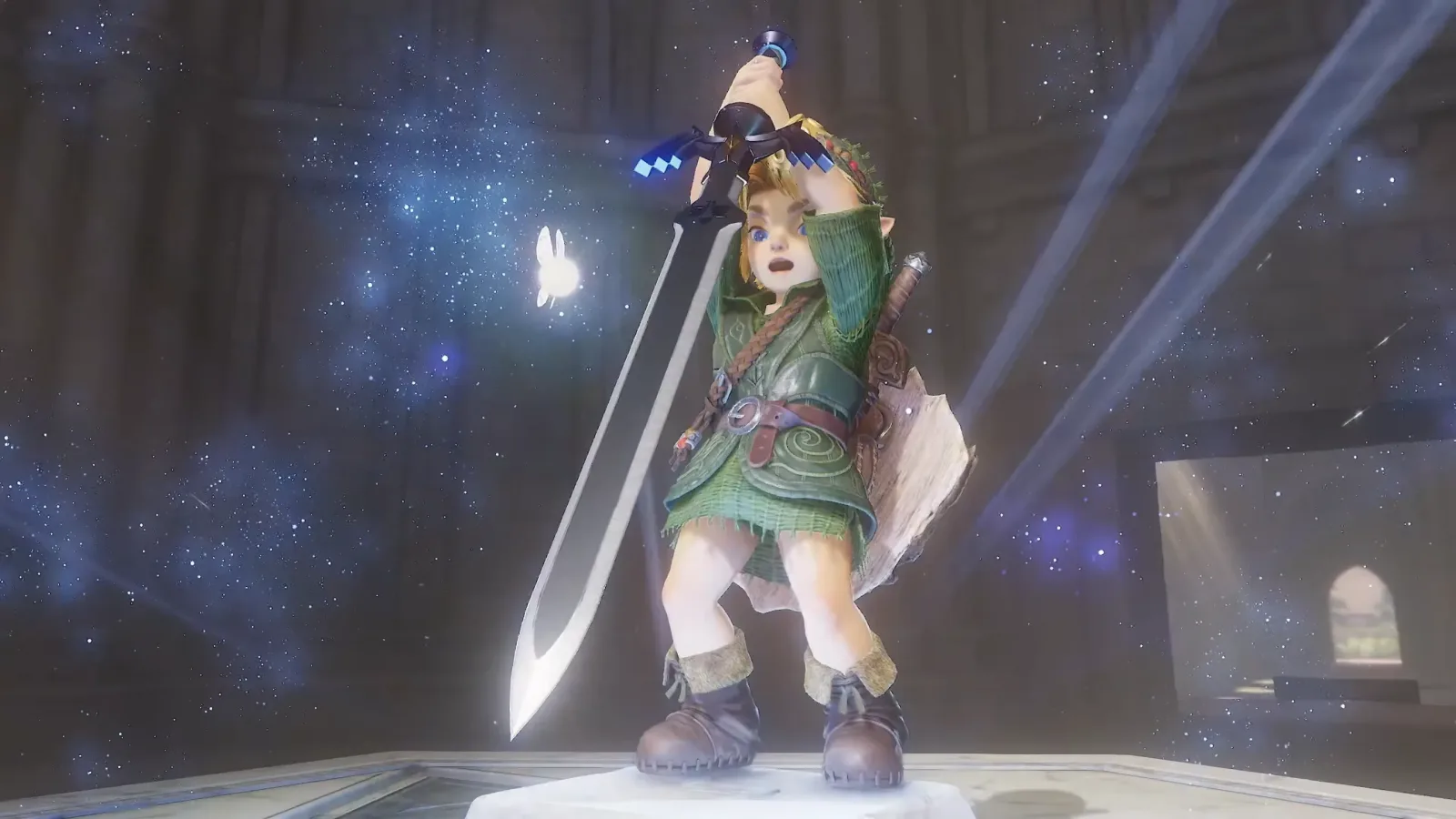
Nintendo's reported remake of The Legend of Zelda: Ocarina of Time has reignited a familiar industry argument: how much should a platform holder rely on its past to support its future? For former Nintendo of America public-relations leads Krysta Yang and Kit Ellis, the answer is not that Nintendo should abandon new ideas in favor of old favorites. Instead, they believe the company has enough history, enough beloved games, and enough development options to make remakes a more regular part of the Switch 2 release schedule.
Their case is rooted in a practical concern. Modern blockbuster games take longer, cost more, and demand more resources than ever. A company that depends exclusively on enormous, ambitious, ground-up productions risks leaving major gaps between releases. Nintendo has historically avoided some of the worst consequences of that approach by mixing tentpole games with smaller projects, ports, spinoffs, and occasional remakes. Yang and Ellis argue that expanding the remake portion of that mix could help Nintendo keep its new hardware supplied without turning every release into a years-long AAA undertaking.
That does not mean the strategy is without risk. Both former executives see a clear danger in the commercial appeal of a prestige remake, particularly one based on a game as important as Ocarina of Time. If a modernized version proves exceptionally successful, Nintendo could be tempted to prioritize safer nostalgia-driven releases over unusual, expensive, and less predictable new projects. The challenge, then, is not whether remakes are worthwhile. It is whether Nintendo can use them as support for original games rather than a substitute for them.
A deep library is Nintendo's advantage
Ellis's central point is simple: few companies can match Nintendo's back catalog. Across decades of hardware, the publisher has built landmark games in series including Super Mario, The Legend of Zelda, Metroid, Star Fox, F-Zero, Advance Wars, Kid Icarus, Fire Emblem, and many more. Some of those franchises remain active, while others appear only intermittently. That gives Nintendo an unusually broad range of options when deciding which properties might benefit from a full remake, a remaster, a collection, or a new smaller-scale installment.
For useful background on this topic, read Anbernic Teases RG DDS, a Dual-Screen Handheld Built for 3DS-Style Emulation.
In their discussion, Ellis pointed to the anticipated 2026 returns of Star Fox and Ocarina of Time as signs of strong audience interest when classic games receive premium treatment. An Ocarina of Time remake would be an especially notable case because it is not merely a revival of a dormant or secondary series. The Nintendo 64 original is widely viewed as one of Nintendo's defining releases, and revisiting it places the company's remake strategy under much greater scrutiny.
Nintendo's approach has often appeared selective compared with some of its major competitors. Capcom has repeatedly revisited Resident Evil, Sony has invested heavily in remakes and remasters of major PlayStation releases, and Xbox has continued returning to properties such as Halo and Gears of War. Nintendo, by contrast, has tended to release fewer remakes per hardware generation outside of the Pokémon series. Many of its recent revivals have also focused on reintroducing franchises that had spent time away from the spotlight, including Metroid, Star Fox, and Advance Wars.
That pattern has value. A remake can function as more than a refreshed version of an old game; it can test demand for a franchise, bring in players who missed the original hardware, and establish whether a series deserves a larger new sequel. In that sense, revisiting a game is also a way to keep an intellectual property alive between its biggest entries.
Remakes can fill the spaces between blockbuster launches
The original Switch demonstrated why a varied release pipeline can matter. Throughout its life, Nintendo used Wii U ports to reinforce its calendar and introduce games that had reached a comparatively limited audience on the previous system. Titles from that era could find a much larger market on Switch, while Nintendo gained reliable releases without having to build every project from zero.
For Ellis, remakes can serve a related role on Switch 2. They can help keep a yearly lineup active while the company's largest teams pursue new Mario, Zelda, Animal Crossing, Pokémon, or other major projects. Not every game, he argued, needs to be a wholly original production. The important thing is maintaining a healthy flow of releases without allowing the balance to tip too far toward recycled material.
This is a useful distinction. "Remake" covers several very different kinds of projects. A straightforward remaster may update resolution, performance, controls, and convenience features. A more extensive remake can redesign environments, combat, presentation, pacing, and systems for a modern audience. Nintendo has experience across that spectrum, and its choices can shape how players perceive the value of each revival.
A carefully selected remake may also be less creatively limiting than it initially sounds. Updating an older game requires decisions about which elements should remain intact, which design conventions no longer work, and how to introduce a classic to players with no nostalgia for its original release. Done well, the process can preserve a game's identity while addressing the friction created by decades of changing expectations.
Still, Yang and Ellis both stress that frequency matters. A company can benefit from a bigger remake presence without reaching the point where audiences believe that its schedule is built mostly from familiar products. Nintendo's strength has long been its ability to surprise players with new mechanical ideas, unexpected genre shifts, and unconventional takes on its established characters. A remake program should protect space for that identity, not erode it.
The warning behind comparisons to PlayStation's schedule
Yang framed the issue in terms of development scale and release droughts. No major publisher can sustainably make only the biggest and most technically demanding experiences, she argued. When every project must be a massive, transformative AAA release, production timelines grow and the gaps between first-party launches can become difficult for audiences to ignore.
Her reference to Sony reflects ongoing player frustration over stretches in the PlayStation 5 generation when major first-party exclusives have felt less frequent than expected. Sony has also published high-profile remakes and remasters, illustrating that reviving older games does not automatically prevent a thin release schedule. The broader lesson is that remakes are a tool, not a complete solution. They work best when they are one part of a portfolio that also includes new franchises, sequels, experimental projects, multiplayer games, and smaller productions.
Nintendo already has several ways to bridge the time between its largest releases. Smaller Mario sports games and projects such as Splatoon Raiders can give established series fresh activity without requiring the same scale as a major numbered sequel. These games may not command the same attention as a new mainline Zelda adventure, but they help a platform feel active and give fans more reasons to stay engaged with its ecosystem.
In many cases, that kind of spinoff may be more exciting than another remake. A new concept using recognizable characters can create something players have not experienced before, while a remake inherently invites comparison with an original that may still be easy to access. Nintendo's ideal approach may be to use both: remakes for preservation and renewed accessibility, alongside unconventional side entries that explore what its older franchises could become next.
Success could create a new problem
Yang's biggest concern is that success may encourage overcorrection. If a prestige remake sells extraordinarily well, the business case is obvious. It can be easier to market a game with a famous name, an established audience, and decades of goodwill than an entirely new Zelda direction or an unfamiliar intellectual property. A hit on the scale of 10 million copies can make the safer path look especially attractive.
But that very incentive can become damaging if it starts dictating too many creative decisions. The new, unusual, and risky projects that define a company's future may not have the immediate certainty of a remake, yet they are what create the next generation of classics. Nintendo would not have its famously deep library without taking those chances in the first place.
An Ocarina of Time remake, if handled with care, could therefore be both a celebration of Nintendo's past and a test of its discipline. It could demonstrate how effectively the company can modernize one of its most important games. It could also reveal how strongly players respond to premium revivals on Switch 2. Neither outcome requires Nintendo to become dependent on remakes.
The most sustainable model is likely a deliberate balance: major original games as the foundation, smaller inventive releases to maintain momentum, and a measured number of remakes chosen because they have a real reason to return. Nintendo has the catalog to support that approach better than almost anyone. The question is whether it can capitalize on that advantage while continuing to make the kinds of unexpected games that will eventually be worth remaking themselves.
Community
Discussion
Start the conversation.
No comments have been posted yet.