

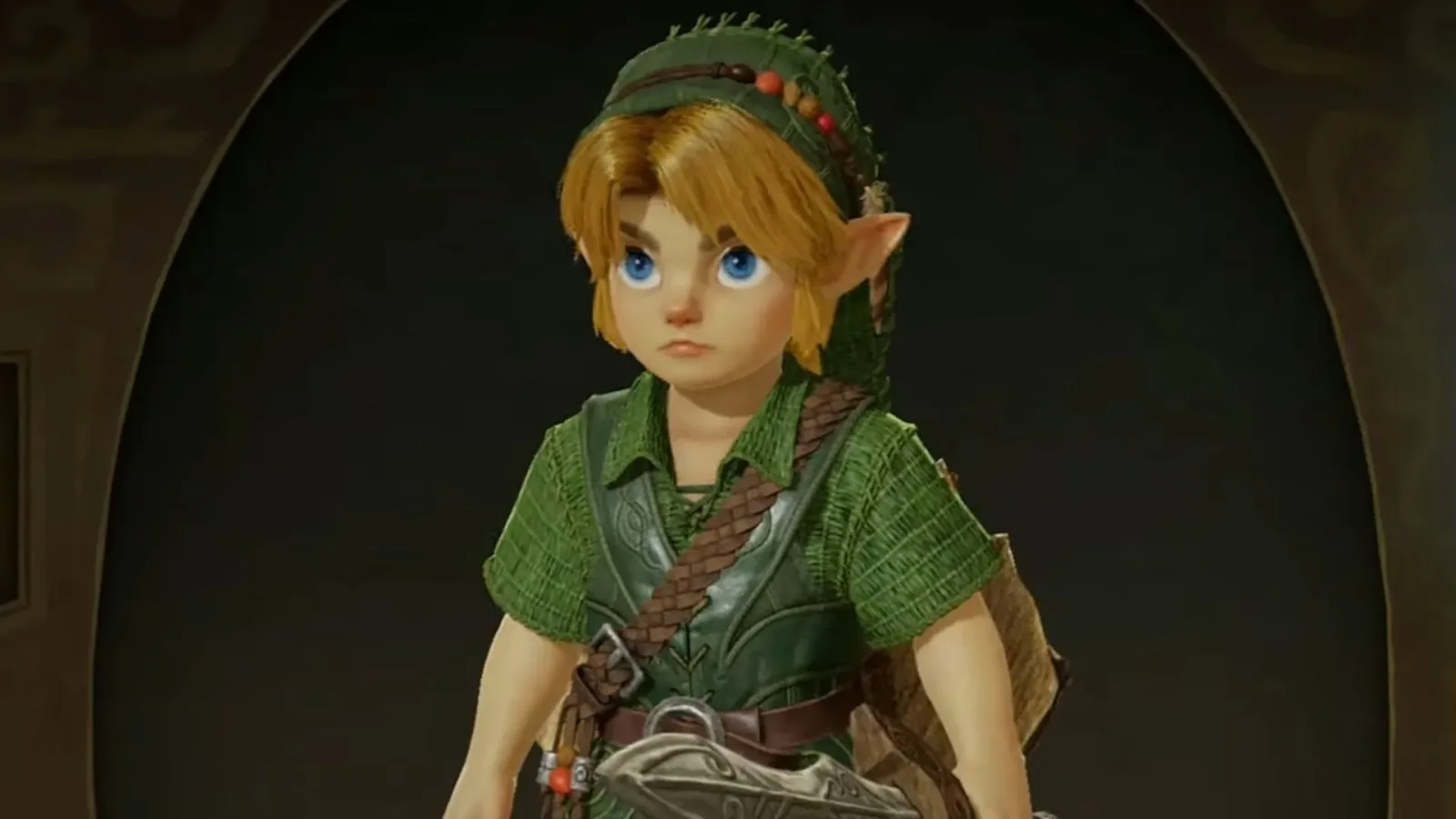
A recent Saturday Night Live sketch built around a hypothetical showdown between The Legend of Zelda: Ocarina of Time and Grand Theft Auto 6 may have made Link the butt of several jokes, but former Nintendo of America marketing leaders believe the company would still have seen substantial upside in the segment.
Kit Ellis and Krysta Yang, who previously held marketing and creator-relations roles at Nintendo of America, discussed the sketch in a video on their channel. Their assessment was not that every joke would have delighted Nintendo's brand team. The bit leans heavily on a familiar, dismissive contrast: GTA 6 is framed as the loud, stylish, high-octane choice, while Zelda is portrayed as the comparatively quaint game for puzzle enthusiasts, complete with jokes about Link's green outfit.
Yet the larger picture matters more than any single punchline. The sketch treated a proposed Ocarina of Time remake as an event large enough to stand beside what may be the year's most commercially dominant release. The crowd's reaction also undercut part of the joke, erupting with enthusiasm for Zelda and demonstrating just how enduring Nintendo's classic adventure remains in popular culture.
A November showdown framed as gaming's next major event
The sketch imagines Link and GTA 6 protagonist Jason competing for attention as both games vie for November dominance. Its comic premise is straightforward: each character boasts about the attractions of his own release, turning the rivalry into a miniature version of the kind of shared-release-date frenzy that can dominate entertainment conversation.
For useful background on this topic, read PlateUp! Halloween Event Adds Trick Cards, Costumes and Steam Trading Cards.
Jason's side of the exchange is positioned around elements commonly associated with Rockstar's open-world crime series: action, cars, spectacle, and adult appeal. Link, meanwhile, is given the task of selling the more traditional Nintendo experience, with puzzles and fantasy adventure becoming part of the contrast.
On paper, that contrast could sound unflattering to Zelda. The sketch repeatedly suggests that one side is for the "cool" audience and the other is for people with more niche or supposedly uncool interests. But comedy sketches are not product pitches, and the importance of the segment may lie in the premise itself. Putting Zelda in the same cultural conversation as GTA 6 acknowledges that Nintendo's franchise has enough recognition, history, and fan loyalty to be understood immediately by a broad television audience.
Yang argued that Nintendo likely would not have hated the segment because it presents the game as a major deal. The script also communicates a real feature of Zelda's identity: its puzzle-solving. That is not an invented trait or a random dig disconnected from the series. While the joke treats it as less thrilling than a fast car chase, puzzles have been central to Zelda's design for decades and remain one of the qualities fans value in the franchise.
Ellis likewise highlighted the significance of Zelda being portrayed as an equal opponent to GTA 6. In an entertainment landscape where GTA releases command enormous attention, simply being selected as the counterpart for such a rivalry signals the perceived stature of Nintendo's series.
The audience response changed the energy of the joke
Perhaps the most revealing part of the sketch was not the dialogue between the characters but the audience response to Zelda. The crowd reacted so strongly to the Nintendo side of the premise that the intended hierarchy became difficult to sustain. Rather than validating the idea that Ocarina of Time was a lesser, more embarrassing option, the room's enthusiasm became a reminder of the game's remarkable cultural footprint.
Ocarina of Time occupies a rare place in video game history. For many players, it is not merely an older Zelda entry but a foundational 3D adventure that helped define how action, exploration, targeting, dungeon design, and narrative presentation could work in the medium. Its name alone can trigger instant recognition among longtime fans, even among viewers who may not actively follow every current game release.
That recognition is especially useful in a sketch that depends on the audience immediately understanding the stakes. A joke about one fictional character arguing with another only works if viewers know who those characters are and what they represent. Link's presence supplied that shared language. The audience's loud response suggested that the character and game still carry a level of affection that cannot be reduced to an old stereotype about who plays Zelda.
In that sense, the sketch's teasing may have inadvertently reinforced Nintendo's point. Zelda is not some obscure alternative that needs to explain why it deserves to exist next to a blockbuster. It is one of the few gaming brands with a legacy powerful enough to be used as a recognizable competitor in a mainstream comedy sketch about the industry's biggest releases.
Why some jokes still may not have pleased Nintendo
Ellis and Yang did not suggest Nintendo would have embraced every detail. They pointed to the depiction of Link as someone for "nerds" or "losers" as an example of the kind of characterization that likely would not align with the company's view of its audience. The joke draws from dated assumptions about games and the people who play them: the idea that gritty, adult-oriented crime games confer cultural coolness while colorful fantasy adventures are inherently less mature or less desirable.
That divide has long been simplistic, and it is even less persuasive now. Nintendo's audience is broad, spanning children, families, dedicated enthusiasts, competitive players, nostalgic adults, and people who simply want imaginative worlds and polished gameplay. Zelda itself has continually evolved across styles and generations, from the open-air exploration of Breath of the Wild and Tears of the Kingdom to the more structured dungeon-driven adventures that shaped earlier entries.
The sketch also poked fun at Zelda's visual identity. Yang noted that Nintendo might not have appreciated jokes at the expense of the game's art style. Art direction has always been one of Zelda's defining strengths, whether the series is pursuing the bright cartoon expressiveness of The Wind Waker, the shadowier fantasy tone of Twilight Princess, or the painterly, storybook-like presentation associated with other installments.
One visual gag involving a bottled fairy also seems like the sort of moment a carefully managed brand would not necessarily celebrate. In the sketch, the fairy falls apart and dies after being pulled from the bottle. It is an absurd, fleeting comedy image, but it transforms one of Zelda's most recognizable magical motifs into something deliberately shabby. For a company known for protecting the consistency and warmth of its character worlds, that is probably not the preferred portrayal.
A contrast with Nintendo's response to an earlier Wario sketch
Ellis and Yang compared the likely response to this Zelda sketch with an earlier SNL segment involving Wario, which aired in 2021 while they were still at Nintendo. That production starred Elon Musk as Wario and revolved around a court case tied to Mario's death in a Mario Kart-style incident.
The older sketch went much further into material that clashes with Nintendo's family-friendly image. It included references to Mario using drugs and Luigi sexting Princess Peach, among other adult jokes. Yang said that sketch was not received well internally, an unsurprising outcome given how directly it pushed Nintendo characters into subject matter far outside their usual presentation.
The distinction helps explain why the Zelda-versus-GTA 6 segment may have fared better. The new sketch is teasing, but its core is built around games competing for consumer excitement. It does not fundamentally recast Link or the Zelda world around criminal behavior, drugs, or explicit sexual content. Its humor comes from exaggerating genre differences and fan perceptions, not from placing Nintendo characters in an especially damaging scenario.
For a marketing organization, those differences are meaningful. Brands do not need to approve of every joke to recognize when a prominent appearance keeps the underlying product desirable, recognizable, and relevant. A joke can be mildly irritating while still generating the kind of awareness most campaigns would want.
Zelda's unusual ability to challenge a giant
The proposed face-off also speaks to Nintendo's unique position in the business. GTA 6 carries extraordinary expectations, and few publishers would even attempt to position a major release directly against a Rockstar launch. But Zelda is not just another game series competing for a crowded release window. It is a multigenerational property with a dedicated audience and a name that has become shorthand for a particular kind of premium adventure.
That does not mean the two games serve exactly the same players or offer identical experiences. Their tones, mechanics, age appeal, and worlds are dramatically different. A GTA 6 launch promises one sort of cultural event; an Ocarina of Time remake would promise another. The point is that Nintendo has a rare ability to make its own event feel important even when another enormous release is absorbing attention.
As Yang put it, the sketch's broad positioning of Ocarina of Time as a worthy side-by-side rival to GTA 6 was the key positive. The audience reaction added an extra layer of validation, showing that Zelda still inspires immediate excitement rather than polite nostalgia.
Whether a Zelda: Ocarina of Time remake and GTA 6 ultimately become November competitors is separate from the sketch's effect. The comedy segment has already demonstrated the larger truth behind its premise: Link remains a powerful mainstream symbol, and Zelda has the kind of fanbase and cultural standing that can make even a joking comparison with gaming's biggest blockbuster feel plausible.
Community
Discussion
Start the conversation.
No comments have been posted yet.