

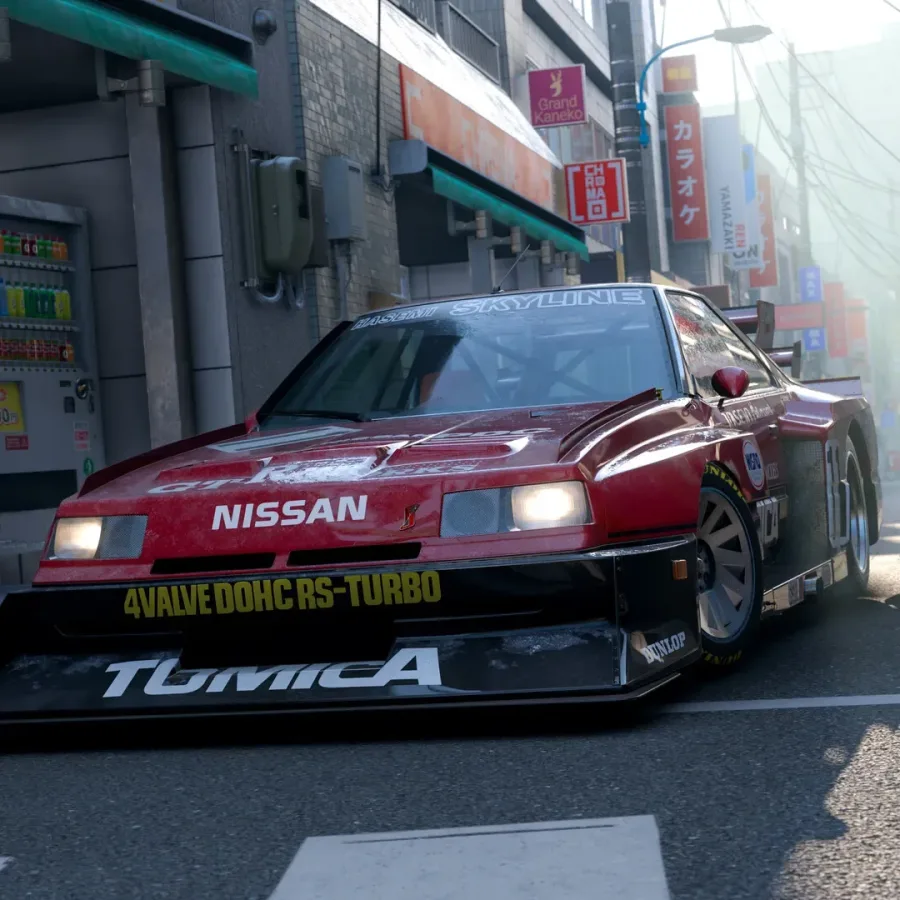
Forza Horizon 6 developer Turn 10 Studios has issued expanded moderation guidance following months of criticism from players concerned that anime-inspired custom car liveries, commonly known as Itasha designs, have been disproportionately caught up in the game's enforcement system.
The updated rules state plainly that Itasha-style creations are permitted in Forza Horizon 6. However, the studio also draws a firm line around explicit sexual material and content judged to be sexually suggestive. That distinction has done little to end the argument among some players, particularly within Japanese-language communities, where concern remains over how those definitions will be applied and whether a player can safely share, save, photograph, or race alongside a design made by somebody else.
The controversy matters because liveries are not a minor side activity in a Forza game. For many players, vehicle customization is a major creative outlet and a way to celebrate motorsport, pop culture, games, manga, and anime. With Forza Horizon 6 set in a recreation of Japan, Itasha culture has naturally become especially visible. The real-world practice involves decorating cars with bold illustrations of fictional characters, often from anime, manga, or video games. The term itself is often translated as "painful car," a reference to the intentionally loud, eye-catching style that some may find embarrassing or excessive.
Itasha Is Allowed, But the Boundaries Are Narrower Than Some Players Expected
Turn 10's guidance is intended to settle the central question: the mere presence of anime-style artwork does not violate the rules. An Itasha livery is not banned simply because it features a stylized character or originates from Japanese pop culture.
For useful background on this topic, read Golden Joystick Awards 2026 Nominations Put 007: First Light and Big Walk in Front.
Where moderation enters the picture is the presentation of that character. The revised standards prohibit both explicit sexual content and sexually suggestive content. The studio points to elements such as provocative poses, gestures, facial expressions, and emphasis on particular body parts as examples of imagery that may be deemed suggestive. The guidance does not reproduce visual examples, understandably given the subject matter, but that choice has also left players to interpret broad descriptions for themselves.
That uncertainty is at the heart of the backlash. Critics have argued that phrases such as "provocative" and "suggestive" leave significant room for subjective judgment, especially when applied to anime artwork, where visual conventions can differ from realistic depictions. Some commenters have characterized the standards as too vague to give creators confidence before they upload a livery. Others have acknowledged that the additional explanation is more useful than a blanket restriction, even if it does not answer every edge case.
The debate is also complicated by the fact that depictions of female anime characters can range from ordinary character art to imagery intended to be flirtatious or sexualized. A pose, costume, facial expression, or framing that one player sees as harmless fan art could be judged differently by a moderator. Perceived character age is another highly sensitive consideration when artwork uses an anime style, and content that appears to cross into sexualized depictions involving youthful-looking characters can carry far more serious consequences.
Turn 10 Says Human Moderators Review Reports
Another major concern raised by the community has been the process behind enforcement. Players have speculated that automated moderation may be behind a reported wave of bans, while others have feared that coordinated reporting campaigns could force penalties against particular creators or types of artwork.
Turn 10 says that reported content enters a queue for review by a human moderator. It also says that the number of reports submitted against a particular item does not affect where that item sits in the queue or how it is prioritized. In other words, the studio's stated policy is that a large volume of reports alone should not make a livery more likely to be reviewed first or treated as a violation.
That clarification directly addresses fears that players could weaponize the reporting system against Itasha creators. It does not necessarily resolve every concern, though. A human review system still depends on consistent interpretation of the rules, and players who consider the definitions unclear may remain uneasy about how a reviewer will assess stylized art. The renewed guidelines provide a framework, but not a public catalog of exactly which poses, outfits, or compositions will pass scrutiny.
Some complaints have gone further, with players alleging that simply keeping an unpublished draft design in their library, or taking a screenshot featuring another player's questionable livery, might result in a severe sanction. The available clarification focuses on reported content and prohibited custom designs; it does not establish that every claim circulating online about screenshots, drafts, or incidental appearances leads to a ban. Still, the prevalence of those fears illustrates how little trust parts of the community currently have in the moderation process.
Warnings Are Typical, but Zero-Tolerance Violations Can Mean a Permanent Ban
Forza's policy distinguishes between ordinary violations and the most serious forms of prohibited material. Under the usual escalation process, a player's first violation generally results in a warning. Further violations can bring suspensions of increasing length.
Permanent bans can be issued immediately, without prior infractions, when content falls under the game's zero-tolerance standards. The policy identifies child sexual content, explicit sexual content, explicit nudity, and other material covered by its most severe rules as grounds for that outcome. Turn 10's zero-tolerance category also covers offenses including hate speech, credible threats of violence, terrorist or violent extremist content, and sexually explicit or nude imagery.
This distinction is important to the Itasha discussion. A design that is merely considered inappropriate under the broader guidelines may be handled differently from content judged to be explicit or to involve child sexual exploitation. Yet players remain concerned that an anime livery could be placed into the harshest category because moderation may interpret a character as underage or consider the composition sexual in nature. The updated policy explains the broad categories, but it cannot eliminate difficult judgment calls inherent to user-generated art.
Itasha designs are allowed under the stated rules, but their imagery must remain outside the definitions of explicit and sexually suggestive content.
Japanese Reviews and Community Discussion Reflect the Frustration
The dispute has had a visible effect on the game's user-review conversation on Steam. Forza Horizon 6 has reached a "Mixed" status among Japanese-language reviews following an increase in posts that do not recommend the game. Several of those reviews focus less on driving, Japan's recreated environments, or vehicle handling than on the perceived risk of harsh enforcement in the online ecosystem.
That is notable because the game initially received positive attention on Japanese social media for its treatment of the country and its detailed, compact interpretation of Japanese locations. Players have praised the simple pleasure of exploring the map and driving through its version of Japan. Even some favorable reviews, however, have criticized aspects of the online experience, with complaints extending to seasonal missions, credit collection, and wider operational issues.
For frustrated players, the gap between a highly regarded driving experience and an allegedly unpredictable moderation system has become a central disappointment. They argue that a premium-priced game should offer clearer expectations for people creating and sharing harmless-looking liveries. Whether every reported ban claim is accurate or reflects the full circumstances of a moderation decision is not publicly established, but the volume of discussion has clearly pressured the developers to provide more detail.
Iconography Restrictions Are Not New to the Series
Discussion around enforcement has also included banned historical symbols, including Japan's imperial flag. Some players have treated such restrictions as evidence that Forza Horizon 6 is uniquely strict, but rules around inflammatory or controversial iconography predate this entry.
Previous Forza games have prohibited imagery such as Nazi symbols and the Confederate flag. In 2020, former Forza creative director Mike Brown discussed moderation involving accurate depictions of Japan's imperial flag in car designs, explaining that direct recreations could bring a ban while more abstract expressions would not necessarily be treated the same way. The September 24, 2026 guidance for Forza Horizon 6 repeats restrictions concerning that iconography.
The larger issue, then, is not that every type of moderation is new. Rather, many players believe the current game is enforcing its rules more aggressively than earlier Forza releases, particularly where anime-inspired designs are concerned. Turn 10's latest document attempts to separate permissible fan expression from content it considers sexual or otherwise unacceptable, while also assuring players that reports receive human review.
Whether that will restore confidence remains uncertain. The rules now make it clear that Itasha itself is welcome in Forza Horizon 6, but creators looking to avoid trouble may need to be especially cautious about poses, costumes, framing, gestures, facial expressions, and any design choices that could be interpreted as sexualized. For a community built around sharing custom vehicles, the next challenge for Turn 10 will be demonstrating that those standards can be enforced consistently and transparently.
Community
Discussion
Start the conversation.
No comments have been posted yet.