

Warning: This article discusses major spoilers for Avengers: Endgame Encore and its newly added ending.
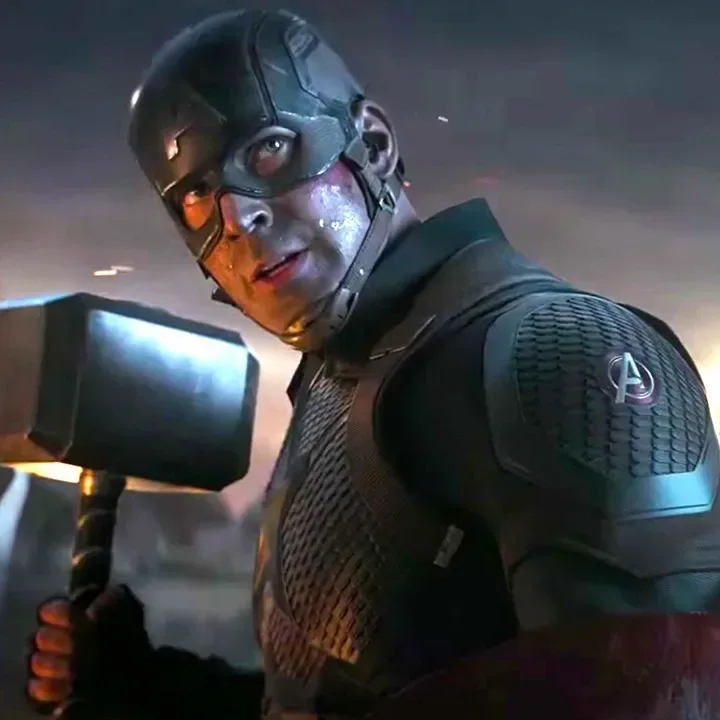
Avengers: Endgame gave Steve Rogers what appeared to be a rare and unusually definitive conclusion for a Marvel Cinematic Universe hero. After returning the Infinity Stones across time, Steve chose not to come back to the present as planned. Instead, he remained in the past and built the quiet life he had been denied for decades, eventually reappearing as an old man to pass the Captain America shield to Sam Wilson. Its final image--Steve dancing with Peggy Carter--was designed as a tender farewell.
That farewell is no longer quite so final in Avengers: Endgame Encore. The revised version extends Steve and Peggy's closing scene beyond the familiar dance, interrupting their moment with an unexpected appearance by Loki. Director Anthony Russo has now addressed the significance of that extra beat, describing it as the point where Avengers: Doomsday is born.
Russo discussed the new sequence during a Q&A following a New York screening of Avengers: Endgame Encore. Asked whether moments in the rerelease gain new significance with Avengers: Doomsday on the horizon, he pointed directly to the added material at the end of the film. His comments make clear that the extension is not simply an extra scene for longtime fans; it is intended to function as a narrative bridge into the next Avengers story.
For useful background on this topic, read Forza Horizon 6 Clarifies Itasha Rules Amid Ongoing Moderation Backlash.
"There's certainly a pivotal moment at the end where... the moment has a different meaning," Russo said. "We play one beat past where Steve Rogers' story ended with Peggy Carter, and in that moment, that's where Doomsday is born."
A familiar ending, suddenly transformed
The original version of Endgame left plenty of room for debate about the mechanics of Steve's decision, especially in a franchise increasingly concerned with branching timelines and multiversal consequences. But emotionally, the scene was straightforward. Steve finally got to live rather than fight, and Peggy received the reunion that had been impossible in the main MCU timeline.
Endgame Encore changes the emotional shape of that resolution by allowing the dance to continue just long enough for Loki to arrive. The character appears to be coming from his time as a TVA agent, placing the scene firmly in the era of Marvel storytelling where timelines are actively observed, managed, threatened, and sometimes destroyed.
That appearance immediately raises questions that the original ending intentionally did not need to answer. Why has Loki sought Steve out? Is he there to warn the couple, recruit them, relocate them, or correct a problem caused by Steve's decision to remain in the past? And, perhaps most importantly, does his arrival mean that Steve and Peggy's hard-won domestic life has been endangered from its very beginning?
Russo did not explain what Loki says, what decision follows, or where Steve eventually goes. Still, the director's description ties the encounter to the rise of Doctor Doom and frames the scene as an inciting moment rather than a nostalgic postscript. What once looked like the end of Captain America's journey now appears to be a doorway into a larger crisis.
Why Loki is the key figure in the new scene
Loki's presence carries particular weight because this is not necessarily the Loki Steve knew during the Battle of New York, nor the villain who died during the opening of Avengers: Infinity War. His TVA tenure places him in a context far removed from the earlier Avengers films. He is connected to the machinery of the multiverse and has direct experience with timelines that diverge from expectation.
That makes Loki an ideal character to disrupt Steve and Peggy's private happy ending. Steve's choice to stay behind has always been one of the MCU's most consequential time-travel decisions, even if the film initially presented it as a personal one. A TVA-connected Loki would have reason to understand the potential ramifications in a way few other characters could.
The new scene also creates an intriguing reversal. Loki was once an enemy Steve fought alongside the original Avengers, yet he may now be arriving as a messenger, guide, or rescuer. Whatever his purpose, he is apparently connected to the chain of events that reaches Avengers: Doomsday. The significance of the scene lies not merely in Loki appearing, but in the possibility that he knows something Steve and Peggy do not.
The Doctor Doom connection remains deliberately unclear
Russo's statement suggests a direct relationship between the new ending and Doctor Doom's eventual emergence, but the precise connection has not been confirmed. That uncertainty has naturally driven discussion around how Steve, Peggy, and Loki might become entangled in Doom's story.
A recent teaser showed Doom mourning his wife and child, an image that has encouraged theories about grief, loss, revenge, and a multiversal catastrophe affecting his family. One possibility being discussed is that actions taken by Steve, Peggy, and Loki somehow help place Doom on his path of vengeance. The idea is not that Steve intentionally creates a villain, but that even a compassionate attempt to protect a family could have devastating consequences in another reality.
Another theory centers on the prospect that Loki saves Steve and Peggy from a universe headed for destruction. In this scenario, their peaceful life is interrupted because remaining where they are is no longer possible. Loki could move them elsewhere--potentially into Doom's universe--where their presence becomes part of a much more complicated conflict.
There is also speculation around children and the balance of realities. If Steve and Peggy have a child in a timeline where they were not meant to remain, that alteration could displace or endanger another child. Such a development would fit the franchise's increasing focus on personal choices carrying enormous multiversal costs. However, these remain theories, not confirmed plot details. Russo's comments establish the importance of the added scene without revealing the mechanics behind its consequences.
Steve Rogers' story may be continuing after all
The biggest immediate implication is simple: Steve Rogers is not finished. The post-Endgame future of the former Captain America has been an area of sustained fan interest because the character's original conclusion felt unusually complete. He had fought through war, ice, loss, alien invasion, civil conflict, and the final battle against Thanos before choosing the life he had always wanted.
Yet a happy ending in a multiverse story can be fragile. By adding Loki to the scene, Endgame Encore does not erase the meaning of Steve and Peggy's reunion, but it does make that reunion vulnerable. The dance still represents what Steve chose and what he earned. The interruption suggests that the universe--or universes--may refuse to let that choice remain isolated from the larger conflict.
That is a meaningful distinction. Steve's return does not appear to be framed solely as a victory lap or an excuse to revisit an iconic character. If Russo is correct that the new beat is where Doomsday begins, then Steve's personal decision is being recontextualized as part of the foundation for the next saga-level threat.
It also puts Peggy at the center of a developing mystery. In the original ending, she was the emotional destination of Steve's journey. The extended scene makes her an active participant in the moment that may change his future again. What she knows, chooses, or loses could matter just as much as Steve's response to Loki.
A rerelease that functions as new MCU story material
Extended editions and theatrical rereleases often offer deleted moments, celebratory additions, or small rewards for dedicated audiences. Endgame Encore appears to be doing something more consequential. Its new ending changes the context of an existing landmark scene and positions it as required background for a forthcoming Avengers film.
That approach gives the new material an unusual responsibility. The original conclusion remains beloved because of its clarity and emotional restraint. Any continuation has to honor that while introducing the instability necessary for a new story. The choice to use Loki, time travel, and a multiversal threat provides Marvel with a way to revisit Steve's life without pretending the original ending never happened.
For viewers, the central mystery is now whether Loki's arrival represents hope or disaster. He may be attempting to protect Steve and Peggy from an imminent collapse. He may need their help to avert one. Or his intervention may itself be the trigger that changes the fate of several worlds, including the world Doctor Doom calls home.
Avengers: Doomsday arrives in theaters on December 18. Until then, the extra moment at the end of Avengers: Endgame Encore leaves Steve Rogers' long-awaited peace in a very different place: not erased, but interrupted by a visitor who seems to know that the story is far from over.
Community
Discussion
Start the conversation.
No comments have been posted yet.