

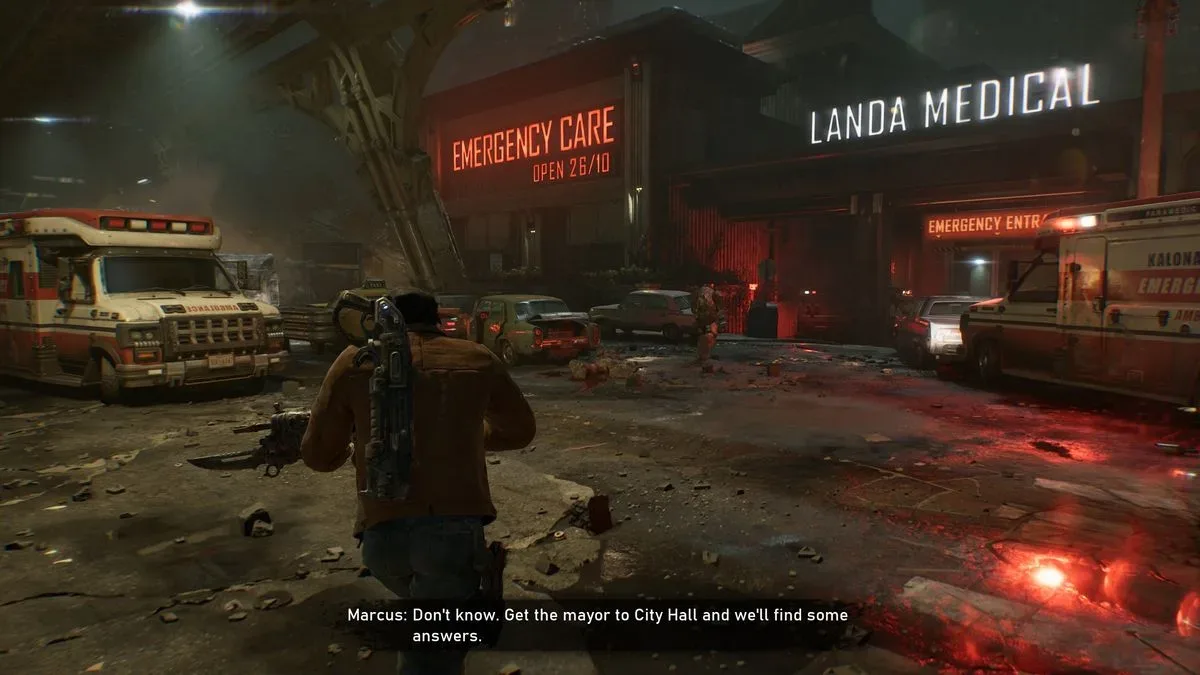
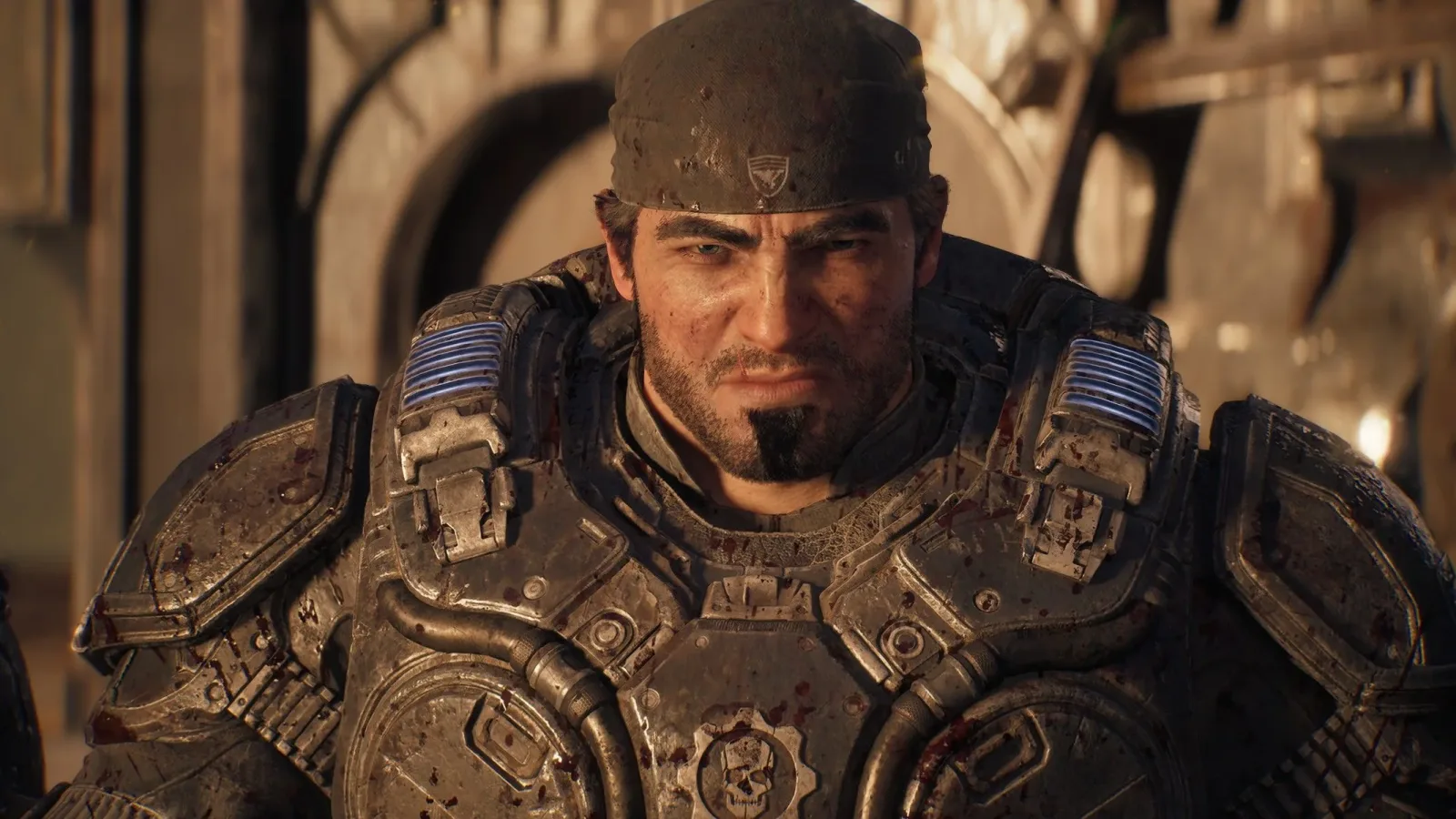
Gears of War: E-Day is shaping up to be a major return to form for Xbox's defining cover-shooter series. This review remains in progress because the game's multiplayer offerings are not yet fully available for assessment, but the campaign already makes a powerful case for itself. Built as a prequel set on the catastrophic day the Locust first emerge, E-Day trades distant warzones and broad franchise mythology for an immediate, city-wide nightmare. Its focus is Kalona, an industrial metropolis collapsing in real time around Marcus Fenix, Dominic Santiago, and the rest of Bravo Squad.
That close focus is one of the campaign's biggest strengths. Rather than treating its setting as a chain of interchangeable arenas, E-Day turns Kalona into a place players gradually come to know, then watch get destroyed. The result is a cinematic, hard-hitting third-person shooter that understands why Gears of War's original combination of bombast, desperation, and brotherhood mattered in the first place.
The campaign was completed on PC in roughly 16 hours, with most optional objectives tackled but without a dedicated sweep for collectibles. It is structured across five acts and supports one to four players. As a single-player experience, it is already an exceptionally encouraging start for a game that still has multiplayer questions left to answer.
Emergence Day begins in a city still celebrating peace
E-Day takes place in Kalona, a Gothic industrial city defined by dockyards, military sites, towering streets, and imposing architecture. At the beginning, the population is emerging from the long shadow of a conflict with the Union of Independent Republics, or UIR. Public signs celebrate the war's end, and the city has been spared the kind of destruction that often accompanies a battlefield victory. That apparent stability makes what follows far more unsettling.
For useful background on this topic, read Arc Raiders Escalates Anti-Cheat Fight With Permanent Bans for Detected Cheaters.
Marcus Fenix and Dominic Santiago are connected by a shared loss from the UIR conflict: Dom's brother Carlos, who also served alongside Marcus. The pair intend to slip away from a military ceremony for drinks, only for the ground to break open beneath Kalona. The Locust arrive without warning, pouring out of the earth in enormous numbers. Some are animalistic and fast-moving; others carry firearms and armor. Civilians flee through streets being swallowed by sinkholes and fire, while the city's already strained defenders attempt to mount a response.
It is a strong premise for a prequel because it does not rely on the audience already knowing every piece of Gears history. The terror comes from being present at the beginning of an unimaginable disaster. Marcus, Dom, Carter, and Reyes are not embarking on a neatly defined mission. They are moving from emergency to emergency in a city that has no idea how to survive what has happened to it.
E-Day's story rarely pulls perspective away from Marcus for long. That choice helps the campaign sustain its urgency and avoids making Kalona's destruction feel like distant spectacle. Familiar locations return at different points in the story, including Legacy Bridge, but their repeated use does not make the campaign feel recycled. Instead, revisiting areas reveals how much has changed. Places that initially seem stable or merely threatened become wrecked, inaccessible, or transformed into desperate defensive positions.
A setting with the impact of a character
Kalona gives E-Day a rare sense of continuity for a shooter campaign. Its architecture and public spaces do not simply exist to frame combat encounters; they communicate what the city was before the Locust arrived. A formerly proud urban center becomes a maze of fractured infrastructure, burning streets, frightened survivors, and improvised military resistance. The campaign's destruction is unflinching, but it is especially effective because the game first establishes what is being lost.
The approach recalls the power of tightly focused urban shooter settings, where returning to the same districts can make their decline feel personal. E-Day uses that structure to make every new catastrophe register. The city is not a backdrop that resets after a cutscene. It is a continually worsening crisis zone.
This darker atmosphere also brings out an interesting side of Gears' characters. The series has always had room for oversized personalities, harsh banter, and its famously colorful profanity. E-Day retains that edge, but the prequel setting strips away some of the later confidence attached to these heroes. Beneath the bravado, the campaign explores grief, shock, trauma, and the human impulse to keep moving when there is no obvious path to safety. Marcus and Dom's relationship benefits from being placed under that pressure so early in the larger Gears timeline.
Adaptive cover makes every battle feel less scripted
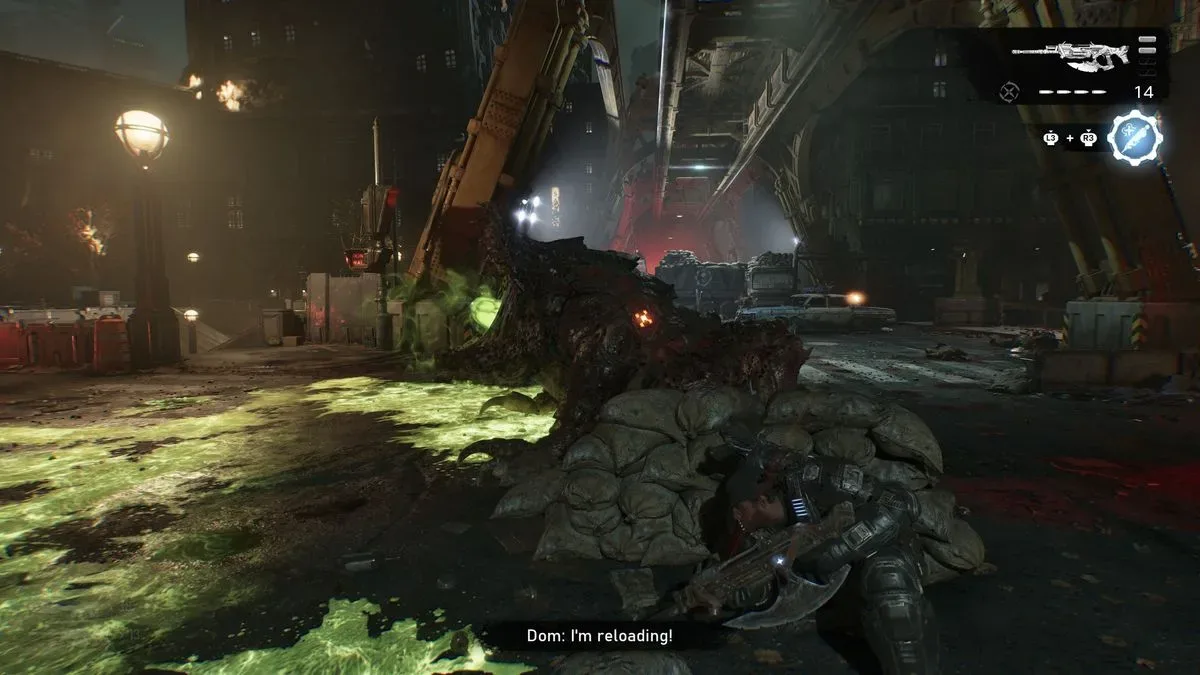
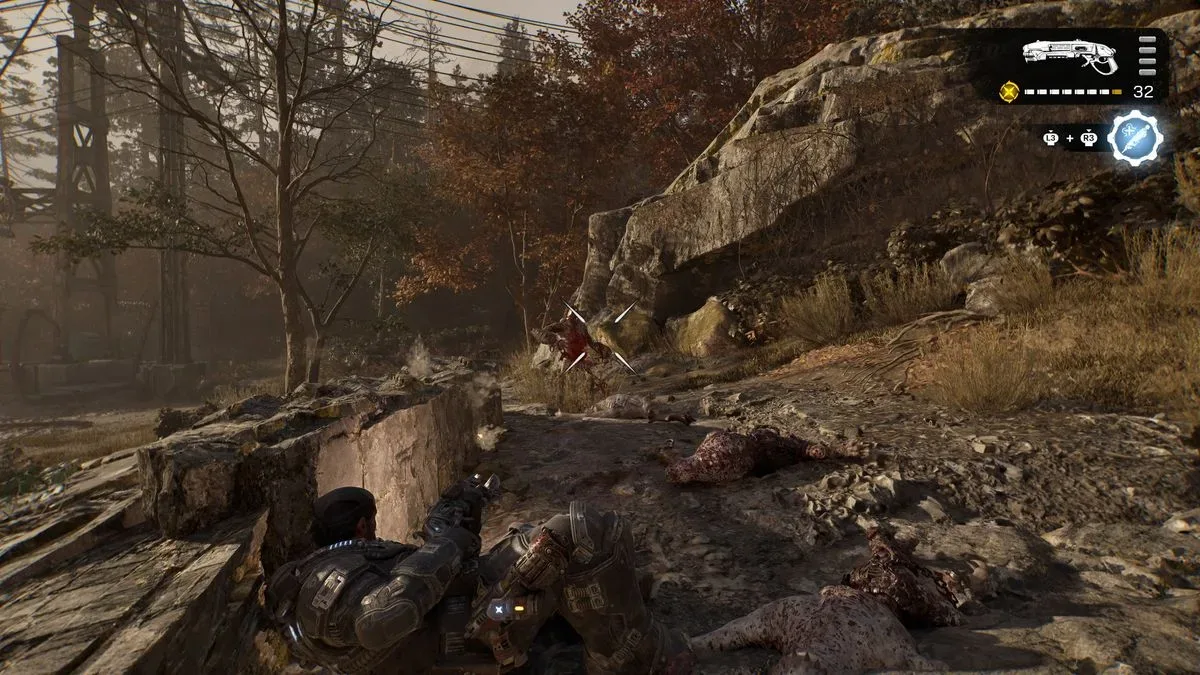
For all the attention paid to its story and setting, E-Day is still an action game first. Its most impressive mechanical achievement is an adaptive cover system that makes firefights feel more flexible than the series' traditionally rigid stop-and-pop engagements. Players can use a much wider range of environmental objects for protection, including low debris that may leave Marcus lying on his back while firing upward.
That may sound like a relatively small change, but it affects the entire rhythm of combat. Cover no longer appears to be reserved only for conveniently placed waist-high barriers. Kalona feels more like a real city under assault because its rubble, ruined fixtures, and damaged structures can all become part of the fight. The difference is especially valuable in chaotic encounters, where a sudden dive behind minimal cover can be the move that prevents a death.
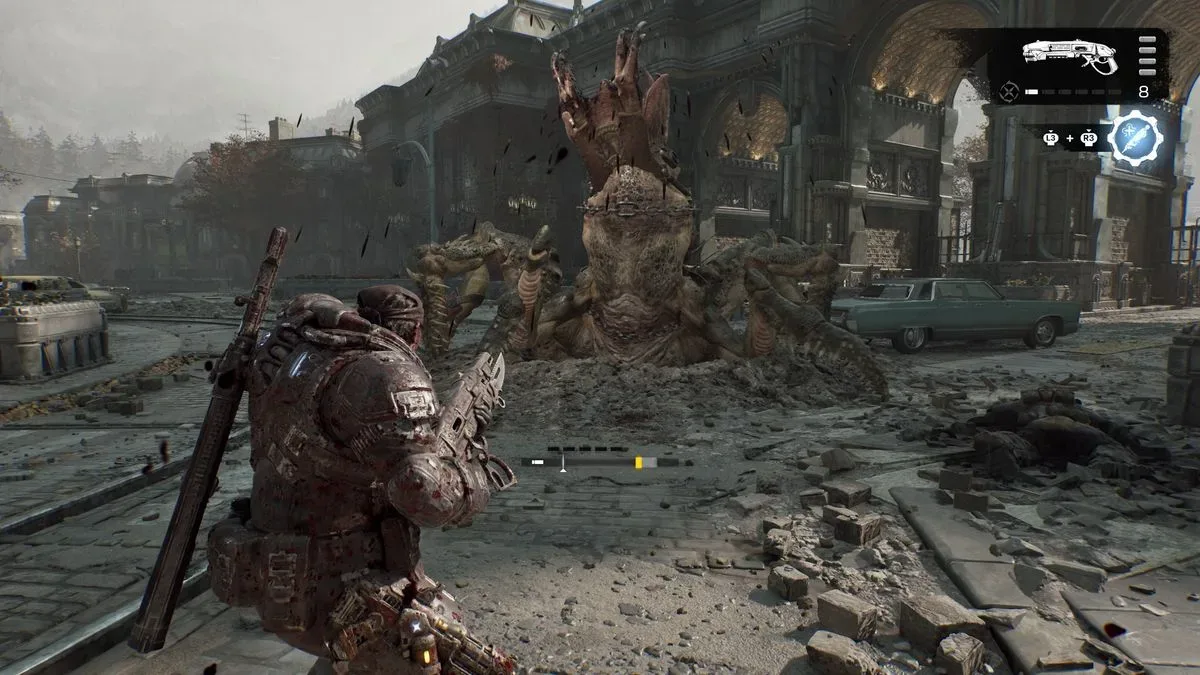
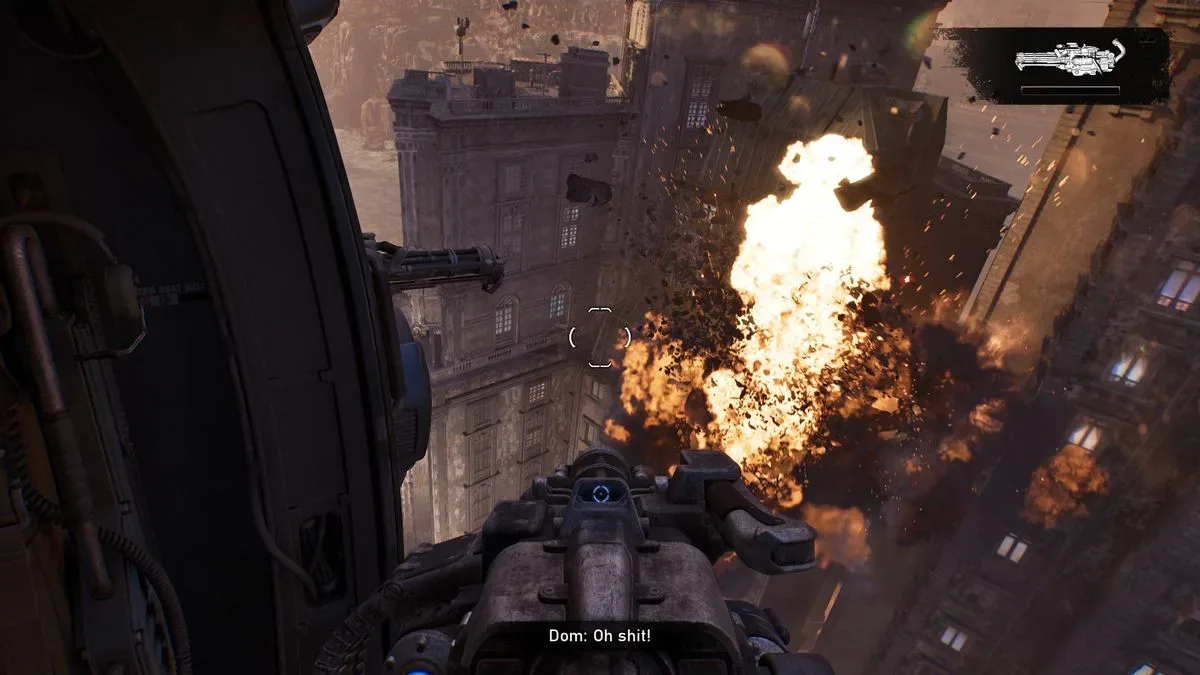
Combat remains demanding even at normal difficulty. Locust forces are aggressive and responsive, mixing enemy types in ways that force players to constantly reconsider their position. Smaller, twitchy creatures can rush a safe spot while armed Drones lay down fire, take cover, and look for flanking opportunities. New enemy types are introduced carefully enough that they retain their threat when they appear, whether that means acid-spewing beasts or airborne enemies dropping fire from above.
The campaign does not lock players into one preferred weapon style, either. Deliberate mid-range shooting with bolt-action rifles can be extremely effective, especially when targets are exposed at a distance. Yet ammunition scarcity ensures that scavenging is a meaningful part of the flow. A weapon that seems unremarkable at first can become vital during a close-quarters fight when the battlefield offers no better option.
Weapon mods provide meaningful reasons to experiment
Gears of War: E-Day's hardcase upgrades add further variety. Weapon and armor modifications found around Kalona have a substantial impact rather than functioning as trivial statistical bonuses. One example changes the Gnasher shotgun to use slug rounds, dramatically improving its potential at a distance and allowing for more precise headshots against Drones. Another combination can reshape the Longshot sniper rifle: switching its traditional long-range scope for an over-the-shoulder view and pairing it with a modification that chambers another round after a headshot creates a very different weapon from the standard version.
These systems make experimentation rewarding. The Gnasher can initially feel underwhelming when used at the wrong range, but becomes devastating at close distance, particularly when fired quickly without aiming. The classic Lancer returns as well, complete with its chainsaw bayonet, while the Incinerator shotgun brings its own acid-spewing appeal to the arsenal.
Not every familiar Gears tool lands equally well. Melee combat, including the chainsaw-focused identity of the Lancer, feels less impactful than the game's gunplay. Compared with the tense exchange of fire, emergency repositioning, and desperate use of available cover, melee lacks a little weight. It is not enough to undermine the broader combat package, but it is one area where the shooting carries more of the excitement.
A strong campaign, with multiplayer still to be judged
The most promising thing about E-Day is how naturally its pieces reinforce one another. Kalona's destruction supports the adaptive cover system. The personal stakes of Emergence Day make the combat's urgency feel more meaningful. The broader weapon customization encourages players to engage with each encounter as a changing survival problem rather than a shooting gallery with an obvious solution.
It also helps that the campaign's optional objectives feel worth pursuing when they lead to extra confrontations. In a game with this much confidence in its combat spaces, more opportunities to fight through Kalona can be more attractive than a simple hunt for collectibles. Finishing the story leaves the kind of lingering melancholy usually associated with spending sustained time in a convincingly realized world, even though the experience is driven by explosive action.
There is an unfortunate real-world cloud over the game's launch period, with The Coalition affected by further Xbox layoffs as E-Day arrives. That makes the evident craft in the campaign feel even more bittersweet. The game is an ambitious demonstration of what the studio can do with the franchise: preserve its loud, muscular identity while giving its characters and setting more emotional texture.
The final verdict must wait until multiplayer is available and evaluated. Campaign-only players, however, have plenty of reason to be optimistic. Gears of War: E-Day launches on October 6, 2026 for PC and Xbox Series X, and its single-player offering already stands as a compelling prequel and one of the most confident cover-shooter campaigns the series has produced in years.
Community
Discussion
Start the conversation.
No comments have been posted yet.