

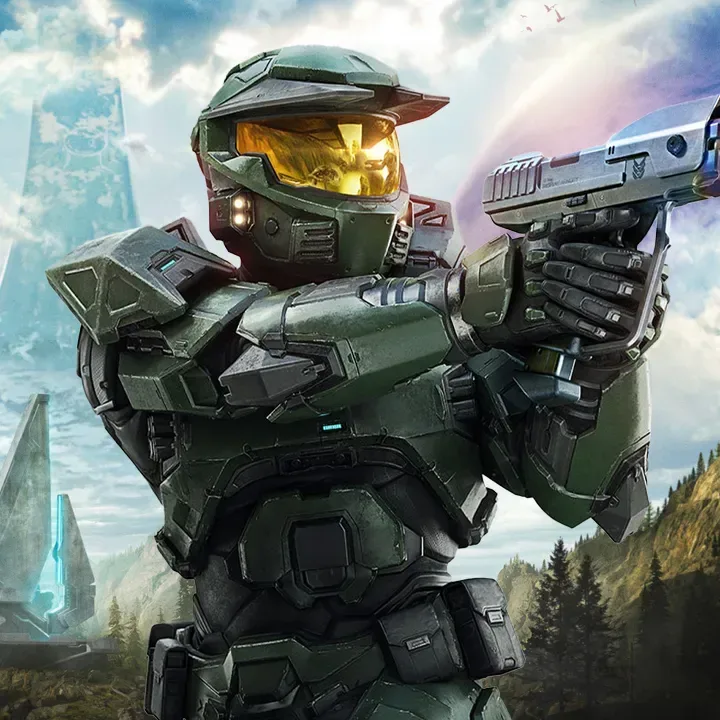
The future of Halo is already becoming a major point of debate among its community, even though concrete details about the next game remain scarce. A rumor circulating from an online user known as TechnicalHalo has suggested that Activision could fully reboot the science-fiction series, discarding existing continuity in favor of an entirely new beginning.
That claim is unverified, and there is no confirmed indication that Activision intends to erase the franchise's lore. Still, the possibility has prompted fans to wrestle with a question that has followed Halo for years: after more than two decades of games, novels, comics, and other stories, is the best route forward a continuation, a selective reset, or a fresh story that leaves Master Chief's timeline behind?
The conversation arrives during a turbulent moment for the series. Activision has confirmed it is assembling a new team for the next Halo game, while Halo Studios has been heavily affected by layoffs. It is not yet known whether any Call of Duty teams will participate in development, although Sledgehammer Games has been linked to the franchise in past rumors. With a new development structure taking shape and no announced game to define its direction, fans see this as a potential turning point.
A clean slate or a selective reset?
For some players, a full reboot sounds too drastic. The original run of games developed by Bungie--from Halo: Combat Evolved through Halo: Reach--remains the heart of the series for much of the community. Those entries established the relationship between Master Chief and Cortana, the Human-Covenant conflict, the Halo rings, and the tone that made the franchise an Xbox landmark.
For useful background on this topic, read Dawn of War 4 Developers Surrender After Hard AI Orks Crush Their Space Marines.
However, many of the fans skeptical of a complete reset are not necessarily asking for the current continuity to continue unchanged. One frequently proposed compromise would retain the Bungie-era games as canon while revising, replacing, or otherwise moving away from the stories beginning with Halo 4.
That idea reflects a widespread feeling that the post-Bungie games contain individual strengths but have struggled to build satisfying long-term momentum. Halo 4 has earned greater appreciation over time among some players, particularly for its focus on Chief and Cortana. Yet Halo 5: Guardians and Halo Infinite remain contentious in story discussions. Fans who support a partial reset often argue that major plot threads were introduced, changed direction, or left unresolved too quickly.
In that view, preserving the original saga while opening a new branch after Halo 3 or Halo: Reach could protect what players consider the franchise's foundational material. It would also give a new creative team room to establish a clearer plan rather than being tied to every unresolved element of the last decade.
A selective reboot would let the series hold onto the most cherished Master Chief stories while creating a new era with a more deliberate direction.
There are obvious drawbacks. Removing later installments from continuity could make players who invested in those games, expanded fiction, and characters feel as though their engagement no longer matters. It could also reinforce the criticism that Halo has repeatedly changed course instead of following through on its existing narrative ideas.
Why some players favor starting over completely
Other fans believe a true reboot may be the most straightforward answer. Their case is less about rejecting every post-Bungie story and more about the enormous weight of the franchise's accumulated history. A newcomer trying to understand modern Halo encounters more than 20 years of games and a substantial expanded universe. That depth is a strength for longtime followers, but it can also be daunting for an audience Activision may want to grow.
A reboot could establish a new version of the setting with less assumed knowledge. It could introduce the Covenant, Forerunners, Spartans, and the Halo installations in ways designed for players who have never touched the earlier games. It could also rebuild the universe around a central premise and story plan without needing to account for every earlier revelation, retcon, faction, and character arc.
Fans raising this possibility often point to the practical challenge surrounding Master Chief's voice. Steve Downes has defined the character for generations of players, and the prospect of recasting him is understandably sensitive. Yet the longer the series continues, the more likely a new actor becomes unavoidable if Chief remains its leading figure.
A direct sequel that introduces a new voice for the character could be difficult for audiences to accept, particularly if it attempts to preserve every detail of the current timeline. A reboot, by contrast, could frame new versions of familiar characters as part of a distinct interpretation. That would not remove the emotional attachment many players have to Downes' performance, but it could make the transition more understandable in narrative terms.
Recasting concerns extend beyond Chief. Cortana has been voiced by Jen Taylor across much of the franchise, while recent projects have also used replacement performers for particular characters. A new continuity could theoretically establish a fresh cast from the outset, avoiding the expectation that every returning figure must match a decades-old portrayal exactly.
Master Chief does not have to be the only answer
Not every fan sees the debate as a choice between rebooting Chief and continuing Chief. Another strong argument is that the Halo universe is broad enough to support games led by entirely different characters.
Halo 3: ODST and Halo: Reach are regularly cited as proof that the series can work beyond the Master Chief. Both games gave players a different perspective on the larger conflict, shifted the atmosphere in meaningful ways, and showed that Spartans and Marines other than John-117 could carry emotionally resonant campaigns.
A new game set elsewhere in the timeline could offer that kind of separation without overwriting established events. It could move far into the future, return to an earlier period, or focus on a conflict largely disconnected from the current state of the main storyline. Such an approach would let Activision introduce accessible protagonists and conflicts while preserving the continuity for fans who remain invested in it.
This route also has room for a variety of tones. Halo can be a heroic military adventure, a desperate survival story, a squad-focused war drama, or a mystery involving ancient alien technology. The franchise does not need to rely on a single protagonist in order to remain recognizably Halo.
There is a risk, of course, that sidelining Master Chief too aggressively could make a new project feel disconnected from the brand's identity. Chief is more than a character; he is one of gaming's most recognizable icons. But supporters of new protagonists argue that the series has already demonstrated how powerful a side story can be when it has a clear identity of its own.
The real issue is confidence in a direction
The division over a reboot ultimately reflects a deeper desire for confidence in the franchise's future. Whether players want the Bungie-era canon preserved, the entire universe restarted, or a new cast placed in a separate corner of the timeline, many are asking for the same thing: a coherent plan.
That means a campaign with a satisfying arc rather than a setup waiting years for resolution. It means understanding what role Master Chief should play, if any, and treating the wider universe as an opportunity rather than an obligation. It also means matching the storytelling decision with gameplay that understands why Halo became so influential in the first place: strong sandbox combat, memorable missions, distinctive enemies, and a sense of scale balanced with immediate player freedom.
Activision's newly formed team will face a difficult task. A full reboot could attract newcomers but alienate players attached to established canon. A continuation could reward loyal fans but inherit narrative baggage. A separate story could avoid both problems, yet would need to prove that Halo remains compelling without leaning entirely on Master Chief.
For now, the reboot rumor should be treated cautiously. No official plan has confirmed that the existing timeline will be discarded, and the next game itself may still be some distance away. But the discussion shows just how much is riding on the decision. The next Halo does not simply need to answer what happens after the last campaign. It may need to explain what the franchise wants to be for its next generation of players.
Community
Discussion
Start the conversation.
No comments have been posted yet.