

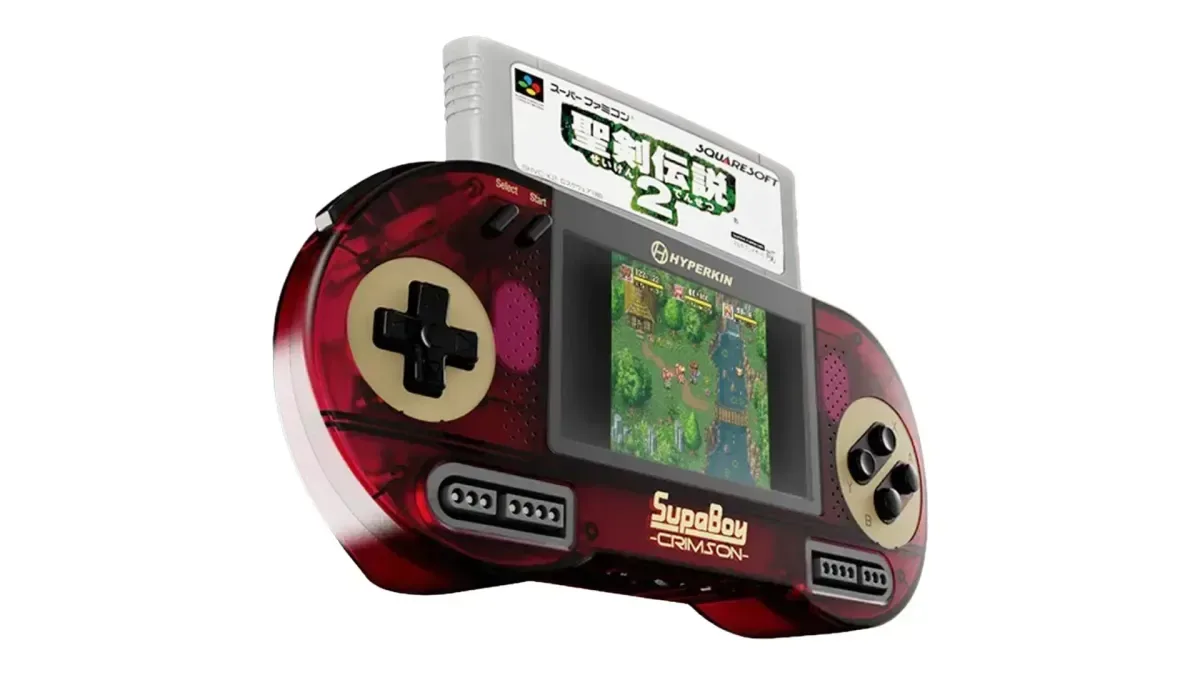
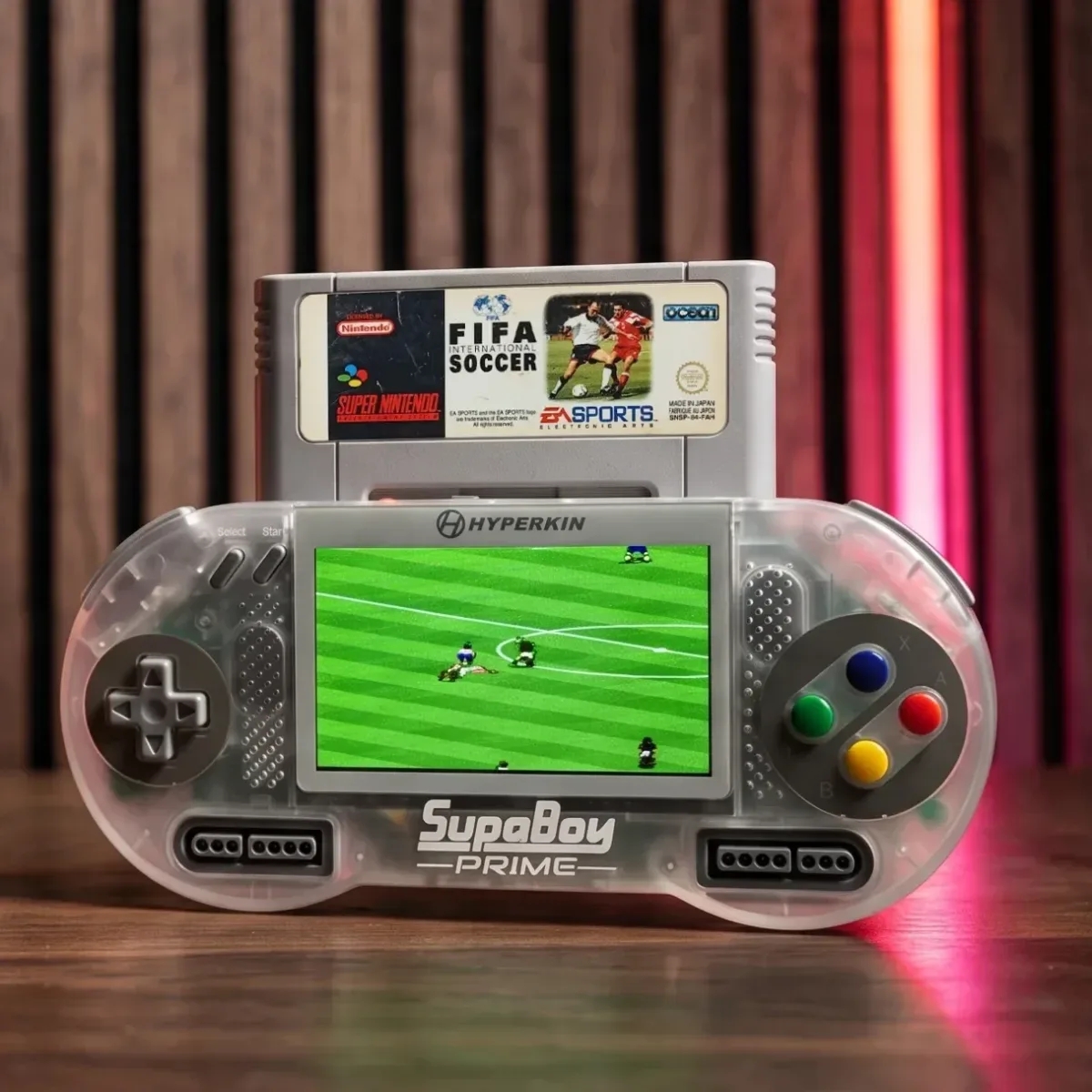
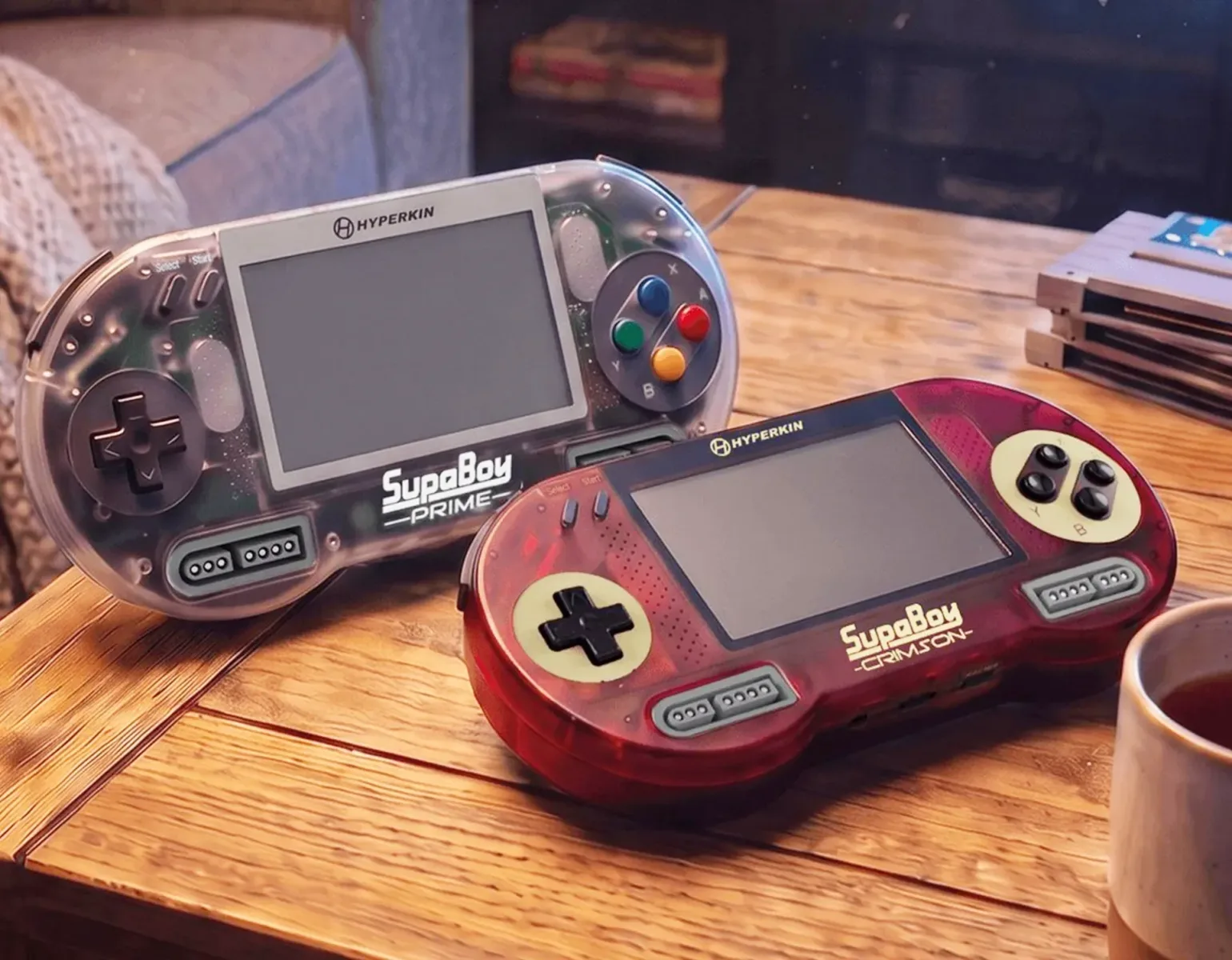
Hyperkin is giving its long-running cartridge-compatible handheld a new coat of paint. The Hyperkin SupaBoy S, a portable system designed to play original Super Nintendo and Super Famicom cartridges, is now available to pre-order in two newly announced finishes: Crimson and Prime.
The revised versions do not represent a new hardware generation. Hyperkin is keeping the familiar SupaBoy S design, screen, ports, battery capacity, and core compatibility intact. Instead, the update is focused on appearance, with transparent elements and colour details intended to evoke the visual identity of Nintendo's 16-bit hardware in different regions.
Both colourways are listed at $129.99. Shipping is expected to begin on October 28, 2026, though the wording leaves room for that schedule to change. For players who still maintain a shelf of original SNES or Super Famicom games, the new editions offer another chance to buy one of the more unusual portable options in the retro hardware market.
A Handheld Built Around Real Cartridges
The defining appeal of the SupaBoy line is straightforward: it is made for physical Super Nintendo and Super Famicom cartridges rather than downloaded ROM files. Users insert their games directly into the top of the unit and play through its built-in display, without needing a television.
For useful background on this topic, read Open-Box ROG Xbox Ally Deals Highlight How Difficult Affordable Handheld PCs Have Become.
That makes the device distinct from the many modern handhelds built around emulation libraries, digital storefronts, or preloaded software. The SupaBoy S is aimed at collectors and longtime players who want to make use of the cartridges they already own, whether that means revisiting a personal collection, checking the condition of an old game, or simply taking 16-bit favourites away from a home console setup.
Hyperkin's original SupaBoy arrived in 2011. The company later introduced the refined SupaBoy S model in 2016, adding quality-of-life changes and a larger 4.3-inch display. Nearly a decade after that revision, the newly announced Crimson and Prime models keep that established version of the hardware in circulation rather than replacing it with a redesigned successor.
For prospective buyers, that means the announcement should be read as a style update, not as an upgrade path for existing owners. There is no indication of altered internal components, new display technology, expanded connectivity, or a larger battery. Anyone who already owns a SupaBoy S should expect the same basic experience from the new versions.
Crimson and Prime Take Cues From 16-Bit History
While the hardware remains unchanged, the colour choices are deliberately rooted in Super Nintendo-era design. The Crimson and Prime editions use some transparency alongside understated references to Famicom and Super Nintendo colour schemes.
That approach fits a category where presentation can matter almost as much as raw specifications. Retro players often value hardware that complements the cartridges, controllers, and consoles they collect, and transparent plastic has long held a special place in gaming hardware culture. It can give a device a more playful appearance while also putting its internal construction on display.
The naming and styling also help distinguish these editions from earlier SupaBoy S units without changing the identity of the product. Hyperkin is still offering the recognizable wide-bodied handheld with its top-mounted cartridge slot and front-facing controller connections. The difference is that buyers now have two more visually expressive options if the standard look was not to their taste.
For collectors, limited or alternate colourways can be a meaningful consideration even when functionality is identical. For players who simply want a practical way to run cartridges, the choice will likely come down to personal preference and availability. Either way, the central proposition remains unchanged: this is a portable screen attached to a system that accepts the original games.
Compatibility Across SNES and Super Famicom Libraries
The SupaBoy S supports both NTSC and PAL Super Nintendo and Super Famicom cartridges, making it region-flexible for users with games from multiple territories. That broad compatibility is especially useful in the retro market, where collectors commonly mix North American, Japanese, and European releases based on language options, regional exclusives, artwork, price, or personal nostalgia.
Support for Super Famicom cartridges is significant because Japan's library contains numerous releases that never received a standard SNES version elsewhere. At the same time, access to PAL cartridges gives European collectors a way to use their existing games without restricting themselves to one regional ecosystem.
Hyperkin also states that the handheld works with flash cartridges such as EverDrive products, as well as accessories including the Game Genie and the Super Game Boy adapter. Flash cartridges may be useful for enthusiasts who legally back up games they own, homebrew developers testing software, or players managing a large collection in a more compact format. Meanwhile, Game Genie support can appeal to those who enjoy experimenting with classic cheat devices.
The Super Game Boy adapter is another notable inclusion. That accessory was originally built to allow compatible Game Boy cartridges to be played through a Super Nintendo. Its compatibility with the SupaBoy S gives users another potential way to explore Game Boy software through the handheld's SNES cartridge slot, subject to the behaviour and compatibility of individual games and accessories.
Portable Play, Television Output, and Controller Ports
Although portability is the obvious selling point, the SupaBoy S is not limited to handheld use. It includes an AV output, allowing owners to connect the system to a larger display at home. That includes older CRT televisions for players pursuing a period-appropriate setup, as well as compatible displays that still accept the connection.
This flexibility helps the system occupy an unusual middle ground. It can be a self-contained handheld for casual use, a convenient cartridge-testing device, or a compact substitute for a traditional console in a secondary room. Its value depends less on delivering a technically modern version of SNES play and more on providing several ways to access original media.
The device also has two front-mounted controller ports for original Super Nintendo controllers. That feature means local multiplayer is not confined to passing around a handheld or relying on a separate modern controller standard. Owners can connect their existing pads and play together when the SupaBoy S is connected to a television.
For games built around competitive or cooperative couch play, that option is important. The Super Nintendo catalogue includes countless titles designed for two players, and the presence of physical controller ports allows the handheld to retain some of the social functionality normally associated with the original console. It is a practical feature, even if the device's compact form factor remains its main attraction.
Screen Settings and What Has Not Changed
The SupaBoy S includes a display option that lets users switch between 4:3 and 16:9 aspect ratios. Holding the brightness button for three seconds toggles the setting. The 4:3 mode is the traditional display shape associated with the Super Nintendo's original output, while 16:9 provides a wider presentation for those who prefer it.
Because the new Crimson and Prime units retain the existing display and controls, this feature carries forward exactly as part of the familiar SupaBoy S experience. The same applies to its cartridge focus, AV connection, controller ports, regional support, and stated accessory compatibility.
There is an important distinction here for anyone considering a pre-order: these editions are not being presented as a response to the current wave of high-resolution FPGA systems, premium aftermarket screens, or boutique retro console recreations. Hyperkin has not announced a redesigned SupaBoy with newly specified performance features. The appeal is continuity, paired with two fresh appearances.
That may be welcome news for buyers who already know what the SupaBoy S offers and simply want a more distinctive shell. It also makes the purchasing decision relatively clear. Those looking for a physical-cartridge handheld with the established SupaBoy feature set can choose between the new colourways without worrying that one has a technical advantage over the other.
Pre-Orders Are Open Now
Pre-orders for the Hyperkin SupaBoy S in Crimson and Prime are open through Hyperkin's official storefront. Each version carries a price of $129.99, with shipping expected to start on October 28, 2026.
As always with retro hardware built around aging physical media, prospective owners should consider the condition and regional makeup of their cartridge collections before buying. The SupaBoy S is intended to make original games portable, and its region-free cartridge compatibility gives it broad appeal, but its usefulness will be greatest for players who want to actively use physical SNES and Super Famicom software rather than merely display it.
With Crimson and Prime, Hyperkin is not trying to reinvent its handheld. Instead, it is extending the life of a recognizable retro device with a pair of colour options that better celebrate the era of hardware it was created to play.
Community
Discussion
Start the conversation.
No comments have been posted yet.