

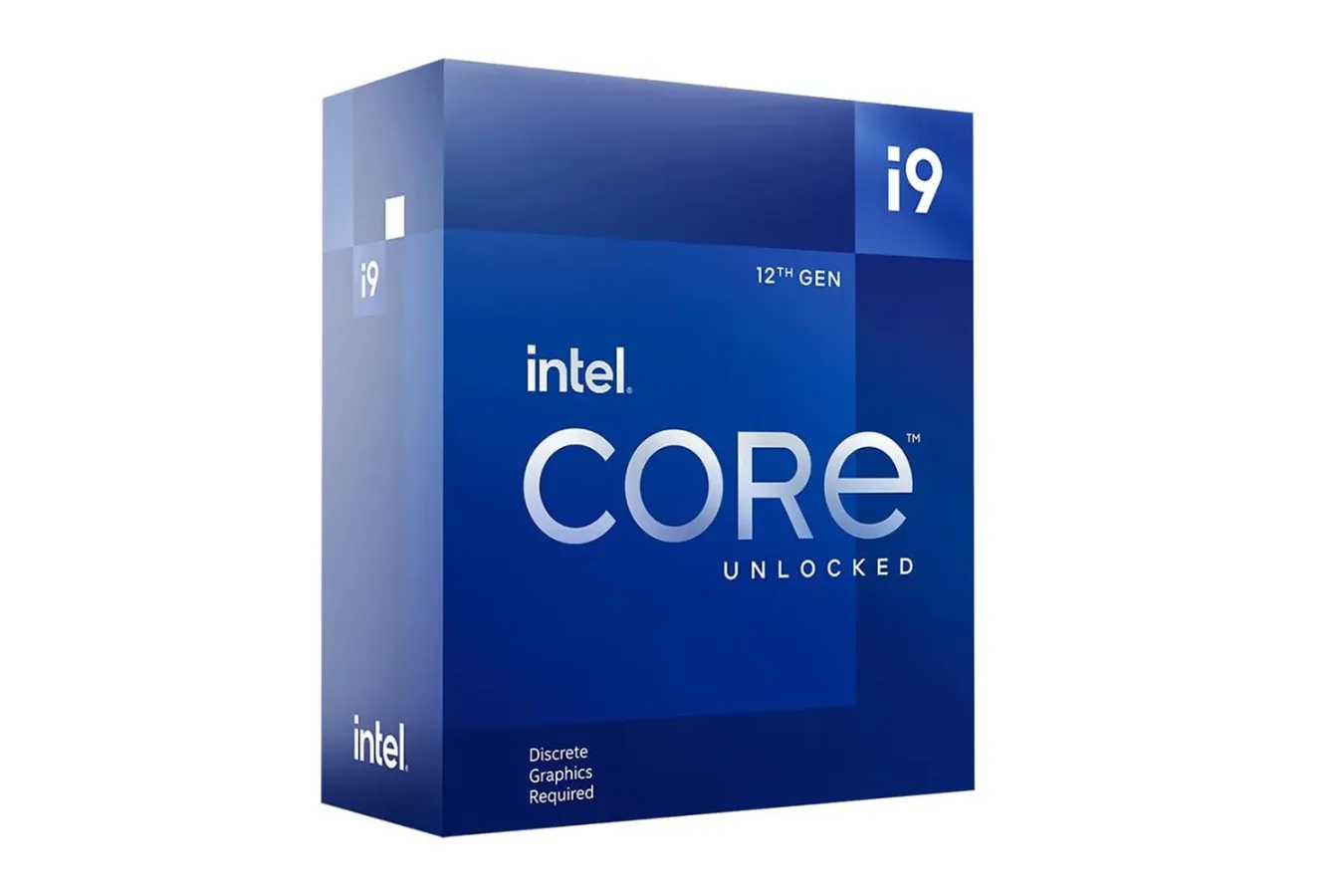
Cyber Monday PC hardware discounts can create an unusual opportunity: parts that were once premium flagship components can become the foundation of a powerful gaming build at a far more approachable price. Intel's Core i9-12900KF is the latest example, with the unlocked 12th-generation desktop processor listed at $246 during the sale period.
The Core i9-12900KF arrived in late 2021 as one of Intel's most ambitious answers to the growing importance of high core counts in desktop PCs. It is no longer the company's current flagship-class option, and the LGA1700 socket it uses has since been succeeded. But age does not erase its specifications, its gaming potential, or its usefulness to builders who are shopping within a defined budget.
For the right buyer, the appeal is straightforward. This is a 16-core chip with high boost clocks, an unlocked multiplier, and compatibility with Intel 600- and 700-series motherboard chipsets. At $246, it can make particular sense as an upgrade for someone already invested in the LGA1700 platform, or for a new builder who finds a suitably discounted compatible motherboard and intends to prioritize graphics performance elsewhere in the budget.
A Former High-End CPU at a Different Kind of Price
Intel initially positioned the Core i9-12900KF near the upper end of its Alder Lake desktop range. The processor's earlier peak price was cited at $333, while its later listed price was $246. Cyber Monday pricing language around the offer has described an additional 26% reduction, although the stated deal price is also $246. As with any limited-time retailer listing, prospective buyers should confirm the final displayed price before placing an order.
For useful background on this topic, read Titanfall 2's Unfinished Live-Service Future Helped Preserve What Made It Great.
Regardless of that pricing ambiguity, the larger point remains clear: the 12900KF is now being sold in a bracket that is considerably more accessible than the one it occupied at launch. PC components do not become incapable simply because a newer generation arrives. In many gaming systems, especially those paired with a capable dedicated graphics card, a previous-generation high-end CPU can still deliver the performance headroom needed for modern releases, esports titles, multitasking, and content creation workloads.
The value proposition is strongest when the processor is not viewed in isolation. A gaming PC is a collection of tradeoffs among the CPU, graphics card, motherboard, memory, storage, cooling, power supply, and display. Spending less on a processor can leave more room for a stronger GPU, faster storage, more memory, or a better monitor--upgrades that may have a more immediate impact depending on the games being played and the resolution targeted.
What the Core i9-12900KF Brings to a Gaming Build
The Core i9-12900KF uses Intel's hybrid core design, which was a major feature of the 12th-generation family. Its 16 physical cores are divided into two types:
- Eight Performance cores: These are designed for demanding foreground tasks and can boost up to 5.2GHz.
- Eight Efficient cores: These help process background activity and less heavily threaded workloads without placing all of that work on the Performance cores.
This split was designed to help a system stay responsive when multiple tasks are happening at once. For a gaming PC, that can mean playing a game while a browser is open, voice chat is running, background applications are active, or streaming and recording tools are doing their work. Modern PC use rarely involves launching one program and leaving everything else closed, so the additional cores can still be meaningful well beyond synthetic benchmark results.
The chip also includes 30MB of L3 cache. Cache capacity and design are only part of a processor's performance picture, but they can matter in workloads that benefit from quick access to frequently needed data. Competitive games and CPU-sensitive titles are often judged not only by average frame rates, but also by frame-time consistency. A smooth experience depends on avoiding disruptive dips as much as it does on producing a high headline number.
Because this is a K-series processor, it is unlocked for overclocking. Builders with a compatible Z-series motherboard and a sufficiently capable cooling solution can adjust settings beyond stock operation. That does not mean overclocking is necessary to make the CPU worthwhile; stock performance remains the baseline expectation for most users. Still, the unlocked multiplier provides an option for enthusiasts willing to spend time tuning their system and managing the extra thermal demands that can accompany higher settings.
The KF Suffix Is an Important Limitation
Before treating the Core i9-12900KF as a universal recommendation, there is one specification that needs to be understood: the "KF" name means this model does not include integrated graphics.
A discrete graphics card is required to produce video output. That makes this processor a natural fit for a gaming build, where a dedicated GPU is generally expected anyway, but it is less flexible than a chip with onboard graphics. Someone assembling a basic office PC, troubleshooting a graphics card issue, or planning to wait before buying a GPU should be especially careful. With the 12900KF, there is no fallback display solution built into the processor.
This also changes the budgeting conversation. The $246 CPU cost is not the full cost of a working PC. A compatible motherboard, memory, cooler, power supply, storage, case, operating system, and discrete graphics card are still required. Buyers should avoid allocating too much of their budget to the processor if it forces compromises on the GPU or other core components.
Who Should Consider This Deal?
The most obvious audience is the existing LGA1700 owner. Intel 600- and 700-series chipset motherboards use the appropriate socket, making the 12900KF a potentially clean upgrade for people currently running a lower-tier 12th-generation processor. BIOS support should always be checked for an individual motherboard, but the platform compatibility gives current owners a practical path to more cores and higher clocks without replacing every major component.
It can also suit a first-time builder who is deliberately pursuing value rather than the newest platform. Discounted motherboards from the 600 and 700 series may combine with this processor to create a capable system without paying current flagship prices. That approach is particularly reasonable for someone who expects to keep the same CPU and motherboard for years rather than routinely swapping processors between generations.
Potential use cases include:
- Gaming at high refresh rates with a suitable dedicated GPU.
- Streaming or recording gameplay while keeping other applications open.
- Editing video, rendering, compiling, and other multi-core productivity tasks.
- Upgrading an existing LGA1700 computer from a lower-end processor.
- Building a performance-focused PC around discounted previous-generation parts.
The Platform Question Matters for New Builders
The primary caveat is not the 12900KF's raw capability. It is platform longevity. LGA1700 has been succeeded by Intel's newer socket, so a buyer starting from zero is committing to a platform with a more limited future CPU upgrade path. A later processor swap may require a new motherboard and potentially a broader rebuild rather than a simple drop-in upgrade.
That does not automatically make the deal a poor decision. Platform longevity has value, but so does upfront affordability. A buyer who can obtain a processor and motherboard at a steep discount may prefer the immediate savings, especially if the resulting system already meets their target performance level. Not everyone needs an upgrade route every year or two.
Still, buyers who specifically want to retain the option of installing a newer processor several years from now may want to compare the total cost of a more current platform. AMD's Ryzen 7000 and Ryzen 9000 families on AM5 are one alternative for shoppers prioritizing a longer-looking CPU upgrade path. The right choice depends on local component pricing, preferred motherboard features, memory costs, and whether the system is being built for gaming alone or for a mix of demanding tasks.
Cooling and Motherboard Planning Should Not Be Skipped
A former flagship processor deserves appropriate supporting hardware. The Core i9-12900KF does not include integrated graphics, and builders should also plan for cooling rather than assuming a basic solution will be ideal. Those who intend to overclock will need to pay even closer attention to thermal capacity, case airflow, and motherboard power delivery.
For a straightforward gaming machine, the important goal is stability rather than chasing every possible MHz. A quality cooler, sensible power limits, updated motherboard firmware, and a properly sized power supply can be more valuable than aggressive tuning. Builders should also make sure their chosen motherboard offers the storage, networking, expansion, and memory support they actually need.
The Cyber Monday listing turns the Core i9-12900KF into an interesting reminder that the best PC part is not always the newest one. At the cited $246 price, Intel's 16-core Alder Lake processor has a clear audience: LGA1700 users seeking a major step up, and builders who can accept an older platform in exchange for strong specifications at a lower cost. It is not the ideal route for every new system, particularly for those focused on future upgrade flexibility. But for a gaming-focused build with a dedicated GPU already in the plan, it remains a substantial CPU with plenty left to offer.
Community
Discussion
Start the conversation.
No comments have been posted yet.