

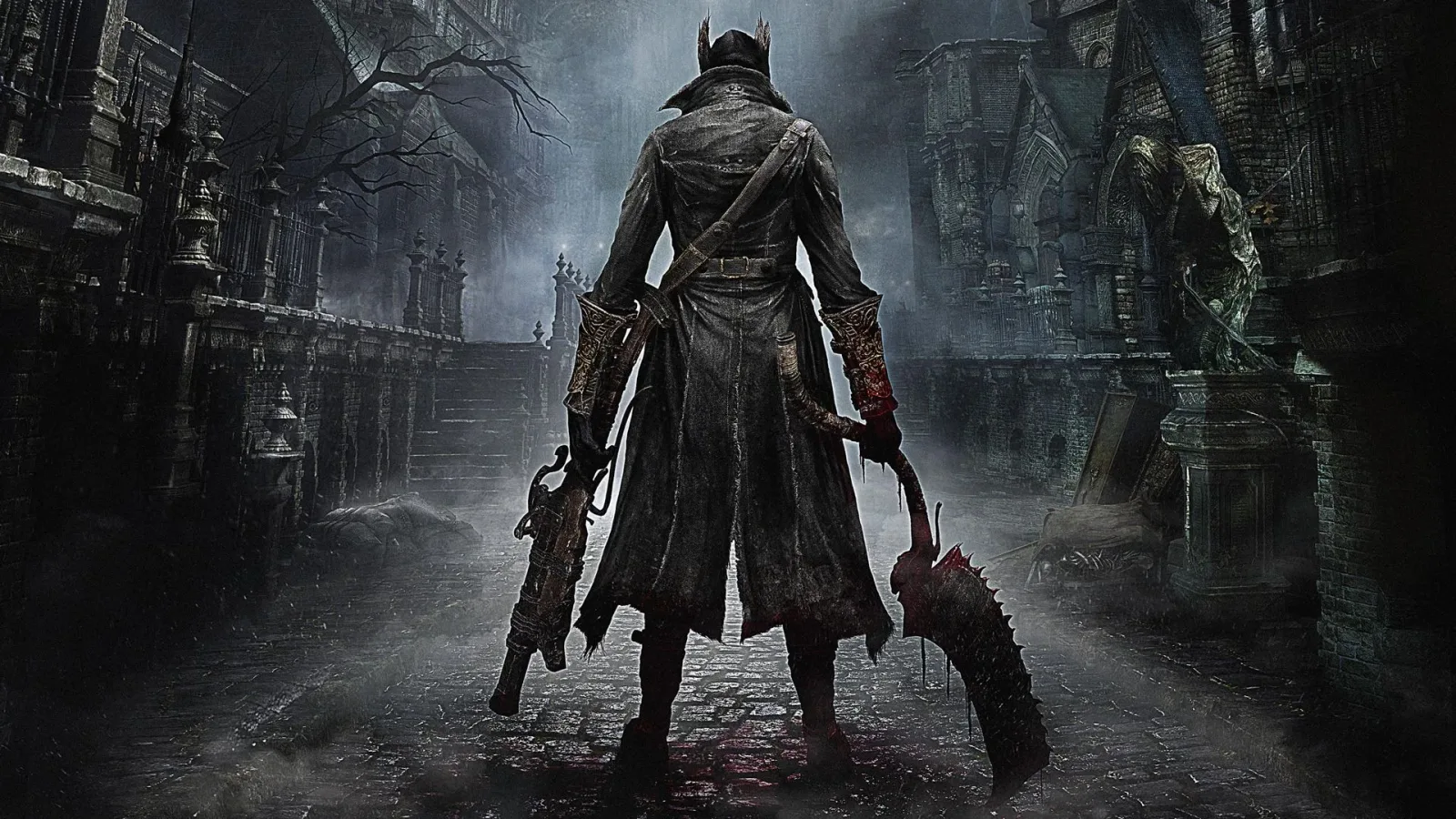
The announced Bloodborne movie remains at a very early stage, but producer Seán McLoughlin--better known to many players as Jacksepticeye--has offered a candid response to the skepticism surrounding his role. The creator says he understands why fans have reacted cautiously to the news, particularly because Bloodborne holds such a revered place for its audience and because the project has been presented with a prominent online personality attached.
McLoughlin discussed the reaction during an appearance on 100 Questions with Tom Simons, where he was asked about the animated adaptation. He estimated that roughly 80% of the responses he saw were critical of his involvement. Rather than dismissing that response, however, he said he could see the issue from the fans' perspective.
Bloodborne is not merely another game in a long-running franchise with decades of adaptations behind it. FromSoftware's Gothic action RPG has built an unusually devoted following through its unsettling setting, cryptic lore, intricate creature design, difficult combat, and a tone that is difficult to reduce to a conventional fantasy adventure. Any attempt to expand that world comes with substantial expectations, and McLoughlin appears aware that a producer's personal enthusiasm is not automatically enough to reassure people.
Why fans are wary of the Bloodborne adaptation
The animated Bloodborne feature was announced at CinemaCon in April, immediately becoming one of the more unexpected projects in the continuing wave of game-to-screen adaptations. McLoughlin is a well-known Bloodborne fan, but his presence as producer prompted questions about why a YouTuber would be placed in a position of creative influence over an acclaimed PlayStation game.
For useful background on this topic, read Slayers 2 Codes for September 2026: Wen, Spins, Ore and Skill Tree Reset.
McLoughlin said he would likely have a similar reaction if someone unfamiliar-looking to a fandom became connected to his own favorite intellectual property. In his view, fans are right to pause when a beloved universe changes hands or moves into a new medium. That reaction is particularly understandable here because Bloodborne is still closely associated with its original game experience, and players have long hoped for more direct returns to that game in the form of a sequel or a 60fps remaster.
Those hopes have continued without an announced answer from FromSoftware. As a result, an animated feature may be viewed by some fans not simply as a new creative opportunity, but as a reminder that the future of the game itself remains unclear. McLoughlin has previously said he feels enormous pressure to get the adaptation right, recognizing that many players care deeply about what happens to the property.
That tension makes the current conversation more complicated than the usual debate over casting or visual style. Fans are not yet weighing a trailer, a cast list, or completed animation. They are responding to the basic structure of the project and to the people publicly associated with it. With no director, writer, or animation studio named so far, McLoughlin's role naturally occupies much of the available discussion.
McLoughlin says the film will not try to replace the game
One of McLoughlin's central reassurances is that the film is not intended to retell Bloodborne's story beat for beat, challenge the game's status, or somehow improve upon it. Instead, he says the goal is to respect the setting and create a strong story within the universe that already exists.
That distinction could prove essential. Bloodborne's game narrative is inseparable from player discovery: its mysteries emerge through exploration, environmental storytelling, item descriptions, boss encounters, and repeated failure. A film cannot duplicate that interaction. Trying to recreate every major moment, enemy, and revelation in a different format could risk producing a checklist rather than a story designed for animation.
A separate tale set within the world could offer more room to preserve the atmosphere without forcing the original player character's path into a fixed cinematic interpretation. It could focus on another hunter, a different corner of Yharnam, or events that complement the game's wider mythology. None of those specifics have been confirmed, and McLoughlin did not reveal story details, but his description suggests that the team is at least considering the adaptation as an expansion of the setting rather than a replacement for the original work.
There are obvious creative challenges in that approach. Bloodborne's lore thrives on uncertainty, and its most memorable ideas often become more powerful because they are only partially explained. A movie will need to find a balance between giving viewers enough emotional and narrative clarity to follow events while retaining the dread, ambiguity, and gradual descent that define the game's identity. Animation may provide a useful format for the project, especially if the eventual studio can capture the exaggerated Gothic architecture, body horror, and nightmarish transformations that would be difficult to realize cleanly in another medium.
A producer role built around creative vetting
McLoughlin has also described his role in practical terms. He says he is involved in evaluating creative ideas, rejecting choices that do not feel appropriate for Bloodborne, and helping decide who is brought onto the project. He characterized himself as a kind of "vibe-checker," someone there to identify whether an idea matches the spirit of the game.
He further said that people on development calls listen to his input closely and that he has a say in hiring decisions and the vetting process. His concern, as he explained it, is that the production should not bring in people with no understanding of what Bloodborne is. That does not mean that every future collaborator must be a lifelong expert, but it establishes an expectation that the creative team should engage with the material seriously rather than treating the name as a generic dark-fantasy label.
For fans, that claim will likely be met with both encouragement and continued caution. A producer who knows the game and is invested in its tone can be a valuable advocate in a larger production process. At the same time, the quality of an adaptation will ultimately depend on the filmmakers, artists, writers, and performers who eventually shape the final feature. McLoughlin's public commitment gives fans a statement of intent, but the eventual hiring announcements will offer a clearer indication of how that intent is being put into practice.
The absence of named talent is therefore not just a missing piece of trivia. It is the next major test for the film's credibility. A writer must decide how to make Bloodborne's fragmented lore work as a feature-length narrative. A director will need a clear vision for horror, action, pacing, and the material's distinctive religious and cosmic imagery. An animation studio will be tasked with translating a world known for dense visual detail without sanding down its strangeness.
Bloodborne joins a growing slate of FromSoftware screen projects
The Bloodborne film is one of two currently known FromSoftware game adaptations heading to cinemas. An Elden Ring movie directed by Alex Garland is further along, having wrapped filming in July and moved into post-production. Bloodborne, by comparison, is still at the foundational stage of assembling its creative team and determining the precise shape of its animated story.
The two projects underline the growing appetite for adaptations built around games that were once considered especially difficult to translate. FromSoftware titles are celebrated for worlds that invite interpretation rather than delivering straightforward exposition. That quality has helped foster enduring communities, but it also creates a high bar for filmmakers. The challenge is not simply reproducing costumes, weapons, or monsters. It is communicating why those elements feel ominous, mysterious, and emotionally resonant in the first place.
Recent video game films have shown that audiences will respond to adaptations that understand the appeal of their source material while still functioning as movies. But that success has also made viewers more alert to projects that appear to chase recognition without a coherent creative reason to exist. Bloodborne's supporters will be watching for signs that its adaptation is being developed with a specific artistic perspective rather than relying solely on the game's name.
No release date or key creative appointments yet
For now, the Bloodborne movie has no release date, and there is no announced director, writer, animation studio, or cast. That leaves a long road before audiences can judge whether McLoughlin's confidence and his stated commitment to the property translate into a finished feature.
His comments do not erase the concerns that followed the announcement, nor are they likely intended to. Instead, they amount to an acknowledgment that fans' doubt is reasonable and that trust has to be earned through decisions made during development. For a project based on one of modern gaming's most intensely protected worlds, that may be the only useful starting point.
Whether the final animated film can honor Bloodborne's universe without diluting its mystery remains an open question. The next meaningful answers will come when the production reveals who is creating it, what story it intends to tell, and how it plans to bring Yharnam's nightmare to the screen.
Community
Discussion
Start the conversation.
No comments have been posted yet.