

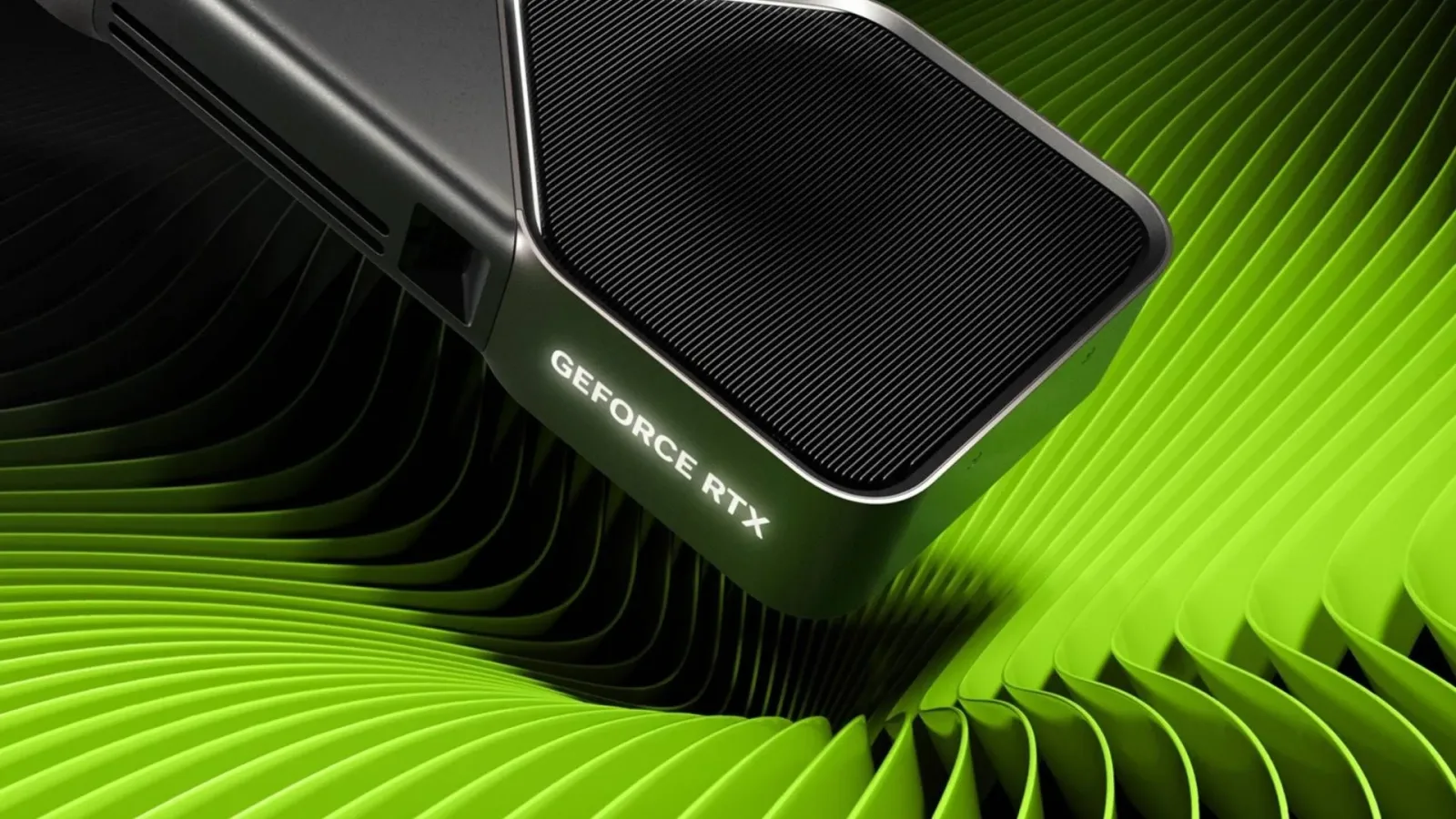
Nvidia's next major gaming graphics-card generation may be much further away than PC players expected. A new rumor from well-known hardware leaker kopite7kimi suggests that the chips expected to underpin a possible GeForce RTX 60-series family could now be targeted for 2028 rather than 2027. Nvidia has not announced an RTX 60-series, confirmed a launch period, or detailed its consumer gaming roadmap beyond currently available products, so this should be treated as speculation rather than a firm schedule.
Even with that important caveat, the claim has implications for anyone planning a gaming PC purchase, holding out for a generational reset in GPU pricing, or wondering whether the familiar cadence of new GeForce launches is still intact. If a 2028 launch proves accurate, it would leave a substantially larger gap between Nvidia's flagship gaming GPU architectures than PC enthusiasts have grown accustomed to over the last several generations.
The discussion centers on GR20x, a designation associated in rumor circles with Rubin-based graphics hardware. Rubin is Nvidia's next major architecture family on the company's broader technology roadmap, but the relationship between that architecture, particular chips, and eventual GeForce product names remains unconfirmed. A GPU architecture can also support several markets, including AI, enterprise computing, professional visualization, and data centers. That means an architecture's existence does not, by itself, establish when a consumer RTX graphics card will reach store shelves.
Embedded X/Twitter post
A Possible 2028 Launch Would Be a Major Departure
For many years, Nvidia's enthusiast gaming GPU launches have broadly followed a roughly two-year rhythm. That has never been an ironclad rule: launches can be staggered, lower-tier models routinely arrive long after flagships, and market conditions can alter plans. Still, the pattern has provided a useful expectation for PC builders deciding whether to buy now or wait for the next architecture.
For useful background on this topic, read Slayers 2 Codes for September 2026: Wen, Spins, Ore and Skill Tree Reset.
Nvidia's Blackwell GeForce cards began arriving in January 2025. That followed the Ada Lovelace-based RTX 40-series by roughly 27 months. Before that, the Ampere-based RTX 30-series appeared a little more than two years ahead of the RTX 40 family. Those intervals were not identical, but they were close enough to create a sense that a successor generation would eventually arrive within a predictable window.
A 2028 debut for a next-generation GeForce family would change that calculation dramatically. Rather than seeing a new architecture around two years after Blackwell's gaming debut, buyers could potentially be waiting around three years or more. The final figure would depend on which model establishes the new generation, since Nvidia traditionally launches products in waves. A top-end card may lead the lineup while more mainstream options follow months later.
The historical comparison often raised in discussions of a lengthy Nvidia gap reaches back to the transition from the GeForce 8000 era to the GeForce 400 series, a period shaped by very different technology and market circumstances. Comparing old brand names and launch dates is imperfect, especially because Nvidia has skipped labels, reworked product segmentation, and introduced refreshes across multiple generations. Nevertheless, a 2028 RTX 60-series window would stand out as an unusually long pause by modern GeForce standards.
Why the Timeline Remains Uncertain
The latest claim represents a shift from earlier chatter that had put the next gaming generation in 2027. The leaker has indicated an intention to limit further updates until more definite information becomes available, while also acknowledging that previous expectations did not hold up. That self-correction is useful context: supply-chain planning, chip development, manufacturing capacity, product positioning, and internal priorities can all change long before a company publicly unveils a graphics card.
There is no shortage of reasons to remain cautious. Nvidia has said nothing official about RTX 60-series branding, Rubin-powered GeForce cards, specifications, launch timing, prices, or model names. A rumor involving an internal chip label is not equivalent to a retail schedule. Even if the underlying information is directionally correct, a consumer gaming release could move forward or backward as plans develop.
PC hardware rumors are particularly vulnerable to confusion because companies build products on overlapping timelines. Engineering samples, packaging plans, board designs, memory configurations, and software work can emerge at different points in a project. Information about one part of a company's portfolio can also be mistaken for another. For now, the safest conclusion is simply that there is no reliable public date for Nvidia's post-RTX-50 gaming generation.
AI Demand May Be Changing the Consumer GPU Equation
The prospect of a longer wait arrives during a period when graphics processing has become central to far more than games. Nvidia's data-center business and AI-focused hardware demand have become enormous forces in the wider semiconductor market. High-performance GPUs are sought after for training and running AI models, scientific workloads, cloud infrastructure, professional rendering, and enterprise applications.
That does not mean Nvidia has abandoned PC gaming. GeForce remains one of the company's best-known brands, and the gaming market still matters for hardware, drivers, software features, and its broader ecosystem. But the company's priorities are now spread across markets whose demand profiles and margins can differ sharply from traditional consumer graphics cards.
Component availability also matters. Modern high-end GPUs rely on advanced manufacturing nodes, memory supplies, packaging capacity, and complex board-level components. When those resources are constrained, vendors must decide how to allocate them. Such decisions can affect volume, pricing, launch sequencing, and potentially the timing of future consumer hardware.
For players, the frustrating part is that a delayed successor does not automatically make existing graphics cards cheaper or easier to buy. If demand remains high and supplies are limited, current-generation products can continue to command substantial prices. The RTX 5070 has carried a suggested price of $549, while AMD's Radeon RX 9700 has been available around $579, but real-world availability and retailer pricing can move independently of those reference points.
Could RTX 50 Super Cards Fill the Gap?
A major factor in any extended-generation scenario would be refresh hardware. Nvidia has regularly used Super-branded cards to revise portions of a lineup between architectural launches, potentially offering altered specifications, more memory, or a different value proposition than the original versions. These launches are not guaranteed, but they are a familiar part of the company's recent GeForce strategy.
Previous rumors have suggested RTX 50 Super models could arrive in 2027, after earlier expectations placed them in 2026. Like the RTX 60-series chatter, those claims have not been confirmed. Still, the idea makes strategic sense if the next full architecture is farther out. A refresh could give Nvidia an opportunity to address competitive pressure, adjust configurations, or provide an updated option for buyers unwilling to wait until a later generation.
That possibility should not be mistaken for a recommendation to postpone every PC upgrade. Refresh cards can be appealing, but their eventual specifications, prices, and availability are unknown. They may also target only selected parts of the market. A player using an older GPU that is struggling with current games may gain more from a good-value card available today than from waiting for a product that has not been announced.
What a Longer Wait Means for PC Builders
A delayed next generation would make buying decisions more dependent on immediate needs. Historically, many enthusiasts have timed purchases around an anticipated architectural launch, hoping for better performance, stronger ray tracing, upgraded AI-assisted features, or price reductions among outgoing cards. If the next major launch is genuinely distant, that waiting strategy becomes less clear-cut.
- Upgrade for a specific problem: If a current card cannot deliver the resolution, frame rate, or feature support needed for the games being played, an upgrade can be justified without a new generation on the horizon.
- Watch actual street prices: Suggested prices are only part of the picture. Retail stock and regional pricing can be more important than a launch MSRP.
- Build a balanced system: A graphics-card purchase should be considered alongside CPU performance, power-supply capacity, cooling, memory, and monitor resolution.
- Avoid buying solely on rumors: Unannounced products may be delayed, changed, renamed, or cancelled. Confirmed hardware is always easier to evaluate than a speculative roadmap.
It could also create an opening for AMD. With a major Nvidia architecture potentially farther away, AMD would have an opportunity to compete more aggressively in areas where buyers feel underserved, especially if it can provide strong performance and availability at prices below premium GeForce offerings. No unannounced AMD product should be assumed, but competition is one of the few durable pressures capable of improving the graphics-card market for players.
The Bottom Line
The notion of GeForce RTX 60-series cards arriving in 2028 is a notable rumor, not a confirmed Nvidia plan. It is plausible that expanding AI and data-center demand, component constraints, and a changing business landscape could make the company's gaming GPU cycle less regular than it was in the past. Yet there is still too little official information to declare that a three-year-plus wait is inevitable.
For now, PC gamers should view the report as a signal that the old expectation of a major new GeForce generation every two years may no longer be dependable. Anyone considering an upgrade should prioritize current performance needs, realistic pricing, and available stock rather than making a purchase decision around a launch window that Nvidia itself has yet to reveal.
Community
Discussion
Start the conversation.
No comments have been posted yet.