

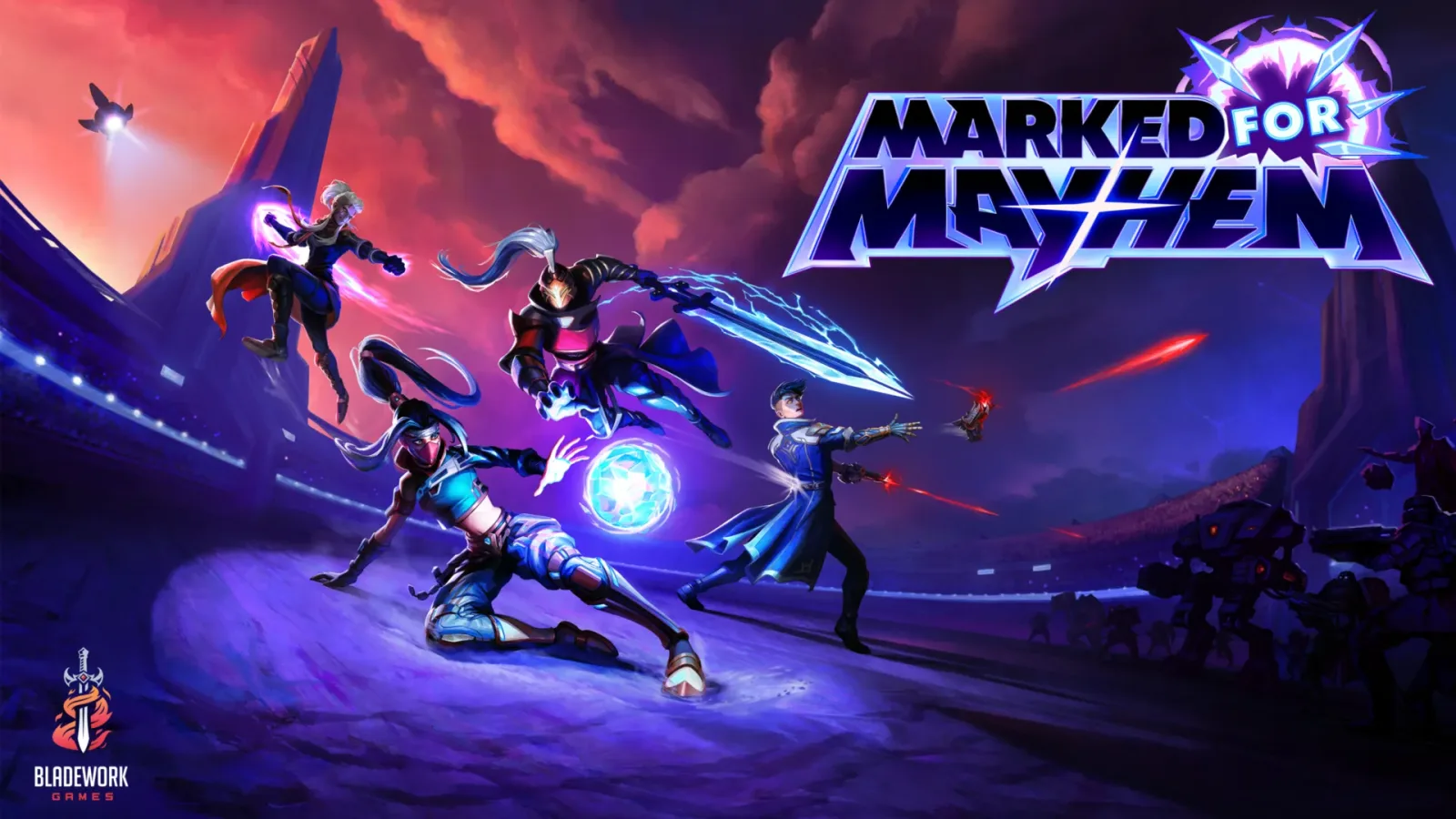
Bladework Games has released the first developer vlog for Marked For Mayhem, offering a clearer look at the unusual competitive structure behind its upcoming four-player action dungeon runner. The central idea is straightforward but intentionally volatile: players need one another to make it through a run, yet only one competitor can ultimately emerge as the winner.
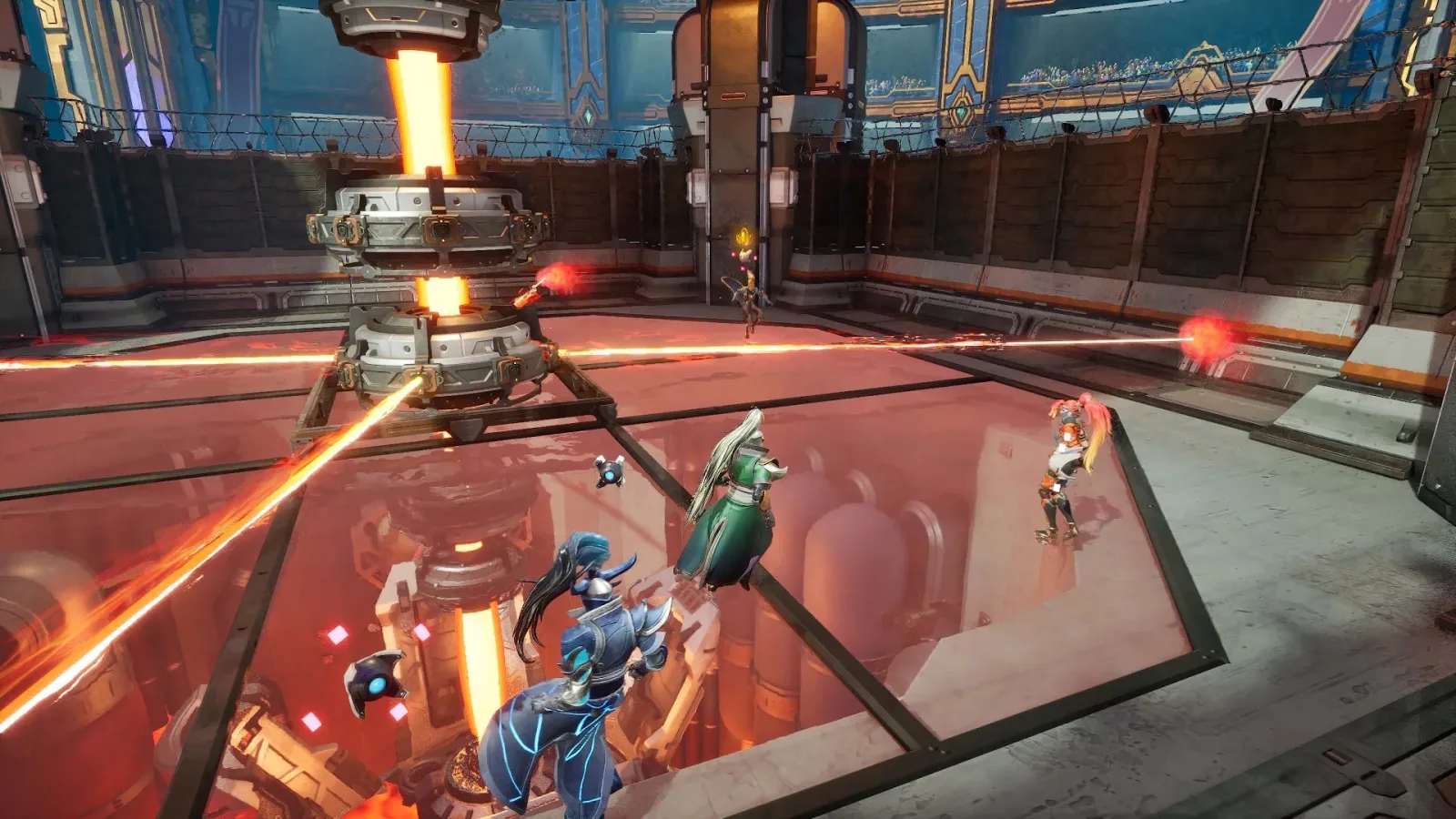
The game is built around a deliberate collision between cooperation and rivalry. Teams enter chaotic missions together, tackle combat encounters and traversal problems, and pursue the objectives required to keep progressing. At the same time, every participant has reason to protect their own standing. Points, medals, leaderboard movement, and player-versus-player interference all ensure that helping another player is not always the same thing as helping oneself.
That tension is at the heart of the experience Bladework Games is aiming to create. Rather than separating co-op activity from competitive modes, Marked For Mayhem puts both elements into the same run. A group may need to coordinate carefully against enemies or during a difficult environmental challenge, only for the balance to shift moments later when a player sees an opening to disrupt a rival's score.
A dungeon run where alliances are useful, not permanent
In conventional cooperative dungeon games, success is generally shared. Players gather a group, overcome threats, and receive the rewards together. Competitive multiplayer games, meanwhile, often make every opponent an obstacle from the start. Marked For Mayhem instead occupies the unstable middle ground between those models.
For useful background on this topic, read Smalland 2: Lost Realms Reveals First Gameplay, Targets 2027.
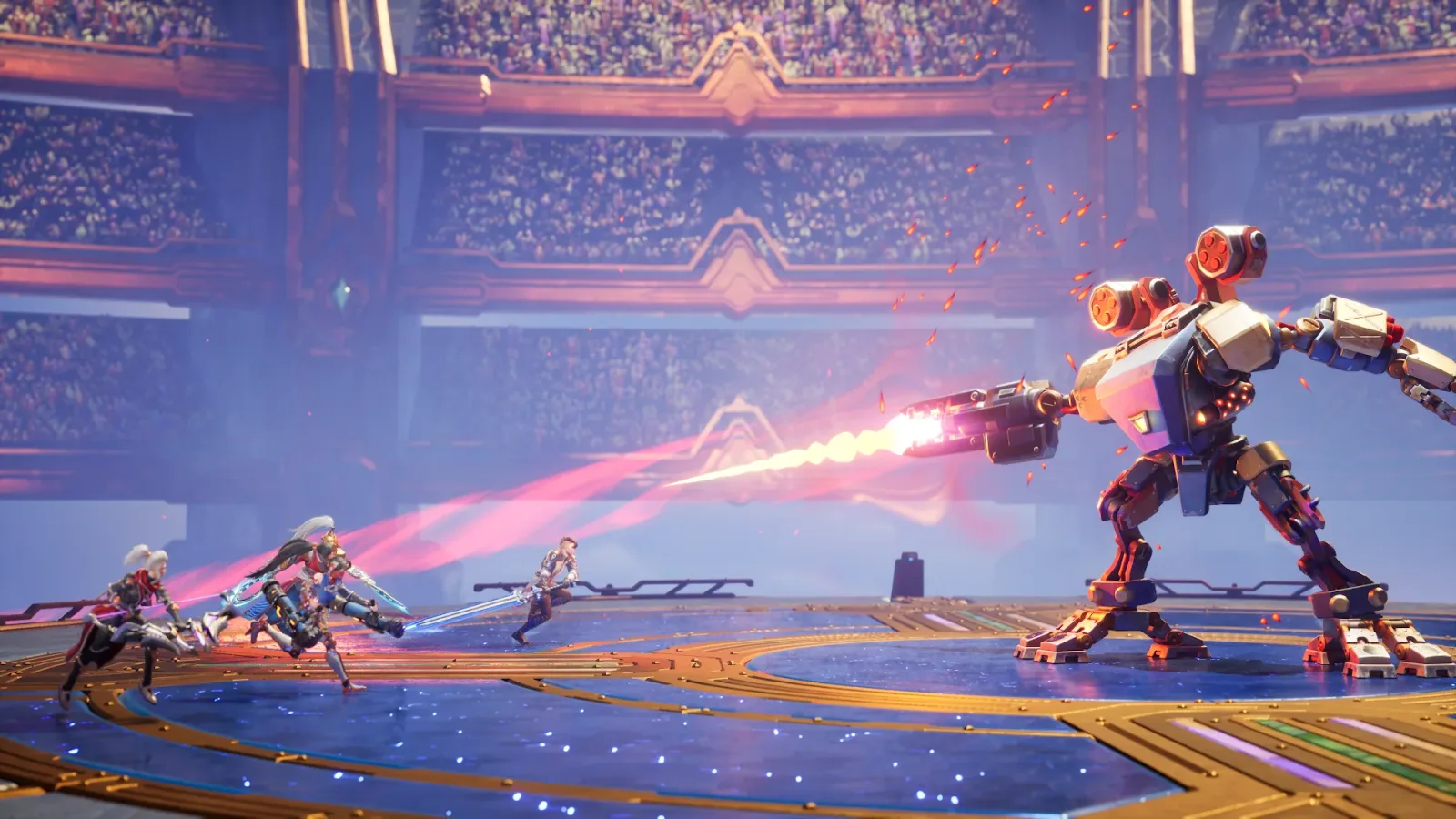
Its missions require Operators to work together to complete runs, which makes coordination a practical necessity rather than an optional social extra. Enemies, routes, and objectives can demand the attention of the full group. But this shared effort leads into a competitive format where a single victor is the intended outcome. The result is a match structure that can encourage short-term partnerships while leaving room for betrayal, opportunistic play, and last-minute reversals.
Bladework Games describes the intended result as emergent chaos. That description matters because the game is not merely presenting a team objective followed by a standard deathmatch. The competitive pressure is designed to be present throughout the action. Players can judge when to contribute to the group, when to focus on personal progress, and when an opponent's success has become too dangerous to ignore.
For a four-player game, that design could produce quickly changing relationships during each session. Two players might temporarily align around a difficult encounter, while another competitor attempts to improve their position elsewhere. A strong lead could make one Operator a natural target, and a player who appears to be falling behind may still have tools to alter the outcome before the run concludes.
For another perspective on this story, read Marked For Mayhem Dev Vlog Details Co-op Runs, PvP Disruptors and November Playtest.
Disruptors put pressure on the leaderboard
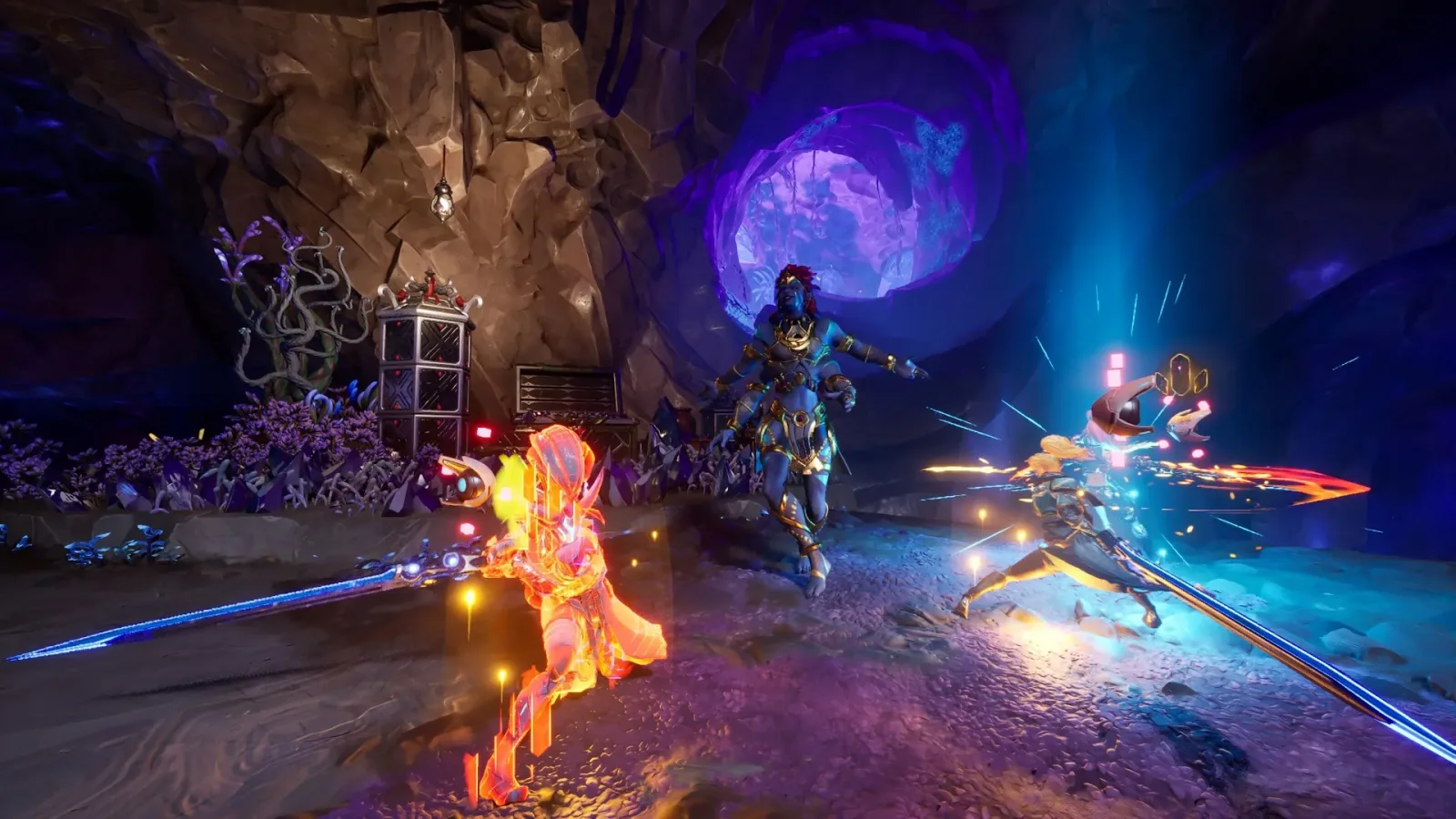
The most direct expression of that competitive side is the Disruptor system. Disruptors are tools players can use to unsettle rivals and change the state of the competition. One highlighted use is stealing points from another Operator, making the system more than a simple combat-focused nuisance. It can affect the standings themselves.
That creates a meaningful decision point. A player may be tempted to save a Disruptor for a critical moment, particularly if a rival has created a substantial lead. Using one at the right time could shift the leaderboard and force the targeted player to change plans. Conversely, committing a Disruptor too early might leave an Operator without an answer when the final stages of a match become especially contested.
The presence of score-stealing also gives players a reason to watch the entire field rather than concentrating only on their immediate encounters. In a game where medals and leaderboard progress matter, knowing who is leading can be as important as knowing where the next enemy is positioned. The competition is not solely about mechanical execution; awareness, timing, and the ability to recognize a rival's vulnerability appear set to play major roles.
Bladework Games has not detailed every Disruptor in the first vlog announcement, but the broader purpose is clear. These systems are intended to keep players from becoming too comfortable, to give trailing competitors ways to influence a run, and to create memorable moments when a seemingly secure position suddenly becomes uncertain.
Combat builds can change during a run
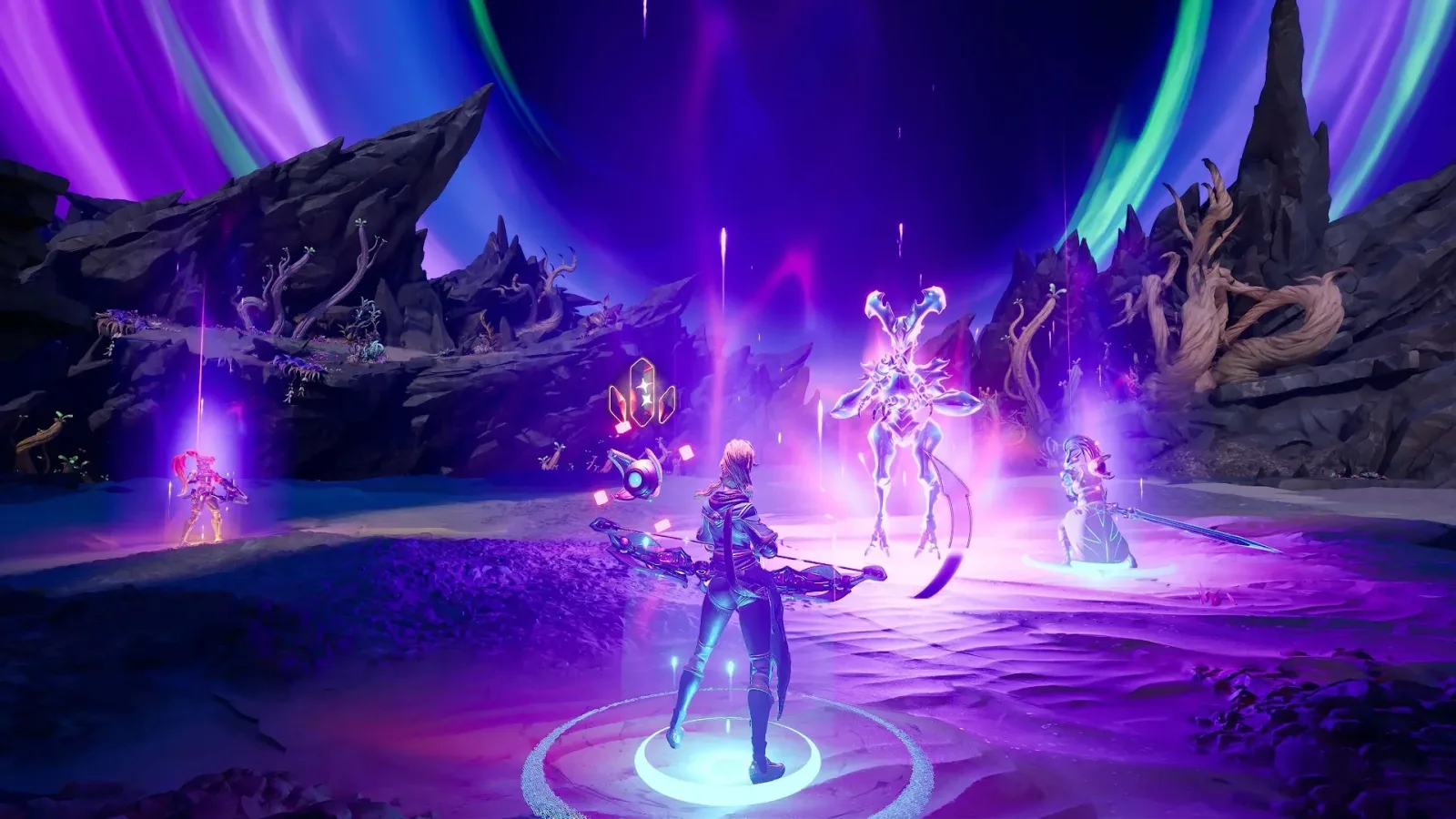
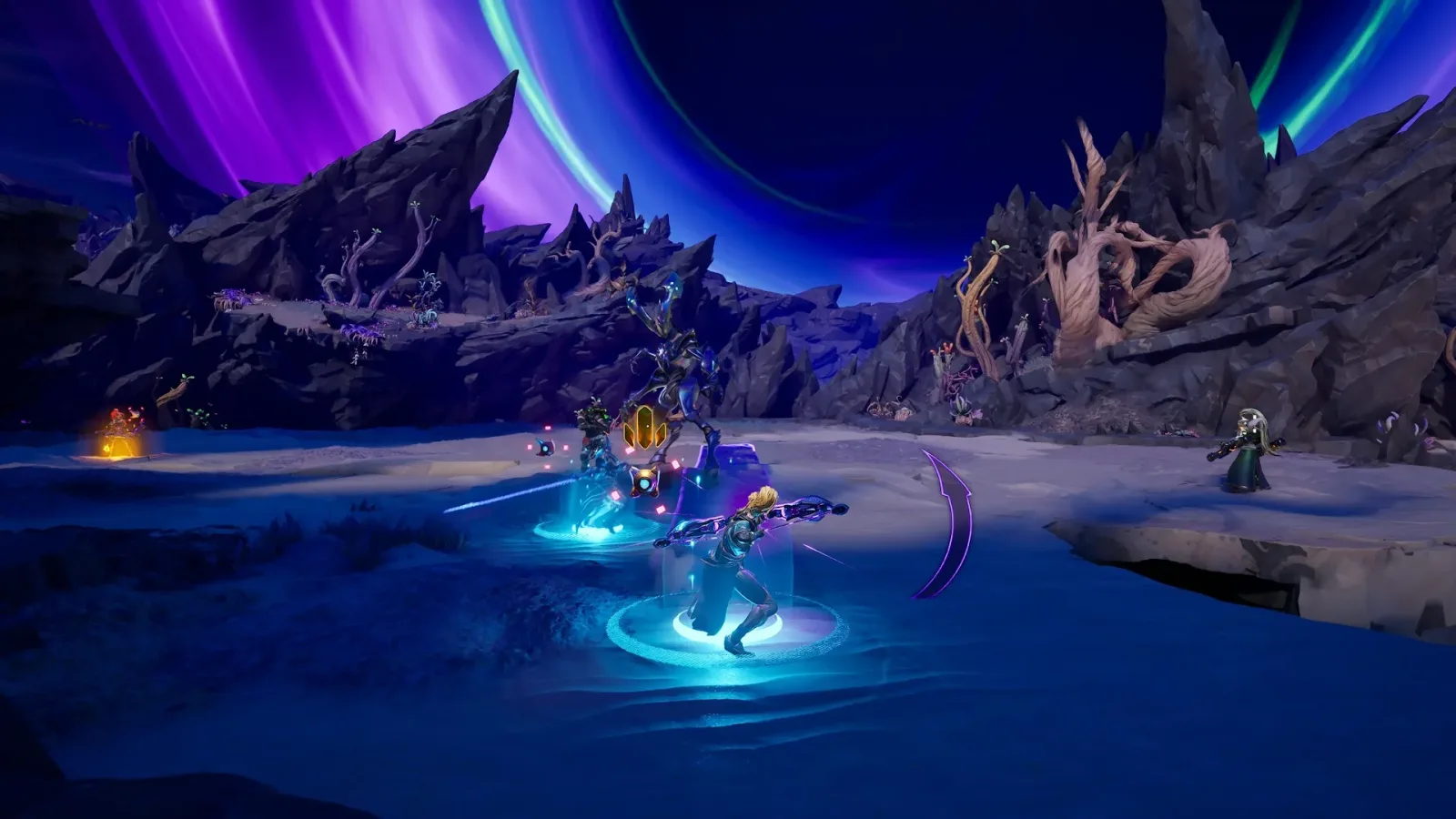
Alongside the competitive mechanics, Marked For Mayhem is positioning its combat around flexible build-making. Players will be able to shape their approach during a run through weapons, abilities, and modifiers. This suggests that an Operator's preferred style may develop in response to the choices and opportunities that appear rather than being completely decided before the match begins.
Build flexibility is particularly relevant in a game with both cooperative and adversarial demands. A setup that excels at clearing enemies may be valuable when the group needs to survive a difficult sequence. Another collection of abilities or modifiers could prove more useful for mobility, disruption, scoring opportunities, or handling a particular path through a level. The need to react to a changing match may make build decisions carry consequences beyond raw damage.
It also supports replayability. If players can find different combinations of weapons, abilities, and modifiers from run to run, the competitive metagame may remain fluid as participants explore how their choices fit the game's varied challenges. A player who succeeds with one approach may become a clear threat to opponents, prompting rivals to adjust their own tactics or use Disruptors at moments where that build is weakest.
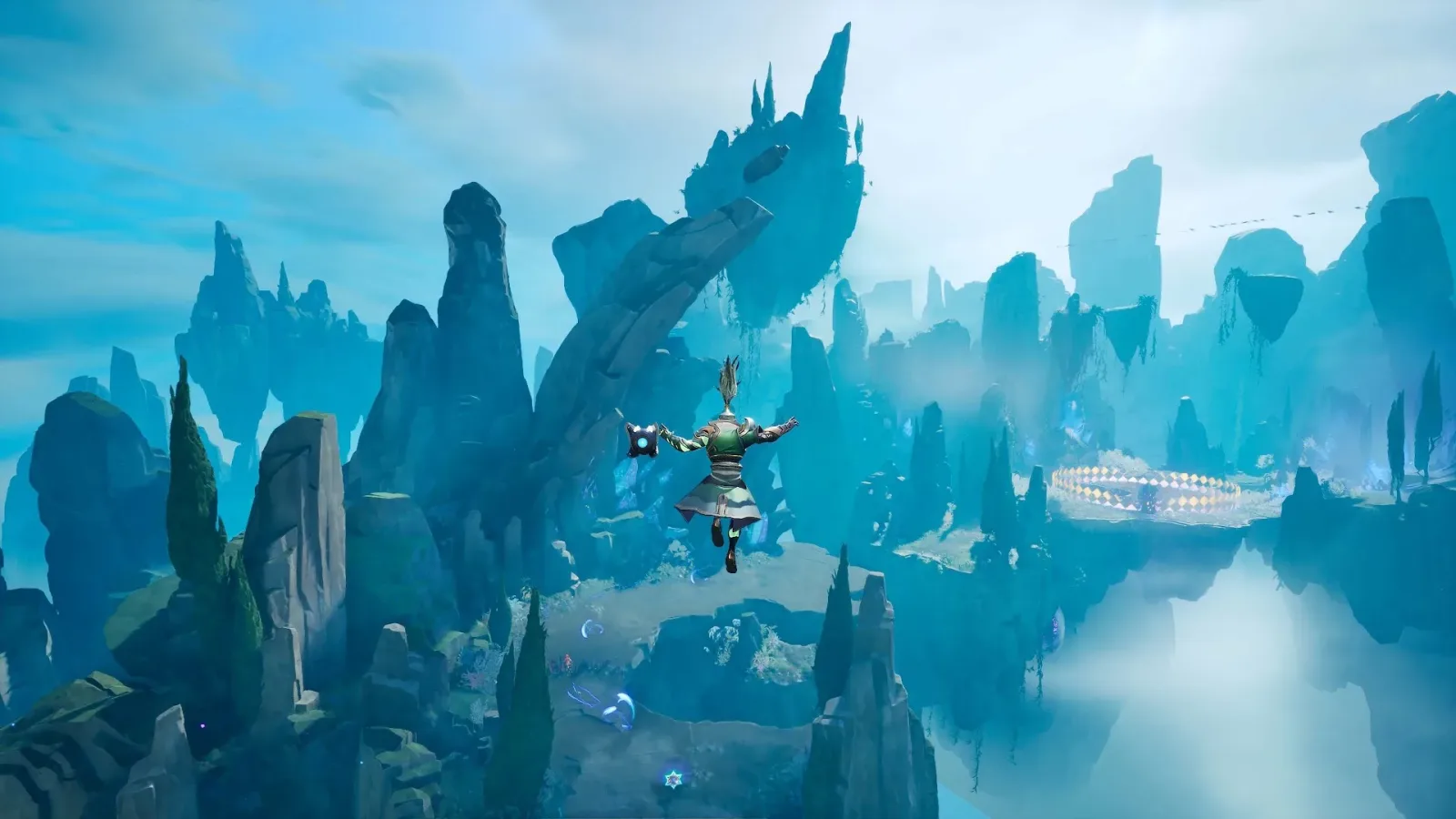
The announcement does not lock the game to a single route through its challenges, either. Multiple paths to victory are part of the design, with traversal challenges and minigames joining combat as important pieces of the overall match. This broader activity mix should help distinguish individual runs: a strong fighter may not automatically dominate every situation if another player excels at movement challenges, understands an alternate route, or finds a way to gain an advantage through a minigame.
An interdimensional tournament framework
The game frames its competitive action as an interdimensional combat tournament. Rounds and chaotic challenges award medals, which in turn feed into leaderboard progression. This tournament structure gives a clear context to the mix of activities: combat is important, but it is one part of a larger contest designed around accumulating the results needed to finish above the other Operators.
Medals offer a useful way to make varied objectives feel connected. Whether players are fighting, traversing an environment, dealing with a minigame, or pursuing another challenge, the rewards can still contribute to the same competitive picture. The leaderboard then becomes the shared reference point for the group, showing not only who has performed well but also who may be worth targeting with a well-timed Disruptor.
The focus on rounds also implies a rhythm of rising pressure. Each new challenge can give players a chance to recover from an earlier mistake or extend an existing advantage. Since only one player is intended to win, maintaining that advantage may be every bit as important as acquiring it. A successful Operator will need to deal with the game's enemies and environments while anticipating the actions of three other people who each have a reason to take the lead away.
Online matches, friends, and a public test
Marked For Mayhem is planned as an online multiplayer experience with matchmaking and friend-based competition. That combination should accommodate groups who want to build rivalries over repeated sessions as well as players looking to enter matches through the online queue.
For friends, the co-op-meets-competition premise could be especially well suited to rematches. A close finish or an effective point theft can create the sort of story that encourages another run immediately afterward. For matchmaking players, the same systems could make each new team composition unpredictable, as participants learn how unfamiliar rivals approach objectives, builds, routes, and Disruptors.
The first public playtest is scheduled for November 6 through November 8. It will be the first opportunity for players to try the game's competitive dungeon-running structure directly and assess how its cooperative requirements hold up alongside its PvP systems. Public tests are also an important step for an online game built around chaotic four-player interactions, since player behavior in real matches can reveal which mechanics create exciting reversals and which need further refinement.
Bladework Games has stated that launch will be the beginning rather than the endpoint for the multiplayer experience. The developer plans to expand the game after release with additional enemies, biomes, weapons, Disruptors, and more. No launch date was included in the announcement, so the November playtest currently stands as the next confirmed chance to engage with the project.
What to expect next
The first dev vlog establishes Marked For Mayhem as a game where the question is not simply whether a four-player group can survive a dungeon run. The more interesting question is who can turn that shared survival into a personal victory. Combat, improvisational builds, route choices, minigames, medal rewards, and leaderboard manipulation are all being assembled around that goal.
Its biggest differentiator may be the way it treats cooperation as essential but incomplete. Helping the group can be the correct move because everyone needs the run to continue. Yet it can also help an opponent gather the momentum required to win. Players will need to determine when teamwork is the safest route, when individual ambition should take priority, and when a Disruptor can turn a rival's moment of success into an opening.
Players interested in following the game can wishlist Marked For Mayhem on Steam and the Epic Games Store ahead of the November 6-8 public playtest. As development continues, the planned additions of new locations, enemies, weapons, and competitive tools suggest that the game intends to keep evolving its particular brand of multiplayer disorder.
Community
Discussion
Start the conversation.
No comments have been posted yet.