

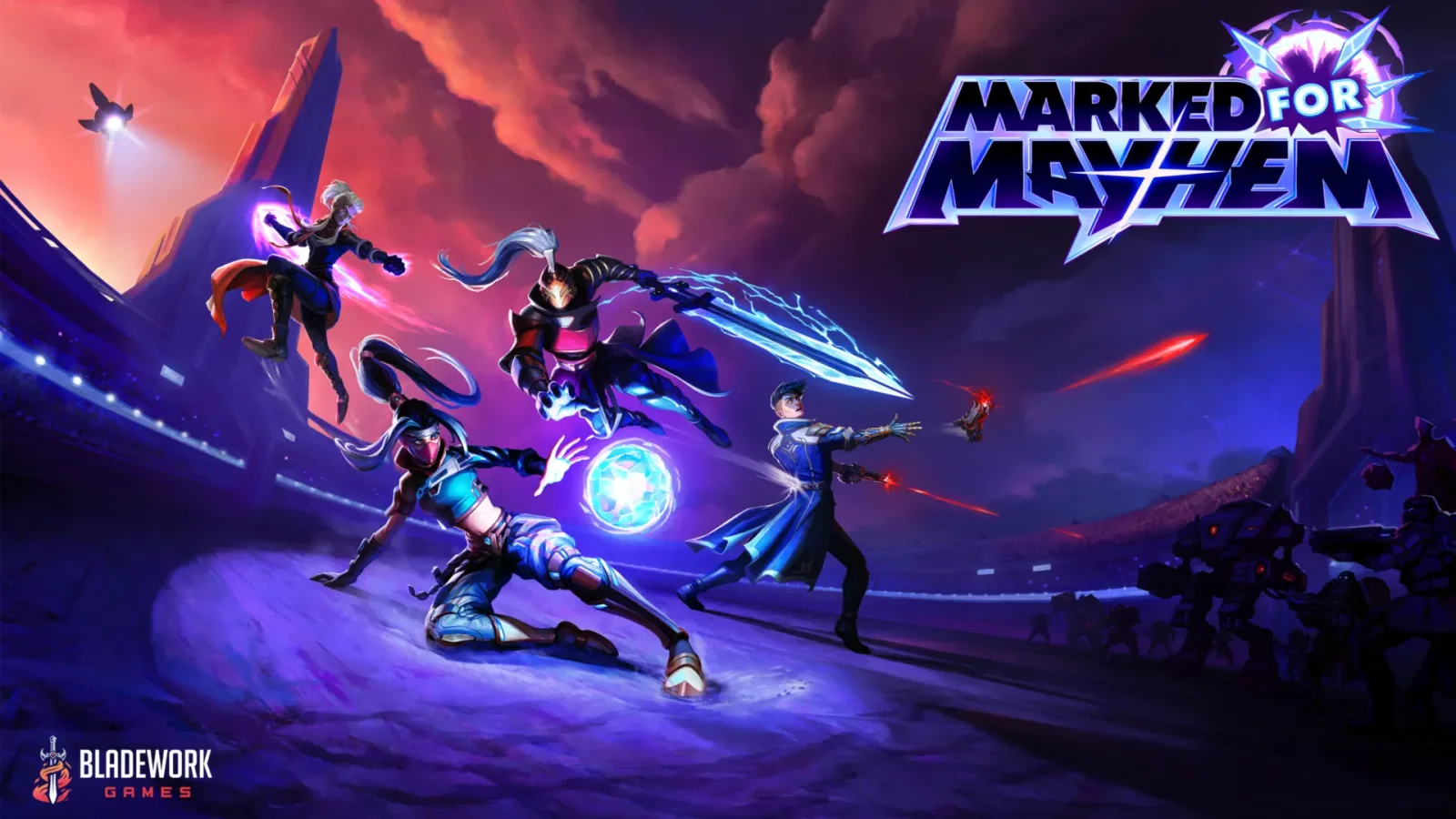
Bladework Games has unveiled Marked for Mayhem, its debut game, with a reveal during the PC Gaming Show Tokyo Direct. The newly announced title is a multiplayer dungeon runner that puts competition at the center of every expedition: players enter shattered dimensions as rival Operators, fight through enemies and bosses, collect medals, and ultimately attempt to claim the top position on the leaderboard.
Rather than presenting a co-operative party pushing toward a shared victory, Marked for Mayhem is designed around four players contesting the same run. Operators will need to deal with the dangers of each dungeon while also accounting for the people alongside them. The stated goal is not simply surviving a route or defeating a final boss. Victory belongs to the single Operator able to finish on top, making score, medals, combat performance and interference with rivals fundamental parts of the experience.
The announcement establishes an ambitious competitive framework for a game that combines fast dungeon action with flexible character-building decisions. Players will be able to use recognizable weapon types, acquire new abilities during a match, apply modifiers as circumstances change, and employ special Disruptor powers intended to unsettle competing Operators. Bladework Games also says the project will continue to evolve through live development, with additional enemies, biomes, weapons and Disruptors planned after launch.
A dungeon run where every Operator is a rival
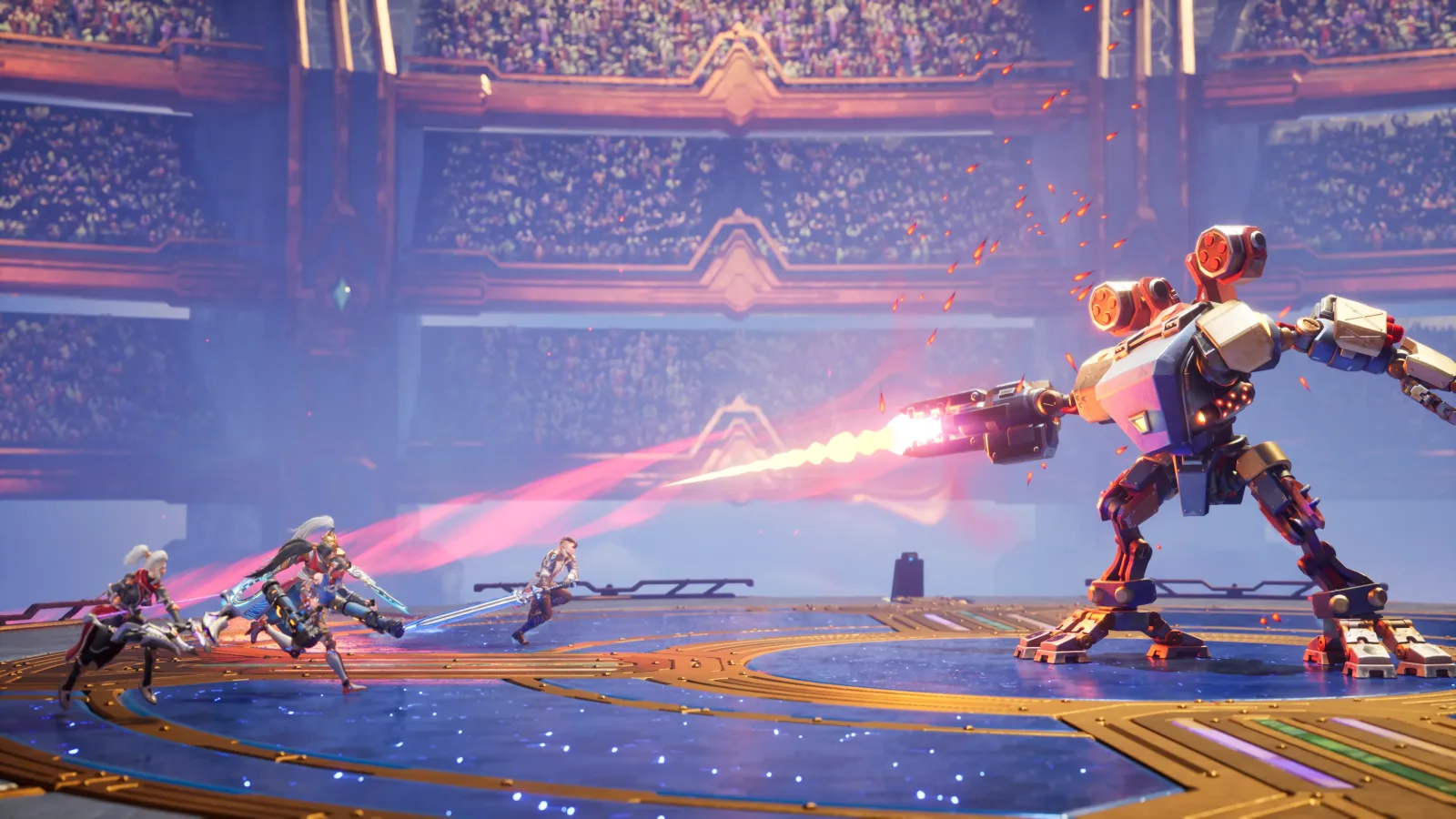
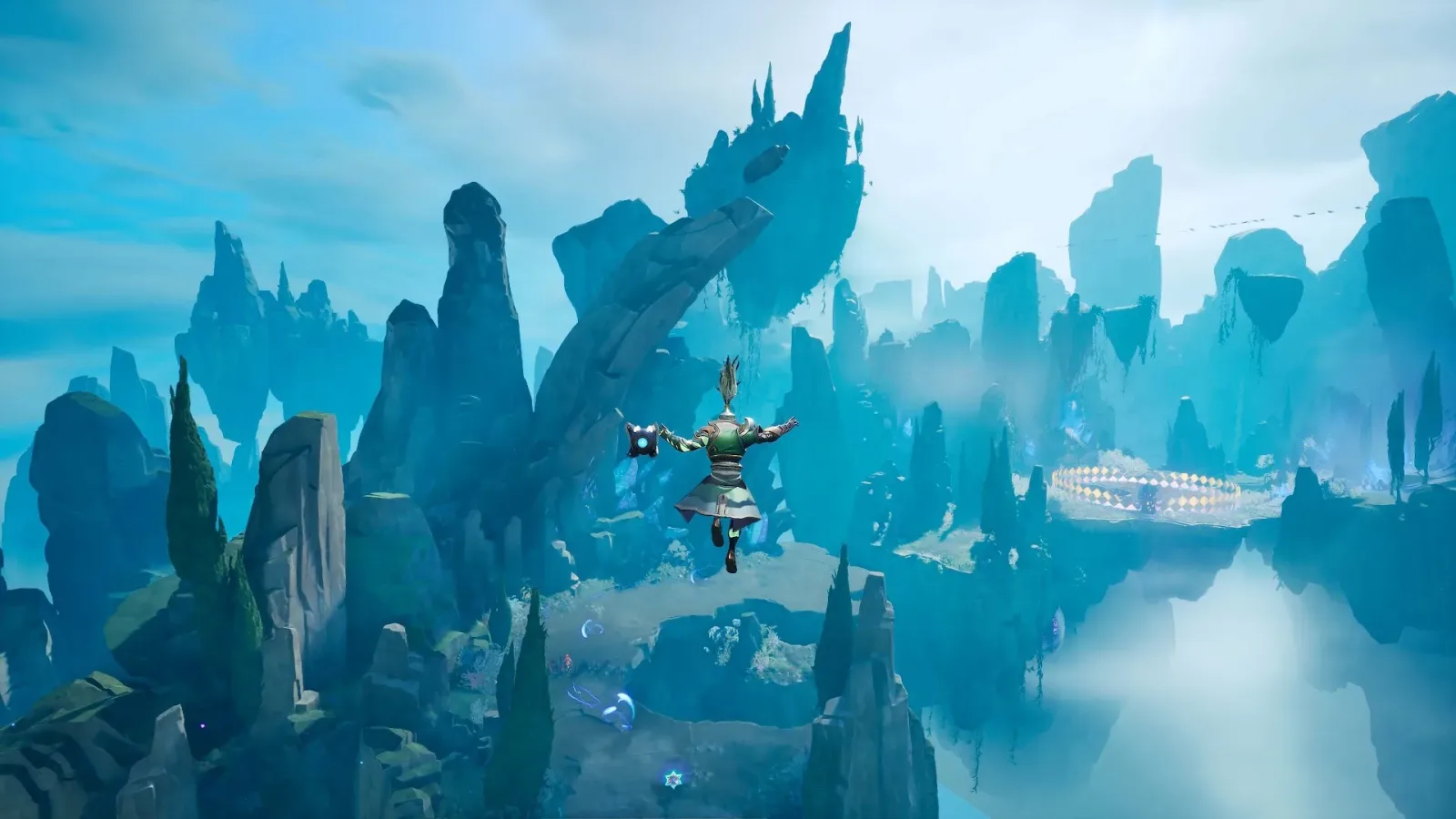
The central premise of Marked for Mayhem is an interdimensional combat tournament. Operators traverse fractured worlds filled with hostile forces, chaotic objectives and major boss encounters, all while competing for the medals that feed into the standings. That structure suggests that moment-to-moment action is only one side of the contest. Players will also be assessing which challenges are worth pursuing, how safely they can secure rewards, and whether there is an opening to deny another player the points they need.
For useful background on this topic, read Rockstar's New Modding Rules Put Fan Missions, Maps and Game Ports in the Crosshairs.
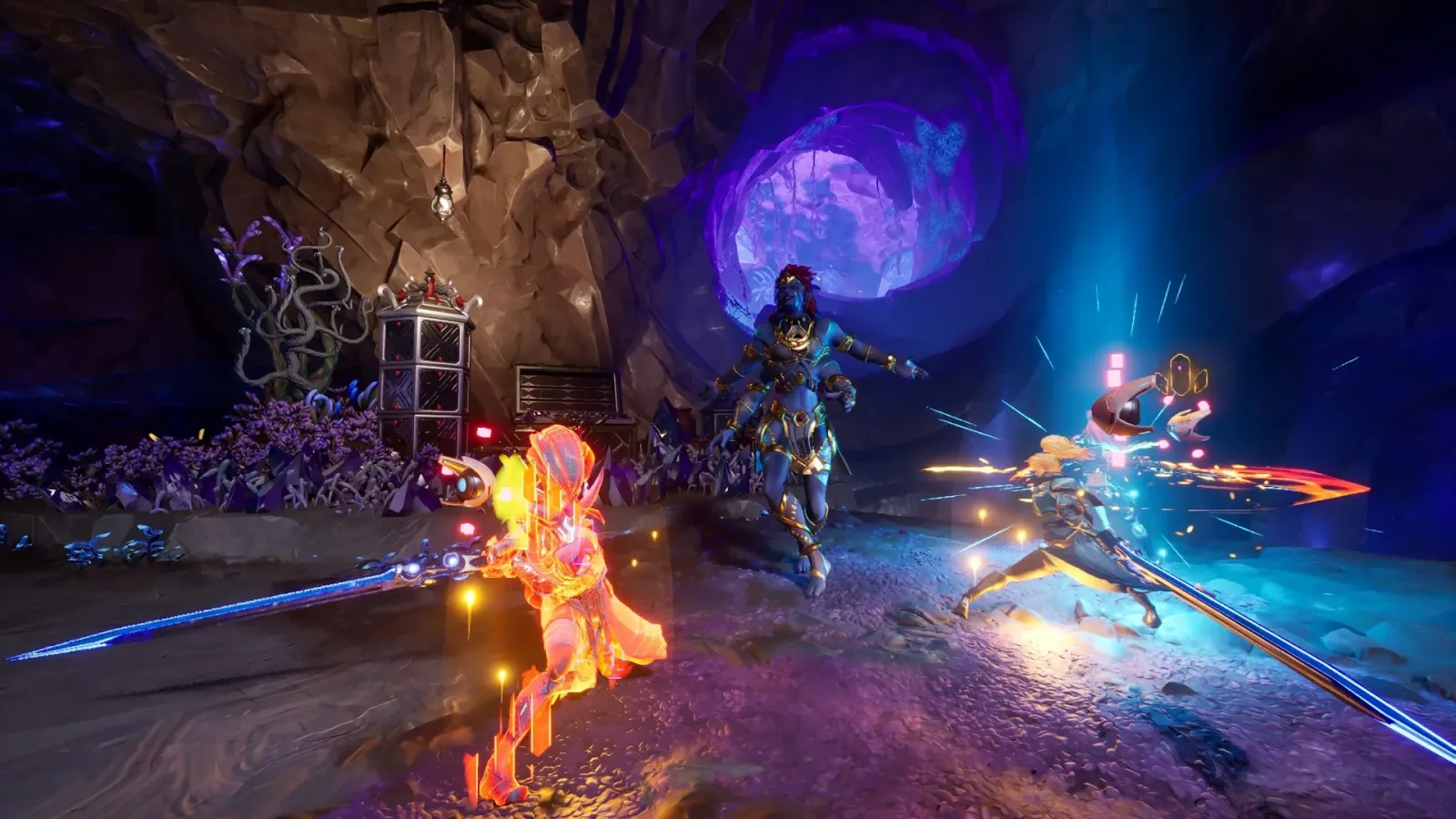
Runs are built for up to four competitors. Each participant enters with the same broad objective of climbing the leaderboard, but the game's systems are meant to create friction between them. A player could be focused on clearing enemies efficiently, another might seek out a high-value challenge, and a third could hold resources for a well-timed interruption. This makes the dungeon itself a shared arena rather than a sequence of isolated encounters.
That competitive format distinguishes the game from a more conventional roguelite or action dungeon crawler. The danger is not limited to the monsters occupying a room. Opponents are active variables capable of changing the shape of a run, either directly through attacks and disruptive powers or indirectly by seizing medals, setting a faster pace, and forcing everyone else to react to a changing scoreboard.
Builds can change while a match is underway
Bladework Games is framing build-making as one of the pillars of Marked for Mayhem. Operators will be able to shape their approach on the fly through weapons, abilities and modifiers found or earned over the course of a run. Instead of committing to one fully fixed loadout before a match begins, players are expected to adapt to the tools they receive and the pressures created by rivals.
This approach can give a four-player competitive run a changing rhythm. A weapon or ability that seems ideal for rapidly clearing ordinary enemies may not be the best answer to an ArenaGame challenge, a durable boss, or an opponent who has moved ahead on points. Likewise, a modifier that improves mobility, survivability or damage could gain value depending on the current layout of the dungeon and how aggressively other Operators are contesting medals.
The announcement does not yet detail the full weapon roster, the individual ability pool, or how modifiers will be acquired and combined. Still, the emphasis on mid-run customization indicates that adapting to circumstances will matter as much as mechanical combat skill. A winning player may need to recognize when their existing build has stopped being effective and pivot before another Operator converts their own advantage into an insurmountable lead.
Disruptors bring sabotage into the scoring race
One of the game's most notable systems is the use of Disruptor abilities. These powers are explicitly designed to interfere with competing players, creating opportunities to sabotage a rival, steal points, and swing the leaderboard. In a mode where a single Operator wins, that kind of interaction could ensure that a lead never feels completely secure.
Disruptors appear intended to make direct player-versus-player pressure more tactical than a straightforward race to kill enemies first. An Operator may decide whether to spend a disruptive power immediately to stop an opponent from completing an objective, save it until a boss encounter, or use it when stealing points would have the largest impact on the standings. The risk-and-reward element is important: committing a powerful interference tool at the wrong time could leave a player without an answer when the match's decisive moment arrives.
Because the game also includes enemies, challenges and bosses, disruptive play will have to operate within a wider combat ecosystem. The most effective sabotage may come from exploiting a rival's position while they are already occupied with a dangerous target or attempting to secure a medal. Conversely, players who focus entirely on attacking other Operators may lose ground if they neglect the dungeon's core objectives.
Bosses and ArenaGames add different pressures to a run
Boss fights are another key component of the announced formula. These formidable enemies are positioned as major obstacles, but defeating or engaging with them can offer more than a simple checkpoint. Bladework Games says their powers can be harnessed, suggesting that bosses may influence the build options or capabilities available during a run.
That detail adds another strategic layer to the competitive loop. A boss could represent a dangerous but potentially valuable investment of time and resources. Operators may have to decide whether the benefits tied to a boss are worth exposing themselves to disruption, falling behind in medals, or giving an opponent space to pursue another scoring opportunity. The exact mechanics behind harnessing boss powers have not been outlined, but the concept fits the game's focus on temporary advantages and adapting builds under pressure.
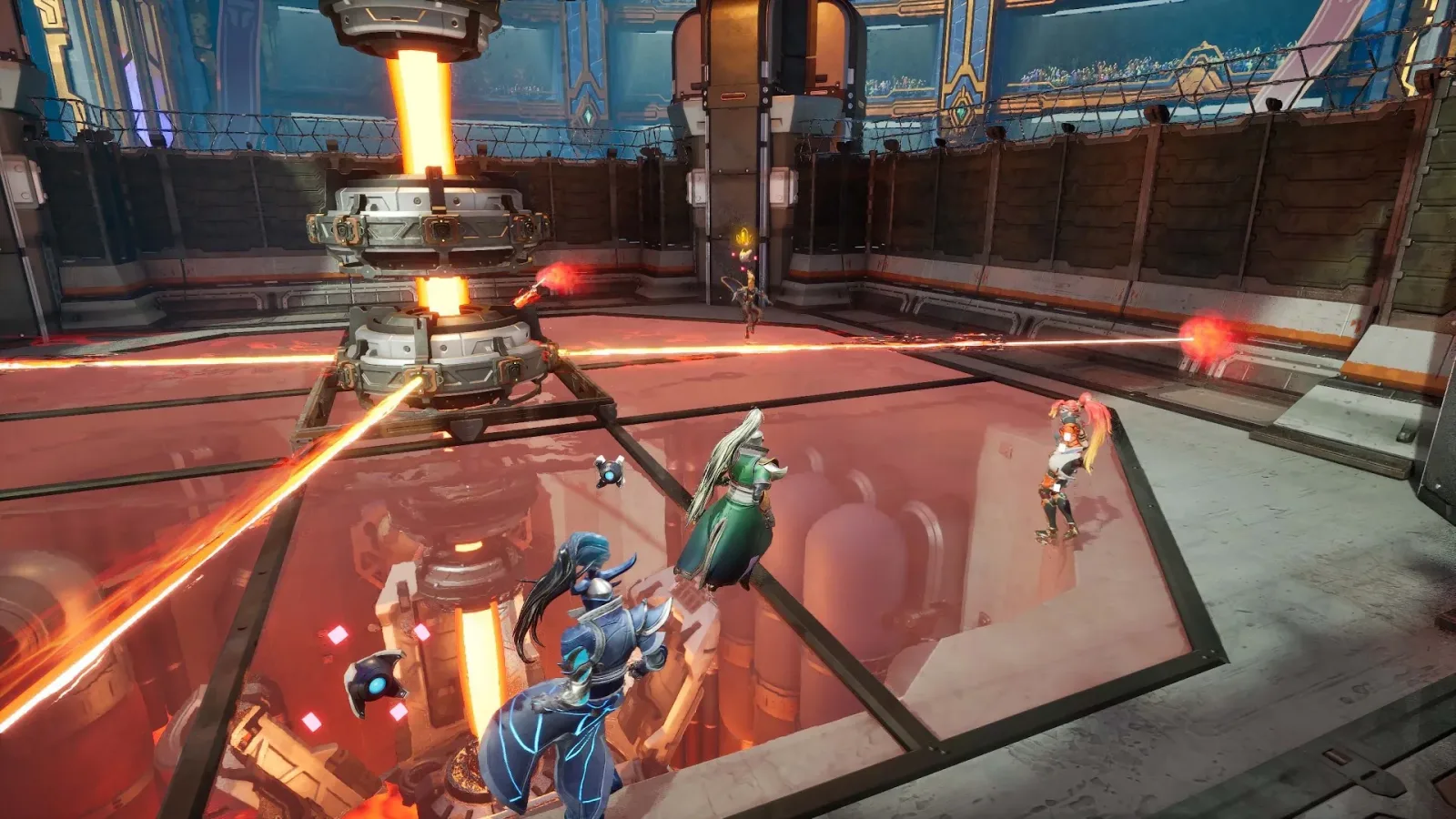
Matches will also include what the studio calls ArenaGames: chaotic challenges that offer a further route to medals and leaderboard gains. Their inclusion means a run is not expected to be a single continuous path of ordinary rooms and boss battles. Instead, players may encounter special contests that pull attention toward a high-reward activity, potentially bringing all four Operators into close competition at once.
With medals functioning as a key measure of progress, these events could become turning points. A player trailing in the standings may see an ArenaGame as a chance to recover, while the leader must choose whether to defend their advantage or take a calculated risk for an even greater lead. Bladework Games has not yet specified the types of challenges that will be included, so the exact range and rules of ArenaGames remain to be revealed.
Live development plans point to an expanding tournament
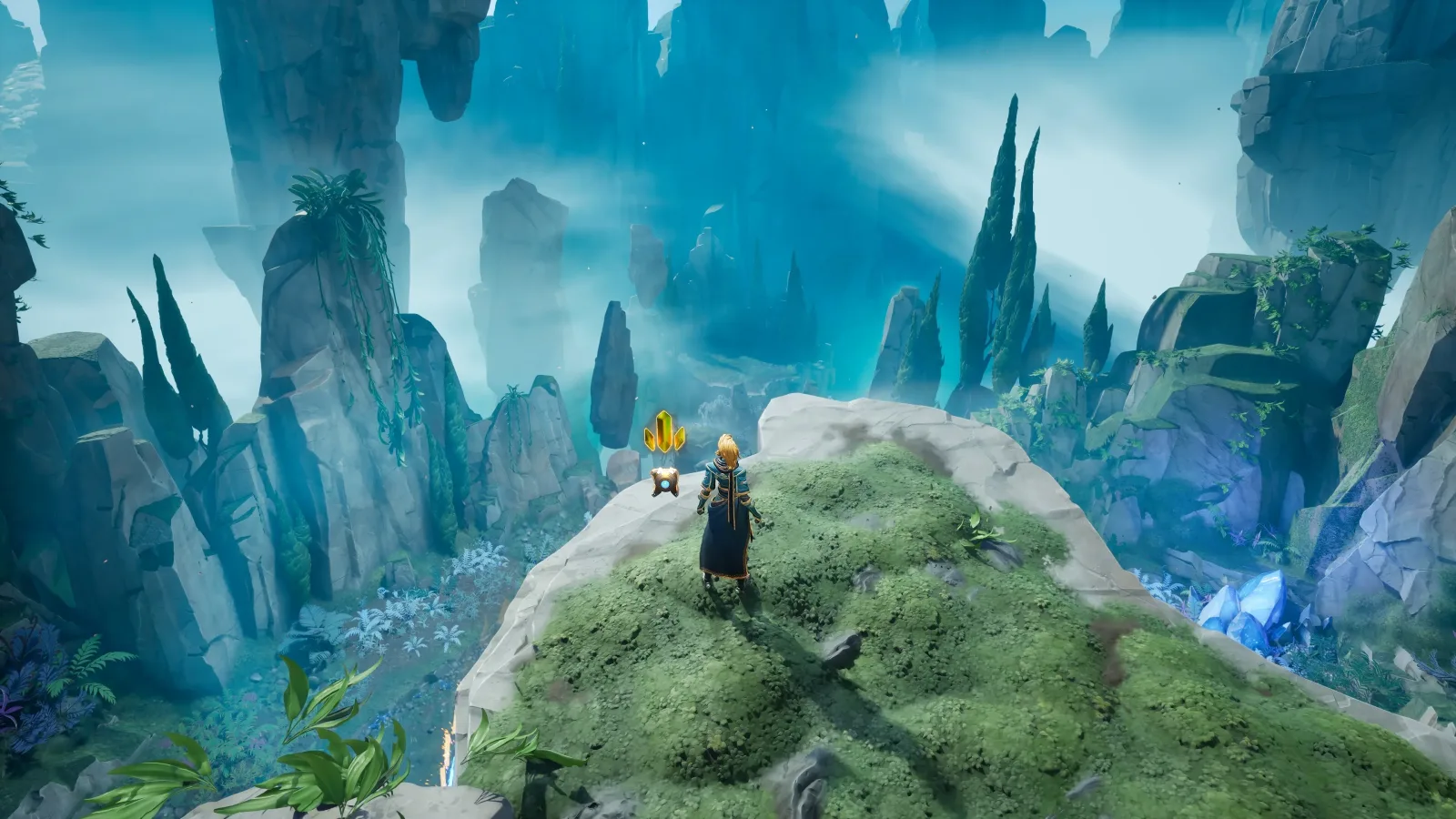
Alongside the reveal, Bladework Games outlined plans for ongoing live development. The studio intends to add new enemies, biomes, weapons and Disruptors over time. For a game built around repeated competitive runs, that commitment could be especially meaningful, as fresh environments and new tools may alter both the tactical landscape and the ways players approach scoring.
Additional enemy sets and biomes could change how Operators navigate danger, while new weaponry and abilities may create alternative build paths. New Disruptors, meanwhile, have the potential to reshape the social and competitive side of a match by introducing different forms of counterplay. The studio has not announced a schedule or detailed roadmap for these updates, but its stated intent is for the game to keep developing beyond its initial offering.
The focus on an evolving pool of content is well suited to the premise of an interdimensional tournament. If each dimension introduces different hazards and opportunities, players may need to keep learning how environments, bosses, modifiers and disruptive powers interact. That prospect is likely to appeal to players who enjoy mastery-driven multiplayer games, particularly those interested in making rapid decisions as conditions change.
PC release plans and beta interest
Marked for Mayhem is currently confirmed for PC, with Steam and the Epic Games Store named as the intended storefronts. No release date, pricing details, or console versions were announced alongside the reveal.
Bladework Games has also opened a limited beta sign-up opportunity. Players interested in seeing how the four-player dungeon competition develops ahead of release can register their interest, while wishlisting is available on the game's planned PC storefronts. Community channels will be used for additional updates as development continues.
For now, Marked for Mayhem stands out through the combination of dungeon-running action and an unapologetically competitive structure. Its Operators are not merely surviving dangerous dimensions together; they are fighting for the right to be the one person at the top when the run ends. Between evolving builds, medal-driven challenges, boss-derived powers and Disruptors built for sabotage, Bladework Games is aiming for a multiplayer contest where momentum can change quickly and no lead should be taken for granted.
Community
Discussion
Start the conversation.
No comments have been posted yet.